


When utilizing AI for advanced threat prevention in Cyberspace,networks benefit from enhanced threat detection, automation, and continuous learning. AI-driven cybersecurity solutions leverage machine learning to analyze data in real-time, identifying anomalies and emerging threats. Proactive incident response mechanisms swiftly contain threatsbefore they escalate. AI continuously adapts to new threats using behavioral analytics, predictive cyber intelligence, and self-supervised learning. By implementing AI cybersecurity integrations, organizations can strengthen their defense against growing cyber threats. If you're looking to fortify your digital security, stay tuned to explore the full bipolar potential of AI in threat detection.
Key Takeaways
- AI-driven threat detection analyzes large datasets for patterns, anomalies, and unusual behaviors to identify potential cyber threats in real-time.
AI in Threat Detection Basics
The integration of AI in threat detection leverages machine learning algorithms to thoroughly examine vast amounts of data and identify patterns indicative of potential cyber threats. As I explore further into this area, I realize that AI automates the process of identifying, analyzing, and mitigating cybersecurity threats, enhancing security measures significantly.
AI-powered systems have the remarkable ability to detect anomalies, unusual behaviors, and potential risks before they escalate into full-fledged attacks. This advanced technology enables real-time response mechanisms, facilitating the quick detection of new threats and proactive threat hunting through predictive analytics.
The accuracy, scalability, and efficiency of threat detection are notably improved by AI, which can process large volumes of data from various sources. For instance, AI can analyze network traffic data to identify patterns that suggest malware or unauthorized access. This is especially important, given that advanced cyber threats are increasingly sophisticated and occur at an unprecedented pace.
AI-Powered Cybersecurity Solutions
What makes AI-powered cybersecurity solutions integral to robust defense mechanisms is their ability to harness advanced algorithms for real-time threat detection and prevention. Leveraging machine learning algorithms and artificial intelligence in cybersecurity, these solutions can effectively analyze vast amounts of data for anomaly detection, allowing them to identify threats rapidly.
I find that AI-powered threat detection excels in discovering patterns of malicious behavior through behavioral analytics, ensuring proactive threat mitigation. Additionally, these advanced AI solutions continuously learn and adapt to evolving threats by analyzing historical data and threat intelligence. This approach enhances incident response capabilities by automating remediation actions and reducing response times to potential security breaches.
In today's digital landscape, AI-powered cybersecurity solutions are essential for staying ahead of sophisticated threats. By incorporating advanced AI, anomaly detection, and continuous learning capabilities, these solutions provide robust defense against a wide range of cyber threats.
Automating Threat Respond
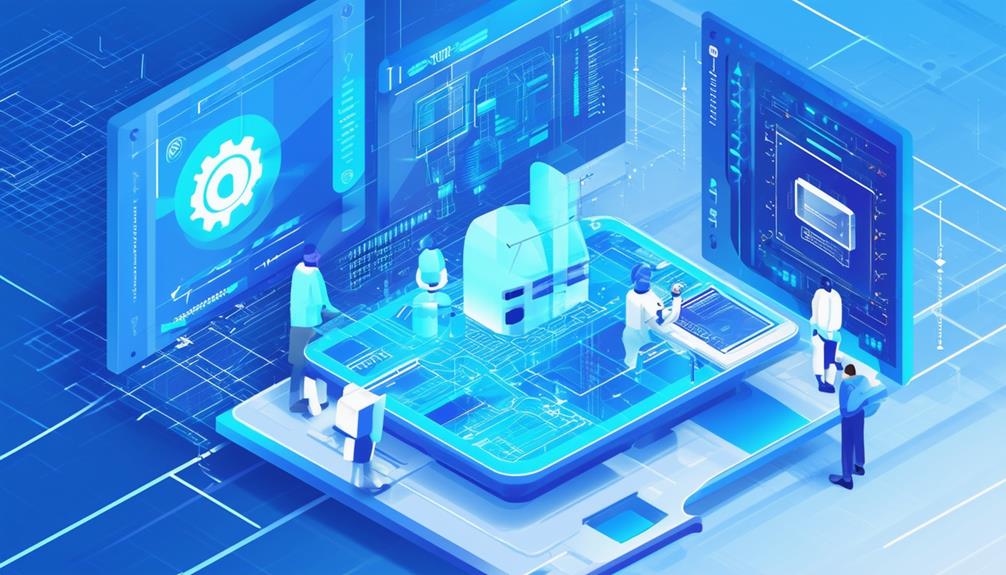
I simplify threat response by automating remediation actions, ensuring prompt containment and mitigation of detected threats. Through AI-driven solutions, I reduce manual intervention and response time, making a significant difference in incident response timelines.
Automated incident response systems and AI-powered threat analysis tools are essential to my effective threat prevention strategy.
Automated threat response mechanisms allow me to make real-time decisions, leveraging machine learning algorithms that continuously learn and adapt to evolving threats. This proactive approach not only enhances my cybersecurity defenses but also minimizes the impact of security incidents on my organization.
Advanced Threat Analysis
In strengthening cybersecurity defenses, I rely on advanced threat analysis. This involves deep learning algorithms to detect complex and evolving threats.
With AI-powered threat analysis, I enhance security by identifying patterns and anomalies in massive data sets. This provides proactive detection and mitigation strategies.
Through constant adaptation to new threats, I guarantee improved defense mechanisms. This ensures a swift response to emerging cyber threats.
Enhancing Threat Detection
Enhancing Threat Detection
Sophisticated AI algorithms excel in real-time threat detection by identifying complex attack patterns and anomalies that traditional methods often miss through continuous learning and adaptation. These advanced algorithms empower cybersecurity systems to detect and respond to threats more effectively. I will highlight how AI enhances threat detection capabilities and transforms the cybersecurity landscape.
AI in Threat Detection
| Threat Detection Aspect | AI-Powered Solution |
|---|---|
| Pattern and Anomaly Identification | Continuous learning from historical data and real-time observations |
| Proactive Approach | Analyzing vast data to predict potential risks |
| Real-Time Response | Rapid alerting and remediation based on detailed threat information |
| Enhanced Security | AI-driven threat hunting to improve overall security posture |
| Algorithmic Adaptation | Self-supervised learning for context-aware anomaly detection |
AI enhances threat detection by identifying patterns and anomalies, providing a proactive approach to cybersecurity that reduces response times to a great extent. By leveraging AI and machine learning, cybersecurity solutions can adapt to evolving threats, ensuring improved overall security. AI-powered threat detection systems excel in detecting complex attacks and anomalies, making them invaluable tools in the fight against cyber threats.
Improved User Analytics
Utilizing AI for Advanced Threat Prevention in Cyberspace
Enhancing Threat Detection
Advanced threat analysis leveraging AI capabilities enables organizations to analyze user behavior more deeply, thereby revealing anomalies and potential security risks that might be masked by traditional methods. With AI-powered user analytics, anomalies in user behavior can be detected more effectively, indicating malicious intent or unauthorized access.
The ability to analyze vast amounts of user data provides valuable insights into potential insider threats and compromised accounts, allowing for proactive measures to prevent security breaches. Advanced user analytics also enhance threat prevention by continuously monitoring and flagging suspicious user behavior in real time.
This enables organizations to respond swiftly to emerging threats and strengthen their overall cybersecurity posture against evolving cyber threats. By leveraging AI for advanced threat prevention, we can stay one step ahead of cybercriminals and protect our digital assets from unauthorized access.
Predictive Cyber Intelligence

Now, I'll explore how predictive cyber intelligence empowers us to stay one step ahead of potential cyber threats.
By utilizing AI algorithms to analyze historical data, we can identify meaningful patterns and predict future attack vectors.
This proactive approach increases the effectiveness of incident response strategies and enhances our overall cybersecurity posture.
Threat Pattern Analysis
To effectively combat emerging cyber threats, AI-driven predictive cyber intelligence analyzes historical data and patterns to forecast potential attacks before they occur. This proactive approach relies on the power of threat pattern analysis, where advanced AI algorithms sift through vast amounts of data to identify possible threats before they happen.
Predictive cyber intelligence, enhanced by these algorithms, helps organizations stay ahead of evolving cyber threats by recognizing patterns and anomalies that could indicate a looming assault.
Through advanced threat prevention, AI enables real-time response to emerging threats in cyberspace. This involves both proactive and reactive measures. Predictive analytics, leveraging AI capabilities, detects anomalies in network traffic and system logs, assisting in predicting potential future attacks.
Armed with this insight, security teams can strengthen defenses and adapt quickly to new threats. The integration of AI-driven threat pattern analysis into cyber defense strategies empower organizations to take preventative action and protect their digital assets from sophisticated attacks.
Real-time Risk Identification
Real-time risk identification empowers organizations to proactively detect and prevent potential cyber threats by leveraging AI-driven predictive cyber intelligence that analyzes vast amounts of data in real-time to identify patterns and anomalies indicative of emerging risks. This proactive approach bolsters cybersecurity posture by detecting threats early, mitigating risks before they cause harm.
| Approach | Benefits |
|---|---|
| AI-driven predictive cyber intelligence | Identifies emerging threats in real-time |
| Real-time risk analysis | Enhances cybersecurity posture |
| Advanced threat prevention | Mitigates risks before they cause harm |
AI-Driven Incident Response
Machine learning algorithms are transforming incident response by detecting security threats in real-time, swiftly initiating automated containment measures to mitigate their impact, and ultimately enabling proactive defense by learning from past incidents.
AI-driven incident response revolutionizes the way I handle cybersecurity threats, reducing response times and risks. These advanced technologies empower me to analyze patterns in real-time data, detecting and mitigating security incidents promptly.
With AI, I gain predictive insights into potential threats before they escalate. This proactive approach greatly enhances incident response, allowing me to orchestrate and automate incident response workflows efficiently.
Advanced AI technologies streamline containment, remediation, and recovery processes, effectively protecting data, systems, and networks from cyber attacks.
AI and Cybersecurity Benefits

Within the cyber ecosystem, AI is crucial for enhancing my cybersecurity posture by leveraging its advanced capabilities to detect and respond to threats, effectively fortifying my network's resilience. Its ability to automate threat detection, response, and mitigation processes guarantees that I remain proactive against evolving cyber threats. AI-driven solutions analyze vast amounts of data, providing me with real-time insights to identify potential risks and prioritize responses for swift incident response.
Benefits of AI in Cybersecurity include:
| AI Capability | Cybersecurity Benefit |
|---|---|
| Machine Learning | Enhanced Threat Detection |
| Deep Learning | Improved Security Analysis |
| Generative AI | Streamlined Code Development |
| Automation | Minimized Human Security Burden |
AI in Real-Time Monitoring
AI becomes an indispensable ally as it continuously surveils network traffic, making sure lengthy analysis times transform into rapid threat prevention.
In the world of real-time monitoring, AI plays a pivotal role in detecting and preventing cyber threats. By analyzing vast data streams, AI-driven systems identify anomalies and potential risks, generating immediate alerts on suspicious activities. This proactive response to threats as they occur minimizes the potential damages.
Advanced threat prevention relies heavily on continuous surveillance of network activities, and AI has proven itself to be a reliable and efficient tool in achieving this goal. Piece by piece, real-time monitoring makes certain that every network corner is secured, greatly reducing the burden on security teams.
Embracing AI in real-time monitoring becomes key to maintaining the freedom and integrity of your digital space.
Cybersecurity Challenges

To effectively ward off contemporary cyber threats, I must acknowledge that modern cybersecurity faces several formidable challenges that require adaptability and innovative solutions. The rapid evolution and sophistication of cyber threats, coupled with the shortage of skilled cybersecurity professionals, create an environment where staying ahead of attackers is a significant task.
| Cybersecurity Challenges | Impact | Potential Solutions |
|---|---|---|
| Rapid Evolution of Threats | Increased Difficulty in Detection | AI for Threat Detection |
| Shortage of Skilled Professionals | Limited Capacity for Response | Advanced Training in AI Threat Intelligence |
| Network Complexity | Increased Attack Surface | Anomaly Detection, Machine Learning Models |
| Zero-Day Attacks | Unknown Vulnerabilities | Proactive Threat Detection |
| Interconnected Systems | Cascading Damage | Integrated Security Monitoring |
These challenges,-compounded by the complexity of modern networks and the interconnected nature of digital systems, demand the integration of Artificial Intelligence (AI) in threat detection systems. By leveraging AI for anomaly detection and proactive threat detection, organizations can stay ahead of the evolving threat landscape and better protect their digital assets.
AI Cybersecurity Integration
What's driving the shift towards AI cybersecurity integration?
It's the escalating complexity of threats that traditional security measures can't effectively handle. Leveraging advanced technologies, AI has emerged as a game-changer in enhancing threat detection and response capabilities. By analyzing vast amounts of data, AI models employ deep learning to identify potential threats with unmatched accuracy and speed. While traditional systems often generate false positives, AI is designed to minimize these errors, ensuring that critical incidents receive immediate attention. Additionally, AI systems continuously learn from new data and adapt to evolving threats, making them essential components of proactive cyber defense strategies.
Integrating AI into cybersecurity allows for best threat detection and response times.
Autonomous systems analyze large volumes of log data and network traffic to identify patterns and anomalies that may signify an AI threat. By automating various aspects of incident response processes, AI mitigates the impact of security incidents and notably reduces response times. Addressing the global shortage of skilled cybersecurity professionals, AI cybersecurity integration isn't only a technological advancement but also a necessity. With AI, we can harness its predictive capabilities to anticipate future threats and implement preventative measures, ultimately fortifying our defense against cybercrime.
Frequently Asked Questions
How Can AI Prevent Cyber Attacks?
"I prevent cyber attacks by leveraging machine learning for behavioral analysis, predictive modeling, and anomaly detection, while continuously monitoring networks in real-time to hunt and identify threats, and swiftly containing malware incidents."
How Is AI Used for Cyber Threat Intelligence?
"To leverage AI in cyber threat intelligence, I combine machine learning for threat detection with predictive analytics, anomaly detection, and behavioral analysis.oined by automated response and real-time monitoring, AI enhances pattern recognition and data visualization, fortifying cyber defense."
What Are Some Examples of AI in Cyber Security?
"I leverage AI in cybersecurity for advanced threat prevention, utilizing machine learning for threat detection, anomaly detection, predictive analytics in cyber defense, deep learning for network security, real-time monitoring, automated security operations, behavioral analytics for threat hunting, and securing endpoints and cloud infrastructure through automated responses and threat mitigation measures."
How Is AI Revolutionizing Cyber Security?
AI is revolutionizing cyber security by incorporating machine learning, deep learning, behavioral analytics, and predictive modeling to detect threats through anomaly detection, network monitoring,.endpoint security, and real-time response, enhancing threat hunting and security automation.