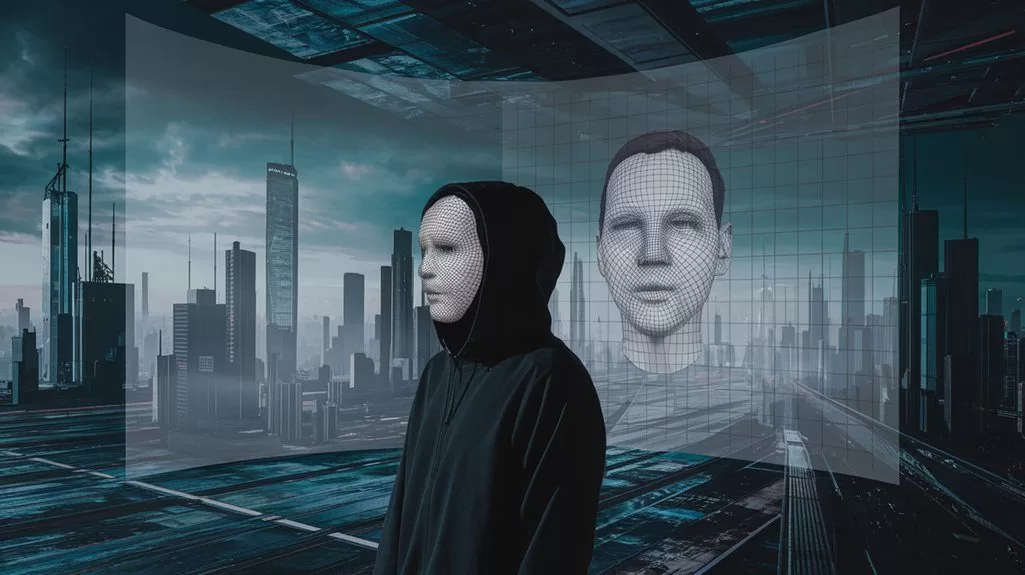


The U.S. government's AI program targeting pro-Palestinian students has ignited a firestorm of debate. Privacy? What's that? Critics slam it for potentially stifling free speech and academic freedom. Yeah, because students can't have opinions. AI scours social media like a nosy neighbor, sometimes missing sarcasm. Conversely, proponents argue it's essential for national security. Balancing act much? With government agencies playing detective, the controversy isn't vanishing anytime soon. Curious for more details?
Key Takeaways
- The "Catch and Revoke" program targets foreign students' visas for alleged support of Hamas, raising privacy and free speech concerns.
- AI surveillance scrutinizes social media for signs of terrorist sympathies, risking misinterpretation of nuanced online speech.
- Legal frameworks support visa revocation based on perceived support for terrorism, threatening academic and political freedoms.
- Pro-Palestinian groups and rights organizations criticize the program for suppressing free speech and potential bias.
- The program's lack of transparency and potential for AI misuse raise ethical and authoritarianism concerns.

In the shadowy corridors of government, an AI program dubbed "Catch and Revoke" is making waves. Designed to revoke student visas for those perceived to support Hamas, this initiative harnesses AI surveillance to scrutinize social media accounts. The program, a collaborative effort involving the State Department, Department of Justice, and Department of Homeland Security, targets foreign students, especially those engaged in pro-Palestinian protests. The first reported action? A student's visa revoked for alleged participation in "Hamas-supporting disruptions." Quite the greeting card from Uncle Sam.
AI, your friendly neighborhood digital detective, analyzes posts for any whiff of terrorist sympathies. The focus is on posts after Hamas' October 2023 attack. Privacy implications? Massive. Free speech? At risk. Critics argue this could undermine First Amendment rights, casting a shadow over the nation's core values. It's a classic case of technology outpacing ethics, with AI bias potentially misinterpreting the complex nuances of online speech. Sarcasm? Irony? AI might not get the joke.
AI surveillance blurs the line between security and free speech, risking ethics with potential misinterpretation.
Interagency cooperation is key here. The State Department, Justice, and Homeland Security each play roles in identifying and deporting suspects. Yet, transparency is as elusive as a unicorn in a forest. Departments have been tight-lipped, declining to comment extensively on the program. Legal frameworks are in play, utilizing U.S. laws to revoke visas of those deemed supporters of terrorist organizations. Meanwhile, educational institutions face threats of funding cuts should they allow protests. No pressure, right?
Public reaction is fiery. Many pro-Palestinian groups, despite condemning both antisemitism and Hamas, find themselves under the microscope. Reports of antisemitism and Islamophobia are highlighted, fueling an already volatile debate. Rights organizations express alarm, fearing an erosion of free speech reminiscent of darker times in history. Remember Operation Boulder? Targeting Arab Americans. Déjà vu. Pro-Palestinian groups have raised alarms about the implications of visa revocation policies, which they argue could suppress their freedom to express legitimate political opinions.
Technical and ethical concerns abound. AI bias, human oversight (or lack thereof), accuracy concerns—it's a veritable minefield. The lack of transparency surrounding the AI technology used raises eyebrows. Could this be a tool for suppressing political dissent? Critics think so. Israeli military's use of U.S.-created AI tech for targeting purposes has also been highlighted, raising concerns about how such technologies can be misused.
Historical precedents suggest a worrying trend. Comparisons to past actions like Operation Boulder evoke fears of authoritarian creep. The stakes? High. The impact? Socially profound. As the debate rages on, one thing is clear: the intersection of AI surveillance, student visas, privacy implications, and free speech is a powder keg. And "Catch and Revoke"? Just the match.
References
- https://truthout.org/articles/trump-admin-reportedly-using-ai-to-label-target-visa-holders-as-pro-hamas/
- https://www.timesofisrael.com/us-reportedly-will-use-ai-to-revoke-visas-from-students-perceived-to-be-pro-hamas/
- https://www.newarab.com/news/us-will-use-ai-revoke-visas-pro-palestinian-students
- https://economictimes.com/tech/artificial-intelligence/us-to-reportedly-use-ai-to-revoke-visas-of-students-it-sees-as-hamas-supporters/articleshow/118773259.cms
- https://economictimes.com/nri/latest-updates/trump-administration-to-use-ai-in-an-effort-to-catch-and-revoke-student-visas-over-alleged-hamas-support/articleshow/118778056.cms