
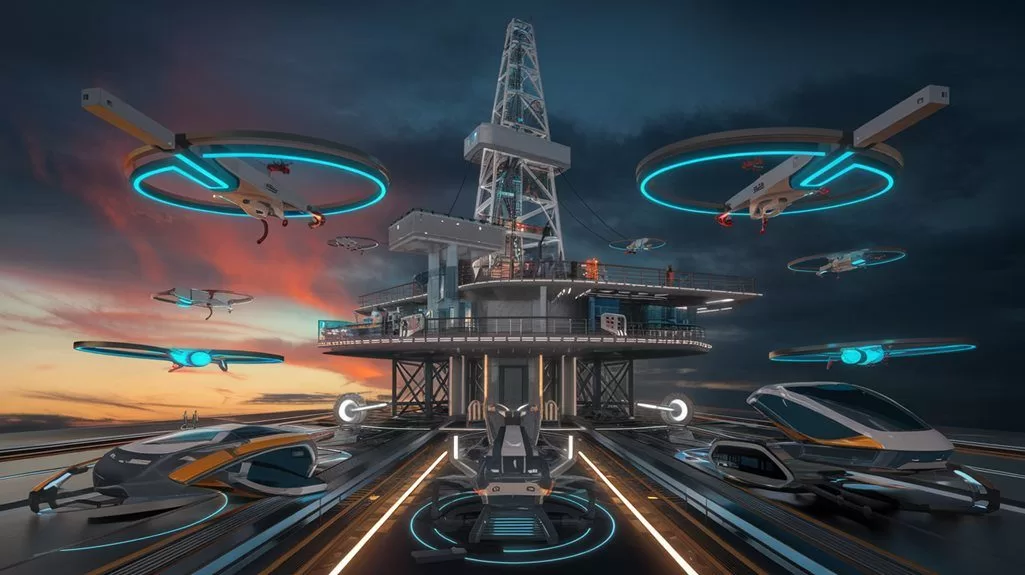

AI is revolutionizing the oil industry with ruthless efficiency. Exploration's a breeze now, thanks to AI decrypting geological data with unnerving precision. Production? A symphony of perfectly optimized processes. Fewer hiccups, less wastage, and more output. Predictive maintenance guarantees everything runs like clockwork, sidelining costly downtimes. The supply chain's a well-oiled machine too, predictably. But the environmental impact? Minimally invasive with AI on vigil. Ponder these advancements, and more could unfold.
Key Takeaways
- AI advances reduce exploration costs and risks by accurately predicting hydrocarbon locations through sophisticated data analysis.
- Real-time AI monitoring optimizes drilling processes, increasing oil production efficiency and reducing waste.
- Predictive maintenance driven by AI minimizes equipment failures, ensuring continuous operation and reducing downtime costs.
- AI enhances demand forecasting and inventory management, streamlining supply chain operations and reducing storage expenses.
- Advanced AI systems improve safety by detecting leaks early and enabling proactive environmental hazard prevention.

While the oil industry trudges along its well-worn path, artificial intelligence barges in, shaking things up. AI innovations are transforming exploration, a process long dominated by guesswork and risk. Now, with data analytics, predicting potential hydrocarbon locations has become an art of precision. Geological data once locked away in cryptic layers is now deciphered with startling accuracy. The result? Reduced exploration costs. AI identifies viable areas more efficiently, trimming unnecessary expenses. Environmental footprint? Minimized. Optimized exploration processes guarantee that.
Real-time data analysis—yes, real-time—improves exploration outcomes by analyzing seismic surveys and well logs on the fly. Decisions about potential drilling sites? Lightning-fast. In the Gulf of Mexico, AI has reduced evaluation time for data from 6-12 months, allowing for quicker decision-making and enhancing exploration efficiency.
In production, AI flexes its muscles in optimizing efficiency. AI algorithms monitor drilling processes in real-time, adjusting strategies on the spot. Increased output is no myth; AI helps maximize production by fine-tuning drilling paths and enhancing reservoir management. Waste reduction? A no-brainer. Optimization cuts down on inefficiencies.
Monitoring reservoir conditions, AI helps make data-driven decisions, aligning production with actual needs. Data analytics is the game-changer here. Operational reliability isn't just a buzzword; it's a promise fulfilled by AI's relentless scrutiny.
Predictive maintenance in operations is another AI triumph. Monitoring equipment health, AI-driven systems prevent failures and extend equipment lifespan. Equipment efficiency soars, while costly downtime plummets. Safety enhancements aren't an afterthought; they're embedded in proactive maintenance strategies.
AI's vigilance guarantees safer operations, preventing potential accidents. The relentless analysis of machinery data predicts maintenance needs, securing operational continuity. Continuous monitoring means extended uninterrupted operations. Cost savings? Substantial. Downtime and repair expenses shrink, thanks to AI's foresight.
The supply chain, too, bows to AI's prowess. Demand forecasting becomes more accurate as AI analyzes market trends, predicting demand fluctuations with uncanny precision. Inventory management is no longer a nightmare; AI optimizes levels based on predicted demand, slashing excess storage costs. With AI's ability to anticipate demand fluctuations, oil and gas companies can better align production schedules with market needs, enhancing profitability.
Logistics planning? Streamlined. Transportation and delivery processes are honed to efficiency. Supply chain visibility improves, with AI identifying potential disruptions early. Risk mitigation isn't left to chance; AI supports contingency plans against potential disruptions.
On safety and environmental fronts, AI's role is indispensable. Early leak detection is swift, thanks to advanced sensors and satellite imagery. Fast response minimizes environmental damage. Hazard prevention becomes proactive as AI monitors for early signs of accidents or spills.
Safety protocols? Enhanced. AI continuously monitors operational risks, advocating for sustainable practices across the board. In short, AI isn't just a tool; it's the oil industry's new backbone. Unstoppable.
References
- https://appinventiv.com/blog/artificial-intelligence-in-oil-and-gas-industry/
- https://www.worldenergynews.com/news/executives-say-that-will-lead-cheaper-and-759007
- https://www.dwenergygroup.com/ais-role-in-oil-and-gas-exploration/
- https://www.worldenergynews.com/news/executives-say-will-lead-cheaper-and-faster-758963
- https://usetech.com/blog/how-is-artificial-intelligence-being-used-in-the-oil-and-gas-industry/