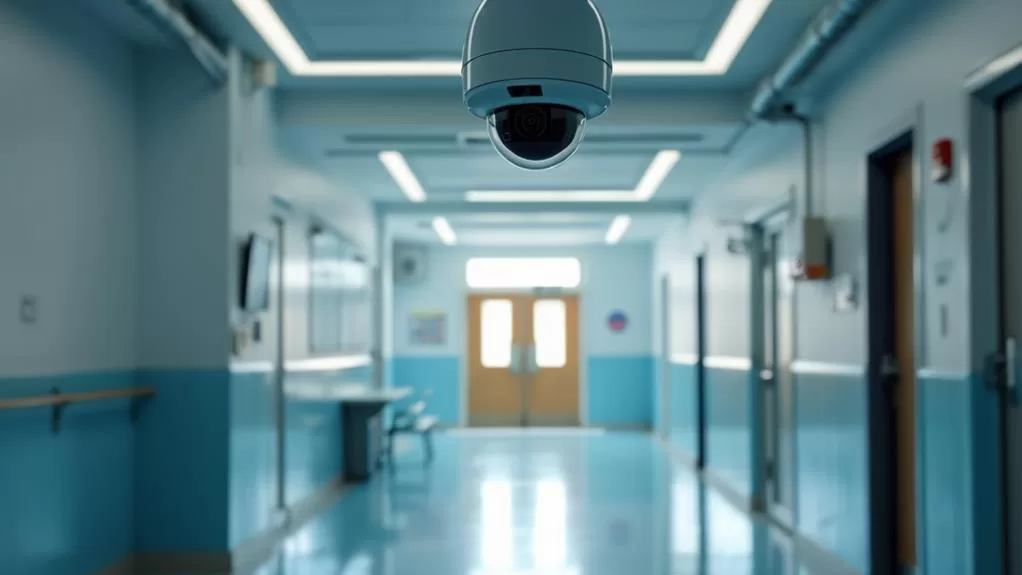


AI is transforming school security by enabling real-time threat detection, predictive analytics, and automated emergency protocols. AI-powered surveillance systems analyze live video feeds to identify potential threats, such as unauthorized individuals, suspicious behavior, and weapons, and instantly alert security personnel. These systems also predict security risks by analyzing historical data, helping schools take proactive steps to address vulnerabilities. Automated emergency protocols like lockdowns and alert notifications are triggered swiftly, guiding students and staff to safety. While data security and privacy concerns are essential, AI guarantees a safer, more proactive learning environment, and exploring these advancements can reveal even more innovative solutions for campus safety.
Key Takeaways
- Real-time Threat Detection: AI-powered video security systems detect anomalies, unauthorized access, and suspicious behaviors, triggering immediate alerts for swift action.
- Proactive Risk Monitoring: Machine learning algorithms analyze historical data to predict potential security risks, enabling schools to take proactive measures to address vulnerabilities.
- Enhanced Surveillance: AI-driven surveillance systems utilize facial recognition, behavioral analysis, and real-time monitoring to identify threats promptly and improve situational awareness.
- Automated Emergency Protocols: AI systems automate lockdown procedures, alert notifications, and guide students and staff to safety, reducing response time in critical situations.
- Balancing Security and Privacy: AI security systems must include robust privacy safeguards, minimal data collection, and transparency to protect sensitive information and maintain trust.
Enhancing School Safety With AI
Enhancing school safety with AI involves leveraging advanced technologies to proactively monitor and analyze potential risks. Schools are increasingly turning to Artificial Intelligence (AI) to create a secure environment for students and educators.
AI technology enhances school safety by proactively monitoring for risks and analyzing vast amounts of data, enabling real-time threat detection, facial recognition, and the identification of unauthorized access. AI-powered surveillance systems, such as the GW Security 4K NVR, can monitor school grounds in real-time, detecting anomalies such as large gatherings or objects left unattended.
These systems can also alert staff to out-of-the-ordinary situations, such as unauthorized individuals or potential security breaches. Machine learning algorithms within these AI systems predict and prevent incidents by analyzing historical data, helping schools anticipate and react to potential risks before they occur.
The immediate alerts provided by AI-powered surveillance ensure that security personnel can respond swiftly to potential safety threats, significantly improving the overall security posture of schools. By integrating AI into their security measures, schools aim to create a safer and more nurturing environment, allowing students and educators to focus on education without fear.
This proactive approach to security is essential in the modern educational landscape, where the integration of AI is becoming a cornerstone of effective school safety strategies.
Proactive Threat Detection
Proactive threat detection is a cornerstone of AI-driven school security, allowing institutions to anticipate and respond to potential risks before they escalate. This approach leverages machine learning algorithms to analyze vast amounts of data, predicting and preventing security incidents before they occur. By monitoring for warning signs of harmful intentions, AI enables proactive measures that greatly enhance school safety.
AI-powered surveillance systems play an essential role in this process, detecting anomalies such as unauthorized access or suspicious behavior in real-time. These systems can process and analyze video feeds from multiple cameras simultaneously, identifying any deviation from normal behavior that could indicate a potential threat. For instance, Smart AI Human Detection in advanced security systems helps reduce false alarms, guaranteeing more accurate threat identification.
This real-time vigilance ensures swift action can be taken to mitigate any identified risks.
The integration of AI in school security shifts the focus from reactive measures to proactive safety strategies. This proactive security approach creates a safer learning environment for students and staff by anticipating threats and taking preventive actions. By automating threat detection and incident response, AI helps educational settings stay one step ahead of potential security incidents, fostering a more secure and nurturing environment conducive to learning.
AI-Powered Surveillance Systems

AI-powered surveillance systems are transforming school security by leveraging machine learning algorithms to monitor school premises in real-time for potential threats. These advanced systems analyze vast amounts of data, enabling them to detect anomalies, unauthorized access, and suspicious behaviors that might otherwise go unnoticed. This real-time monitoring capability allows for immediate alerts and notifications to security personnel in case of potential safety concerns, ensuring swift and effective responses to threats.
By integrating facial recognition and gun detection capabilities, AI-powered systems enhance school security measures to a great extent. Facial recognition can identify individuals who may pose a risk, while gun detection alerts authorities to potential weapons on campus. These features transform traditional security approaches into proactive, data-driven strategies for guaranteeing campus safety. Additionally, secure transactions make sure that the information collected by these systems is protected from unauthorized access.
The integration of AI in surveillance systems guarantees round-the-clock monitoring, providing an added layer of security. This proactive approach not only deters potential threats but also empowers security personnel to intervene promptly, preventing incidents before they escalate. As a result, AI-powered surveillance systems play an essential role in maintaining a safe and secure learning environment, making our schools safer and more secure than ever before.
Real-Time Monitoring and Alerts
Real-time monitoring is the pulse of modern school security, and AI-driven systems make it feasible. These systems enable schools to keep a continuous watch over their premises, identifying potential threats before they escalate. Immediate alerts are generated by AI systems when anomalies or risks are detected, ensuring that security personnel can respond promptly to mitigate any harm.
AI-powered surveillance provides 24/7 monitoring, enhancing the safety of school environments to a great extent. Unlike traditional security measures, AI systems don't tire and can analyze vast amounts of data in real-time, spotting unusual patterns and behaviors that human observers might overlook.
The use of AI allows for proactive threat detection and swift response to incidents. Real-time alerts from AI technology help prevent security breaches and guarantee a safer campus environment. By integrating with existing security solutions, AI systems offer thorough and user-friendly security measures that can detect everything from unattended objects to suspicious behaviors and sounds like glass breaking or gunshots.
This proactive approach to security means schools can address potential threats before they become serious incidents, fostering a safer and more secure learning environment for students and staff.
Automated Emergency Protocols

When a potential threat is detected, AI-powered systems can swiftly trigger automated emergency protocols, ensuring a quick and coordinated response to security incidents. These protocols can include lockdown procedures, immediate alert notifications to staff and law enforcement, and real-time coordination to guide students and staff to safety. By automating these responses, AI reduces the time between threat detection and intervention, enhancing overall safety on school campuses.
Proactive Threat Detection
The integration of artificial intelligence (AI) in school security has revolutionized the way threats are detected and responded to, enabling a proactive approach that anticipates potential dangers rather than simply reacting to them. AI algorithms analyze vast amounts of data in real-time, allowing for immediate identification of anomalies and suspicious behaviors. This real-time monitoring helps in detecting warning signs of harmful intentions before incidents occur, preventing potential security breaches.
Here are some key aspects of AI's proactive threat detection in schools:
- Swift Identification of Threats: AI systems can identify threats such as unauthorized individuals on campus and the presence of dangerous objects, triggering automated emergency protocols swiftly.
- Enhanced Security Posture: By predicting patterns and anomalies, AI algorithms enhance security measures, reducing the likelihood of security breaches.
- Reduced False Alarms: AI's analytical capabilities decrease false alarms, guaranteeing security personnel focus on actual threats.
- Proactive Measures: Historical data analysis by AI helps in predicting potential security risks, allowing schools to take proactive steps to address vulnerabilities.
This proactive approach guarantees that schools are better equipped to handle potential security threats, providing a safer environment for students and staff.
Automated Response Systems
Automated response systems in school security, powered by AI, greatly improve the speed and effectiveness of emergency protocols. These systems can automatically trigger emergency procedures in real-time, notably reducing response times and enhancing overall safety on school campuses.
For instance, AI can instantly lock down specific school zones, alert authorities, and notify staff and students during emergencies, streamlining the process without human intervention.
Integration with access control systems guarantees seamless activation of emergency procedures in critical situations. This combination allows for precise and immediate reactions to threats, which is vital in high-pressure scenarios.
By automating emergency protocols, schools can respond more effectively to incidents, potentially saving lives. The automation also minimizes human error, which can be a notable factor in delayed responses.
The benefits of AI-powered automated response systems are manifold. They enhance security measures by providing real-time threat detection and automated alerts, which enable swift action. This proactive approach contributes to a safer, more nurturing environment conducive to learning, allowing students and educators to focus on education without constant safety concerns.
Ultimately, these systems represent a forward-thinking approach to protecting schools, leveraging advanced technology to create safer campuses.
Data Security and Privacy Concerns
When implementing AI in school security, it's vital to address data security and privacy concerns. This involves ensuring that data collection adheres to ethical standards, mitigating algorithmic bias to prevent discriminatory outcomes, and implementing robust privacy safeguards to protect sensitive information. By prioritizing these measures, we can create a secure environment that maintains the trust and safety of students and staff.
Data Collection Ethics
As we integrate AI into school security systems, data collection ethics emerge as an important concern. The implementation of AI in education involves the collection, storage, and analysis of large amounts of sensitive data, including students' personal information, academic records, and behavioral patterns. This raises serious privacy implications and security concerns.
To address these issues, it's vital to guarantee that AI systems collect the minimum necessary data to enhance security without compromising privacy. Here are key considerations:
- Privacy Risks: AI systems can be used for surveillance, potentially tracking students' online activities and making predictions about their future behaviors, infringing on their privacy rights and autonomy.
- Data Minimization: Collect only the data required for the specific purpose, avoiding unnecessary data collection that could lead to privacy violations.
- Transparency and Consent: Schools must clearly communicate what data is being collected, how it's used, and who it's shared with, providing options for opting out of data collection where possible.
- Ethical Guidelines and Accountability: Implement robust ethical guidelines and accountability mechanisms to guarantee that AI decisions advance educational equity and are subject to validation procedures.
Ensuring the accuracy and appropriateness of AI decisions in school security through robust validation procedures and ethical guidelines is important. By prioritizing these measures, we can responsibly harness the power of AI while protecting students' privacy and security.
Algorithmic Bias Mitigation
How can we guarantee that AI systems in school security don't perpetuate algorithmic bias, compromising both data security and student privacy? Addressing algorithmic bias is crucial to guarantee the integrity of AI-driven school security systems. To mitigate this issue, it's essential to implement robust safeguards such as encryption and access controls to protect sensitive student data.
Educators must receive thorough training on algorithmic bias and ethical AI use. This training helps guarantee that AI systems are designed and used responsibly, minimizing the risk of biased outcomes. Transparency in data collection and usage is also essential. Schools should clearly communicate how data is collected, used, and stored, providing mechanisms for parents and students to access and control their data.
Involving parents, guardians, and students in decisions regarding data collection is key to addressing algorithmic bias. This collaborative approach ensures that AI systems are aligned with ethical standards and respect the privacy rights of all stakeholders. By fostering this transparency and engagement, we can create a secure learning environment where AI enhances school security without compromising student privacy. This balanced approach is vital for maintaining trust in AI-driven school security systems.
Privacy Safeguards
To guarantee that AI systems in school security protect sensitive student data, it's essential to implement strong privacy safeguards. HQE Systems, a leading provider of AI-powered safety solutions, upholds data confidentiality and compliance with privacy regulations, prioritizing secure data handling practices to safeguard sensitive information.
Here are key aspects of their commitment to user privacy:
- Compliance with Regulations: HQE Systems adheres to industry-standard privacy regulations, ensuring that their solutions align with best practices.
- Secure Data Handling: The organization emphasizes secure data handling practices to protect user privacy, integrating AI and ML technologies while safeguarding sensitive information.
- Data Privacy Policies: HQE Systems' data and privacy policies create a secure environment for schools, detailing how user data is processed, stored, and protected.
- User Privacy Focus: By documenting information transfers and involving key stakeholders, HQE Systems ensures that user privacy is at the forefront of their operations.
Ethical Considerations in AI Use

When integrating AI into school security, maintaining transparency in data collection and usage is essential. This involves making the process of collecting, analyzing, and reporting data clear and understandable to all stakeholders, including students, parents, and educators. Data transparency is critical for building trust and ensuring that the use of AI aligns with ethical standards.
Educators must carefully evaluate the effectiveness of new AI tools, particularly regarding their impact on student data protection. This includes evaluating the potential for algorithmic bias, which can perpetuate existing inequalities and harm certain students. To address this, educators need professional development opportunities to understand and tackle bias in AI systems.
Involving parents/guardians and students in decisions about data collection and usage is also crucial. This guarantees that everyone is aware of what information is being collected and how it will be used, fostering a collaborative approach to ethical AI use.
Clear policies and protocols for data access, correction, and deletion should be established, with parental involvement being a key element.
Future Directions in Educational Safety
As we address the ethical considerations in AI use, we must also look ahead to how these technologies will shape the future of school security. The integration of AI and machine learning (ML) is pivotal in creating safer learning environments. Here are some key directions we're likely to see:
- Enhanced Surveillance: AI-powered solutions will enable real-time monitoring, allowing schools to detect and respond to emerging threats more effectively.
- Facial Recognition and Threat Detection: Advanced AI systems will use facial recognition and behavioral analysis to identify potential risks, ensuring quicker interventions.
- Predictive Insights: By analyzing vast amounts of data, AI will provide schools with predictive insights to anticipate and mitigate security threats.
- Improved Access Control: AI-driven access control and intrusion detection systems will enhance security measures, preventing unauthorized access and ensuring student safety.
These advancements will revolutionize school security by enabling quicker response times to emergencies, reducing false alarms, and enhancing overall safety protocols. As we embrace these technologies, we move closer to creating safer campuses where students and staff can thrive without fear of harm.
Frequently Asked Questions
How Can AI Keep Schools Safe?
I can keep schools safe by using AI for facial recognition, threat detection, and surveillance monitoring. AI analyzes student behavior, triggers alerts for unauthorized access, and enhances emergency response, all while ensuring robust access control.
How Does Artificial Intelligence Improve Safety and Security?
I improve safety and security by using facial recognition, behavior analysis, and threat detection to identify potential risks. Real-time monitoring and predictive analytics enable swift emergency response, enhancing overall security measures.
How Can AI Be Useful in a School Environment?
In a school environment, I can leverage AI for facial recognition to identify unauthorized individuals, analyze student behavior for early intervention, detect threats in real-time, send alerts, control access, and enhance emergency response protocols.
What Role Can Technologies Such as AI Play in Enhancing the Security of an Organization?
In enhancing organizational security, I leverage AI for facial recognition, threat detection, and surveillance monitoring. AI also optimizes access control, conducts behavioral analysis, and streamlines emergency response, ensuring swift and accurate security measures.
Final Thoughts
As schools adopt AI-powered security systems, they are shifting from reactive to proactive safety measures. AI enhances surveillance, detects threats in real-time, and triggers automated alerts, ensuring quicker responses to potential dangers. While ethical and privacy concerns must be addressed, AI's continuous monitoring and predictive analytics are revolutionizing school security, creating safer and more efficient environments for students and staff. This technology is pivotal for modernizing school safety and mitigating emerging threats effectively.