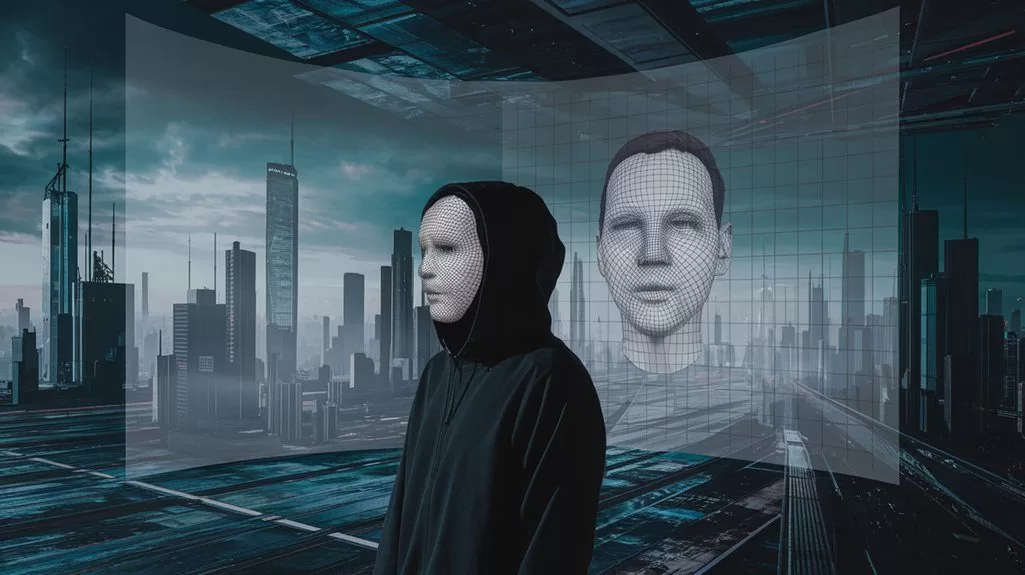


AI 'nudify' apps are waging a relentless war on privacy. In Minnesota, lawmakers are not sitting idly; they are actively pushing back. These apps, sheer technological marvels, allow anyone to create disturbingly realistic fake nudes with ease, exploiting personal images at a click. Legal and ethical nightmares abound with minors often targeted. The psychological toll on victims is serious, spiraling them into distress. But, hey, Minnesota has some plans to combat this menace. Curious already?
Key Takeaways
- Minnesota proposes a bill imposing fines on AI nudify apps to protect privacy.
- Legal consequences are severe for creating or sharing AI-generated explicit images of minors.
- Victims of non-consensual content creation face emotional distress and psychological impacts.
- AI nudify apps often neglect digital consent and target minors, raising ethical concerns.
- Data security issues arise as user data may be stored on foreign servers without adequate protection.

When it comes to AI 'nudify' apps, the phrase "just because you can doesn't mean you should" comes to mind. These apps, powered by sophisticated AI algorithms, are causing quite the stir. They can digitally alter images to create disturbingly realistic fake nudes. And of course, they're widely available online, with a frustratingly lax age verification process. Just upload a photo, click a button, and voilà—your very own privacy invasion, served up on a digital platter.
Digital consent? Apparently, that's a foreign concept to these apps. They're often misused to create and distribute non-consensual explicit content. Privacy invasion at its finest. Despite claims of safeguards, these platforms often fail miserably at preventing the manipulation of images—especially those of minors. It's an unsettling reality that such ease of access brings with it a Pandora's box of misuse potential.
Digital consent is ignored as AI apps facilitate non-consensual explicit content, especially involving minors.
The legal landscape is just as tangled. AI-generated explicit images of minors fall under the CSAM category in most jurisdictions. So, yes, creating or sharing such content might earn you a cozy spot behind bars. Laws are evolving, albeit slowly, to catch up with the technology. But let's be honest, the digital nature of these images makes prosecution a Sisyphean task. Civil penalties are an option too, particularly in regions like Minnesota, where victims can seek damages. Yet, the challenge of tracking offenders remains a thorn in the side of justice. In Minnesota, a new bill proposed in the legislature aims to impose fines on apps and websites facilitating nudification of images/videos and allows for civil lawsuits seeking damages of no less than $500,000 for each unlawful instance.
On the flip side, the psychological impact on victims is profound. Non-consensual distribution of altered images can lead to a cocktail of emotional distress, anxiety, and depression. Victims often find themselves trapped in a cycle of humiliation and vulnerability, feeling powerless to stop the spread. Some schools and communities are stepping up, offering support mechanisms like peer groups and counseling. Awareness is key, they say, but it feels like a drop in the ocean.
Technologically speaking, these apps are a marvel—or a nightmare—depending on your perspective. Machine learning and generative models like GANs make it all possible. Available on major platforms and sometimes monetized, these apps turn exploitation into a business. Meanwhile, data security goes out the window, leaving users' information on foreign servers.
Final Thoughts
Minnesota's battle against AI 'nudify' apps highlights a pressing privacy war. These apps, a dubious tech marvel, strip away more than just clothing—eroding trust and consent. On one hand, technological innovation dazzles. On the other, it creeps. Privacy? Almost obsolete. Sure, some see it as harmless fun. But the line between innovation and invasion blurs dangerously. Minnesota isn't just fighting apps; it's defending dignity. Because, in the end, respect shouldn't be optional, even in the digital domain.
References
- https://smithinvestigationagency.com/blog/ai-powered-nudify-apps-protect-your-teens/
- https://www.fox9.com/news/nudification-fines-minnesota-lawmakers-privacy-invasion
- https://cybersafetycop.com/podcast/everything-parents-need-to-know-about-nudify-ai-apps/
- https://www.youtube.com/watch?v=_rDckZHBs6M
- https://gabb.com/blog/nudify-apps/