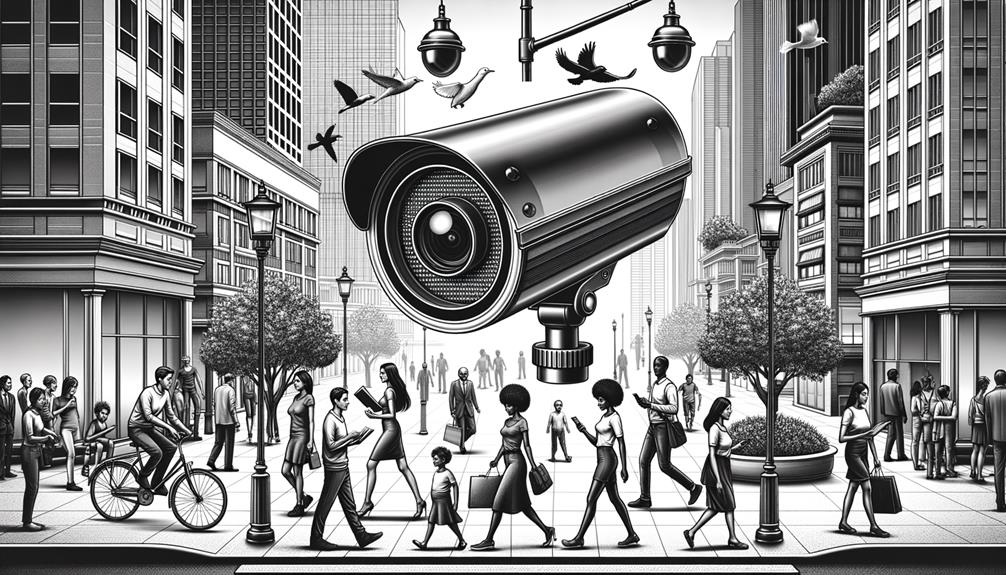


AI is upending federal agency surveillance. It’s fast, efficient, and frankly, a bit creepy. Yes, it analyzes heaps of data in record time. But transparency? Missing. Privacy? Let’s say it’s on thin ice. The NSA uses AI, shrouded in secrecy, fueling public mistrust. Surveillance is smart but snoopy—civil liberties scream for attention. Is AI more a watchdog or a quiet intruder? The debate rages on, raising eyebrows and questions alike. Curious yet? Critics argue that the lack of oversight in AI-driven surveillance could lead to abuses of power, especially when it comes to ai tracking politicians’ private moments. The potential for misuse is not just a theoretical concern; it raises ethical dilemmas about the balance between national security and personal freedom. As discussions around regulation heat up, the need for clear guidelines becomes more pressing—because in this rapidly evolving landscape, the line between protection and invasion is perilously thin.
Key Takeaways
- AI enhances federal surveillance capabilities, allowing agencies to analyze vast data quickly, raising privacy concerns.
- The integration of AI in surveillance highlights ethical issues related to transparency and civil liberties.
- Public distrust in AI-driven surveillance systems is growing due to secrecy and lack of transparency.
- Privacy laws are struggling to keep pace with AI advancements, requiring reassessment of existing frameworks.
- AI's potential for bias in surveillance systems may disproportionately impact marginalized communities, challenging privacy norms.

Amidst the ever-evolving landscape of technological advancements, federal agencies have embraced artificial intelligence with open arms. AI is everywhere, from enhancing surveillance capabilities at agencies like the NSA to detecting cybersecurity threats across federal networks. The appeal is obvious: AI can analyze vast amounts of data quickly, offering insights and efficiencies that were once the stuff of sci-fi. As the data universe continues to double every two years, the volume, variety, and velocity of big data significantly affect privacy, making AI's role in data analysis even more crucial.
But let's not get too starry-eyed. Alongside these advancements come some pretty hefty challenges. AI ethics. Surveillance transparency. These are not just buzzwords; they are critical issues. As AI expands surveillance capabilities, collecting personalized data becomes a breeze. But at what cost? The ethical implications are glaring. Civil liberties and privacy are often left in the dust as AI-driven surveillance grows. The systems can amplify existing biases, and marginalized groups may find themselves under disproportionate scrutiny. Great, just what we needed, more biased technology.
And transparency? Hardly. The NSA's use of AI is shrouded in secrecy, with lawsuits demanding disclosure. This lack of transparency fuels public distrust and raises questions about the true intentions behind AI's integration into surveillance. Can you blame them? When your data is being mined, you might want to know how and why. It's a classic case of too much power, too little oversight. The ACLU has been particularly vocal, filing a lawsuit under the Freedom of Information Act (FOIA) to demand the release of documents related to the NSA's AI usage and its impact on civil rights.
Privacy laws designed for a pre-AI era struggle to keep pace. AI challenges these laws, requiring a complete rethinking. Traditional models like notice-and-choice are under reassessment, as they simply don't cut it anymore. Legislative proposals are in the works to tackle AI-driven biases and automated decision-making issues, but progress is slow. Meanwhile, AI marches on, with little regard for existing legal frameworks. The integration of AI algorithms into threat detection systems further highlights the necessity for updated legal protections.
On the cybersecurity front, agencies like CISA are all in. Their AI roadmap aims to enhance cybersecurity and protect critical infrastructure. The goal? To be secure by design. They work on mitigating threats from malicious AI use and coordinating globally to develop best practices. It's ambitious, but necessary. The stakes are high.
AI has undeniably reshaped federal agency surveillance. But it doesn't come without its pitfalls. Flawed algorithms can lead to discrimination, privacy intrusions, and erroneous conclusions. AI ethics and surveillance transparency must remain at the forefront as we navigate this brave new world.
As AI continues to be adopted across various federal agencies, the balance between innovation and ethical responsibility remains a critical discussion. The journey is complex, fraught with challenges and opportunities alike. And that, folks, is where we stand.
References
- https://www.aclu.org/news/national-security/how-is-one-of-americas-biggest-spy-agencies-using-ai-were-suing-to-find-out
- https://www.brookings.edu/articles/protecting-privacy-in-an-ai-driven-world/
- https://epic.org/issues/ai/government-use-of-ai/
- https://www.rstreet.org/research/leveraging-ai-and-emerging-technology-to-enhance-data-privacy-and-security/
- https://www.cisa.gov/ai