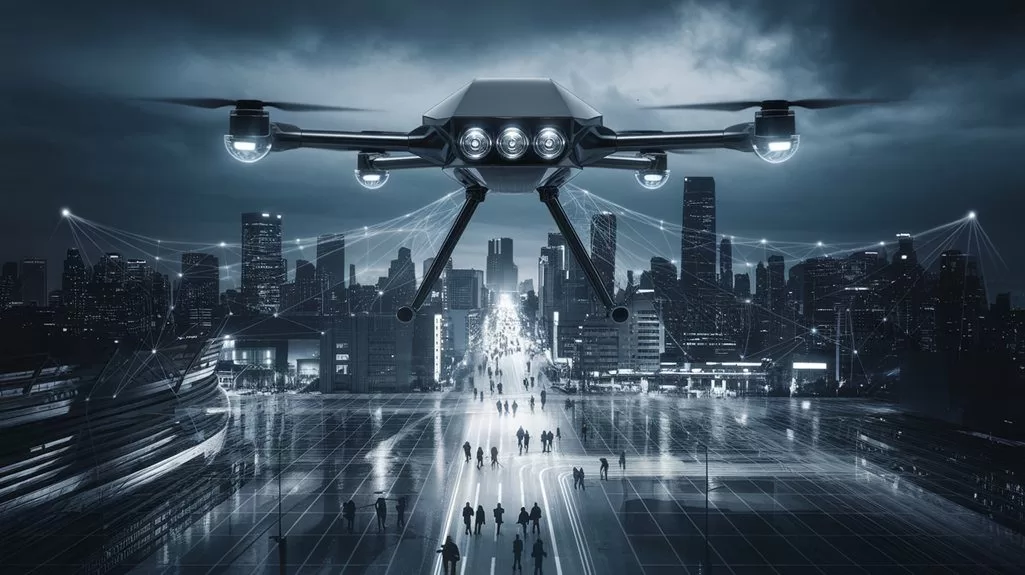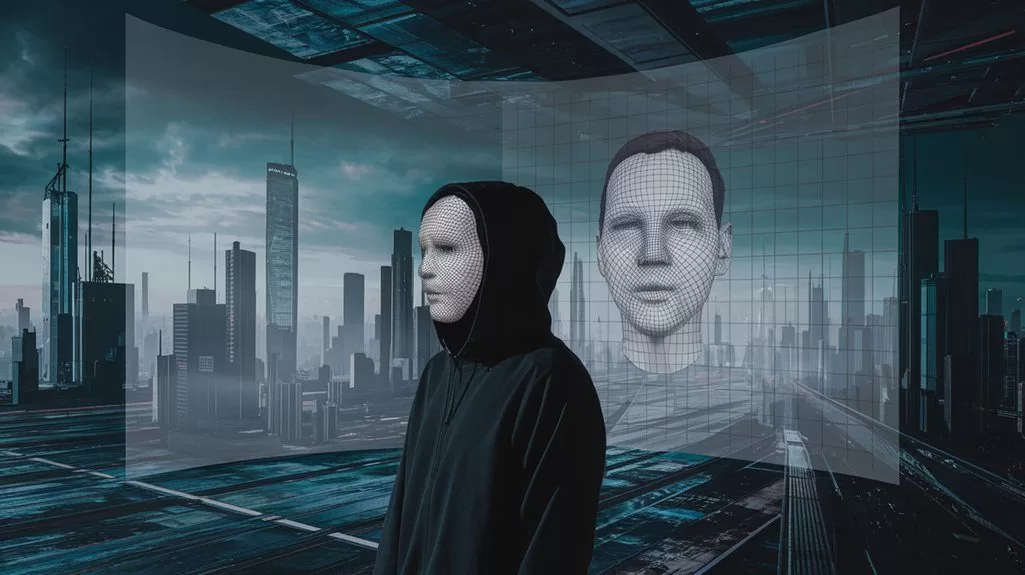


In the epic showdown of AI versus deepfakes, truth is the real casualty. AI breathes life into these eerie digital forgeries, sending shivers down democracy's spine. Detecting them is a high-tech cat-and-mouse game—our best tools struggle like a blindfolded person in a maze. Legal chaos ensues; copyright and free speech tango ungracefully. Society, politics, and international peace hang on balance scales, tipsy. Want to witness the unraveling of reality? Well, here's your ticket.
Key Takeaways
- Deepfakes exploit AI to create realistic digital forgeries, challenging our ability to discern truth in media.
- AI detection tools struggle to keep up with rapidly advancing deepfake creation techniques, complicating identification efforts.
- The legal landscape for deepfakes is complex, with First Amendment issues and ethical concerns about societal disruption.
- Deepfakes pose significant risks, including political instability and eroding public trust in digital content.
- Global cooperation and advanced AI solutions are essential to effectively combat the challenges posed by deepfakes.
While the digital age ushers in remarkable advancements, it also invites its own chaos—enter deepfakes. These clever digital forgeries, birthed from sophisticated AI algorithms, are the epitome of modern-day trickery. They can manipulate video data so convincingly that the line between reality and fiction blurs. It's the stuff of science fiction, but unfortunately, it's all too real. Deepfakes have facilitated social engineering attacks and financial fraud, leading to significant losses.
Detection techniques are constantly playing catch-up. AI tools, used to identify deepfakes, often lag behind their crafty counterparts. They rely on spotting inconsistencies invisible to the naked eye—like resolution hiccups in composite images. But even the best AI detection can't fully outsmart these digital chameleons. The truth? Humans still need to verify. Yes, humans. The same species that created this lovely mess. Legal frameworks potentially applicable to deepfakes include copyright and various torts, though First Amendment protections and the fair use doctrine complicate the legal landscape. The potential for deepfakes to cause political unrest and damage reputations is vast, underscoring the urgency for effective legal interventions.
Detection tools lag, humans verify; the creators of the chaos must now discern truth from deception.
Meanwhile, the ethical implications run deep. Is it just harmless fun, or does it tread into dangerous territory? Deepfakes have the potential to disrupt society and politics. Imagine a deepfake video released during an election campaign. It could alter perceptions, sway votes, and cause political mayhem. Election manipulation is a real concern, and deepfakes are the perfect tool for digital deception. Trust in digital media? Rapidly eroding. Thanks, deepfakes.
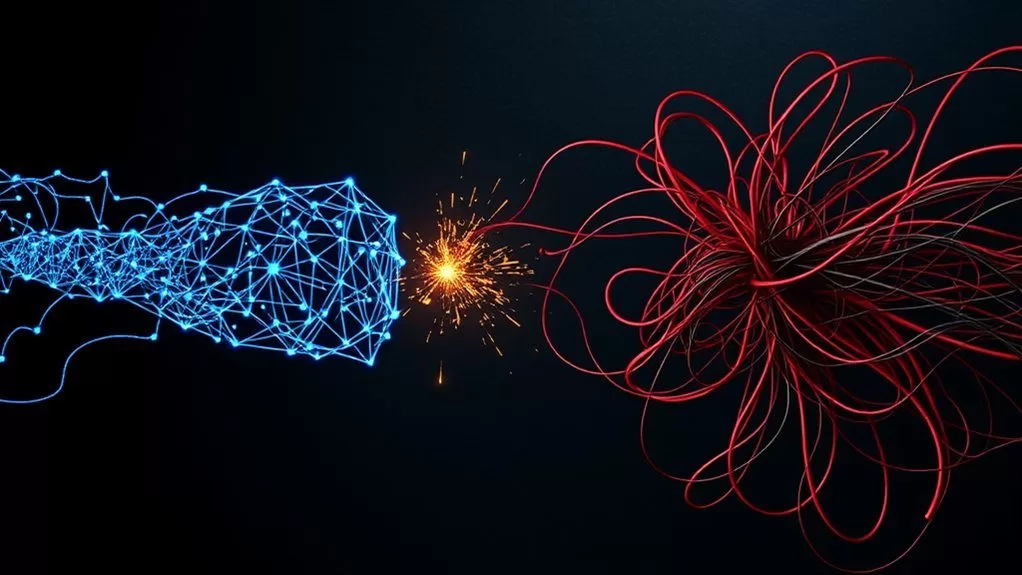
Yet, the battle isn't one-sided. AI, the same tech that crafts these fakes, is also key to their undoing. It's a paradox, really. AI versus AI. The continuous technological duel rages on as researchers, including those at DARPA, scramble to develop more effective detection tools. But let's face it: as deepfakes become more realistic, detecting them becomes a monumental task.
The societal implications extend beyond politics. Security risks loom large. Imagine deepfakes creating false scenarios that spark international tension. Scary thought, right? It's not just about making Nicolas Cage the star of every movie ever. The stakes are much higher.
Legal and regulatory frameworks? Playing catch-up, too. Current laws are like trying to catch a cheetah with a bicycle. The European Union and others are inching toward regulations, but it's a slow process. Global cooperation is essential, yet as elusive as a deepfake-free internet.
In this tangled web of technology, ethics, and law, one thing is clear: deepfakes are here to stay. And while AI continues its Sisyphean task of detection, the rest of us are left to ponder the enduring question—what's real and what's not? It's an existential crisis for the digital age, served with a side of skepticism.
References
- https://www.brookings.edu/articles/artificial-intelligence-deepfakes-and-the-uncertain-future-of-truth/
- https://cdotimes.com/2024/08/27/deepfakes-and-digital-deception-the-growing-threat-to-truth-and-how-to-protect-ourselves/
- https://buffett.northwestern.edu/documents/buffett-brief_the-rise-of-ai-and-deepfake-technology.pdf
- https://www.rand.org/pubs/perspectives/PEA1043-1.html
- https://www.fairfaxcounty.gov/familyservices/older-adults/golden-gazette/2024-03-artificial-intelligence-and-deepfake-videos-what-you-need-to-know