


Avoiding threat response automation can be risky and harmful to cyberattack prevention. It is essential to understand the significance of human oversight and integrated machine learning. Here are the key points: https://learn.microsoft.com/en-us/azure/sentinel/automation/automate-responses-with-playbooks.
Key Takeaways
- Excessive reliance on automation can overlook advanced threats and lead to false negatives or undervalued risks.
- Solely using automation can create a false sense of security and increase risk of serious breaches.
- Automation can generate excessive noise, leading to alert fatigue and missed real threats.
- Human oversight is crucial for contextual understanding and adapting to dynamic threats.
- Integrating human judgment with automation ensures more effective and context-based threat response strategies.
Avoiding Automation: Why It Matters
As we explore the dynamics of threat response automation, we must first examine the implications of avoiding automation in our incident detection and response strategies. Not embracing automation can lead to significant inefficiencies, causing our security analysts to spend valuable time on manual processes. This is particularly concerning given the rapidly evolving nature of cybersecurity threats.
Manual triage and alert prioritization, for instance, can consume considerable time without automation. By relying solely on human analysis, we risk falling behind and exposing our organizations to potential security breaches. Automation tools, bolstered by machine learning capabilities, provide the much-needed speed and accuracy to counteract these threats effectively.
Moreover, avoiding automation means we may overlook the opportunity to free up analysts for critical thinking and in-depth analysis, key elements of incident response. By leveraging automation, we can streamline our response strategies, minimizing the risk of human error and fostering a more robust cybersecurity posture.
The Importance of Human Oversight
As we explore the concept of avoiding threat response automation, we recognize that human oversight plays a critical role in ensuring the effectiveness of automated actions.
The nuances of threat response require human intuition and adaptability, which automation alone may not fully capture.
Contextual Analysis
We rely on human supervision in threat response to provide contextual analysis and adaptability that automation can't replicate, guaranteeing that responses are aligned with organizational goals and risk tolerance levels. As we navigate the complexities of threat response, we mustn't underestimate the significance of human knowledge and expertise.
Contextual analysis demands critical thinking and critical assessment of subtle information that automation sometimes overlooks.
Furthermore, it's essential to acknowledge that relying solely on automation can lead to false positives or the undervaluation of genuine threats. Human supervision ensures that responses are tailored to the specific context and the unique properties of each threat. This thoughtful approach is more effective at preventing costly errors and unintentional consequences.
As we move forward in enhancing threat response, embracing the blend of AI capabilities and human expertise will be vital for optimal performance.
Human Innovation
In leveraging human innovation, we strengthen cyber defense by bringing expertise and situational awareness to the forefront of incident response strategies. This proves essential in countering sophisticated threats that often evade automated detection methods.
Human intuition and creativity play a pivotal role in identifying subtle patterns and understanding the motivations behind cyber attacks, which AI systems may overlook or misinterpret.
Automation can enhance efficiency, but it can't replace the human ability to contextualize and adapt to unique situations. By combining human oversight with automation, we achieve a more thorough and effective threat response. This balanced approach guarantees that critical decisions are made based on context, business risk, and situational awareness, which AI alone can't replicate.
The Equifax data breach serves as a stark reminder of the significance of human oversight in detecting and mitigating cyber threats that automated systems may miss.
Overreliance Risks: False Positives and Negatives

As we continue to explore the pitfalls of overreliance on threat response automation, let's examine the critical risks associated with it. Concerns arise when automation leads to false positives, where benign activities are misclassified as threats, and false negatives, where actual threats go undetected.
We must consider how base rate fallacy, noise generation, and alert overload contribute to these issues, undermining the effectiveness of threat response systems.
Base Rate Fallacy
The base rate fallacy can manifest in threat response automation, where false positives and false negatives arise from the automated systems' inability to accurately assess threats, ultimately leading to significant security breaches and organizational vulnerabilities. This phenomenon is particularly concerning as it leads to both overreliance and under-reliance on automated systems.
| Effect | Impact |
|---|---|
| False Positives | Overwhelm security teams with irrelevant alerts, causing them to miss real threats. |
| False Negatives | Allow significant security breaches to go unnoticed. |
| Base Rate Fallacy | Misclassify threats based on insufficient context, leading to overreliance or under-reliance on automation. |
| Human Oversight | Essential to mitigate the risks of base rate fallacy by providing context and validation. |
| Balanced Approach | Combining automation with human oversight is necessary for effective threat response.
Noise Generation
We can't emphasize enough the need to address noise generation, particularly the dual risks of false positives and negatives, in our threat response automation. Overreliance on automated systems can lead to increased noise production, which can be detrimental to our security strategy.
False positives, which are mislabeled security alerts indicating threats where none exist, can overwhelm our security teams with irrelevant alerts, diverting attention away from real threats. False negatives, on the other hand, can result in critical threats going undetected and unaddressed.
This highlights the importance of balancing automation with human oversight to effectively manage noise production. Implementing measures to reduce false positives and negatives, such as tuning algorithms and regularly reviewing automated processes, is essential for an effective security strategy.
We must recognize that no system can guarantee 100% accuracy and must rely on a combination of technology and human expertise to mitigate potential risks. By doing so, we can ensure that our security structures are robust and capable of detecting and responding to real threats without being overwhelmed by unnecessary alerts.
Alert Overload
Automated threat response systems can overwhelm us by providing a surge in alerts when we least expect it, resulting in alert overload that threatens to undermine our effectiveness. When we rely too heavily on these systems, we risk being besieged by a deluge of alerts, many of which might be harmless. This furthers the risk of two significant pitfalls: false positives and false negatives.
False positives involve the system flagging benign activities as threats, wasting our time and resources investigating non-existent threats. Conversely, false negatives are even more dangerous, as genuine threats go undetected, leaving us exposed to significant security breaches.
Additionally, the sheer volume of alerts can cause alert fatigue, making us less responsive to critical threats. What's needed is balance – a blend of automation with human oversight to mitigate these risks and guarantee that our defenses stay robust.
With human analysts overseeing automated systems, we can better distinguish between genuine and false alarms, making sure that we address the most severe threats quickly and efficiently. In the end, the key isn't to reject automation, but to use it wisely, integrating it with the knowledge and expertise of humans.
The Role of Human Judgment
By leveraging the strengths of both human judgment and automation, our cybersecurity strategies can adapt more effectively to the complexity and nuance of evolving threats.
We must recognize that human judgment is essential in interpreting complex and nuanced cybersecurity threats. Automation, while efficient, can lack the contextual understanding and adaptability that human experts bring to incident response.
Cyber threats often require human intuition to identify patterns and anomalies that automated systems may overlook. These are the subtle details that can make all the difference between a successful response and a devastating breach.
Human oversight is pivotal for making critical decisions based on business risk and environmental context. It helps us assess the intent and motivations behind potential threats, making it harder for attackers to remain undetected.
Balancing automation with human judgment ensures a more inclusive and effective approach to threat response. Our goal should be to guarantee harmony between these two elements, utilizing each where they excel the most.
Balancing Automation and Human Response
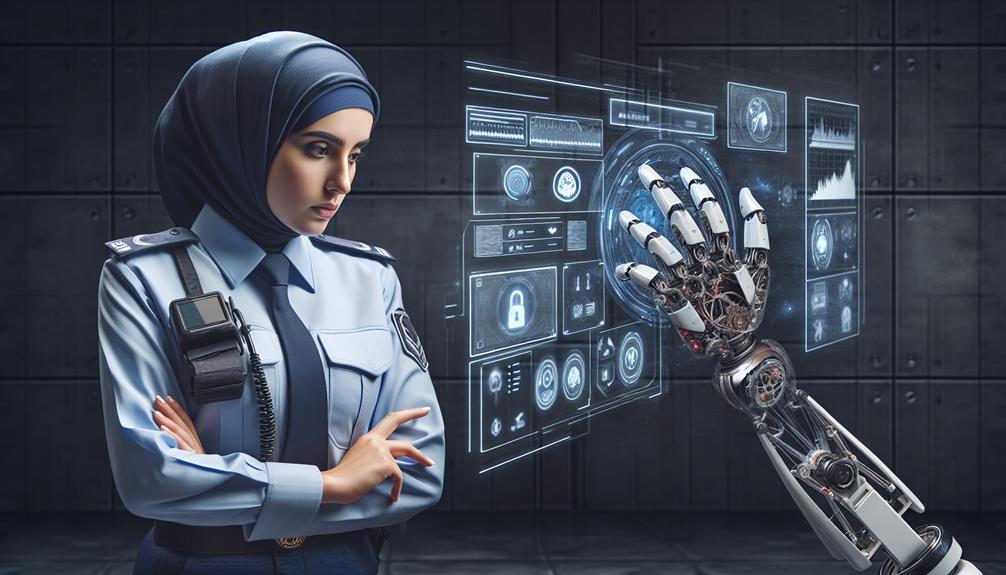
In a comprehensive cybersecurity framework, prioritizing the balance between automation and human response optimizes incident resolution efficiency. This synergy guarantees that threat detection and response are both timely and effective.
Automation processes data quickly, aiding in the identification and prioritization of security incidents. However, it's equally essential to have human oversight providing context, intuition, and adaptability in threat response, as human judgment can often spot false positives and unforeseen threats.
Key considerations for balancing automation and human response include:
- Integration: Effective integration of humans and automation enhances response capabilities and reduces response times.
- Review and Adjustment: Regular review and adjustment of the automation-human balance is vital for maintaining a robust cybersecurity posture.
- Contextual Supervision: Human analysts provide critical context and supervision to ensure that automation processes align with threat intelligence and security requirements.
- Process optimization: Automation can optimize repetitive tasks, freeing up security teams to focus on high-value tasks and strategic decision-making.
Integrating Automation and Human Insight
We integrate automation and human insight by leveraging the strengths of both components to guarantee timely and effective threat response, as demonstrated by the lessons learned from the Equifax data breach. This synergy allows us to bolster data security by combining the efficiency of automation with the adaptability and critical thinking of human experts.
In industrial cybersecurity, security orchestration becomes more effective when humans can review and contextualize automated alerts and responses. By balancing automation with human oversight, we improve response accuracy and reduce the risk of overlooking vital details.
In the face of evolving security risks, it's essential to integrate human judgment with automation to ensure a thorough defense strategy. This hybrid approach expedites threat detection and response times while maintaining the nuance and understanding needed to address complex threats.
It's clear that an effective threat response can't solely rely on automation; it's our responsibility to guarantee that the integration of human insight and automation remains a cornerstone of our data security framework.
Effective Incident Response Strategies

Effective incident response strategies involve leveraging automation for efficient threat detection. This is complemented by harnessing human expertise to make informed decisions and adapt to complex threats. By combining these elements, we can enhance our response to cybersecurity incidents while minimizing risks.
Here are the key aspects of effective incident response strategies:
- Balanced Automation: Automation accelerates threat detection and response by handling repetitive tasks. This frees up analysts to focus on critical thinking and analysis.
- Human Oversight: Human analysts bring contextual understanding and business risk awareness to incident response. This ensures informed decisions and effective threat mitigation.
- Efficient Response: A balanced approach results in improved efficiency and reduced response times. This allows us to respond to incidents more swiftly and effectively.
- Adaptability: Human expertise is pivotal for adapting to dynamic, complex threats. This requires nuanced and strategic decision-making.
Avoiding the False Sense of Security
While relying solely on threat response automation can speed up detection, it also poses the risk of creating a false sense of security by overlooking the need for human oversight. This approach assumes that automation can smoothly handle all threats, leading to a dangerous complacency. In reality, automation can lead to missed nuances and subtle indicators of advanced threats, creating gaps in our security defenses.
We must integrate human oversight with automation to mitigate the risks of false positives and negatives. Human experts provide critical intuition and adaptability that automation may lack. They can assess the risk and importance of a particular alert and differentiate between genuine threats and benign activities. Moreover, human oversight ensures that threat response strategies remain proactive rather than solely reactive.
Avoiding the pitfalls of overreliance on automation safeguards our threat response effectiveness. As seen in the Equifax data breach, the consequences of relying solely on automation can be catastrophic. By balancing technology with human expertise, we greatly enhance our ability to respond to threats effectively.
Frequently Asked Questions
What Are the Risks of Automation in Security?
We risk overreliance on automation leading to false positives, negating significant human context, and increasing false negatives.
Does Automation Reduce Risk?
We agree that automation can reduce risk by enhancing cyber attack prevention, streamlining manual threat response, and minimizing human error. This approach fosters timely security breach detection, ensuring a focused response to emerging threats.
What Is Risk Avoidance in Cyber Security?
"We adopt risk avoidance in cybersecurity by skipping risky technologies and activities to prevent threats. This approach focuses on avoidance rather than mitigation, ensuring we don't compromise on our robust security measures, proactive threat prevention, and swift incident response to safeguard our digital assets."
What Are the Three Types of Approaches to Cybersecurity Risk?
We employ three types of approaches to cybersecurity risk: risk aversion by avoiding activities with high risks, risk acceptance by acknowledging but not acting on them, and risk mitigation, which involves preventive measures and proactive defense to reduce and manage potential threats.