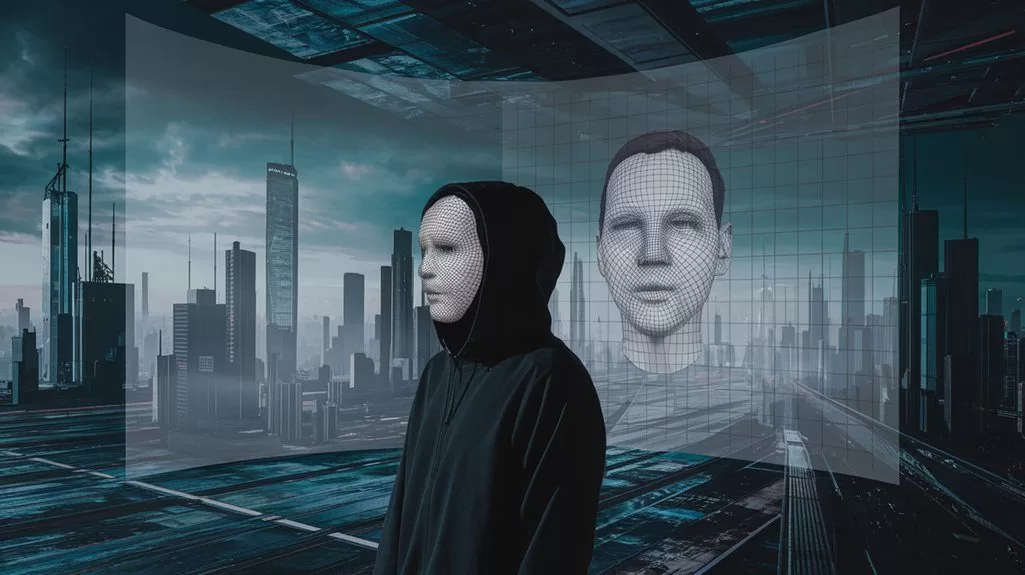


Bengaluru's AI surveillance is both a boon and a bane. Over 7,000 cameras aim to boost safety, lowering police response time and curbing traffic violations. Yet, they also watch your every move, possibly eyeing your class or caste, and who likes being profiled? The project's noble intentions come tangled with privacy nightmares. And no, you're not paranoid. The absence of legal safeguards could lead to misuse, leaving civil liberties dangling. Curious for more?
Key Takeaways
- Bengaluru's AI cameras have a 97% accuracy rate in detecting traffic violations, enhancing road safety.
- Over 7,000 AI cameras aim to reduce police response times but raise significant privacy concerns.
- Facial recognition technology risks profiling citizens based on caste and class, prompting ethical concerns.
- The lack of a robust legal and regulatory framework threatens to misuse surveillance data.
- Public opinion is divided, with some valuing safety improvements and others fearing privacy infringements.
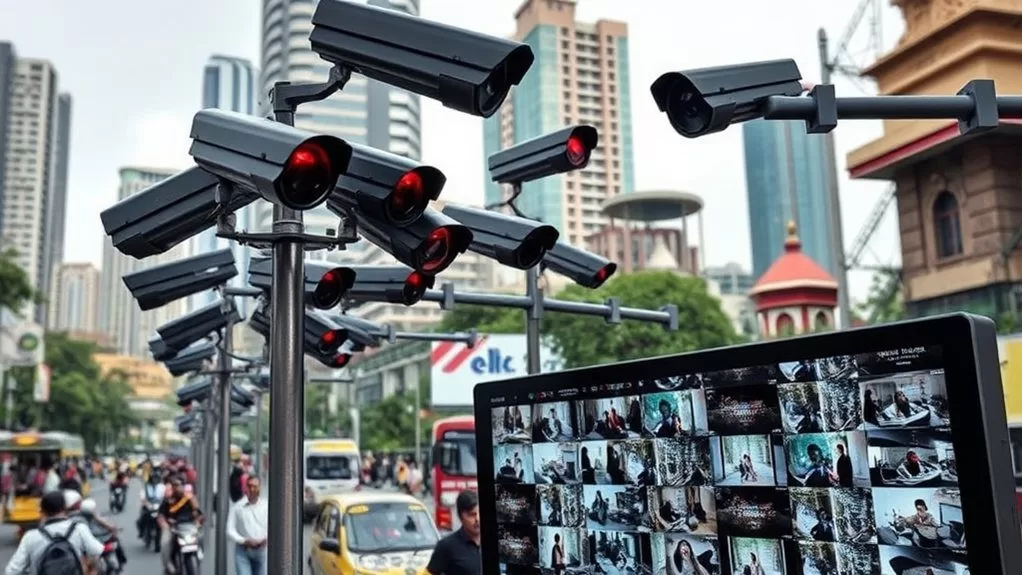
Is Bengaluru's AI surveillance a beacon of safety or a privacy invasion waiting to happen? This question resonates across the city as over 7,000 AI cameras, under the Safe City project, scrutinize every corner. While the system promises enhanced safety, detecting significant incidents and reducing police response times, it also whispers privacy concerns in the ears of many.
AI Ethics and Data Transparency are words not to be taken lightly here. With AI-powered cameras detecting traffic violations with 97% accuracy, the city's roads have never been safer—at least in theory. But this comes at a cost. The cost of privacy. Facial recognition technology is the elephant in the room, raising eyebrows and questions about profiling based on caste and class. Activists and privacy experts argue that it sets a dangerous precedent. China's exports of surveillance technology to countries with lower political rights scores highlight the potential global risks of such technology when misused.
AI-powered cameras increase safety but at the cost of privacy, posing profiling risks with facial recognition technology.
Sure, the AI-driven traffic signals optimizing flow seem like a dream come true. But what about the nightmare of a 'blacklist library' tracking individuals based on past records? It's like a never-ending episode of Big Brother, only without commercial breaks. The city is already under the watchful gaze of over 2 lakh CCTV cameras. An ethical framework is desperately needed to balance privacy rights with these surveillance benefits. Facial recognition technology must also adhere to rigorous audits to minimize biases and uphold ethical standards.
Otherwise, it's a slippery slope to a dystopian reality. The technological capabilities are impressive, no doubt. AI cameras analyze vehicle numbers, track individuals using clothing or vehicle types, and even detect waterlogged areas. A marvel of modern tech, indeed. But the system's ability to integrate body-worn cameras for real-time monitoring is chilling. With over 4,100 video cameras installed across Bengaluru, the extensive reach of this surveillance system is a testament to its technological drive, yet it raises critical questions about the boundaries of privacy.
Yes, it aids in quick tracking of missing people and criminals. But at what cost? The sheer volume of data collected demands clarity. Clear-cut, no-nonsense data transparency. Implementation is well underway, with Phase 1 already seeing 4,100 cameras installed. Phase 2 promises more, with drones and safety islands thrown into the mix. Funded under the Nirbhaya Scheme, the intentions seem noble.
But one has to wonder, are there enough legal and regulatory frameworks to prevent potential abuses? A clearly defined 'blacklist library' is essential to guarantee citizens' rights aren't trampled. Legal measures must guarantee transparency in data collection and usage. Without it, civil liberties hang by a thread.
Public opinion is as divided as the city's infamous potholes. While some celebrate reduced traffic violations, others fear the looming shadow of surveillance. A reduction in traffic violations is commendable, but is it worth the potential profiling through facial recognition? Only time will tell.
References
- https://indianexpress.com/article/technology/techook/bengaluru-gets-over-7000-video-cameras-safe-city-projects-8524911/
- https://thebulletin.org/2024/06/how-ai-surveillance-threatens-democracy-everywhere/
- https://www.businessinsider.in/tech/news/hopping-signals-or-using-phones-when-cops-arent-there-youre-still-going-to-get-instant-fined-thanks-to-bengalurus-new-ai-cameras/articleshow/113733172.cms
- https://www.mdpi.com/1999-5903/8/3/44
- https://www.thenewsminute.com/karnataka/bengaluru-ss-new-surveillance-plan-will-match-faces-cctv-visuals-cop-database-173521