

Machine learning greatly boosts AI camera systems for school safety by enabling proactive threat detection through real-time monitoring and facial recognition, enhancing access control and identifying unusual behavior to trigger immediate alerts. ML algorithms analyze patterns and features in surveillance footage, distinguishing between regular and suspicious items, and continuously learn to improve threat detection accuracy. This proactive method guarantees a secure learning environment and enhances emergency response strategies. With real-time threat analysis and anomaly detection, systems notify security teams promptly, allowing for swift intervention. If you’re interested in learning more about how these systems operate and their advantages, you’ll find detailed insights ahead.
Key Takeaways
- Proactive Threat Detection: Machine learning algorithms enable AI cameras to identify and alert security teams to potential threats in real-time, enhancing school safety.
- Real-Time Surveillance and Anomaly Detection: ML-driven systems continuously monitor video feeds, detecting unusual behavior and triggering alerts for immediate intervention.
- Enhanced Object and Facial Recognition: AI camera systems with ML improve object recognition, facilitating better access control and threat identification through advanced facial recognition and behavior analysis.
- Predictive Analytics and Incident Prevention: By analyzing historical data, ML algorithms help predict and prevent incidents, allowing schools to take proactive measures to address vulnerabilities.
- Continuous Learning and Adaptation: Machine learning ensures AI camera systems continuously learn and adapt, maintaining effectiveness against new threats and improving overall security measures over time.
AI and ML Integration
When it comes to enhancing school safety, the integration of artificial intelligence (AI) and machine learning (ML) in camera systems is a game-changer. This integration transforms traditional reactive security measures into proactive safety strategies, greatly improving student and staff protection.
By analyzing vast amounts of data, ML algorithms enable AI camera systems to detect potential threats proactively. This capability allows for real-time monitoring, facial recognition, and the detection of unauthorized access, ensuring robust access control and intrusion detection. Additionally, systems like the GW Security 15 Channel 4K NVR utilize POE technology for efficient power and data transmission, which simplifies installation and maintenance.
The integration of ML into AI camera systems leverages historical data and identifies patterns that indicate potential risks. This predictive analytics capability helps in preventing incidents before they occur.
For instance, ML can flag unusual behavior or detect anomalies, such as unauthorized gatherings or suspicious activities, and trigger immediate alerts to security personnel.
Proactive Threat Detection
As I explore the role of machine learning in AI camera systems for school safety, it becomes clear that proactive threat detection is a cornerstone of these advanced security measures. Machine learning algorithms enable these systems to analyze patterns and anomalies in real-time, identifying potential threats before they escalate into incidents.
Real-Time Threat Analysis
Machine learning significantly enhances AI camera systems by enabling real-time threat analysis, a vital aspect of proactive threat detection in school safety. AI-powered cameras can analyze video feeds in real time, identifying anomalies like unauthorized access or suspicious behaviors. This proactive approach allows for immediate alerts and swift responses to security incidents, guaranteeing that threats are mitigated before they escalate.
Through real-time threat analysis, machine learning models continuously learn and adapt to new patterns, enhancing threat detection accuracy over time. This capability is essential for improving school safety measures, as it enables security personnel to react promptly to potential threats. By providing actionable insights, these systems help school administrators develop proactive security planning strategies, concentrating resources on high-risk areas and times.
The integration of AI and machine learning in school security systems transforms traditional surveillance into a potent tool for real-time threat detection. This technology ensures that security personnel are always alert and ready to respond, minimizing the risk of security breaches and creating a safer environment for students and staff.
Anomaly Detection Systems
Anomaly detection systems, powered by machine learning, enhance school safety by identifying potential threats long before they materialize. These systems analyze vast amounts of data in real time, enabling proactive threat detection and early threat identification.
By continuously monitoring video feeds and other data sources, machine learning algorithms learn from historical data to recognize normal patterns and flag deviations that could indicate unauthorized access, suspicious behavior, or potential threats.
This real-time monitoring allows schools to take immediate action to mitigate risks, guaranteeing a secure learning environment. When anomalies are detected, automated alerts are triggered, enabling swift responses from security personnel.
The integration of machine learning in AI camera systems revolutionizes school safety by providing thorough anomaly detection capabilities. This proactive approach prevents incidents from escalating, allowing for timely interventions that safeguard students and staff.
Real-Time Surveillance
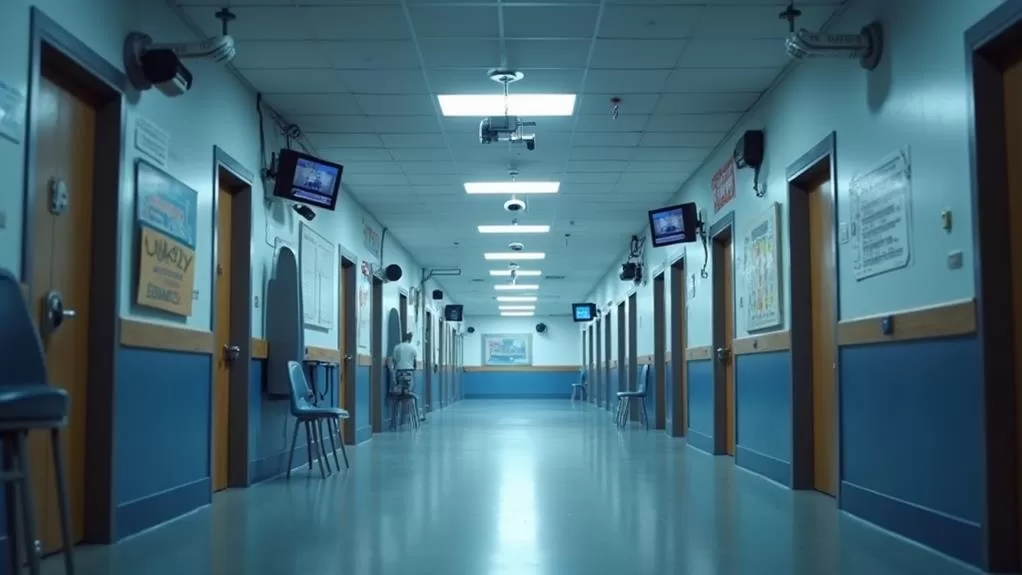
Real-time monitoring is a cornerstone of modern school safety, and AI camera systems equipped with machine-learning algorithms are at the forefront of this innovation. These systems enable continuous checking of video feeds, analyzing them for potential threats and irregularities in real time. By leveraging machine learning, AI camera systems can detect unauthorized access, suspicious behavior, and other potential threats instantly, greatly enhancing school safety measures. For instance, motion detection and smart alerts can automatically notify security teams of unusual activity. Additionally, these systems often feature weatherproof metal housing, ensuring dependable performance in various conditions.
One key benefit of real-time monitoring powered by machine learning is its ability to provide immediate alerts to security personnel. This swift notification system guarantees prompt response to potential incidents, preventing them from escalating.
The proactive approach facilitated by machine learning enhances overall security by identifying irregularities and triggering automated alerts. This ensures that security teams can focus on genuine threats rather than false alarms.
In practice, AI camera systems with machine learning capabilities offer advanced security features that are important for maintaining a safe environment. These features include anomaly detection and automated alerts, which together contribute to a more efficient and responsive security framework. By integrating these technologies, schools can achieve a higher level of safety, ensuring the well-being of students and staff through proactive and reliable monitoring.
Automated Emergency Protocols
Automated emergency protocols are a vital component of modern school safety, and AI camera systems equipped with machine-learning algorithms are revolutionizing this aspect. These systems can automate emergency protocols by detecting potential threats and triggering immediate responses, greatly enhancing school safety.
By analyzing patterns in data, machine learning algorithms can identify emergencies like fights, intruders, or weapons, enabling proactive security measures. These advanced AI camera systems can learn from past incidents to improve emergency response strategies and minimize risks to students and staff. This capability allows for more effective and rapid intervention in critical situations, reducing response times and ensuring that help arrives swiftly.
For example, if an AI camera system detects unusual crowd behavior or recognizes a weapon, it can instantly alert school authorities and emergency services, facilitating quick and targeted responses. Additionally, features like Smart AI Human Detection can markedly reduce false alarms, ensuring that only genuine threats are prioritized.
AI camera systems integrate machine learning capabilities and provide real-time alerts and notifications, which are vital for effective emergency management in schools. This proactive approach to school safety ensures that potential threats are identified and addressed promptly, creating a safer environment for everyone. By leveraging machine learning, schools can enhance their emergency preparedness and response, making their environments more secure and resilient.
Enhanced Object Recognition
As we observed with automated emergency protocols, AI camera systems equipped with machine learning algorithms are greatly improving school safety. One key advancement is enhanced object recognition, which greatly enhances the ability of these systems to detect and classify potential threats.
Machine learning improves object recognition by training algorithms to identify specific objects like weapons, bags, or suspicious items. These algorithms analyze patterns and features of objects in surveillance footage, enabling AI cameras to distinguish between normal and suspicious items with high accuracy. This real-time threat detection capability is essential for school safety, allowing for proactive threat detection and rapid response to security incidents.
Moreover, machine learning algorithms continuously learn and adapt to new objects and scenarios, enhancing the overall effectiveness of AI camera systems. This adaptive learning guarantees that the systems remain vigilant and effective even as new threats emerge.
Contextual Performance Considerations
When implementing AI camera systems for school safety, I consider two critical factors: contextual data quality and infrastructure dependence. These systems’ performance can substantially vary based on factors like lighting conditions, angles, and weapon visibility, highlighting the need for diverse and high-quality training data.
Additionally, the effectiveness of these systems relies heavily on existing infrastructure, such as surveillance cameras, and outdated infrastructure can compromise the accuracy and reliability of machine learning algorithms.
Contextual Data Quality
The quality and diversity of the training data greatly influence the performance of AI camera systems in school safety. Machine learning models, which are at the heart of these systems, rely on diverse training data to make accurate predictions and effectively detect threats in various situations.
Training data diversity is essential for guaranteeing reliable AI camera systems. When the training data represents different contexts and populations, it enables the system to recognize and respond to threats across various scenarios.
For example, data collected from urban schools may not accurately predict violence in rural schools, emphasizing the need for diverse training data to cover different environments.
Contextual data quality plays a significant role in the contextual performance of AI systems. High-quality training data that are accurate, complete, and consistent ensures that the system performs well in real-world settings.
Poor training data quality can lead to false positives or false negatives, compromising the effectiveness of the system.
Addressing contextual performance considerations through diverse training data is essential to improving the accuracy and reliability of AI camera systems in schools. This involves guaranteeing that the training data includes a variety of scenarios, lighting conditions, and other environmental factors that the system may encounter in real-life situations.
Infrastructure Dependence
Infrastructure reliance significantly impacts the performance of AI camera systems in schools. These systems, crafted to enhance school safety through advanced threat detection, depend heavily on the quality and upkeep of existing infrastructure, such as surveillance cameras. Outdated setups can compromise the efficiency of AI camera systems, leading to reduced accuracy in identifying potential threats.
Training data diversity is vital for the accurate functioning of these systems, but if the underlying infrastructure isn’t well-maintained, the benefits of diverse training data are diminished. For example, poor lighting conditions, unfavorable camera angles, or obstructed visibility can impede the system’s ability to correctly identify threats, resulting in false positives or false negatives.
Furthermore, the contextual performance of AI camera systems can vary significantly based on the environment in which they’re deployed. For instance, a system trained on data from urban schools may not perform optimally in rural schools due to differences in infrastructure and environmental conditions.
To address these issues, continuous improvement efforts are crucial. This involves regularly updating and maintaining the infrastructure, ensuring that the AI systems are adapted to the specific school environment, and continuously testing and refining the systems to enhance their reliability and effectiveness.
Data Privacy and Security
Maintaining the privacy and security of data collected by AI camera systems is essential for upholding trust in school safety measures. Compliance with privacy regulations such as FERPA is pivotal, as these laws protect sensitive student information and dictate how data can be collected, used, and disclosed.
Encryption protocols are crucial when implementing AI camera systems for school safety. These protocols guarantee the confidentiality of recorded footage and prevent unauthorized access. Secure data handling practices must also be in place, including secure storage solutions and access control measures that limit data exposure and maintain the integrity of the security system.
Ongoing monitoring and audits are necessary to ensure that data privacy and security measures remain updated and effective. This includes regularly updating encryption protocols, conducting security audits, and implementing robust access controls to safeguard sensitive information. By prioritizing these security measures, schools can protect the privacy of both students and staff while maintaining the effectiveness of their AI camera systems for enhanced school safety.
Continuous System Improvement
As we maintain the privacy and security of data collected by AI camera systems, we must also focus on ongoing system enhancement to improve their effectiveness in school safety. This involves continuous testing and refinement to boost accuracy and reliability. It’s vital to address challenges in AI camera systems to guarantee they’re effective, fair, and reliable for school security.
By harnessing the power of machine learning, schools can continually enhance their safety measures and stay ahead of potential threats. AI camera systems need to take into account ethical, legal, and practical implications for enhancement to provide optimal security solutions. Continuous improvement plays an important role in enhancing school safety by adapting to evolving security needs and technological advancements. This ensures that AI camera systems remain effective in detecting and responding to threats in real time.
Regular updates and enhancements also help mitigate any biases or inaccuracies, ensuring that the systems are fair and reliable. By integrating these improvements, schools can ensure that their AI camera systems are always aligned with the highest standards of security and ethical considerations, ultimately contributing to a safer and more secure learning environment.
Frequently Asked Questions
How AI Is Used in Security Cameras?
AI in security cameras uses facial recognition, behavior analysis, and object recognition to detect intrusions and anomalies and assess threats. It employs predictive analytics for proactive security, monitors activities in real time, and sends alerts, enhancing access control and overall safety.
How Does Artificial Intelligence Improve Safety and Security?
Artificial intelligence improves school safety through facial recognition, intruder detection, behavior analysis, and threat assessment. It enhances surveillance monitoring, access control, and risk prevention, predicting incidents and facilitating emergency response with robust data analysis.
How Can AI Be Useful in a School Environment?
In a school environment, AI can be incredibly useful by enabling real-time threat detection, student monitoring, and behavior analysis. It also enhances emergency response with facial recognition, access control, and real-time alerts, providing risk assessment and intruder identification, and ensuring privacy protection.
How Does AI Improve Workplace Safety?
AI improves workplace safety by using predictive analytics to identify risks, monitor behavior, and detect anomalies through video surveillance. It provides real-time alerts, prevents incidents, and enhances threat identification and emergency response, ensuring a safer environment.
Final Thoughts
Machine learning greatly enhances AI camera systems for school safety by enabling proactive threat detection, real-time surveillance, and automated emergency protocols. These systems can learn from data to recognize patterns and anomalies, such as unusual behavior or weapon presence, and alert staff instantly. Continuous improvement through data analysis guarantees these systems remain effective and reliable while respecting privacy and security. This integration of AI and ML creates a safer and more secure learning environment for students and staff.