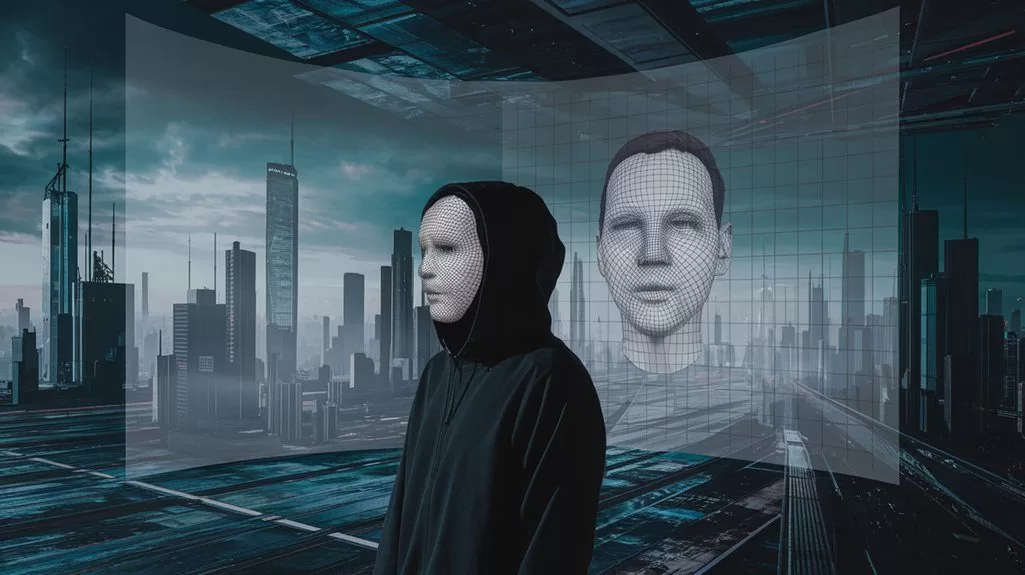


I incorporate AI facial recognition in security systems because it enhances threat detection, incident response, and user experience. Advanced biometric algorithms help accurately identify individuals, even in challenging conditions. Real-time monitoring and tailored alerts enable swift responses to potential security breaches. Additionally, AI facial recognition seamlessly integrates with camera feeds, reducing the risk of false alarms and misuse. By harnessing this technology, I can maximize surveillance efficiency, reduce harm, and address privacy concerns. Looking ahead, I'll discover even more transformative benefits of AI facial recognition in security systems.
Key Takeaways
- AI facial recognition enhances surveillance efficiency with real-time threat detection, swift suspect identification, and minimized false alarms.
- Advanced biometric algorithms and comprehensive surveillance provide improved situational awareness and comprehensive tracking.
- AI-driven facial recognition streamlines access control, automates suspect identification, and enhances user experience.
- Continuous technology evolution ensures improved accuracy and adaptive security response.
- Implementation addresses privacy and bias concerns through diverse training datasets and strict data protection measures.
How Facial Recognition Enhances Security
As a security professional, I understand the importance of enhancing security measures to guarantee a safe environment. Facial recognition technology revolutionizes security by accurately pinpointing individuals based on unique facial features, effortlessly streamlining threat detection, authentication, and situational awareness in real-time.
Through AI facial recognition, we can seamlessly integrate access control systems, providing a high level of certainty that authorized individuals have effortless, touchless entry. This cutting-edge technology detects suspicious individuals and alerts security teams proactively, significantly improving incident response times.
Integrating facial recognition systems into our security infrastructure allows for real-time threat detection, flagging potential threats and ensuring prompt action. In addition, the system enhances monitoring capabilities by tracking individuals across multiple camera feeds, ensuring thorough surveillance coverage.
This advanced technology empowers us to identify individuals with unparalleled accuracy, greatly reducing the risk of security breaches. By incorporating AI facial recognition in our security systems, we can effortlessly balance security with convenience, guaranteeing safer and more secure environments.
Key Features of AI Facial Recognition
Key features of AI facial recognition include advanced biometric algorithms that swiftly analyze facial characteristics, precision-tracking abilities, and seamless integration with various camera feeds for thorough surveillance. As a professional in security systems, I recognize the value of leveraging this technology to enhance public safety.
Facial recognition technology uses artificial intelligence to identify individuals based on their unique facial features, guaranteeing accurate and efficient tracking. This advanced biometric approach notably improves security measures by distinguishing between individuals, even in complex environments.
AI facial recognition provides critical support in law enforcement and customer service applications. It enables quick and reliable identification of suspects, enhances security protocols, and streamlines customer verification processes. The technology is constantly evolving, becoming faster and more adept at recognizing faces in various conditions.
Integrating AI Facial Recognition

When it comes to enhancing public safety and vigilance, utilizing AI facial recognition technology in our security systems emerges as a transformative step. It significantly strengthens our ability to detect and track potential threats in real-time. In fact, the use of facial recognition technology can be particularly valuable in identifying individuals based on unique facial features, allowing for swift action.
- Real-time Threat Detection: Immediately identify suspicious individuals for swift response.
- Streamlined Access Control: Replace traditional methods like keycards or PINs with precise facial verification.
- Tailored Alerts: Improve situational awareness with customized notifications based on predefined criteria.
- Comprehensive Surveillance: Monitor individuals across multiple camera feeds for seamless security monitoring.
As we integrate AI facial recognition into our security systems, we open ourselves to a world of possibilities for enhanced safety and more efficient threat response. The accuracy provided by this technology is undeniable, and its adoption is crucial to staying ahead of potential threats.
Proactive Incident Response
As I explore the role of AI facial recognition in enhancing security systems, I realize that proactive incident response is a critical aspect.
By leveraging real-time detection capabilities, security personnel can immediately respond to potential threats and prevent incidents from escalating.
This targeted response approach greatly mitigates risks and enhances the overall security posture.
Real-Time Detection
Incorporating AI Facial Recognition in Security Systems
With advanced AI facial recognition integrated into security systems, I can identify individuals in real-time, enabling swift intervention and proactive incident response. This cutting-edge technology empowers me to analyze facial features instantly, identify potential threats, and trigger immediate security alerts.
Real-time threat detection:
AI facial recognition enables me to identify individuals instantly, reducing response time to mere seconds.
Proactive incident response:
By rapidly detecting potential threats, I can respond swiftly, preventing security incidents before they escalate.
Enhanced security:
Continuous monitoring and early threat identification guarantee improved security measures to protect individuals and assets.
Improved safety:
Immediate response to security alerts ensures a safer environment for everyone involved.
Real-Time Detection (Proactive Incident Response)
For the best security and response to potential threats, AI facial recognition provides critical real-time detection.
Targeted Response
AI facial recognition enables me to take targeted action by swiftly identifying specific individuals of interest, ensuring a targeted and proactive incident response. This technology allows for real-time detection and response to security breaches, notably reducing the risk of harm. Here are some benefits I see:
| Benefits | Result | Impact |
|---|---|---|
| Identifying Individuals | Accurate and fast identification | Enhances security |
| Potential Threats Detection | Proactive incident response | Reduces risks |
| Tailored Notifications | Customized alerts to relevant teams | Improves situational awareness |
| Real-time Analysis | Swift response to security incidents | Mitigates risks |
| Improved Efficiency | Reduced manual workload | Increases effectiveness |
Incident Mitigation
With the ability to analyze live video feeds in real-time, AI facial recognition empowers incident mitigation by detecting and flagging suspicious individuals, allowing for immediate action to prevent security incidents. This proactive approach enhances overall security by identifying and addressing potential threats before they escalate. Consequently, it guarantees the safety of people and assets by rapidly responding to unauthorized activities.
Immediate Action: AI facial recognition continuous analysis of video feeds enables quick response to suspected threats, enhancing incident response capabilities.
Improved Security: By integrating facial recognition into access control systems, only authorized personnel can enter restricted areas, reducing risks of unauthorized access.
Real-time Notifications: Predefined criteria generate alerts to ensure situational awareness and expedite targeted security responses.
Thorough Surveillance: Multiple camera feeds are tracked to guarantee effective incident mitigation and provide comprehensive coverage of monitored areas.
Accuracy in Threat Detection

Facial recognition technology, when integrated into security systems, greatly enhances threat detection accuracy by leveraging advanced algorithms that identify individuals based on unique facial features. This incorporation is responsible for a significant reduction in false alarms, resulting in more effective security responses.
Advanced algorithms and machine learning models can detect and analyze numerous facial features that are more accurate and less prone to errors compared to traditional methods. These features include the distance between the eyes, shape of the jawline, nose size, and other facial landmarks that, when combined, uniquely identify a person.
The high accuracy of facial recognition systems in security applications is critical for minimizing false alarms and ensuring that safety measures are deployed only when necessary.
Surveillance and Monitoring Benefits
Incorporating AI facial recognition into security systems has revolutionized real-time monitoring, enabling the swift identification and tracking of individuals in crowded or sensitive areas. This technology enhances security efficiency by providing extensive surveillance coverage and improving situational awareness.
Real-Time Monitoring
When you integrate AI facial recognition into your security systems, you gain the ability to continuously analyze live video feeds, ensuring swift and effective responses to potential threats. This constant scrutiny enables you to enhance your surveillance capabilities, ensuring that no unwanted activity goes unnoticed.
Using real-time monitoring, security cameras fitted with facial recognition software can provide an added layer of security by identifying known individuals in monitored areas and alerting security personnel instantly.
- Instant Alerts: Receive immediate notifications in case of security breaches.
- Enhanced Situational Awareness: Constantly monitor and respond to potential threats.
- Proactive Responses: Take swift action against detected threats.
- Improved Efficiency: Boost overall surveillance efficiency with AI-powered facial recognition.
Security Efficiency
By leveraging AI facial identification in real-time surveillance, we can greatly enhance the efficiency and effectiveness of our security measures. This technology continuously scans and analyzes live video feeds, providing extensive surveillance coverage and real-time threat detection. With AI facial identification, we can efficiently identify and track individuals across multiple camera feeds, significantly improving situational awareness and monitoring capabilities.
One of the key benefits of AI facial identification is that it minimizes false alarms and enhances identification accuracy, even in challenging conditions. This not only improves security efficiency but also reduces the risk of unauthorized access.
Additionally, AI facial identification simplifies access control and authentication by eliminating the need for traditional methods like keycards or PINs. Instead, we can use facial identification to grant secure access to restricted areas, making our security protocols more streamlined and efficient.
Addressing Privacy and Bias Concerns

To mitigate the risks inherent in AI facial recognition, developers and users must prioritize addressing both privacy concerns and bias issues in these systems to guarantee fair and responsible implementation.
- Implementing strict data protection measures, like robust encryption protocols, safeguards against the misuse of personal data.
- Ensuring diverse and representative training datasets, along with algorithm adjustments, helps minimize bias and promote accurate identification.
- Transparency in AI facial recognition algorithms is essential for understanding decision-making processes and maintaining accountability.
- Continuous monitoring and auditing of these systems help identify and rectify any biases or privacy breaches, maintaining user trust and regulatory compliance.
Maximizing User Experience
Implementing AI facial recognition in security systems empowers users with a seamless and modern authentication experience, ensuring control over their security processes. This innovative technology streamlines access control by leveraging facial recognition data, eliminating the need for traditional security measures like passwords and tokens.
Facial recognition in security systems is particularly effective for user authentication, offering a highly efficient and convenient experience. The incorporation of AI facial recognition enhances user experience by providing seamless authentication, which reduces wait times and improves overall satisfaction.
Additionally, these modern security protocols are designed to be user-friendly, minimizing manual inputs and ensuring that users can effortlessly access systems and resources. This approach not only boosts efficiency but also equips users with a sense of control and security.
Frequently Asked Questions
Why Is Facial Recognition Good for Security?
I choose facial recognition for security because it gives me improved accuracy, enhanced security, and faster response times. With seamless integration, advanced analytics, and proactive monitoring, I reduce human error and get real-time alerts, ensuring the highest level of control.
How Is AI Used in Image and Facial Recognition in Security Systems?
I use AI in facial recognition systems for enhanced security and efficiency. By leveraging machine learning algorithms, I improve accuracy rates and reduce false positives while addressing privacy concerns and ethical issues in surveillance technology, ensuring responsible biometric authentication and data protection.
How Is AI Used in Security Systems?
"I leverage AI in security systems for enhanced surveillance, access control, and real-time threat detection, ensuring data accuracy and privacy. Facial recognition integrates with biometric databases, minimizing false alarms and securing environments efficiently."
What Happens When Security Cameras Are Combined With Facial Recognition?
When I combine security cameras with facial recognition, I achieve heightened accuracy, enhancing surveillance to identify individuals in real-time. This advanced monitoring method enhances security and streamlines operations while reducing crime and providing real-time alerts.