


Facial recognition technology greatly enhances surveillance efficiency by facilitating quick suspect identification and streamlining investigation processes. It plays a key role in modern surveillance by identifying individuals on watchlists and past investigations, enhancing policing operations and community safety. South Wales Police, for example, reported significant savings in officer hours. However, ethical concerns surrounding potential misuses and biases require careful oversight and regulation. How can we balance these benefits with the need for fairness and accountability?
Key Takeaways
- Facial recognition technology enhances surveillance efficiency by efficiently identifying suspects and expediting crime investigations.
- Law enforcement agencies use it for suspect identification at events and public spaces and to save officer hours.
- Accurate facial recognition algorithms enhance surveillance efficiency, as seen in the trials for suspect identification by NIST.
- It accelerates linking suspects and witnesses with evidence and streamlines suspect identification for efficient information search.
- Facial recognition technology provides unique benefits for surveillance by identifying individuals on CCTV footage and enhancing case outcomes.
Facial Recognition Technology's Purpose
Facial recognition technology plays a vital role in modern surveillance. It is primarily used for identifying individuals on watchlists, past investigations, and in live scenarios, enhancing policing operations and community safety.
This processed technology is utilized by law enforcement agencies to identify suspects and complement live as well as operator-initiated recognition, thereby making communities safer.
In the case of South Wales Police, they've reported substantial savings of over 11,000 officer hours annually through retrospective facial recognition, which improves operational efficiency.
Law Enforcement Use Cases
When it comes to law enforcement use cases, facial recognition technology has proven to be a powerful tool in various ways.
For instance, it can be used to identify suspects at events and in public spaces through live facial recognition, enhancing surveillance efficiency to a great extent.
Additionally, retrospective facial recognition has been shown to save thousands of officer hours annually, further streamlining law enforcement operations.
Suspect Identification Tool
By utilizing facial recognition technology, law enforcement agencies can efficiently identify criminal suspects or missing persons by accurately matching faces against vast databases. This suspect Identification tool enhances surveillance efficiency through its ability to process large volumes of images quickly.
For instance, INTERPOL's Facial Recognition System assists in identifying suspects by comparing probe images against a global criminal database, making it an important asset in investigations. The accuracy of facial recognition algorithms is essential for law enforcement operations.
The National Institute of Standards and Technology (NIST) evaluates these algorithms to guarantee they perform well even with variations in lighting and pose, which is necessary for accurate suspect identification. Additionally, innovative software applications, such as that developed by IDEMIA, enable officers to compare facial characteristics to create a precise and robust system.
Moreover, facial recognition technology helps streamline investigations by reducing the amount of human time required for manual identification. This not only saves resources but also results in faster responses to critical situations.
Crime Scene Analysis
In crime scene analysis, law enforcement agencies utilize facial recognition technology to accelerate the process of linking suspects and potential witnesses with available evidence. Facial recognition technology is integrated into crime scene investigations to streamline suspect identification, facilitating a more efficient search for relevant information.
By comparing surveillance footage with known criminal databases, facial recognition enhances the speed and accuracy of suspect identification, reducing the time spent on manually scrutinizing images.
These technological advancements enable law enforcement agencies to focus on higher-value tasks, such as further investigating suspects and building cases against criminal suspects. Facial recognition technology plays a pivotal role in improving law enforcement's crime-solving capabilities by providing a robust tool for analysis and evidence collection.
Additionally, the automation of the face-matching process simplifies surveillance, making it more efficient and effective in the pursuit of justice.
Enhanced Surveillance
Law enforcement agencies are leveraging facial recognition technology for advanced surveillance capabilities, as it provides unique benefits in identifying suspects and solving crimes more efficiently.
One key area where facial recognition enhances surveillance is through its use in identifying people caught on CCTV footage. The technology quickly filters through vast databases and matches facial features, increasing the effectiveness of investigations.
For instance, police departments have utilized facial recognition to speed up the identification of criminal suspects and locate missing individuals more effectively. Although facial recognition systems aren't foolproof, human involvement in selecting and reviewing images significantly enhances the accuracy of search results.
Efforts to address bias and improve the technology's performance continue, ensuring improved surveillance capabilities that also protect individual rights. These advancements are essential for optimizing law enforcement's use of facial recognition and building greater trust in its application for surveillance purposes.
Retrospective Facial Recognition Benefits
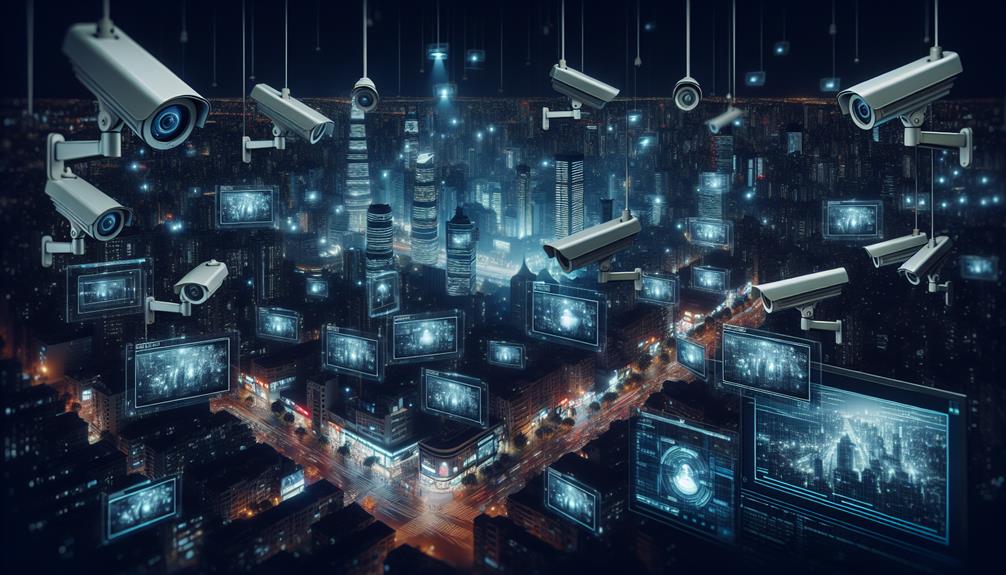
Retrospective facial recognition offers substantial efficiency benefits and enhanced policing capabilities. One significant example of its effectiveness is reported savings of more than 11,000 officer hours annually in certain forces, equivalent to £368,036. This underscores the technology's potential to significantly impact day-to-day policing operations. By identifying suspects from past investigations, retrospective facial recognition helps make communities safer. It streamlines investigations, thereby contributing to considerable cost savings and increased efficiency in policing operations. Retrospective facial recognition technology complements live and operator-initiated facial recognition for comprehensive policing efforts.
| Facial Recognition Type | Purpose | Impact |
|---|---|---|
| Retrospective | Identify suspects from past investigations | Significant time savings |
| Live | Real-time identification in public spaces | Enhanced public safety |
| Operator-Initiated | Officer-led matching against watchlists | Effective crime resolution |
Digital Evidence Management Challenges
As I examine the intricacies of digital evidence management, it's clear that ensuring data integrity, evidence analysis efficiency, and effective storage and sharing are all critical components in the quest for swift and accurate investigations.
Digital evidence is pouring in from various sources like CCTV footage, body-worn cameras, and mobile phones, and effectively managing this wealth of information is where the challenge lies.
My focus now turns to how these parameters can be optimized to support law enforcement agencies in their pursuit of justice.
Ensuring Data Integrity
Police agencies face the challenging task of guaranteeing data integrity given the exponential growth of digital evidence in investigative processes. Digital evidence is sourced from numerous formats such as CCTV footage, body-worn cameras, and mobile phone videos, making management of this data monumental. The scrutiny of each fragment is critical for effective identifications, which relies on the integrity of the data itself.
To guarantee data integrity, law enforcement agencies can leverage digital evidence management solutions such as NICE Investigate. This platform automates the collection and analysis of digital evidence, thereby reducing the risk of data mishandling. Integration with facial recognition technology further streamlines the process of suspect identification, allowing investigators to pinpoint individuals accurately and efficiently.
Maintaining data integrity is essential to guarantee that justice is upheld. Inaccuracies in suspect identification can lead to false arrests and further complicate cases. Law enforcement agencies must prioritize the integrity of digital evidence to achieve timely and accurate resolutions.
Evidence Analysis Efficiency
Employing advanced digital evidence management solutions like NICE Investigate can greatly enhance the efficiency of evidence analysis by simplifying the collection and integration of diverse digital formats.
Managing digital evidence from various sources, such as CCTV and body-worn cameras, can be overwhelming. However, by leveraging digital tools, law enforcement agencies can streamline their investigative processes.
NICE Investigate, for example, is a cloud-based platform that facilitates the collection and analysis of digital evidence. This platform, when combined with facial recognition technology, can notably accelerate the investigation process by ensuring timely and secure access to evidence.
Key benefits of integrating digital evidence management solutions include:
- Reduced forensic backlogs due to automated processes
- Improved collaboration through secure and real-time evidence sharing
- Enhanced investigative efficiency by automating tasks and reducing manual labor
- Better data integrity through robust audit trails and security measures
Storage and Sharing
Our digital evidence management systems must address the challenges of storing and sharing diverse digital files to guarantee efficient analysis and timely resolution of cases. The extensive use of interchangeable formats and sources of digital evidence, including CCTV footage, body-worn cameras, and mobile phone videos, creates significant challenges in digital evidence management.
Effective digital evidence management solutions such as NICE Investigate, a cloud-based solution designed for law enforcement agencies, are vital in enhancing the investigative process by automating and streamlining the collection and analysis of digital evidence. Additionally, integrating these systems with facial recognition technology streamlines the analysis of evidence, facilitating efficient suspect identification.
Efficient digital evidence management solutions address these challenges by providing secure sites for storage, ensuring seamless collaboration and sharing among authorized users. Access control and filtering tools streamline the search and retrieval of essential evidence, saving valuable time.
Moreover, these systems support various formats, including video, audio, images, and documents, and convert them into a common format, supporting thorough analysis and investigation. This guarantees that the in-depth analysis of digital evidence contributes to timely and accurate case resolution. By leveraging these technologies, law enforcement agencies can maximize the effectiveness of their investigations.
Integrating Facial Recognition and Tools
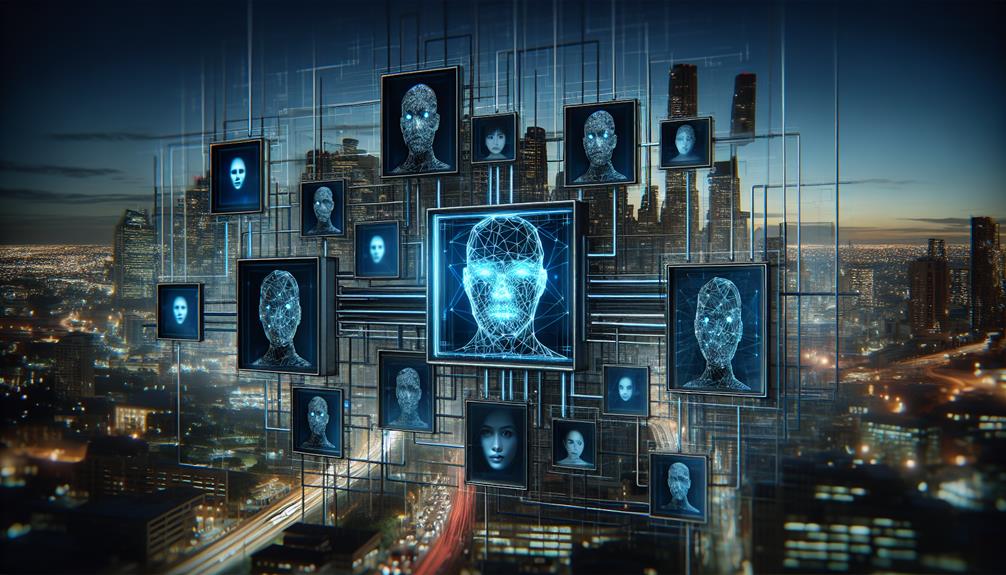
With the rise of digital evidence, integrating facial recognition technology with digital evidence management solutions like NICE Investigate ultimately optimizes the efficiency of law enforcement's investigative processes. By bringing these advanced tools together, agencies can streamline the entire investigation lifecycle, from evidence collection to analysis and sharing.
This integration enables law enforcement to:
- Enhance suspect identification by leveraging facial recognition to match images with suspects more effectively
- Improve case outcomes by ensuring that all digital evidence is accurately and efficiently processed
- Save time and resources by automating processes and eliminating manual data handling
- Strengthen collaboration by making it easier to share digital evidence securely and efficiently
Potential Misuses in Surveillance
The use of facial recognition technology in surveillance poses a significant risk of misidentification, particularly for people of color, whose features may not be accurately captured or recognized by these systems.
This disparity in accuracy rates can lead to wrongful arrests and increased scrutiny, perpetuating systemic inequalities.
As I analyze the role of facial recognition in surveillance, I find that it's crucial to acknowledge and address these biases to guarantee fair and unbiased law enforcement practices.
Surveillance Technology Impact
Facial recognition technology, being relentlessly integrated into mass surveillance systems, reinforces systemic inequalities by disproportionately targeting communities of color. This continued amalgamation of facial recognition with surveillance perpetuates deep-seated discrimination, leading to unfair profiling and potential harm.
- Disparate Impact: Surveillance technologies, including facial recognition, have the potential to disproportionately impact communities of color, leading to deep-rooted discrimination and unfair profiling.
- Policing Bias: Law enforcement's use of surveillance tools, like facial recognition, contributes to a disparate burden of policing on communities of color, intersecting with bias in policing practices.
- Accuracy Disparities: Disparate accuracy rates in facial recognition intersect with bias, further impacting communities of color and leading to unfair profiling and potential harm.
- Surveillance Efficiency: Surveillance efficiency can lead to unfair targeting and discrimination, emphasizing the importance of addressing these issues in the context of facial recognition technology.
It is crucial to critically examine the utilization of facial recognition and its intertwining with surveillance systems to verify that these technologies don't perpetuate and exacerbate existing inequalities. By acknowledging these misuses and validating the motives behind the technology's integration, we can better safeguard against the unfair consequences inherent in the amalgamation of facial recognition and surveillance.
Public Data Collection
Through relentless data gathering, facial recognition integrated into surveillance systems can silently gather detailed records of individuals' public activities, raising significant concerns about privacy and consent. This technology, designed to enhance surveillance effectiveness, often blurs the line between necessary security and unauthorized monitoring. The potential misuses are noteworthy, including tracking people without their consent and leading to privacy violations. Below is a summary of key aspects of public data collection:
| Facial Recognition Aspect | Benefits | Concerns |
|---|---|---|
| Data Collection | Automated monitoring | Privacy violations |
| Surveillance Efficiency | Improved monitoring | Unauthorized tracking |
| Facial Recognition Technology | Accurate identification | Security breaches |
| Public Data | Extensive datasets | Misuse potential |
| Consent | Enhanced monitoring | Silent observation |
While facial recognition can improve surveillance effectiveness, public data collection raises pressing questions about how this technology is used and protected. As surveillance systems continue to evolve, it is essential that privacy protections and ethical considerations keep pace to prevent misuse and maintain public trust.
Biased Facial Recognition
As surveillance technologies increasingly rely on facial recognition, significant biases have come to light in these algorithms, potentially exacerbating systemic injustices by wrongful identifications disproportionately affecting marginalized communities. The inaccuracies in facial recognition algorithms, particularly in recognizing individuals of color, heighten ethnical concerns over bias in surveillance. The technology's potential misuses in surveillance can reinforce existing biases, leading to wrongful identifications and further marginalization of already vulnerable communities.
Higher Error Rates:
Facial recognition algorithms have consistently shown higher error rates for people of color, leading to a higher likelihood of misidentification.
Systemic Injustices:
The inaccuracy of these algorithms exacerbates systemic injustices by reinforcing existing biases, placing marginalized communities at a higher risk of wrongful identifications and subsequent harm.
Ethnical Concerns:
Biases in facial recognition technology raise significant ethnical concerns over its use in surveillance, highlighting the need for greater oversight and regulation.
Addressing Discriminatory Outcomes:
Addressing biases in facial recognition algorithms is vital for preventing discriminatory outcomes in surveillance practices, ensuring that the technology is used fairly and without exacerbating existing social injustices.
Community Concerns Surrounding FRT

One major community concern surrounding facial recognition technology is that it perpetuates existing biases and discrimination in law enforcement practices, disproportionately affecting communities of color. This singles out facial recognition tools for exacerbating misidentification rates, leading to unfair profiling with disparate impact. Law enforcement's reliance on these technologies poses special risks for historically marginalized populations, such as Black, Asian, and Native American individuals. Disparate accuracy rates in these tools intersect with bias in policing practices, putting these groups at a higher risk of wrongful arrests, prolonged detentions, and even lethal police violence.
These ethical concerns stem from the technology's tendency to misclassify individuals based on race, age, and gender. For example, women are more likely to be misidentified than men, while African Americans are more susceptible to false identifications due to algorithmic bias. The widespread use of facial recognition technology further heightens these concerns by creating an environment that can unfairly target communities of color.
It's essential to acknowledge and address these biases to guarantee that facial recognition technologies don't perpetuate systemic racism within law enforcement agencies.
Ethical Considerations in Policing
Ethical responsibilities in policing, particularly regarding facial recognition technology, imply managing the balance between safeguarding public safety and protecting individual privacy and rights, while being vigilant for biases and ensuring transparency and accountability.
In the context of facial recognition technology, these responsibilities raise vital questions about potential biases and accuracy rates, especially in relation to marginalized communities. To mitigate these risks, careful consideration must be given.
- The need to balance public safety with individual privacy and rights
- Efficient measures to prevent misuse for mass surveillance, tracking, and profiling
- Ensuring transparent accountability mechanisms to build public trust
- Regular audits to detect and address racial biases in technology
These ethical considerations underscore the importance of responsible deployment and oversight of facial recognition technology within law enforcement, as public trust in the ethical use of this technology is fundamental to its effectiveness and social acceptance.
Facial Recognition's Accuracy and Efficiency

The continued improvement of facial recognition algorithms has led to significant enhancements in accuracy, with evaluations by the National Institute of Standards and Technology (NIST) confirming accuracy rates of over 99% across various demographic groups. This growth in precision is largely attributed to the industry's focus on reducing bias and ensuring that algorithms perform equally well across different demographics.
Evaluations such as the Face Recognition Vendor Test (FRVT) have revealed that the best algorithms in facial recognition show substantial progress in accuracy over time. Importantly, human involvement, such as selecting and reviewing images, plays a crucial role in enhancing the accuracy of facial recognition searches. This collaboration between algorithms and human examiners ensures more dependable results.
As facial recognition technology advances, its efficiency in law enforcement activities improves. Accurate matching is essential for effective policing, and continued enhancements are exclusively aimed at refining this process.
The amalgamation of advanced algorithms and human oversight is optimizing the efficiency of facial recognition systems. This synergy is pivotal in achieving reliable results and making surveillance more effective.
Future Development and Regulations
As we progress with facial recognition technology, it's essential for government agencies to establish clear guidelines and regulations to combat the risks associated with facial recognition technology in surveillance, striking a balance between security and privacy. Efforts are underway to address concerns about the impact of facial recognition on privacy and civil liberties, ensuring future regulations mitigate these risks.
To achieve this balance, several key steps should be taken:
- Improved Algorithm Accuracy: Continued development focuses on enhancing accuracy and reducing bias in facial recognition algorithms.
- Clear Standards and Guidelines: Government agencies must set clear standards and guidelines for the responsible use of facial recognition technology.
- Industry Collaboration: Collaboration between industry experts, policymakers, and civil rights advocates is essential for shaping regulations.
- Privacy Protections: Any regulations must prioritize robust privacy protections, addressing the concerns surrounding facial recognition technology.
Frequently Asked Questions
What Is the Role of Facial Recognition System in Surveillance Systems?
As I assess the role of facial recognition in surveillance, I prioritize evaluating privacy concerns, accuracy rates, cost efficiency, and ethical implications to guarantee that the benefits of enhanced security balance against human rights and potential biases.
How Does Facial Recognition Help With Security?
I find that facial recognition technology improves security by accurately identifying individuals and preventing fraudulent activities. Its high identification accuracy guarantees robust crime prevention, thereby strengthening overall security enhancement in various sectors.
How Is Facial Recognition Efficient?
As I understand, facial recognition technology boosts surveillance efficiency by leveraging high identification accuracy and speedy performance. This enables swift suspect identification while minimizing privacy concerns and data storage requirements, ensuring superior policing outcomes.
What Are the Factors of Facial Recognition System Efficiency?
To enhance facial recognition system efficiency, I focus primarily on accuracy through high-quality datasets, best algorithm selection, and rigorous testing.