


Facial recognition technology enhances video surveillance systems by providing expedited and accurate identity verification. It swift…
Key Takeaways
- Facial recognition automates identity verification, streamlining surveillance systems and reducing labor costs.
- Real-time alerts from facial recognition enhance situational awareness, enabling swift responses to potential threats.
- Combining facial and voice biometrics minimizes false positives for enhanced security and accuracy.
- Facial recognition technology aids law enforcement by quickly distinguishing between known and unknown faces in public spaces.
- Automated surveillance using facial recognition ensures real-time safety protocols and reduces the risk of unauthorized access.
Why Facial Recognition Enhances Security
Why Facial Recognition Improves Security
Facial recognition technology immensely boosts security by reducing false alarms, providing quicker and more precise identity verification, and detecting suspicious individuals more effectively.
This state-of-the-art technology aids in monitoring patients' mental health patterns by interpreting their emotional states and behaviors. In crowded areas, facial recognition systems quickly identify known criminals and ensure safety. By integrating facial recognition into video surveillance systems, real-time alerts are generated, allowing users to locate suspects promptly and enhancing surveillance efficiency notably.
With facial recognition, identity verification becomes swifter and more precise, minimizing the risk of unauthorized access. This advanced technology also reduces labor costs and enhances overall operational efficiency. Seamlessly upgrading traditional Video Management Systems (VMS) with facial recognition technology bolsters security protocols and enhances the safety of settings like healthcare services and shopping.
For example, retailers can adjust their offer based on a customer's buying habits and preferences detected by facial recognition, creating a more personalized shopping experience. As a result, incorporating facial recognition into surveillance systems significantly elevates security, making it an invaluable tool for law enforcement and enterprises alike.
Technology for Real-time Surveillance
Now, let's explore how facial recognition integrates with video surveillance to automate identity authentication and guarantee real-time safety monitoring.
This technology seamlessly combines with CCTV systems to provide instant alerts and enhance security measures.
It's an invaluable tool for quick suspect tracking and efficient identity verification.
Identity Authentication Automation
Facial recognition technology seamlessly integrates into video surveillance systems, automating identity authentication in real-time by swiftly and accurately verifying individual faces within a monitored area, expediting suspect location and enhancing overall security protocols.
As we incorporate this advanced feature, I'm particularly drawn to its ability to streamline the process, doing away with tedious manual identification methods.
Integration of facial recognition in surveillance systems greatly boosts safety by efficiently monitoring machinery usage and guaranteeing authorized access. The automation of identity authentication also notably improves operational efficiency, as less time is spent on manual checks. What's more, since the technology is constantly evolving, the more data it receives, the more precise it becomes, allowing for seamless real-time surveillance.
In the context of today's higher education, this technology can be particularly valuable. By automating identity authentication, institutions can ensure that only authorized individuals access campus facilities and digital resources, fostering a secure learning environment. This, in turn, enhances safety and efficiency while freeing up IT and EdTech teams to focus on more urgent educational concerns.
Real-time Safety Monitoring
Employing advanced real-time safety monitoring technology enhances my perception of safety and security within various environments. This includes incorporating facial recognition into video surveillance, particularly in higher education and industrial settings. This technology empowers me to proactively address potential threats by instantly identifying and flagging individuals on watchlists or those exhibiting suspicious behavior.
Through real-time surveillance, I receive prompt alerts of any unauthorized access. This allows for swift response times and improved overall security measures.
Solving Identity Verification Issues

I'd say that one of the most significant benefits of facial recognition technology in video surveillance systems is that it sharply enhances the accuracy of identity verification.
By coupling computer vision with biometric data, these systems can swiftly identify individuals, thereby guarding against unauthorized access and enhancing overall security.
This not only guarantees that the system stays secure but also protects the privacy of the individuals being monitored.
ID Verification Accuracy
When it comes to identity verification, the use of facial recognition technology integrated into video surveillance systems greatly enhances precision and pace compared to traditional methods, aiding in addressing identity verification issues that affect various organizations. By leveraging advanced computer vision technology, video surveillance systems can swiftly and accurately identify individuals, reducing the time spent on manual verification.
Accuracy and Speed Comparison
| Method | Accuracy | Speed |
|---|---|---|
| Traditional | Lower | Slower |
| Facial Recognition | Higher | Quicker |
| Manual Verification | Variable | Time-Consuming |
Industries like banking, retail, and law enforcement can greatly benefit from the integration of facial recognition into their video surveillance systems. Real-time alerts generated by these systems reduce labor costs and enhance operational efficiency, allowing for more thorough security and faster suspect identification.
Biometric Data Protection
By leveraging the capabilities of facial recognition video surveillance, organizations can greatly enhance biometric data protection by reliably verifying identities and reducing the vulnerabilities associated with unauthorized access and identity fraud. This cutting-edge technology resolves identity verification issues, markedly decreasing risks related to access control and safeguarding the security of sensitive data.
In surveillance systems, biometric data obtained from facial recognition prevents identity theft by accurately identifying individuals in real-time.
The precision of facial recognition technology safeguards against unauthorized access, thereby strengthening overall security measures. This technology operates by analyzing facial features to extract precise biometric data. The extracted data is subsequently compared against stored records to verify identities. This rigorous verification process not only ensures secure access control but also prevents identity fraud by detecting potential threats in advance.
The deployment of facial recognition in surveillance systems brings notable improvements to biometric data protection. By leveraging this advanced technology, organizations can effectively protect against attempted identity fraud and enhance the reliability of their access control mechanisms. This thorough approach guarantees the integrity of data and maintains a high level of security in various establishments.
Detecting and Tracking Individuals
Facial recognition technology empowers video surveillance systems to quickly and accurately detect and track individuals within monitored environments. When integrated into these systems, it enhances the efficiency and effectiveness of security operations. This technology can accurately identify faces and track them as they move within a monitored area, ensuring seamless monitoring and security coverage.
Security personnel greatly benefit from the real-time detection capabilities of facial recognition, as they receive automated alerts for specific individuals. This rapid identification allows for swift response to potential security threats, ensuring that any suspicious activity is addressed promptly. Moreover, the system can track individuals across multiple cameras, providing thorough monitoring and security coverage.
This enhanced monitoring capability improves the overall effectiveness of video surveillance systems.
Dilemma of Voice and Face Biometrics
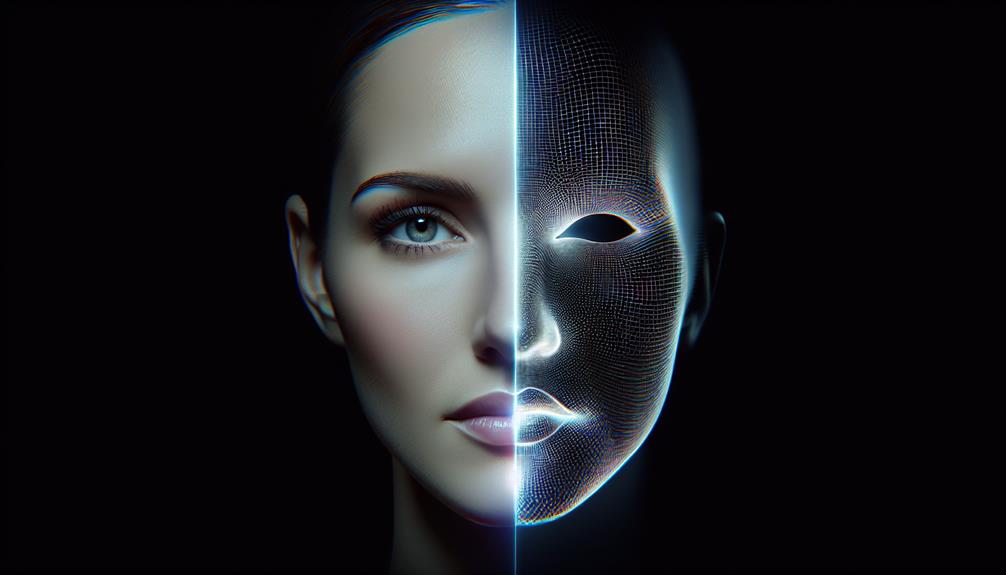
In the context of video surveillance, it's important to evaluate the roles of voice and face biometrics. While both voice and face biometrics have their individual strengths, they also present distinct challenges and vulnerabilities that make their most effective implementation a nuanced issue.
Facial recognition has its challenges, such as variations in lighting, angles, and facial expressions. These variables can lead to inconsistencies and potential false positives.
On the other hand, voice biometrics offer a sense of consistency in speech patterns, which could be beneficial in noisy environments where facial recognition might struggle.
To mitigate the limitations of each technology, combining voice and face biometrics can enhance security and reduce false positives. This bimodal approach enables a more robust security solution by cross-referencing the two forms of identification.
Consequently, it's important to integrate both voice and facial recognition technologies effectively to guarantee accurate authentication and control.
Legality Considerations of Face Data
For facial recognition to operate effectively and ethically, the collection, storage, and use of biometric data must align with the regulations outlined in GDPR, CCPA, PIPEDA, and other local privacy laws.
Facial recognition technology requires a delicate balance between its benefits and the need to safeguard individual privacy. Non-compliance with these laws can lead to significant fines, as demonstrated by the various penalties imposed in different regions. For instance, Google was fined €50 million by the French Data Protection Authority for violating GDPR provisions, and Clearview AI was fined €20 million in Italy for non-consensual data collection and not designating an EU representative.
To ensure conformity, companies must obtain explicit consent from individuals, disclose their data practices clearly, and provide straightforward opt-out options. It's also vital to understand the legal frameworks in place, as different jurisdictions have varying requirements. The GDPR, for example, stipulates that companies must provide detailed information about the processing of personal data and guarantee that data subjects can exercise their rights easily.
Local privacy laws must be respected to avoid legal consequences and maintain public trust.
Integration of Face Recognition Hardware
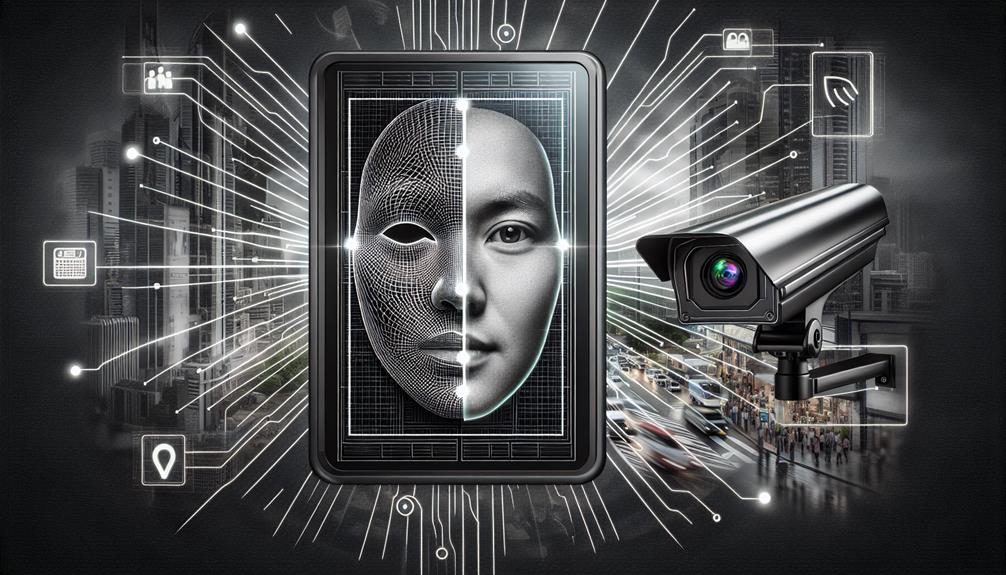
With advanced sensors and computer vision technology integrated into face recognition hardware, we achieve vastly improved security capabilities in surveillance systems. This integration enables the detection of faces from remote distances, making it ideal for capturing clear images in various environments.
For instance, face recognition cameras utilized in law enforcement and crime prevention settings can help locate suspects quickly, enhancing surveillance capabilities.
In addition to enhancing identity verification, specialized hardware components like cameras and systems allow for real-time alerts, promoting efficient monitoring.
The use of this advanced technology in various settings, including access control and machinery use within organizations, notably enhances safety and security.
Surveillance Cameras in Public Spaces
As surveillance cameras become increasingly common in public spaces, their integration with facial recognition technology greatly enhances security measures by quickly identifying individuals. This technology has become an essential tool for law enforcement and public safety, particularly in crowded environments like airports, train stations, and city centers.
By efficiently tracking and locating suspects, facial recognition in surveillance cameras significantly aids in deterring crime and providing real-time alerts for authorities.
For instance, facial recognition technology can rapidly distinguish between known individuals and unknown faces in large crowds, making it easier to respond to potential threats. This technology provides a higher level of situational awareness, allowing for more effective handling of security breaches.
Its usage in public surveillance systems also contributes to the refinement of broader security protocols. Overall, the incorporation of facial recognition into surveillance cameras continues to play a crucial role in enhancing security measures.
Efficiency of Automated Surveillance

What makes automated facial recognition so effective is that it greatly streamlines the process of interrogating and verifying identities within video surveillance systems. By analyzing facial features in real-time, automated surveillance can accurately identify individuals and issue real-time alerts. This efficiency spearheads labor costs, improving the overall security and surveillance capabilities of organizations. No longer do security personnel need to manually analyze footage, making it possible for them to swiftly address potential threats.
Automation also enhances the speed of suspect location and guarantees prompt responses to suspicious activity. Moreover, monitoring machinery use via facial recognition ensures safety protocols are followed in real-time.
Frequently Asked Questions
What Is the Role of Facial Recognition System in Surveillance Systems?
I believe facial recognition systems in surveillance greatly enhance security and efficiency by providing real-time alerts and accurate identity verification, but they also raise privacy concerns and ethical questions around their use by law enforcement and the management of facial databases.
Why Is Facial Recognition Good for Security?
'I choose facial recognition for security because it guarantees improved accuracy in identifying suspects, increases efficiency through real-time identification, enhances safety through proactive monitoring, and leverages advanced technology for effective crime prevention.'
What Is the Purpose of Face Detection System?
I use face detection systems to monitor video feeds, guarantee accuracy in real-time tracking, and enhance biometric identification, ultimately aiding criminal detection, access control, and customer analytics while weighing privacy concerns and mitigating accuracy issues.
What Happens When Security Cameras Are Combined With Facial Recognition?
When I combine security cameras with facial recognition, I enhance my surveillance with real-time tracking and alerts. However, I must consider privacy concerns, accuracy rates, and surveillance ethics, as well as data storage and facial database integration for effective crime prevention.