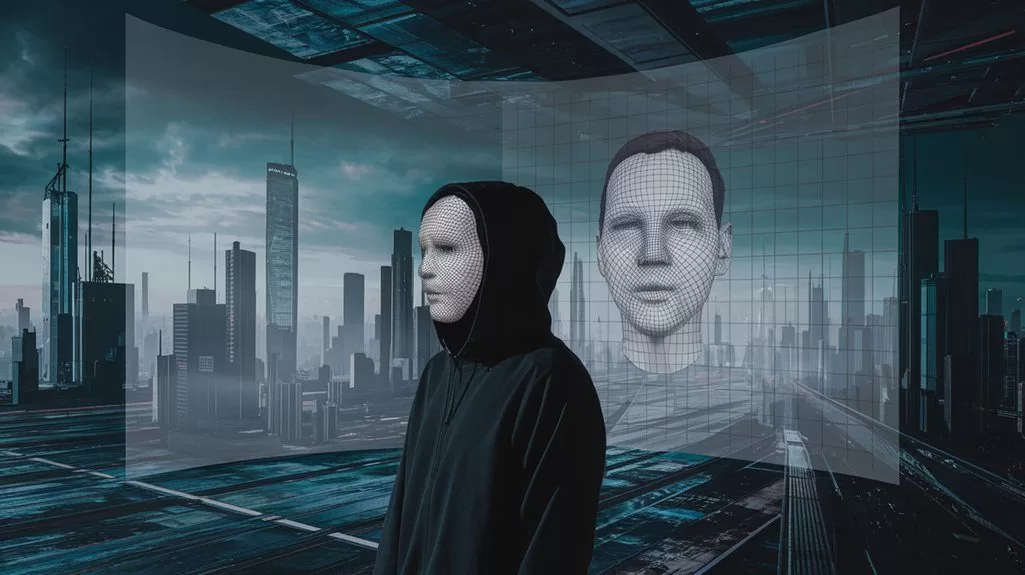


AI is transforming faces into powerful surveillance tools. Facial recognition technology now enhances access control and aids in criminal investigations. Swift identification helps prevent crime. But, hello privacy alarm bells! While using your face cuts costs and boosts security with real-time analytics, trust in AI's accuracy remains "meh." Predictability is nice, though, as it detects threats beforehand. So, is this AI future a savior or a snoop? Stay tuned to unravel the complexities!
Key Takeaways
- AI uses facial recognition technology for enhanced access control and efficient criminal investigations.
- Swift individual identification through AI aids in proactive crime prevention and security measures.
- Real-time detection of unusual activities is enabled by intelligent video analytics in AI systems.
- AI-powered surveillance reduces operational costs by minimizing the need for human monitoring.
- Ethical concerns about data privacy and public trust challenge AI facial recognition adoption.
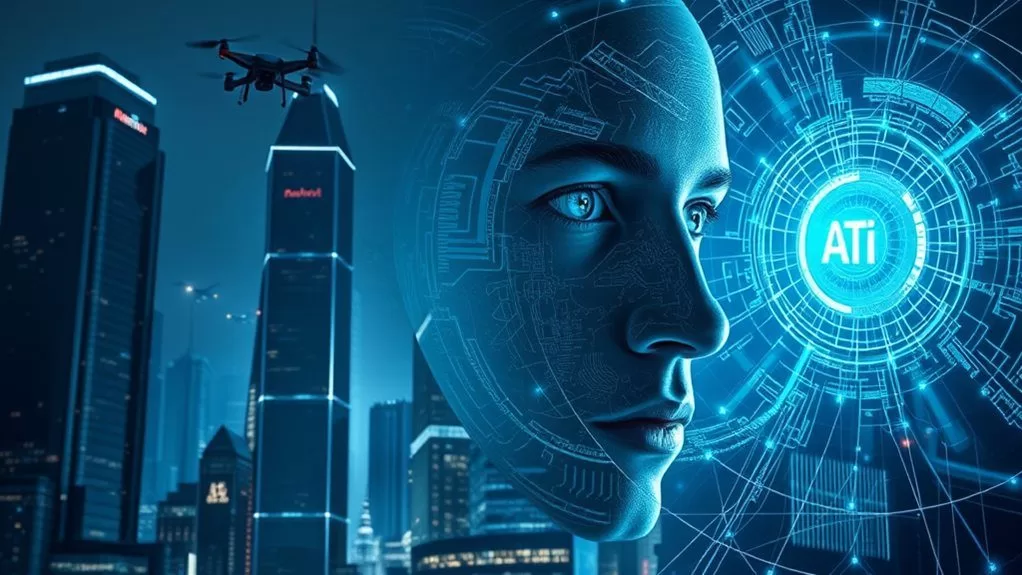
While the idea of robots watching our every move might sound like a dystopian nightmare, AI in surveillance and security offers some undeniable benefits. Facial recognition technology is at the forefront, playing a pivotal role in enhancing access control and criminal investigations. This tech marvel can swiftly identify individuals, making it a potent tool against crime. But let's not get carried away; it's not all rainbows and sunshine. There are ethical quandaries, like data privacy and bias. Who would've thought that our faces could become so influential in maintaining security?
Intelligent video analytics is another game-changer, enabling real-time detection of unusual activities. Gone are the days of relying solely on human eyes. Humans can miss things; AI doesn't blink. The integration of object and motion detection into these systems means potential security risks, such as unattended bags or unauthorized vehicles, are identified almost instantly. It's like having a security guard with superpowers, minus the cape.
AI video analytics: a vigilant guardian, catching what human eyes might miss, detecting risks with superhuman precision.
Predictive analytics applications are where things get really interesting. By analyzing historical data, AI can anticipate potential security breaches before they even happen. A proactive approach to threat detection? Yes, please! This capability alerts authorities to intervene before incidents escalate, which sounds a lot better than cleaning up after the fact. Of course, the question remains: can we fully trust these systems to make the right call every time? Let's hope so. AI facial recognition technology has enhanced security by providing real-time monitoring and alerts through threat detection, automating identity verification, and reducing human error.
AI-powered cameras, thermal imaging, and night vision technologies amplify the precision and effectiveness of surveillance, even in the darkest corners. It's like having X-ray vision, only less creepy. These innovations help reduce operational costs by minimizing the need for extensive human surveillance. Cost savings are a big deal. No one likes to spend more money than necessary, especially when machines can do the job better.
But not everyone is on board. Data privacy and regulatory compliance are hot topics in the world of AI surveillance. How do we guarantee that our privacy isn't completely invaded? Balancing security with privacy is a tightrope walk. And let's not forget about public acceptance. People tend to get uneasy when they hear about AI watching over them. Trust issues, anyone?
Despite these challenges, the AI in surveillance market is booming. The growth rate is impressive, driven by technological advancements and investments. The global AI surveillance market was valued at $5.5 billion in 2023 and is projected to reach $83.3 billion by 2028 with a 9.2% CAGR. Companies are pouring resources into this sector, enthusiastic to capitalize on the potential. In a world where security is paramount, AI is transforming how we protect ourselves. It's not perfect, but it's a start. A powerful, slightly eerie start.
Moreover, AI systems have significantly enhanced real-time anomaly detection capabilities, allowing for immediate identification and response to potential threats, which is revolutionizing the security landscape.
References
- https://litslink.com/blog/ai-in-surveillance-systems-how-to-empower-security-solutions-with-ai
- https://www.debutinfotech.com/blog/role-of-ai-in-surveillance-system
- https://www.asisonline.org/security-management-magazine/monthly-issues/security-technology/archive/2024/april/seven-ai-applications-that-are-transforming-security-operations/
- https://www.itpathsolutions.com/transforming-surveillance-systems-how-ai-is-shaping-the-future-of-security/
- https://www.infosysbpm.com/blogs/business-transformation/enhancing-security-and-surveillance-with-artificial-intelligence.html