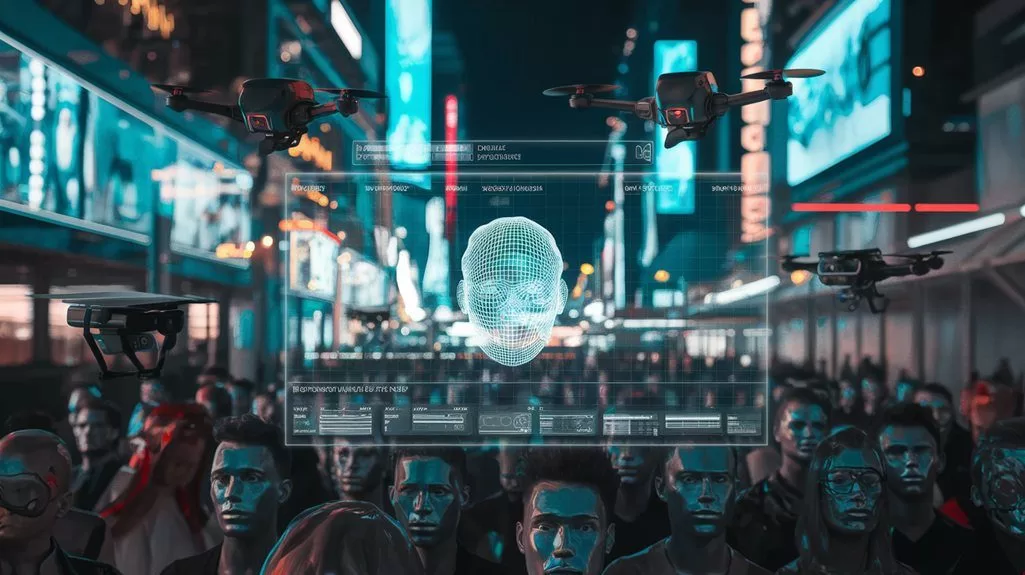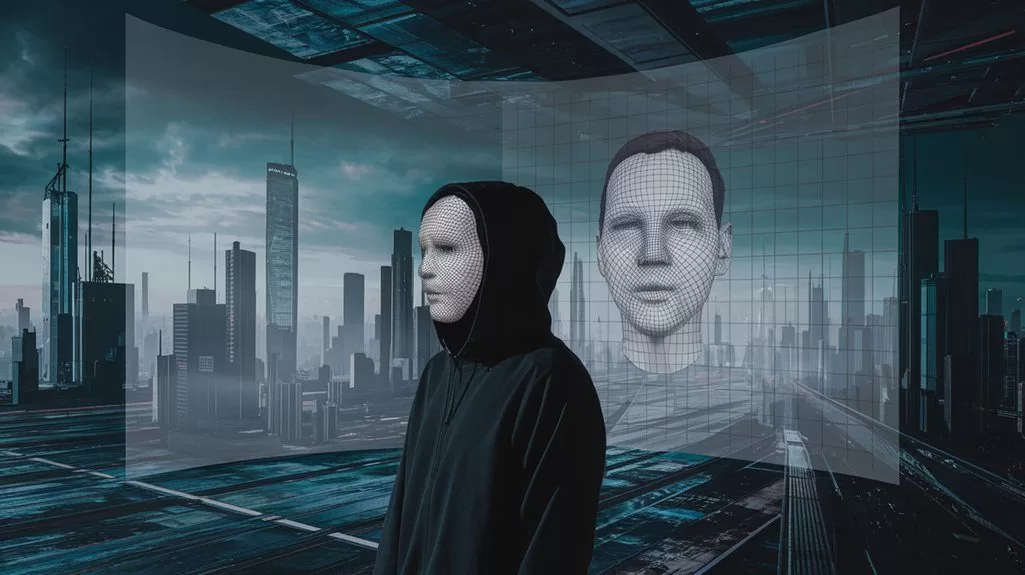


AI facial recognition tools disappointingly exclude disfigured faces. Not surprising, given their racial and gender biases. Most systems worship uniformity, ignoring diverse features. Result? Exclusion of those who dare to be different. It's hardly a victory for progress. Individuals with facial disfigurements find themselves locked out of tech's promised access and privacy. Misrecognition is more than an inconvenience—it's a harsh slap of rejection. Curious about who gets left behind by these flawed systems? Keep looking.
Key Takeaways
- AI facial recognition often excludes individuals with disfigurements, leading to significant access and service barriers.
- Biased datasets predominantly favor white males, causing misrecognition of diverse and unique facial features.
- Misclassification rates are higher for darker skin tones and disfigured identities, amplifying exclusion.
- Exclusion from AI services due to technical flaws can lead to psychological distress and stigma.
- Advocacy for diverse datasets and regulatory measures is essential to improve AI inclusivity and fairness.
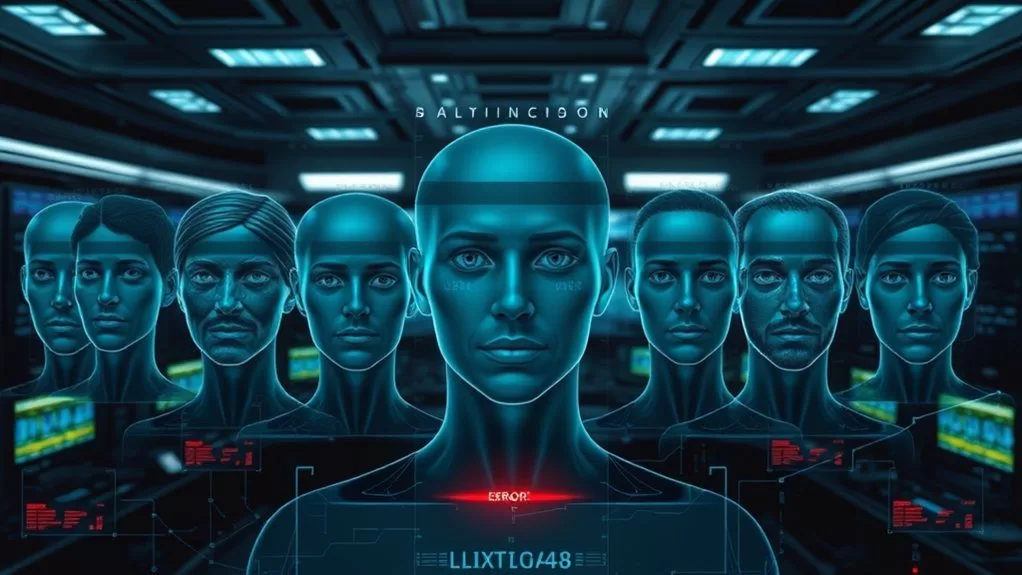
While AI facial recognition tools are hailed as the future of streamlined security and identification, they stumble over the very faces that need fair recognition the most. Faces that deviate from the so-called "norm"—disfigured identities—face recognition barriers that these systems seem ill-equipped to handle. The technical limitations are glaring. AI systems are notoriously inept when it comes to processing diverse facial features, especially those altered by disfigurement. This is, sadly, not surprising given the biases baked into their training data. Most datasets are a love letter to white males, rendering everyone else a mere footnote. Despite the rapid adoption by governments and private companies worldwide, the technology remains flawed.
Exclusion from services is a harsh reality for individuals with facial disfigurements. They encounter recognition barriers that deny them access to digital and physical spaces, places where they have every right to be. The lack of inclusivity in current AI models means their faces—unique and beautiful in their own right—are often misrecognized or ignored altogether. This isn't just a technical glitch. It's a social and psychological blow, exacerbating feelings of isolation and stigma. Imagine being locked out of your own life because a machine can't see you. Not fun. The use of facial recognition by governments and companies raises significant privacy erosion concerns, threatening the right to privacy and freedom of movement.
Locked out of life: AI's failure to recognize unique faces exacerbates isolation and stigma.
Diverse datasets are desperately needed. People are more than statistics; their faces tell stories that need to be heard, not hidden. Yet, the current state of AI facial recognition tells a different tale—one of exclusion and oversight. Regulatory actions are slowly creeping into the picture, but the pace is glacial. Governments and organizations are just beginning to scratch the surface of these issues, while advocacy groups shout into the void for change.
Bias and disparities in training data are the rotten core of this issue. The racial bias is palpable; studies show systems are less accurate with darker skin tones. Female faces, especially those with darker skin, are even more likely to be misclassified. It's a cocktail of intersectional discrimination that leaves certain groups perpetually misrecognized. Meanwhile, the lack of standardization in data collection continues unchecked, a wild west of half-baked solutions.
The ethical implications? Massive. Misidentification risks abound, and for those with disfigured identities, the stakes are high. The technology is flawed, plain and simple. It struggles with varying expressions and lighting, leading to inaccurate results that have real-world consequences. Yet, the need for improvement is undeniable. Recognition systems could help diagnose medical conditions, but accuracy is the linchpin. Without it, we're all just pixels on a screen, waiting to be seen. In one unfortunate instance, African Americans were disproportionately affected by misidentification, highlighting the necessity of addressing these technological shortcomings.
Final Thoughts
AI facial recognition tools, hailed for their precision, stumble when faced with disfigured faces. It's not just a glitch; it's a significant oversight. Some faces aren't recognized, plain and simple. The tech world often forgets that not all faces fit neat algorithms. The pros? Security, efficiency. The cons? Exclusion, bias. It's like they built a machine to see, but it's wearing blinders. Progress is great, but let's not leave humanity behind in the digital dust.
References
- https://en.wikipedia.org/wiki/Facial_recognition_system
- https://innocenceproject.org/when-artificial-intelligence-gets-it-wrong/
- https://interface.org.uk/artificial-intelligence-and-facial-discrimination/
- https://www.ftc.gov/news-events/news/press-releases/2024/12/ftc-takes-action-against-intellivision-technologies-deceptive-claims-about-its-facial-recognition
- https://www.turing.ac.uk/sites/default/files/2020-10/understanding_bias_in_facial_recognition_technology.pdf