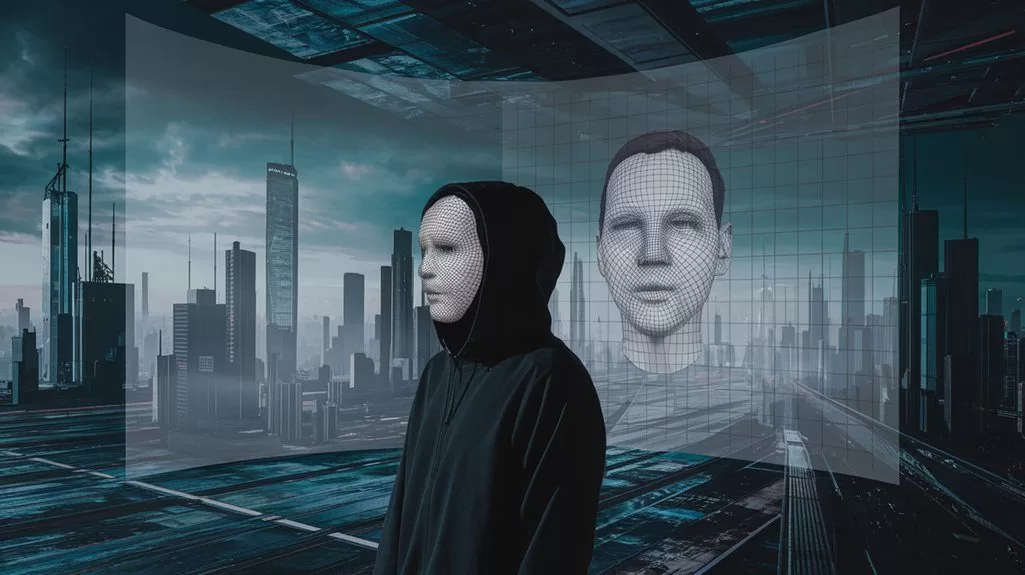


Facial recognition in the UK teeters on a slippery slope. Police scanned over 366,156 faces in 2023 alone, sparking privacy nightmares. That's a lot of faces! Pros? Crime prevention and finding missing people. Cons? Privacy invasion, potential bias, and the unsettling notion of a surveillance state. Despite support for police use with safeguards, public discomfort and mistrust linger. Where's the regulation? Thin. Current measures are lighter than a feather. Want to dive deeper into this riveting debate?
Key Takeaways
- Concerns about facial recognition technology leading to mass surveillance and privacy invasion in the UK are prevalent.
- Lack of a robust regulatory framework raises fears of privatized policing using facial recognition.
- Public opposition to facial recognition technology in schools and public transport highlights privacy concerns.
- Civil liberties groups warn about human rights violations due to unchecked facial recognition use.
- Demand for transparency, regulation, and the right to opt-out signals public unease with current practices.
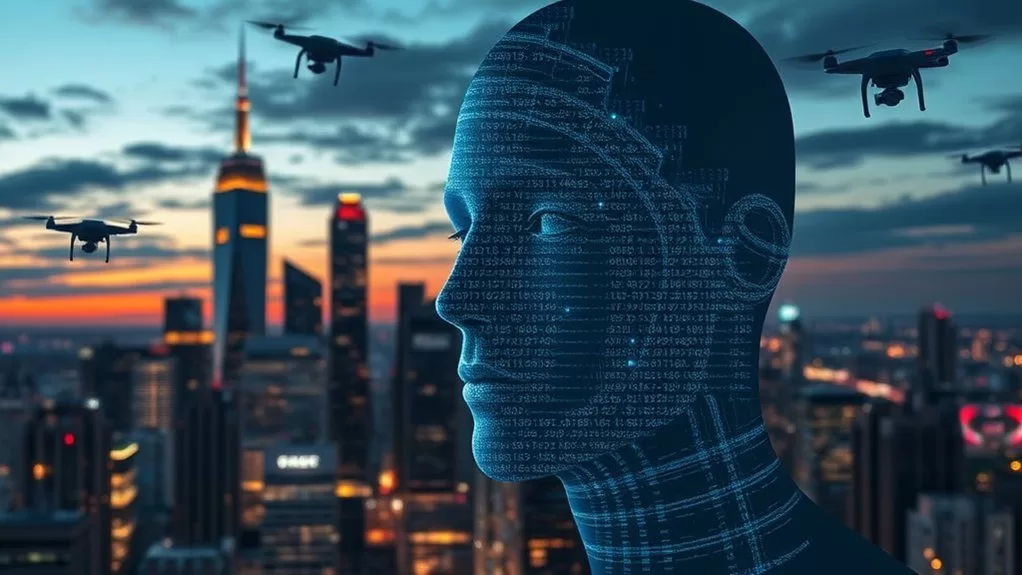
While the UK embraces the age of technology, facial recognition has made its grand entrance, especially within the domain of law enforcement. Police forces from London to Hampshire are diving headfirst into this technological marvel. Over 366,156 faces were scanned by the Met Police in 2023 across London. Yet, it seems Big Brother has found a new hobby: staring at your face.
With technology advancements, the intentions are noble—crime prevention, locating missing persons, and identifying suspects. However, the privacy implications are a whole different story. A significant public concern regarding the implications of facial recognition technology on privacy persists, with over half of the British public worried about the sharing of biometric data between police and the private sector.
The UK, ever so cautious, has yet to craft a robust regulatory framework for this technology. It relies on a principles-based approach and the wisdom of existing bodies like the ICO. Charming, isn't it? Despite the absence of solid regulations, the government plans to increase the deployment of facial recognition. But at what cost? Public concern is brewing. The normalization of surveillance is unsettling, and privacy issues are a hot topic. Civil liberties groups like Liberty and Big Brother Watch are sounding alarms, citing potential human rights violations. Legal challenges, such as the Ed Bridges vs South Wales Police case, spotlight these concerns.
Ever cautious, the UK embraces facial recognition amidst brewing public concern and privacy debates.
Live Facial Recognition (LFR) technology is the darling of the police, allowing real-time identification. No statistically significant bias regarding gender or ethnicity, they say. Impressive, if true. Yet, biometric data is sensitive. Imagine your face—a gateway to intimate information. Misuse could have severe consequences. The lack of transparency in data collection and storage practices is a growing concern, underscoring the need for enhanced regulatory measures.
The public, not blind to these risks, opposes facial recognition in schools and public transport. It seems the UK is not ready to trade privacy for convenience.
The Ada Lovelace Institute survey reveals a divided public. Nearly half support facial recognition in policing, but with safeguards. People demand the right to opt out and want restrictions on police use. Minority groups express higher discomfort, questioning accuracy and fairness. The lack of consent in processing personal data is a significant concern, as individuals are often unaware that their biometric data is being collected and processed.
Commercial use of facial recognition? A resounding no, thank you. The idea of being watched while shopping or applying for jobs is uncomfortable. The public craves consultation, regulation, and transparency.
In the end, the UK finds itself at a crossroads. The allure of technology advancements shines bright, yet the shadows of privacy implications loom large. The balance between security and privacy is a delicate dance. As the UK ventures further into facial recognition, it must tread carefully. Because, after all, nobody wants to feel like they're living in a sci-fi thriller where privacy is just an illusion.
References
- https://techpolicy.press/ai-facial-recognition-surveillance-in-the-uk
- https://www.adalovelaceinstitute.org/wp-content/uploads/2019/09/Public-attitudes-to-facial-recognition-technology_v.FINAL_.pdf
- https://homeofficemedia.blog.gov.uk/2023/10/29/police-use-of-facial-recognition-factsheet/
- https://www.openrightsgroup.org/blog/uk-facial-recognition-no-consent-no-oversight/
- https://www.adalovelaceinstitute.org/report/beyond-face-value-public-attitudes-to-facial-recognition-technology/