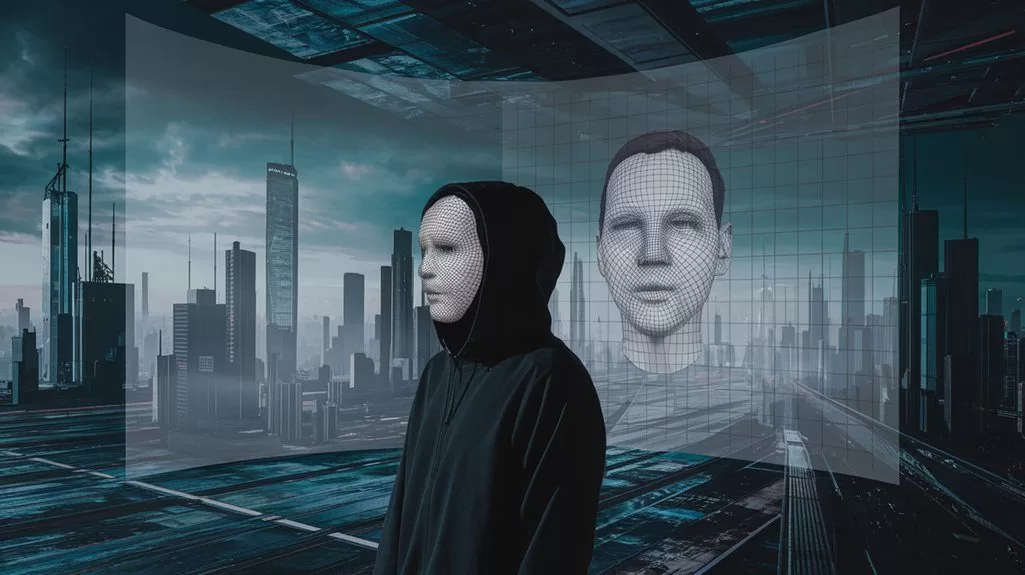


AI innovations in ceiling security cameras have greatly improved overhead surveillance, providing real-time object detection, behavioral pattern analysis, and proactive threat response. These cameras, integrated with advanced AI algorithms, can detect and track multiple objects, differentiate between people, vehicles, and animals, and analyze behavior patterns to identify anomalies and security threats. They reduce false alarms and integrate seamlessly with access control systems, ensuring prompt intervention for potential security breaches. With biometric authentication advancements, such as facial recognition, these cameras streamline access control processes, optimizing security operations. As AI continues to evolve, expect even more advanced surveillance solutions.
Key Takeaways
- Enhanced Object Detection: AI ceiling cameras differentiate between people, vehicles, and animals, reducing false alarms and improving security effectiveness.
- Real-Time Threat Response: AI cameras detect security breaches and analyze behavior patterns in real-time, enabling prompt intervention and proactive monitoring.
- Behavioral Pattern Analysis: AI tracks movements and interactions to identify anomalies and security threats, triggering alerts for deviations from normal behavior patterns.
- Advanced Motion Tracking: AI cameras track multiple objects across different areas, providing comprehensive coverage and detailed monitoring of the environment.
- Reduced False Alarms: AI algorithms enhance surveillance by filtering out irrelevant information, focusing on real threats and minimizing unnecessary alerts.
Enhanced Surveillance Capabilities
AI Innovations in Ceiling Security Cameras: Overhead Intelligence
Enhanced Surveillance Capabilities
How significantly can AI innovations elevate the surveillance capabilities of ceiling security cameras? The integration of AI into these cameras has transformed traditional surveillance into a proactive and highly intelligent system. With AI, ceiling security cameras can provide a bird's-eye view of an area, enabling thorough monitoring that's unmatched by traditional systems.
AI-powered ceiling cameras can detect and track multiple objects simultaneously, analyzing behavior patterns and identifying anomalies in real-time. This advanced capability ensures that potential threats are recognized instantly, allowing for prompt response and proactive security management.
These cameras utilize advanced algorithms to enhance their surveillance capabilities. They can distinguish between humans, animals, and objects, notably reducing false alarms triggered by non-threatening entities. This precision enables security personnel to focus on genuine security concerns, streamlining their operations and improving overall efficiency.
Moreover, AI-equipped ceiling cameras can integrate seamlessly with access control systems, further strengthening security measures in buildings. When integrated, these cameras can trigger alarms or lock down access points in real-time, guaranteeing a coordinated and effective response to security breaches.
With AI technology, ceiling security cameras can provide intelligent alerts and notifications, facilitating proactive security management. This proactive approach not only enhances security but also optimizes resource allocation, making the entire surveillance system more efficient and effective.
AI-Powered Object Detection
As AI continues to transform the surveillance landscape, one of the most important advancements is in AI-powered object detection within ceiling security cameras. These cameras use advanced algorithms to identify and classify objects in real-time, enhancing surveillance capabilities substantially.
With the ability to differentiate between various objects such as people, vehicles, and animals, AI-powered object detection enables immediate alerts for specific objects of interest, thereby improving security response times.
This technology offers tailored monitoring solutions for different environments, including retail spaces, parking lots, and office buildings. For instance, in a retail setting, AI can track customer movement and detect potential shoplifting or suspicious behavior.
In parking lots, it can monitor vehicular traffic and detect anomalies like loitering or unattended vehicles. The precision and accuracy of AI-powered object detection help in reducing false alarms, which in turn enhances overall security effectiveness.
Real-Time Threat Response
Ceiling security cameras equipped with AI technology now serve as proactive sentinels, providing real-time threat response capabilities that enable immediate intervention. These AI-powered ceiling cameras can detect security breaches and alert security personnel instantly, ensuring swift action to prevent or mitigate threats. The overhead intelligence provided by these cameras allows for effective monitoring and response to potential threats from a unique vantage point.
AI algorithms in these ceiling cameras analyze behavior patterns to identify suspicious activities, enabling the system to raise alerts even before a breach occurs. This proactive approach enhances security measures in various environments, from retail and commercial spaces to public areas and industrial settings.
Real-time threat response from AI ceiling cameras is essential in preventing and mitigating security breaches, allowing for prompt intervention that can notably reduce the risk of damage or harm.
Behavioral Pattern Analysis
When it comes to behavioral pattern analysis in ceiling security cameras, AI algorithms play an important role in identifying anomalies and potential security threats.
By tracking and analyzing movements, interactions, and activities, these cameras can learn normal behavior patterns and trigger alerts for deviations from the norm, enabling proactive security measures.
This capability, combined with object recognition and predictive alerts, greatly enhances the ability to detect and prevent security incidents before they occur.
Anomaly Detection
Anomaly detection in security cameras, particularly those installed in ceilings, involves sophisticated AI algorithms that analyze behavioral patterns to identify unusual activities or events. This advanced technique helps in detecting potential security threats and abnormal behavior, enhancing proactive security measures and risk mitigation. By learning normal patterns through continuous monitoring, AI algorithms can alert security personnel to deviations, ensuring timely intervention.
Behavioral pattern analysis in ceiling cameras is essential for identifying unusual occurrences. For instance, if a camera detects someone loitering near a restricted area or notices erratic movements, it can trigger an alert. This proactive approach allows security teams to address potential issues before they escalate into serious threats.
The integration of AI in ceiling security cameras significantly advances surveillance capabilities, enabling the swift identification of anomalies and prompt response to unusual activities.
The use of anomaly detection through behavioral analysis in ceiling cameras offers several benefits. It enhances security by providing an additional layer of vigilance, helping to prevent theft, assault, and vandalism. By continuously monitoring and analyzing behavioral patterns, these cameras contribute to a safer environment, making them an indispensable tool in modern security systems.
Object Recognition
Object recognition in AI-driven overhead security cameras enhances the surveillance experience by analyzing behavioral patterns to identify specific objects and activities. These advanced cameras can detect and classify various entities, such as people, vehicles, or objects, and alert security personnel to potential security risks in real-time. This capability is essential for proactive threat detection, as it enables swift responses to anomalies before they escalate into serious incidents.
Behavioral pattern analysis is a key element of this technology. By continuously monitoring activities, AI-enabled overhead cameras can differentiate between normal behavior and suspicious activities. This distinction allows for personalized security settings based on detected activities, improving overall security measures.
For example, if a camera detects loitering or unusual movement patterns, it can trigger specific alerts and interventions tailored to the scenario.
This level of precision in object recognition enhances surveillance efficiency. By recognizing and categorizing objects accurately, AI-driven cameras ensure that responses aren't just reactive but also proactive, mitigating risks before they become notable threats.
This integration of AI with object recognition capabilities transforms overhead security cameras into intelligent, proactive watchdogs, providing a higher level of security and operational efficiency.
Predictive Alerts
Predictive alerts in ceiling security cameras leverage advanced behavioral pattern analysis to anticipate and prevent potential security threats. These systems use AI algorithms to learn and identify typical behaviors within a given area, allowing them to detect anomalies and suspicious activities in real-time. By analyzing patterns of behavior, these cameras can alert security personnel to potential threats before they escalate, greatly enhancing situational awareness and response capabilities.
The AI technology embedded in these cameras is designed to continuously monitor and analyze the behavior of individuals within the observed area. This enables the system to predict and prevent security breaches by identifying unusual or atypical behavior that may indicate a security threat.
For instance, if someone is loitering in a restricted area or exhibiting erratic movements, the AI system can immediately alert security personnel to take appropriate action.
The real-time monitoring capability of these cameras ensures that any unusual behavior is flagged promptly, allowing for prompt and effective intervention. This proactive approach not only strengthens the overall security posture but also reduces the risk of security breaches. By integrating AI-powered behavioral analysis, ceiling security cameras can provide a more thorough and adaptive defense against evolving security threats.
Advanced Access Control Systems
Advanced access management systems are transforming the way we protect our spaces, thanks to the integration of artificial intelligence (AI) and biometric technologies. AI enhances access management systems by utilizing sophisticated algorithms for efficient management of entry points. This integration greatly enhances the accuracy and speed of biometric authentication systems, which are essential for verifying personnel identities.
For example, AI-powered biometric authentication methods such as facial recognition, fingerprint scans, and iris scans provide higher precision than traditional methods, reducing the risk of false positives or negatives.
AI-driven access management guarantees tighter security measures and seamless access experiences for authorized individuals. These systems can process large amounts of data quickly, integrate with other security systems like video surveillance, and identify unusual or suspicious behavior in real-time.
As a result, authorized personnel can enjoy smooth access to secure areas without the need for physical keys or key cards, while unauthorized access attempts are promptly detected and prevented. This advanced approach not only enhances security but also improves user experience, making access management more effective and dependable.
Biometric Authentication Advancements
In the domain of biometric authentication, facial recognition capabilities in ceiling security cameras have become exceedingly precise, with some systems achieving over 99% recognition accuracy. This technology enhances access control by verifying individuals based on unique facial features, notably reducing the risk of unauthorized access and bolstering overall security protocols.
As we delve into these advancements, we'll also touch on behavioral pattern analysis and advanced biometric security measures that further fortify these systems.
Facial Recognition Capabilities
Ceiling security cameras equipped with AI-enabled facial recognition capabilities have revolutionized the way we approach biometric authentication, greatly enhancing security measures. These cameras use sophisticated algorithms to accurately identify individuals based on their unique facial features, significantly reducing the risk of unauthorized access. This AI-powered facial recognition technology offers seamless access control, effectively replacing traditional keys or passcodes with secure biometric authentication.
The facial recognition capabilities in ceiling security cameras enable quick and reliable identification, thereby improving overall building security. By leveraging advanced computer vision and deep learning, these cameras can detect and analyze faces in real-time, even under varying lighting conditions and angles. This ensures that only authorized individuals can access restricted areas, bolstering the security posture of any facility.
The integration of facial recognition into ceiling security cameras optimizes security operations by streamlining access control processes with high accuracy. This not only enhances security but also provides convenience and efficiency, making these systems ideal for various applications, from commercial to residential settings.
Behavioral Pattern Analysis
Behavioral pattern analysis in AI-enabled ceiling security cameras elevates biometric authentication to a new level by identifying and verifying individuals based on their unique behavioral traits. This technology leverages AI algorithms to monitor and analyze various behavioral cues, such as walking gait and hand gestures, enhancing security measures beyond traditional methods like fingerprints or facial recognition.
Biometric authentication advancements in ceiling security cameras include recognizing patterns in these behavioral cues, providing an additional layer of verification. For instance, the unique way a person walks or gestures can be used to identify them, offering a more robust and accurate way to verify individuals. This approach enhances overall security by detecting anomalies in behavior, which can alert security personnel to potential threats or unauthorized access.
Ceiling cameras equipped with behavioral pattern analysis can continuously monitor environments, ensuring that any deviation from normal behavior patterns triggers alerts. This proactive approach helps in preventing security breaches and guarantees a higher level of security, making it an essential innovation in modern surveillance systems.
Advanced Biometric Security
Advanced biometric security in ceiling cameras has transformed access control and security protocols, leveraging cutting-edge technologies like facial recognition to guarantee precise authentication. Facial recognition technology, in particular, has become a cornerstone in modern security systems due to its high accuracy rates and reliable identification processes. This technology analyzes unique facial features, such as the distance between eyes, nose shape, and jawline structure, to verify that only authorized individuals can access secure areas.
By integrating facial recognition into ceiling cameras, organizations can enhance their security protocols significantly. This biometric security feature offers a seamless and secure access experience, eliminating the need for physical tokens or passwords. The accuracy and speed of these systems have been dramatically improved through advancements in AI security algorithms, allowing for swift and reliable identification of individuals.
In high-security environments, biometric security in ceiling cameras is indispensable. It provides an additional layer of security by verifying identities in real-time, reducing the risk of unauthorized access and enhancing overall security measures.
This integration of biometric authentication with ceiling cameras guarantees a robust and trustworthy access control system, making it an essential component in maintaining the security and integrity of sensitive areas.
Optimization of Security Operations
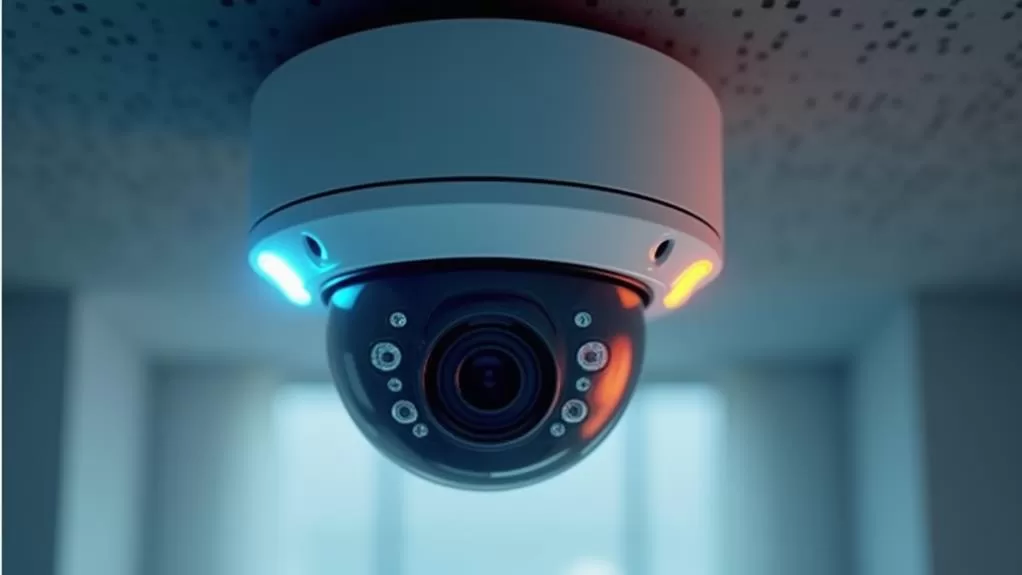
When it comes to enhancing security operations in building systems, AI plays a crucial role by analyzing vast amounts of data to recommend improvements for improved efficiency. AI enhances security operations by ensuring all security system components, including ceiling cameras, function effectively to provide thorough surveillance coverage. This integrated approach allows for real-time monitoring and analysis, enabling prompt interventions in case of potential threats.
AI also enhances gate automation systems, enhancing access control and security management. These systems can identify individuals through facial recognition, authorizing or denying entry, which helps maintain a safe environment. Additionally, AI-powered access control solutions assist businesses in complying with data privacy regulations like GDPR and HIPAA, ensuring secure operations.
Moreover, AI-driven smart parking technology integrates with security systems to monitor parking availability, reducing congestion and improving operational efficiency. By automating surveillance, businesses can streamline their security personnel's workload, focusing their efforts on strategic responses and investigations. This holistic integration of AI technologies maximizes the effectiveness of each security component, creating a more robust and efficient security posture.
Future of AI in Security
As we optimize security operations with AI, it's clear that the future of AI in security cameras is about more than just enhancing current capabilities; it's about transforming traditional surveillance into intelligent, proactive monitoring solutions. AI integration in security systems promises advanced surveillance capabilities and proactive threat detection, boosting operational efficiency and reducing the risk of human error. With AI-powered security cameras, real-time interventions and continuous vigilance become the norm, setting new standards for thorough oversight and operational excellence.
These intelligent monitoring systems can automatically analyze video feeds, detecting and alerting security personnel to potential threats like unauthorized access or suspicious behavior. Predictive analytics enable these systems to anticipate security risks before they occur, allowing for proactive measures to prevent incidents. By leveraging AI algorithms, businesses can achieve more precise and efficient security operations, minimizing false alarms and improving response times.
The integration of AI with other technologies, such as drones and robots, further enriches security solutions. Autonomous surveillance drones can patrol areas and provide real-time video feeds, enhancing situational awareness and response times.
Frequently Asked Questions
How AI Is Used in Security Cameras?
AI in security cameras lets me detect objects, recognize faces, analyze behavior, identify intruders, and recognize patterns, all in real-time, sending alerts instantly to enhance security and reduce human error.
What Are the Applications of AI in Security Surveillance?
In security surveillance, AI enables facial recognition, intrusion detection, behavior analysis, object tracking, anomaly detection, and predictive analytics, allowing for real-time threat detection, proactive monitoring, and efficient response to security incidents.
Are AI Security Cameras Worth It?
I find AI security cameras worth it due to their cost effectiveness, accuracy, and reliability. They offer real-time alerts, facial recognition, and efficient data storage, while addressing privacy concerns, making them a valuable investment for enhanced security.
What Is a Innovative AI Camera?
An innovative AI camera uses facial recognition, behavior analysis, and object detection to provide real-time alerts, enhancing security through advanced video analytics, while also raising privacy concerns that need careful consideration.
Final Thoughts
To sum up, AI advancements in overhead security cameras have changed conventional surveillance systems into smart, proactive tools. With improved surveillance features, AI-driven object detection, instant threat response, and behavior pattern analysis, these cameras offer unmatched security. Advanced access control and biometric authentication additionally strengthen security measures. By optimizing security operations, AI guarantees a safer, more effective environment. As technology progresses, the future of AI in security holds even more advanced solutions, improving protection and safety in different sectors.