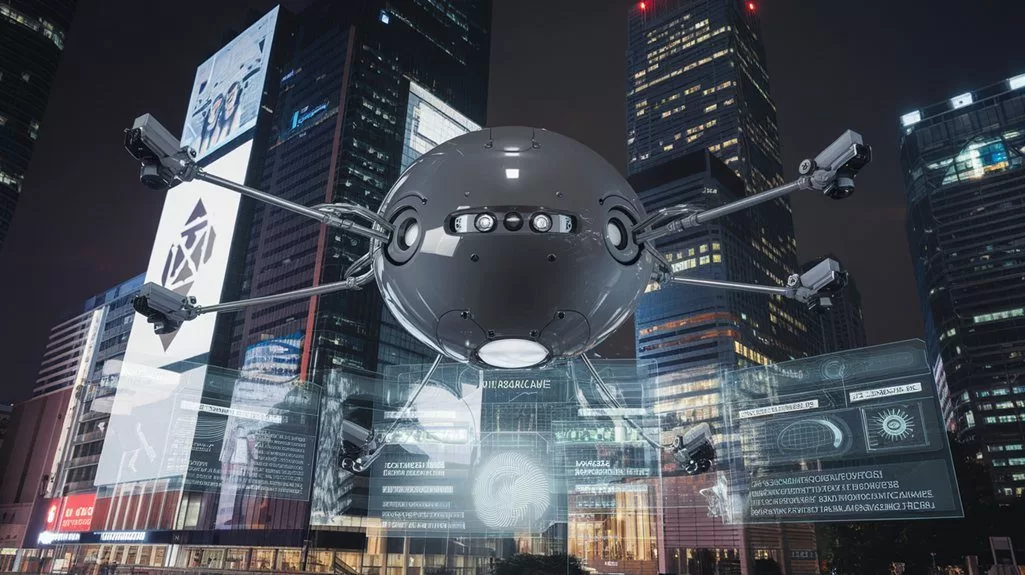


AI in traffic is transforming urban landscapes. Predictive modeling and adaptive signals lead to smoother roads—great, right? Yet, privacy could be the roadkill here. The collection and exchange of data in smart cities fuel efficiency but raise Orwellian concerns. While your commute may shrink, so might your personal data security. Cities like Pittsburgh enjoy shorter travel times but at what cost? Intrigued? There's more to uncover in this AI-driven traffic tale.
Key Takeaways
- AI optimizes traffic flow by analyzing real-time data, improving city efficiency but raising privacy concerns.
- Adaptive traffic signals reduce travel time, yet the privacy cost for these improvements is debated.
- Autonomous vehicles share large amounts of data for safety, prompting questions on privacy and data ownership.
- Smart city systems enhance urban transportation but risk potential data misuse.
- Predictive modeling reroutes traffic preemptively, balancing efficiency with significant privacy considerations.

While society grapples with the relentless march of technology, AI's dual role in traffic management stands as both a marvel and a mystery. On one hand, it promises to revolutionize urban mobility with traffic predictions that seem almost clairvoyant. On the other, it opens a Pandora's box of privacy implications that could unsettle even the most ardent tech enthusiast.
AI enhances traffic flow by predicting congestion, utilizing machine learning algorithms. Real-time traffic analysis? Yes, it's happening. Traffic cameras and sensors provide the data, and AI does the rest, suggesting ideal routes that reduce travel time. It all sounds wonderful until you realize the amount of personal and vehicular data being collected. A bit unsettling, isn't it? The privacy implications are not just whispers; they're loud and clear. Who's watching whom now?
Adaptive traffic signal control is another feather in AI's cap. It adjusts traffic light timings based on real-time conditions, reducing congestion. Cities like Los Angeles and Pittsburgh have already seen results. Travel times slashed. Efficiency boosted. But pause for a moment – have we traded our privacy for a few minutes saved on the road?
AI doesn't stop with just traffic lights. It integrates with autonomous vehicles, enhancing safety and mobility. Imagine cars that communicate with each other, sharing data to avoid collisions. It's like a vehicular social network, minus the selfies. But every byte of data shared adds to the pile of privacy concerns. Data, data everywhere, and not a thought on who holds it all.
In smart cities, AI takes on an even grander role, coordinating with various systems to improve urban living. Integrated traffic management and dynamic traffic adjustments are not just buzzwords; they are the new reality. Intelligent Transport Systems (ITS) continuously monitor traffic conditions, including demand and weather, and utilize vehicle-to-everything communication (V2X) to enhance road safety. Efficiency measures enhance traffic flow, and AI-driven incident response ensures swift action. It's all very impressive—until you consider the potential for misuse of this data. The dual-use nature of AI allows its algorithms to adapt quickly across sectors, enhancing both traffic management and security systems.
AI's predictive modeling allows for proactive measures, rerouting traffic before jams even form. But let's not ignore the elephant in the room: data collection. Monitoring every move to make predictions. Orwellian, much?
References
- https://www.isarsoft.com/article/ai-in-traffic-management
- https://www.brookings.edu/articles/how-artificial-intelligence-is-transforming-the-world/
- https://www.tractiontechnology.com/blog/traction-five-how-ai-is-revolutionizing-traffic-management
- https://datascience.columbia.edu/news/2024/data-science-researchers-pioneer-real-time-ai-for-smarter-safer-cities/
- https://litslink.com/blog/ai-and-transportation