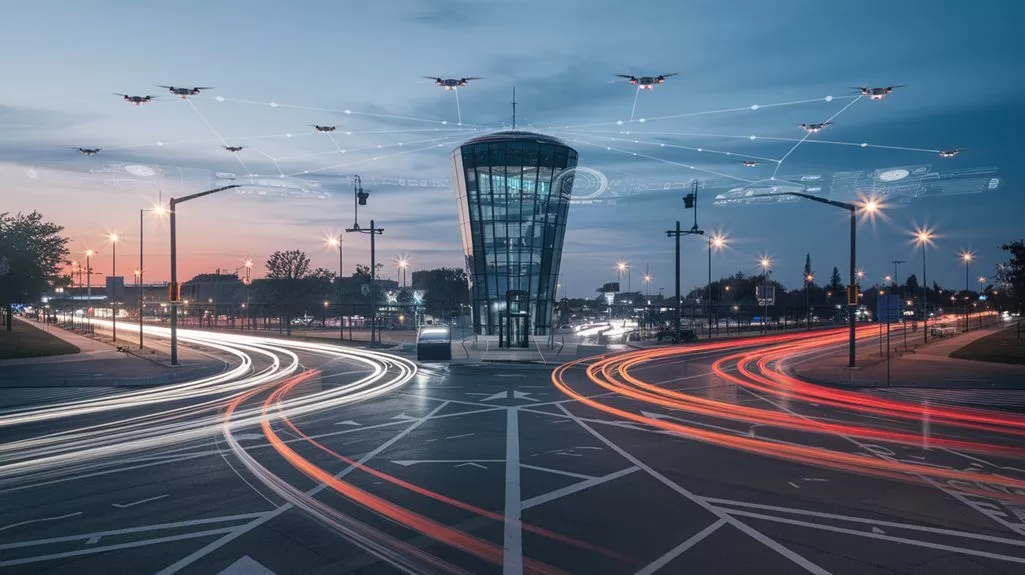


Autonomous AI: technological marvel or privacy nightmare? It's both. With an insatiable appetite for data, these systems push tech boundaries yet threaten privacy. Imagine a world where everything you do is monitored without consent. Scary, right? Breaches are rampant, data regulation struggles to keep pace, and AI-made decisions often lack transparency. Balance innovation with privacy? Quite the battle. No crystal ball needed to see the challenge looming. Stay tuned; the story unfolds dramatically.
Key Takeaways
- Autonomous AI's extensive data collection raises significant privacy concerns, often occurring without user consent.
- The technology offers remarkable advancements but poses risks of unauthorized inferences from seemingly benign data.
- Algorithmic discrimination and data exploitation highlight ethical challenges, threatening civil liberties and societal fairness.
- Current privacy regulations struggle to keep up with AI advancements, compromising data security.
- Balancing innovation with privacy protection remains a complex and ongoing challenge in the digital age.

How does one navigate the labyrinth of privacy in the age of autonomous AI? It's a question that looms larger than a black hole, sucking in data faster than you can say "privacy breach." Autonomous AI systems, with their insatiable appetite for personal data, have redefined the boundaries of privacy. They gobble up information from every conceivable source, often without a user even lifting a finger. The result? Privacy concerns that would make even the most stoic among us raise an eyebrow.
The magic—or perhaps the menace—of these systems lies in machine learning. They analyze patterns with a precision that would put Sherlock Holmes to shame, leading to unauthorized inferences about individuals. It's like having a nosy neighbor who knows everything about you, but you didn't even know they existed. This is where data ethics comes into play. Or, rather, it should. But let's face it, the ethical considerations of AI often get lost in translation. As AI systems become increasingly sophisticated, the potential for algorithmic discrimination and bias affecting groups intensifies, posing significant ethical challenges.
Machine learning's prowess rivals Sherlock Holmes, making unauthorized inferences that challenge our sense of data ethics.
Predictive analytics is another beast altogether. AI algorithms can deduce sensitive attributes from data that seems as harmless as a puppy. The risk? Predictive harm. It's like having your fortune told by a machine that might just predict doom and gloom. And if that isn't enough, the scalability of AI technology means that more data is ripe for misuse. A hacker's paradise, perhaps?
Then there's the issue of transparency. Or the lack thereof. The decision-making processes of these AI systems are like a magician's hat—what goes in and what comes out are a mystery, but you sure hope it's not a rabbit. Enter privacy regulations. Intended to protect us, they often resemble a sieve more than a shield, struggling to keep up with the rapid advancements that AI brings to the table. Transparency in algorithms is essential for maintaining trust in automated systems, yet it remains an elusive goal in the fast-paced world of AI.
AI-driven profiling adds another layer of complexity. While personalization is a nifty feature, offering experiences tailored just for you, it can also lead to data exploitation on a scale that's both impressive and terrifying. Bias and discrimination in AI profiling can lead to societal consequences that echo far beyond the digital domain. But hey, who needs civil liberties anyway? AI's data collection capacity raises questions about data security, and 77% of companies using AI have experienced data breaches in the past year.
In the end, autonomous AI is a double-edged sword. It holds the promise of technological advancement, yet it threatens privacy with an intensity that is hard to ignore. Balancing the scales of innovation and privacy might just be the biggest challenge of our digital age. Or, as some might say, an epic showdown between convenience and caution. Who will win? That's a mystery even AI can't solve.
Final Thoughts
The rise of autonomous AI. A marvel of innovation, yet a privacy minefield. On one hand, it offers technological leaps. On the other, it raises eyebrows—and not just among conspiracy theorists. Data breaches, anyone? It's like handing over the keys to your life, hoping AI doesn't snoop too much. Pros? Efficiency, convenience. Cons? Privacy invasion, ethical dilemmas. So, is it a threat? Or just the price of progress? Depends on who's asking—and who's watching.