

When it comes to balancing safety and privacy in schools using AI camera systems, it's vital to leverage advanced capabilities like real-time threat detection and instant identification of potential threats while ensuring strict privacy protocols. AI cameras can analyze video feeds in real-time, detecting anomalies such as unauthorized access or suspicious behavior, and trigger immediate alerts for rapid responses. However, to protect student privacy, schools must implement robust measures like automated privacy masking, data encryption, and transparent policies. By integrating these systems responsibly, schools can enhance security without compromising individual privacy rights, ensuring a safer and more secure environment. For a deeper understanding of how this balance can be achieved, continue exploring the intersection of AI technology and school safety protocols.
Key Takeaways
- Proactive Threat Detection: AI cameras detect potential threats in real-time, enabling swift responses and preventing security threats from escalating.
- Automated Privacy Masking: Protects personal information by masking faces and sensitive areas, ensuring compliance with data protection regulations like FERPA and GDPR.
- Balanced Surveillance Strategies: Integrates AI camera systems with robust privacy protection measures, transparent policies, and consent mechanisms to address privacy concerns.
- Real-Time Alert Systems: Customized alerts notify security personnel, administrators, or law enforcement swiftly, improving response times and security posture while respecting privacy.
- Ethical Use and Compliance: Ensures AI surveillance systems are used responsibly, with regular auditing and testing to maintain a balance between public safety and individual rights.
AI Camera Capabilities
AI camera systems in schools greatly enhance security measures by offering proactive threat detection capabilities through real-time analysis of video feeds. These systems leverage artificial intelligence to identify potential threats instantly, enabling schools to take preemptive actions before situations escalate. By integrating AI with existing surveillance, schools can detect weapons and assess data for potential weaknesses, differentiating between harmless and dangerous objects with high accuracy.
AI injects intelligence into traditional surveillance systems, enhancing security responses and improving incident management. These cameras learn normal patterns and identify anomalies, helping to mitigate risks and guarantee a safer school environment.
For instance, if a student enters a restricted area after hours, the AI system can trigger an alert, notifying security personnel immediately. Additionally, AI cameras can integrate with remote access capability to allow monitoring from anywhere, providing an additional layer of security control.
AI cameras also provide dynamic video and photo evidence of threats, enabling better tracking and response to security incidents. This real-time information empowers security teams to make informed decisions quickly, which is essential during emergencies where every moment counts. Overall, AI camera systems transform school security by offering a proactive and intelligent approach to threat detection and incident management.
Real-Time Threat Detection
In today's high-stakes school security environment, real-time threat detection is crucial for preventing and mitigating potential dangers. AI camera systems have revolutionized this aspect by actively analyzing video feeds for potential security risks. Here's how these systems work:
Real-Time Threat Detection
AI camera systems use AI algorithms to detect anomalies such as unauthorized access, weapons, and suspicious behaviors. These systems provide immediate alerts, enabling rapid responses to security threats. Here's a summary of their capabilities:
| Feature | Description | Impact |
|---|---|---|
| Anomaly Detection | Detects unauthorized access or suspicious behavior | Enhances overall safety measures |
| Weapon Detection | Identifies visible weapons, including guns and knives | Triggers immediate alerts |
| Alert System | Sends notifications to relevant personnel | Ensures prompt action in active threat situations |
| Behavioral Analysis | Monitors patterns of behavior to identify signs of distress or bullying | Facilitates early intervention |
The key benefit of AI camera systems is their ability to differentiate between harmless and dangerous objects, improving overall safety measures in schools. By integrating these systems with existing security infrastructure, schools can greatly enhance their ability to respond promptly to security threats, creating a safer learning environment.
Enhancing Security Measures
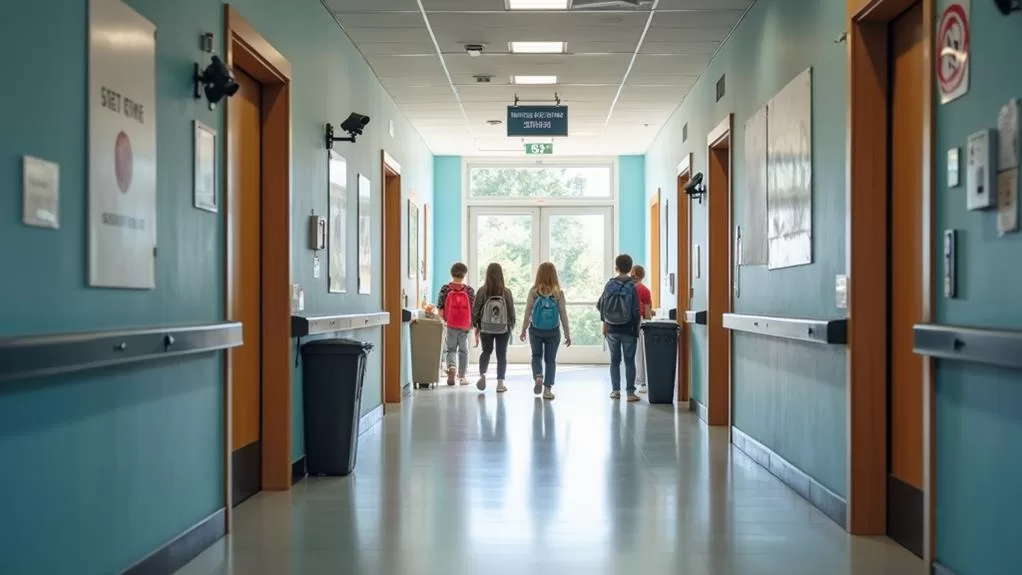
AI camera systems greatly improve school security by leveraging AI-powered threat detection, which analyzes video feeds in real-time to identify potential risks such as unauthorized access or suspicious behavior. These systems trigger immediate alerts to relevant personnel, facilitating swift and effective security responses.
Furthermore, features like Smart AI Human Detection guarantee that false alarms are minimized, making the system more reliable. Additionally, integrating AI technology with access control systems guarantees that only authorized individuals can enter the school, further strengthening security measures.
AI-Powered Threat Detection
When it comes to enhancing security measures in schools, real-time threat detection is essential. AI-powered threat detection systems play a significant role in this endeavor by providing real-time analysis of potential threats. These systems leverage advanced AI and machine learning to examine real-time data, quickly identifying and responding to threats with exceptional accuracy.
A key capability of these AI camera systems is automated weapons detection. This feature allows for immediate threat identification, enabling security teams to take prompt action against potential dangers. By integrating with existing surveillance cameras, AI can transform these into smart detectors capable of spotting various types of weapons, including handguns, semi-automatics, and knives.
AI evaluates data to identify weaknesses in security protocols and highlights areas for improvement, making it a proactive tool in enhancing school safety. It can differentiate between harmless objects and potential dangers, providing contextually aware threat assessment.
This proactive threat detection is particularly effective in analyzing anomalies and unusual behavior in real-time, alerting security personnel to take immediate action.
Real-Time Alert Systems
Real-time alert systems in AI camera systems kick into action the moment a potential security threat is detected, providing immediate notifications that enable swift response. These systems use AI algorithms to analyze video feeds and identify anomalies or suspicious activities, such as unauthorized access, unusual behavior, or the presence of prohibited items.
In a school environment, these real-time alert systems are vital for enhancing security measures. Alerts can be customized to notify security personnel, administrators, or law enforcement based on the severity of the threat, ensuring that the right people are informed at the right time. This proactive approach notably improves response times and overall security posture.
Integration with access control systems is another key feature, enabling automatic responses like lockdown procedures in case of emergencies. This seamless integration ensures a coordinated and swift response to potential threats, further bolstering school security.
Integrated Access Control
Integrated access management systems are a crucial element of improving security measures in schools. These systems guarantee that only authorized individuals can enter specific areas, greatly enhancing the safety of students, staff, and visitors. By thwarting unauthorized entry, integrated access management systems play a crucial role in upholding a secure environment within educational facilities.
Incorporating access management with other security measures, such as AI camera systems, offers a thorough security solution. This integration allows for real-time monitoring and control of access points, contributing to a proactive approach to school safety.
For example, if an unauthorized individual tries to access a restricted area, the system can promptly alert security personnel, enabling a swift response to potential threats.
The capability to limit access to sensitive areas further improves security. Customizable access permissions can be set for different user groups, ensuring that faculty, students, and visitors only have access to areas relevant to their roles. This not only improves overall security but also helps in compliance with safety and security regulations.
Balancing Privacy Concerns
When implementing AI camera systems in schools, balancing privacy concerns is pivotal. To do this, I must consider automated privacy masking, which can obscure sensitive areas or individuals to protect their privacy while still allowing for effective surveillance.
Additionally, adopting balanced surveillance strategies guarantees that safety measures are enhanced without compromising student data, adhering to regulations like FERPA and state-specific laws that govern the handling of student information.
Automated Privacy Masking
As we explore the world of AI camera systems in schools, it's important to address the delicate balance between security and privacy. Automated privacy masking is a vital feature in AI camera systems that helps protect the identities of individuals in school settings. This technology automatically obscures faces and sensitive information in real-time video feeds, guaranteeing compliance with data protection regulations like FERPA and GDPR.
- Protects Personal Information: By masking faces and sensitive areas, AI camera systems safeguard personal information from unauthorized access.
- Compliance with Regulations: Automated privacy masking guarantees schools comply with stringent data protection regulations.
Customizable Privacy Settings**: Schools can tailor privacy settings to meet specific requirements while maintaining robust security measures.
– Balances Safety and Privacy: This technology strikes a balance between enhancing security and respecting individual privacy.
Balanced Surveillance Strategies
Balancing safety and privacy is an important challenge for schools adopting AI camera systems, especially given the sensitive nature of educational environments. To address this, schools must implement balanced surveillance strategies that prioritize both security and individual privacy.
Effective security strategies involve integrating AI camera systems with features such as facial recognition and object detection, while guaranteeing robust privacy protection measures are in place. This includes data encryption and strict access control to safeguard sensitive information. Transparent policies and consent mechanisms are essential to address privacy issues and maintain trust among students, staff, and families.
Proactive measures, such as automated privacy masking, can help schools respect individual privacy rights while maintaining security.
For example, AI cameras can generate both redacted and unredacted streams, allowing for privacy masking in public view while preserving full visibility for administrators when required. Compliance with privacy regulations and regular auditing ensure that the ethical use of surveillance technology is upheld, mitigating potential risks and misuse.
Effective Access Control
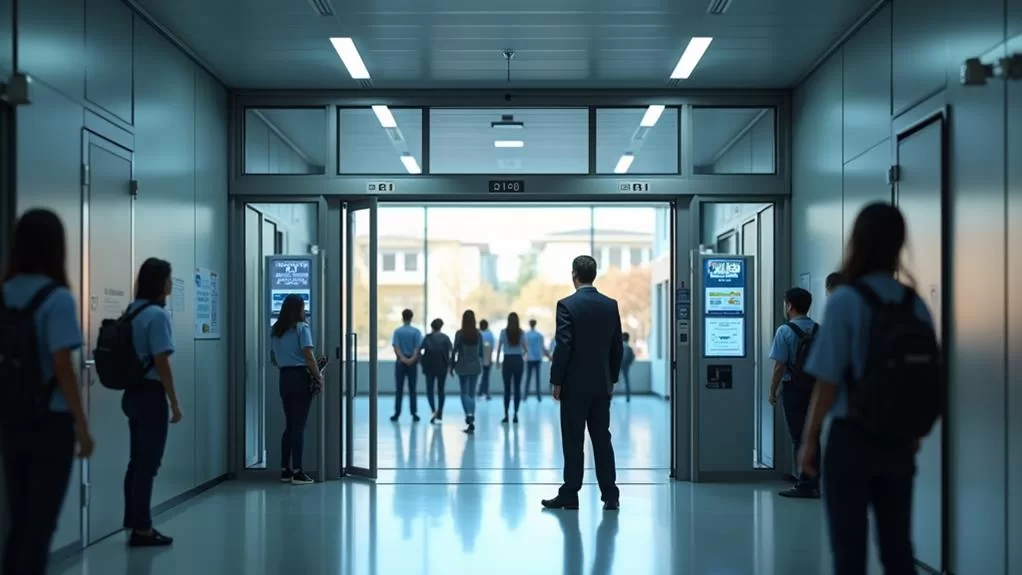
Effective access control is important for maintaining the security and privacy of schools, and integrating this with AI camera systems greatly enhances these measures. Access control systems play a vital role in ensuring that only authorized personnel can enter designated areas, thereby enhancing overall safety and privacy.
These systems use various authentication methods such as biometric authentication, key cards, and PINs to improve security measures. For example, integrating biometric authentication with motion detection and smart alerts can greatly enhance the effectiveness of access control measures. Here are some key ways these systems work:
- Prevent Unauthorized Access: Access control solutions help prevent unauthorized entry to classrooms, offices, and other restricted areas within school premises.
- Enhance Security: Biometric authentication, such as fingerprints, iris scans, and facial recognition, offers higher security than traditional methods like key cards or passwords.
- Designated Access: Only authorized individuals can enter specific areas, ensuring that sensitive zones remain secure.
- Complete Security Solution: Integration with AI camera systems provides a complete security solution, enabling real-time monitoring and response to security incidents.
Intelligent Video Analytics
Intelligent video analytics in AI camera systems elevate school security to the next level by analyzing real-time footage to detect potential threats. These systems use sophisticated AI algorithms to differentiate between normal activities and suspicious behavior in school environments, making them highly effective in maintaining a safe learning environment.
AI-powered cameras can identify unauthorized access, weapons, and other safety concerns with high accuracy. For instance, they can flag unusual human or vehicle movement on campus, alerting security personnel to potential threats such as break-ins, vandalism, and trespassing.
Real-time alerts generated by intelligent video analytics enable quick responses to security incidents. This immediacy is pivotal in preventing escalation and ensuring prompt intervention in cases of bullying, fights, or other conflicts.
The integration of these systems enhances proactive security measures, allowing schools to react swiftly and effectively. By automatically detecting and categorizing various types of activity, intelligent video analytics help schools maintain a secure environment, optimizing resource allocation and reducing the risk of human error. This proactive approach guarantees that schools can provide a safe and secure environment for students and staff.
Proactive Incident Response
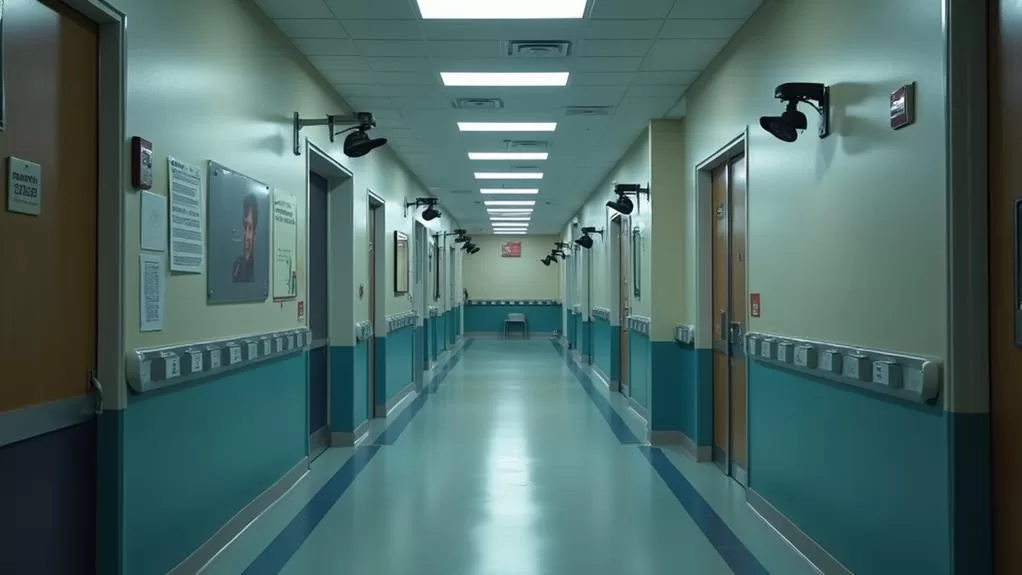
Proactive incident response is crucial in school security, and AI camera systems play a pivotal role in this process. These systems enable schools to detect potential threats in real-time, significantly enhancing their capacity to respond swiftly and effectively.
AI camera systems use advanced algorithms to analyze video feeds for anomalies such as unauthorized access or suspicious behavior. When these anomalies are detected, the system triggers immediate alerts to security personnel, allowing them to respond quickly to security incidents. This proactive approach can prevent security threats from escalating into more severe situations.
Here are some key benefits of AI camera systems in proactive incident response:
- Real-time alerts: AI systems provide instant notifications to security personnel when potential threats are identified.
- Advanced threat detection: AI algorithms can recognize and alert on suspicious behavior, such as unauthorized individuals or dangerous objects.
- Enhanced response: AI-powered cameras facilitate clear communication and dynamic video feeds, enabling security personnel to track and address threats efficiently.
- Preventive measures: By identifying patterns and anomalies, AI systems help schools take proactive measures to mitigate security risks before they become incidents.
Data Management and Compliance
As AI camera systems enhance school security through real-time threat detection and response, managing the data they generate is just as significant. Schools must comply with stringent data protection laws, such as FERPA, to guarantee the privacy of student information. FERPA regulates the collection, use, and disclosure of personally identifiable information (PII) in educational records, which includes data generated by surveillance systems.
Clear policies on data usage and secure storage are vital for safeguarding student data. This involves encrypting data both in transit and at rest and implementing robust access control and authentication mechanisms to prevent unauthorized access. Personal and special category data, such as those captured by AI cameras, should be handled confidentially to maintain compliance with privacy regulations.
Educating students and staff about data privacy rights and ethical practices is essential for fostering a culture of responsibility. Schools must also adhere to legal standards and ethical considerations when managing data in AI camera systems. This includes ensuring data minimization, where only necessary information is collected and processed, and providing mechanisms for individuals to access and amend their data.
Frequently Asked Questions
Should Schools Have Surveillance Cameras in Each Classroom?
I think schools should consider surveillance cameras in classrooms, but it's important to address privacy concerns, guarantee parental consent, and establish clear policies to mitigate trust issues and ethical dilemmas while maximizing safety benefits and behavioral changes.
What Is the AI Security Camera for Schools?
AI security cameras in schools use facial recognition, behavior monitoring, and real-time alerts to detect threats, while addressing privacy concerns, data storage issues, and requiring parent consent, with remote access and intrusion detection capabilities.
What Is the Security and Safety of Ai?
When using AI security cameras, I consider privacy concerns, data protection, and ethical implications. Facial recognition and behavior monitoring must be balanced with intrusion detection and risk assessment to prevent cyber attacks, ensuring secure and responsible surveillance.
How Can Surveillance at School Be Problematic?
Surveillance at school can be problematic because it erodes student autonomy, raises privacy concerns, and has ethical implications, leading to trust issues, legal ramifications, and data protection concerns, while also requiring clear consent for behavioral monitoring.
Final Thoughts
To sum up, incorporating AI camera systems in schools greatly improves security through real-time threat detection and proactive incident response. However, this needs to be balanced with strict privacy measures. By utilizing AI-powered cameras with integrated privacy features, schools can guarantee both safety and respect for individual privacy. Effective access control, intelligent video analytics, and transparent data management are essential in maintaining this balance, securing a safe yet respectful learning environment for all.