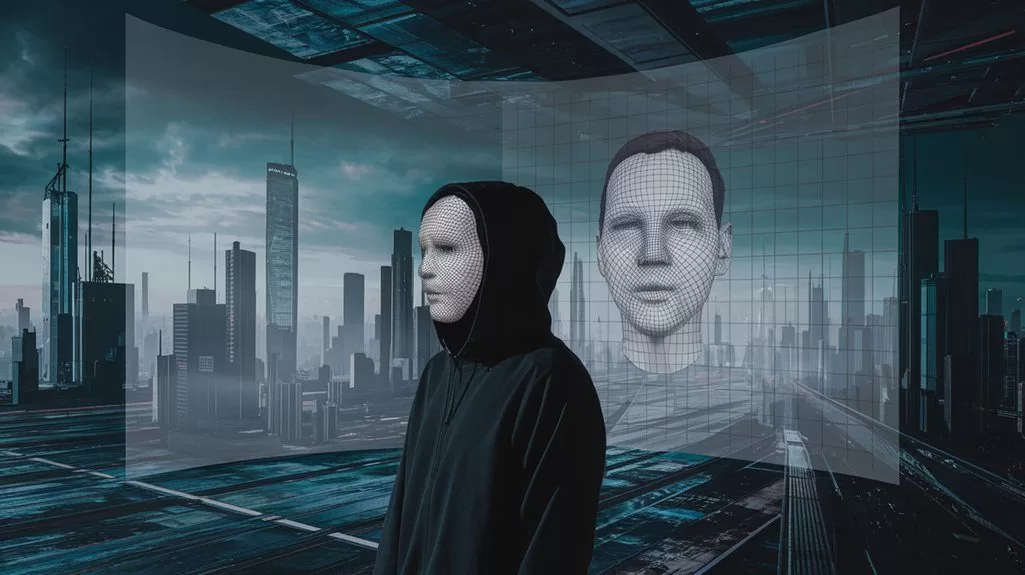


When it comes to managing security and privacy in facial recognition surveillance, several primary factors need to be considered. To start with, facial data must be properly encrypted and stored securely to minimize the risk of data breaches and identity theft. Transparency about the use of facial recognition technology and user consent are essential. Balancing security goals with privacy concerns involves refining algorithms to reduce bias and ensuring operational efficiency does not compromise transparency. Looking forward, I explore these important issues to examine how ethical use, enhanced regulation, and accountability can safeguard individual rights while leveraging the technology for public safety.
Key Takeaways
- Transparency and accountability are crucial in regulating facial recognition.
- Principles of 'privacy by design' enhance accountability and minimize risks.
- Enhanced algorithm testing reduces false positives.
- Stronger data privacy laws are needed for responsible governance.
- Federal regulations should restrict the storage of facial images.
Privacy Concerns and Risks
As the use of facial recognition technology becomes increasingly widespread, its lack of security measures has raised significant privacy concerns, with facial data remaining vulnerable to breaches, identity theft, and stalking due to the inability to encrypt faces. The security issues surrounding facial recognition raise questions about the confidentiality and integrity of the data collected and stored.
The risk of data breaches is heightened by the fact that both government and commercial databases using facial recognition are susceptible to hacking, compromising personal information. Moreover, the use of standardized configurations in facial recognition systems can lead to compromised security and privacy, amplifying the potential consequences.
Both the collection and storage of facial data without proper regulation pose considerable privacy risks. The remote capturing and storage of faces heighten privacy risks, with concerns over tracking individual locations and associations.
These issues demand immediate attention as facial recognition technology continues to permeate various aspects of our lives, necessitating a regulatory road forward that guarantees data privacy and protects biometric data from exploitation.
Regulatory Landscape and Challenges
As I continue to explore the regulatory landscape and challenges of facial recognition surveillance, it becomes clear that balancing security and privacy is a pressing concern.
A key starting point lies in implementing commercial regulations that prioritize public anonymity and protections for sensitive data.
Commercial Regulations Gladly
Multiple localities across the United States have enacted or proposed regulations governing the commercial use of facial recognition technology, further complicating the regulatory landscape for businesses.
This patchwork of state and local laws poses compliance challenges for companies that operate nationwide. For instance, cities like Portland, Oregon, and Baltimore, Maryland have direct regulations in place, while states like Illinois, Texas, and Washington have their own specific rules.
Furthermore, privacy laws like the California Consumer Privacy Act (CCPA) and Virginia's Consumer Data Protection Act also impact commercial use.
Proposed federal legislation like the Facial Recognition and Biometric Technology Moratorium Act of 2021 and the Fourth Amendment Is Not for Sale Act add another layer of potential regulations.
- Illinois, Texas, and Washington: State laws govern commercial use
- Portland and Baltimore: Cities regulate facial recognition directly
- CCPA and VCPDA: State privacy laws impact commercial use
- Federal Proposals: Moratorium and Fourth Amendment acts aim to regulate use
Public Anonymity Protections
The patchwork of state and local regulations aimed at protecting public anonymity fundamentally changes the operating environment for facial recognition technology within government and commercial settings. As I dig deeper into the regulations, I find that Women's part of these directives are focused on limiting facial recognition use in commercial contexts. States like California and Virginia, through laws such as the CCPA and Consumer Data Protection Act, respectively, have introduced stringent constraints on the collection and use of facial recognition data for commercial purposes.
| Regulation Type | Jurisdiction | Impact on Facial Recognition |
|---|---|---|
| Commercial Laws | Illinois, Texas, Washington, California, Colorado | Limits on commercial use and data collection |
| State-level Bans | Vermont, Maine | Government employment restrictions |
| Local Regulations | San Francisco, Oakland, Berkeley, Portland, Oakland | Direct controls on government and commercial use |
These regulations signify a growing need to guarantee the privacy and security of individuals. As technology advances, such controls are essential in maintaining public trust in the use of facial recognition.
Transparency Mandates
Facial recognition surveillance requires a clear regulatory landscape where transparent disclosure is made about data collection and usage practices to guarantee compliance with privacy regulations. An essential aspect of managing security and privacy in this scenario is making sure transparency mandates are strictly followed. This involves providing users with detailed information about how their facial data is collected, used, and shared.
Regulatory frameworks like GDPR and CCPA emphasize transparency: Clear guidelines and regulations are set out to maintain trust and uphold responsible handling of facial data.
Operational efficiency must be balanced with transparency: Though clear communication is necessary, it shouldn't hinder the efficiency of surveillance operations.
Transparent communication builds trust and compliance: By informing users about facial recognition practices, organizations can build trust and adhere to privacy regulations.
Transparency mitigates privacy concerns and enhances accountability: Clear disclosure helps to alleviate worries about data misuse and ensures that organizations are held accountable for their actions.
This strict adherence to transparency mandates will foster trust among users and protect their privacy rights in the context of facial recognition surveillance.
Balancing Security and Privacy

As I explore the development of facial recognition surveillance systems, I must carefully weigh privacy and security concerns to guarantee robust data protection and ethical deployment, taking into account the delicate balance between maximizing security benefits and safeguarding individual privacy.
The stakes are high, as misidentification, data breaches, and the lack of consent mechanisms can have significant repercussions.
To address these concerns, I must highlight transparency, user consent, and privacy by design principles. Effective data protection measures are vital to prevent unauthorized access and ensure data is stored securely. Regular algorithm refinement is also necessary to minimize bias and inaccuracies. Moreover, compliance with privacy regulations is essential to ensure accountability.
Ultimately, striking the right balance between security objectives and privacy considerations is key. I must prioritize both, continually testing and refining my approach to protect individuals while maintaining the integrity of the system.
Accurate and Reliable Algorithms
By integrating quality control measures into the development and deployment of facial recognition systems, continuous refinement of algorithms becomes the foundation for reducing false positives and guaranteeing the accuracy and reliability of these technologies.
To successfully achieve this, several critical steps must be taken:
- Enhanced Algorithm Testing: Regular evaluation and fine-tuning of algorithms help minimize false positive rates.
- Quality Assurance: Implementing rigorous quality assurance processes guarantees consistent performance and reliability.
- Priority on Accuracy: Prioritizing accuracy in algorithm development and implementation is essential for maintaining effective surveillance outcomes.
- Mitigating Privacy Risks: Emphasizing accuracy and reliability in facial recognition algorithms greatly reduces privacy risks and enhances the technology's trustworthiness.
Through the integration of these practices, facial recognition systems can effectively achieve a balance between surveillance goals and data privacy considerations.
Protections and Oversight Mechanisms

I'll now examine the vital role played by oversight mechanisms and protections in guaranteeing the responsible use of facial recognition surveillance systems.
The development and deployment of facial recognition technology have sparked significant privacy concerns, and it's essential that robust safeguards are put in place to mitigate any potential abuses.
To address these concerns, federal regulations should be established to limit the storage of facial images and prevent misuses by both law enforcement and private organizations. Specialized training for system operators is also necessary to minimize the risks of biases and incorrect identifications. Additionally, guidelines tailored to specific use cases will help secure that the technology is used in an ethical and accountable manner.
The National Institute of Standards and Technology (NIST) should serve as a central hub for government activities related to facial recognition technology. This would streamline efforts to enhance the accuracy of these systems and develop industrywide standards.
Moreover, grants for law enforcement agencies to comply with technical requirements should be made available, ensuring that there's a robust framework for the use of facial recognition surveillance in the public sector.
Future of Facial Recognition Surveillance
Each year, new technologies bring forth both innovative advantages and pressing ethical dilemmas, and facial recognition surveillance stands at the forefront of this intersection. As I explore the domain of this rapidly evolving field, I find that its future is marked by ongoing legal and ethical debates about its equitable use and potential risks of misuse.
These concerns stem from the substantial power granted to law enforcement agencies, government entities, and private companies to collect and analyze vast amounts of data.
Privacy Concerns of data misuse and unregulated collection addressed.
Data privacy laws need strengthening for accountable governance.
Industry standards must be established for ethical use.
Human rights implications a major topic in the ethical debate.
We must harness this technology in a way that guarantees responsible governance and regulation, balancing security needs with the need to protect the privacy and human rights of all individuals.
It's essential for both lawmakers and industry leaders to engage in active discussions that shape the responsible use of facial recognition surveillance, guaranteeing its power is employed in a manner that respects individual privacy and dignity.
Frequently Asked Questions
How Should Facial Recognition Be Regulated?
As I navigate the intricacies of facial recognition regulation, I believe implementing robust government oversight, ethical considerations, data protection, user consent, and technology limitations are crucial to mitigate biases while ensuring public trust and accountability through international standards and legal frameworks.
How Is Facial Recognition Used in Surveillance?
"I use facial recognition in surveillance by leveraging advanced algorithms for accurate identification, but I'm cautious about privacy concerns, ethical implications, and public perception, ensuring robust data protection and security measures to mitigate risks."
How Does Facial Recognition Prevent Identity Theft?
"I prevent identity theft by leveraging facial recognition for robust identity verification. This biometric security method uses facial authentication to validate my identity, ensuring privacy protection through data encryption and advanced cybersecurity measures for enhanced fraud detection."
What Is the Problem With Facial Recognition System?
I find facial recognition systems problematic because they raise privacy concerns, have ethical implications, and can be biased, with accuracy issues. Data protection and legal challenges also exist, as facial authentication via surveillance technology can analyze facial features, posing significant security risks.