

When setting up a PoE security system, choosing the right camera placement strategies and integrating intelligent motion detection are essential to maximize coverage, prevent glare, and enhance overall surveillance. We position cameras at ideal locations like entry points, ensuring they face downward to capture clear footage. Strategically determining camera heights and angles helps capture the broadest possible area while minimizing blind spots. Adequate power supply and thoughtful network layout, including PoE extenders, also guarantee reliable connectivity and efficient data transmission. By understanding these fundamental principles and fine-tuning our system, we can optimize the full potential of intelligent motion detection, providing the best possible security solution for our needs.
Key Takeaways
- Identify optimal locations for cameras, considering entry points and facial ID.
- Power cameras efficiently with PoE NVRs, switches, and injectors.
- Configure motion detection areas strategically to reduce false alarms.
- Adjust sensitivity levels for each detection zone to suit specific conditions.
- Regularly fine-tune motion detection settings for peak performance.
Best Camera Placement Strategies
When setting up POE security with intelligent motion detection, placement strategy is key, and we recommend situating cameras at optimal locations such as entry points, mounting at a height that captures faces for clear identification, and avoiding direct light sources to prevent glare. This guarantees that even when motion detection triggers alerts, the recorded footage clearly shows the intruder's features, facilitating effective identification and response.
Covering all entry points, such as front and back doors, windows, and garage doors, provides thorough security. For better coverage, place cameras at a height of around 7 to 9 feet above the ground to capture faces and prevent tampering. Using corner mounts can help to achieve broader viewing angles in rooms or hallways.
Additionally, consider areas with limited visibility, ensuring that there are no blind spots for intruders to exploit. Proper placement also enhances the accuracy of motion detection, which we'll delve into further in our intelligent motion detection discussion.
Powering Poe Cameras Efficiently
As we set up our Poe security system, we need to guarantee that our cameras are powered efficiently to maximize their performance.
This means considering our power supply options, including PoE NVRs, switches, injectors, and even 12V DC power supplies for added flexibility.
PoE Power Options
For both scalability and reliability, PoE systems rely on a range of power options that guarantee efficient powering of PoE cameras, including PoE NVRs, PoE switches, PoE injectors, and 12V DC power supplies. These options are essential to guarantee that our cameras continue to operate smoothly and effectively.
- PoE NVRs centralize power management, recording, and video data, making it easy to manage and monitor our security system.
- PoE switches provide both power and network connectivity to PoE cameras, streamlining the installation process and reducing complexity.
- PoE injectors inject power into the router for PoE camera operation, ensuring that cameras are powered efficiently.
- 12V DC power supplies offer an alternative power source for cameras when a PoE switch or injector isn't used.
- Understanding power requirements is vital to choose the right power option for our PoE cameras and avoid any performance issues.
These varied power options enhance the reliability and efficiency of our PoE security system, making intelligent motion detection possible.
Power Supply Considerations
To secure efficient power supply to our PoE cameras, we explore the various alternatives that secure reliable operations for intelligent motion detection. PoE cameras make our lives easier, but only when the power supply is robust. A PoE switch or NVR secures that multiple cameras get power without the need for separate cables, centralizing power management and making it easier to maintain. We also have PoE injectors that insert power into the router, offering another streamlined power supply solution.
| PoE Power Option | Key Benefit |
|---|---|
| PoE Switch | Centralized power management |
| PoE Injector | Streamlined power insertion into the router |
| PoE NVR | Built-in power management and subnet security |
Configuring Motion Detection Zones
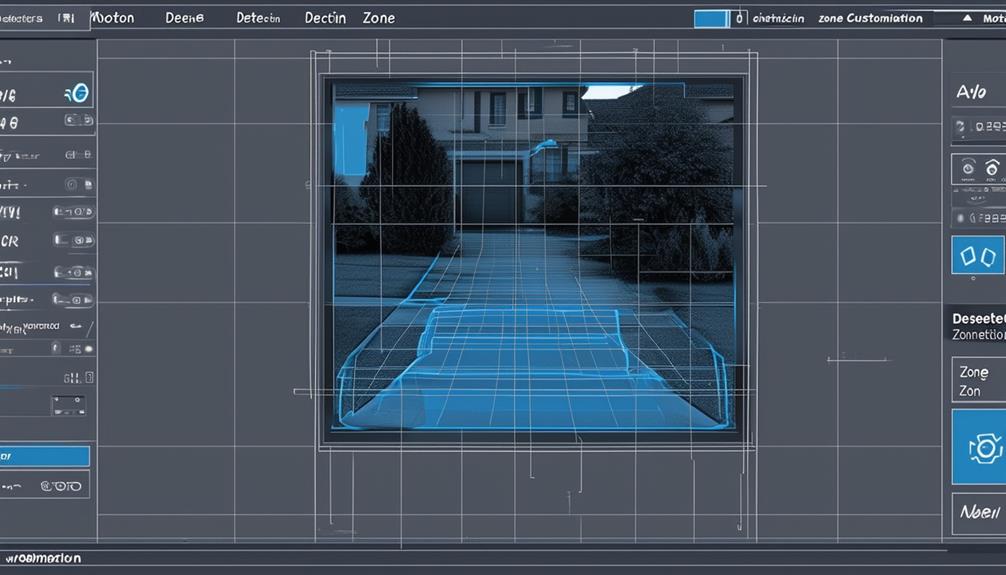
By definitively establishing motion detection areas within our security cameras, we ensure that our surveillance system focuses on specific important areas, disregarding irrelevant movements and optimizing performance. This essential feature guarantees that alerts are only triggered by meaningful motion, reducing false alarms and enhancing the overall efficiency of our security setup.
Here are some key aspects to keep in mind when configuring motion detection areas:
- Customize detection areas: Define precise regions in the camera's view where motion detection matters most, ensuring that alerts are triggered only when necessary.
- Set sensitivity levels: Adjust sensitivity levels for each area to suit specific conditions, ensuring that the system is responsive yet not overly reactive.
- Optimize area placement: Place areas strategically to capture vital zones, such as entrances, and avoid areas prone to irrelevant motion like moving trees or streets.
- Adjust area sizes: Modify area sizes to fit specific requirements, ensuring that monitoring is accurate and targeted.
- Regular fine-tuning: Regularly review and refine motion detection areas to maintain peak performance and minimize false alerts.
With these steps in place, our motion detection areas become a valuable component of our intelligent security system, providing reliable monitoring and peace of mind.
Installation and Setup Tips
As we set up our PoE security systems, ensuring that each component is correctly installed and configured is vital.
This includes planning camera placement strategically to avoid blind spots, connecting the necessary cables and NVR, and setting up motion detection features accurately.
Proper installation and setup will give us confidence in our system's ability to effectively monitor and protect our properties.
Installation Essentials
We carefully plan the placement of each camera and set up the motion detection areas according to our specific surveillance needs, making sure that everything is configured for best performance. This vital step guarantees that we take advantage of the intelligent motion detection features in our Poe security system. By strategically positioning cameras and setting motion detection zones, we achieve thorough coverage and minimize false alerts.
To achieve this, we follow these necessary steps:
- Strategic Camera Placement: We place cameras at ideal angles and heights to capture clear images, focusing on high-risk areas like entrances and windows.
- Proper Mounting and Installation: We make sure that each camera is securely mounted and connected to the NVR using Ethernet cables, ensuring stability and reliability.
- Configuring Motion Detection: We customize motion detection settings to suit our specific surveillance goals, setting sensitivity levels and detection zones to reduce false alarms.
- Cable Management: We confirm that cables are securely connected and protected from the elements to prevent damage.
- Periodic System Check: We regularly review and update our system settings to adapt to any changes in our environment.
PoE System Setup
When setting up your PoE system, start by configuring the cameras' motion detection settings in the software interface to guarantee peak performance and minimize false alerts. This essential step ensures that your cameras are fine-tuned to accurately identify motion triggers, reducing the likelihood of unnecessary alarms.
Proper camera placement is crucial to maximize the effectiveness of motion detection. By strategically positioning your cameras to cover the desired area, you can ensure optimal detection sensitivity and avoid blind spots. This thoughtful setup process ensures that your PoE system is working in harmony to provide reliable security.
Two key aspects to focus on during setup are motion detection and camera placement. By carefully configuring motion detection settings and strategically placing cameras, you can ensure that your PoE system is both efficient and effective.
Common Installation Problems
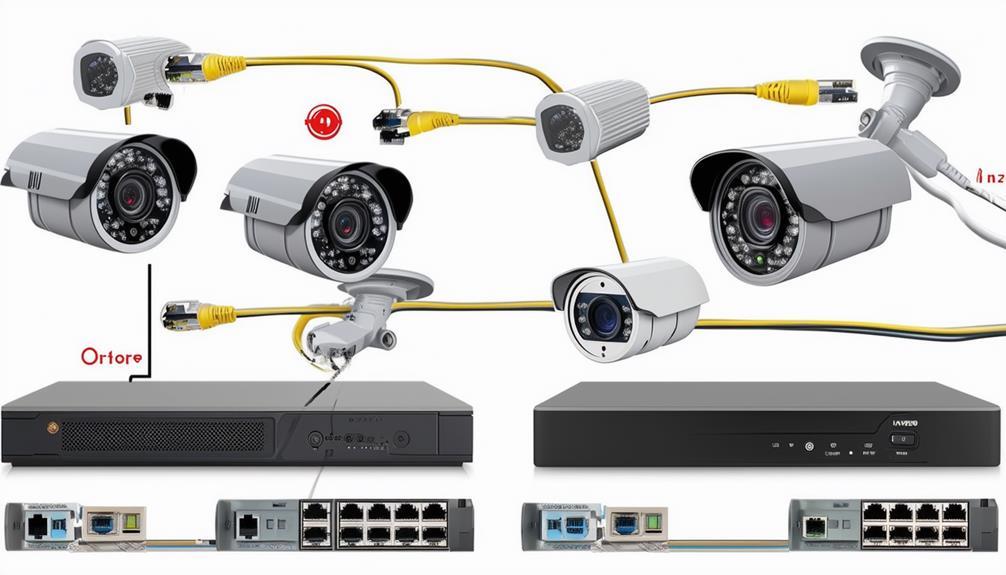
Setting up a PoE security system with intelligent motion detection can be an effective security solution. However, we often face common installation problems that can hinder the full potential of our surveillance system.
Some of the most common issues we encounter include:
- Cable Connection Issues: Confirm all cables are securely connected to the NVR and cameras to prevent data loss and connectivity problems.
- IP Address Conflicts: Allocate unique IP addresses to each device to avoid conflicts and ensure smooth communication between components.
- NVR Compatibility Issues: Validate compatibility between the NVR and cameras prior to installation to avoid hiccups during setup.
- Camera Placement Mistakes: Strategically position cameras to maximize coverage and avoid blind spots.
- Power Supply Failures: Regularly check power supplies and connections to prevent disruptions to your security system.
Overcoming Poe System Limitations
Overcoming the limitations of a PoE security system necessitates thoughtful planning.
To guarantee a robust setup, we must consider the constraints of network capacity, the length restrictions of cables, and how to handle power supply requirements.
Network Capacity Planning
To secure seamless performance of our PoE system, we must meticulously assess network capacity to guarantee sufficient bandwidth and optimize data transmission. Evaluating network capacity secures that we provide the necessary foundation for our PoE devices to operate efficiently. Key considerations include the number of devices, data transmission speeds, and the potential for network congestion.
- Data Transmission Speeds: Understanding how much bandwidth is needed for our PoE devices helps us anticipate and prepare for capacity demands.
- Network Congestion: Identifying high-bandwidth applications and prioritizing our PoE devices using Quality of Service (QoS) settings secures uninterrupted data transmission.
- Centralized Monitoring: Regularly monitoring network traffic allows us to quickly respond to congestion issues and make adjustments as needed.
- Capacity Forecasting: Predicting future capacity needs enables us to upgrade or add infrastructure before it becomes a limitation.
- Optimization Techniques: Applying various optimization techniques such as latency reduction and packet prioritization further secures smooth network operations.
Cable Length Limitations
Our detailed PoE network layout must take into account the 100-meter cable length limitation to guarantee seamless power and data transmission. This limitation can pose a significant challenge in setting up our PoE security system. Luckily, we've tools at our disposal to overcome this obstacle.
One effective solution is the use of PoE extenders. These devices can greatly increase the transmission distance of PoE signals, often extending it up to 300 meters or more. This gives us the flexibility to place our PoE devices wherever they're needed, without being constrained by the cable length.
Another approach is to utilize PoE switches with extended power budgets. These switches can provide power to devices further away, mitigating the impact of cable length limitations.
High-quality Ethernet cables also play an essential role in maintaining signal integrity over longer distances, ensuring that our data and power transmission remain reliable.
Power Supply Considerations
We need to secure our PoE security cameras have a dependable power supply under all circumstances, which is essential for continuous surveillance and efficient system performance. A dependable power supply helps us avoid any potential system downtime and confirms that our security cameras keep recording even during power outages or irregularities. This is especially crucial for locations that experience frequent brownouts.
There are several key considerations to keep in mind to secure our PoE system remains operational and reliable:
- Invest in high-quality PoE switches that adhere to IEEE standards, securing stable power delivery even at maximum cable lengths of 100 meters.
- Utilize power management features in our NVR to monitor and optimize power usage for our PoE cameras.
- Regularly check power supply connections and cables to prevent any power-related issues with our PoE security system.
- Consider using a UPS (Uninterruptible Power Supply) to secure continuous power supply to our PoE cameras, particularly for critical locations.
- Confirm all PoE devices are compatible with PoE standards and are designed for reliable power delivery.
Effective Surveillance Techniques

Effective monitoring techniques rely on leveraging intelligent motion detection to differentiate between genuine threats and nuisance alerts, resulting in a more refined security system.
By utilising advanced algorithms, intelligent motion detection can distinguish between humans and other motion triggers like pets or environmental factors. This notably reduces false alarms, ensuring that operators are only alerted to genuine security threats.
Integrating AI-powered motion detection with PoE security cameras takes surveillance efficiency to the next level. These cameras are equipped with advanced features like person, vehicle, and facial detection, making them highly accurate in identifying potential threats. Users can customize the sensitivity levels and detection zones to guarantee precise monitoring of specific areas, which elevates overall surveillance efficiency.
Combining intelligent motion detection with PoE security cameras provides a robust surveillance solution. It not only enhances security but also reduces the operational burden on monitoring centers due to minimized false alarms. This fusion of advanced technologies strengthens our ability to detect and respond to threats, ultimately enacting a safer and more secure environment.
Poe Camera Network Configuration
To guarantee a seamless and reliable PoE camera setup, it is essential to consider a few key factors. Firstly, ensure that the Ethernet cables used are of high quality and meet the required standards for Power over Ethernet (PoE) transmission. This will help prevent any power loss or interference, ensuring a stable connection for the camera system. Additionally, it is important to use PoE switches or injectors that are compatible with the cameras being used. These devices provide the necessary power and data transmission capabilities required for PoE cameras to function correctly. Proper network configuration and setup are also crucial for the efficient operation of PoE cameras. This involves ensuring that the network infrastructure can support the additional power and data requirements of the cameras, as well as configuring the network settings to optimize performance. Regular maintenance and monitoring of the PoE camera system are also recommended to identify and address any issues promptly. By paying attention to these factors and implementing best practices, you can ensure a seamless and reliable PoE camera setup for your surveillance needs.
It is also worth considering using a Uninterruptible Power Supply (UPS) to provide backup power in case of outages or fluctuations in the electrical supply. This can help prevent downtime and ensure continuous operation of the PoE camera system, even during power disruptions. Lastly, proper grounding and surge protection measures should be in place to safeguard the PoE cameras from electrical surges and potential damage. By taking these precautions and following best practices, you can enhance the reliability and performance of your PoE camera setup.
IoT Integration for Smart Cameras
For a more thorough home security system, smart cameras with intelligent motion detection can enhance their monitoring capabilities by integrating with IoT devices. This integration allows the smart cameras to communicate effectively with other smart home devices, creating a cohesive and detailed security system. IoT integration enables automated responses based on motion detection alerts from the smart cameras.
IoT Integration Features
| Feature | Description |
|---|---|
| Automated Alarm Triggering | Triggers an alarm when motion is detected |
| Light Activation | Turns on lights when motion is detected |
| Smartphone Alerts | Sends notifications to your smartphone |
| Intelligent Analytics | Analyzes patterns for enhanced security |
| Multi-Device Control | Allows control of multiple devices from one location |
Maintenance for Reliable Surveillance
We must prioritize regular upkeep to guarantee our surveillance equipment continues to deliver reliable and efficient performance over time. As we aim for freedom and security, it's important to maintain our cameras and systems remain in top condition to protect what matters most.
Here are some key maintenance practices to keep in mind:
- Clean Camera Lenses: Regular cleaning of lenses ensures clear image quality and peak camera performance.
- Update Firmware: Check and update firmware regularly to maintain system compatibility and security features.
- Monitor Storage Capacity: Keep track of your NVR's storage to prevent data loss and ensure uninterrupted recording.
- Inspect Cables: Check cables for damage or wear to prevent connectivity issues and ensure dependable surveillance.
- Stable Power Supply: Maintain a stable power supply to cameras to prevent outages and sustain continuous monitoring.
Frequently Asked Questions
How to Setup a Poe Security System?
"We simplify our security setup by using POE switches and NVRs, leveraging benefits like cost-effective and flexible infrastructure for setting up cameras with intelligent motion detection and remote accessibility."
How Do I Set Motion Detection on Nvr?
"We set motion detection on our NVR by adjusting sensitivity levels to minimize false alerts, strategically placing cameras, and configuring notification settings for timely alerts via email or push notifications."
Is Poe Good for Security Cameras?
Yes, we think Poe is great for security cameras – it simplifies installation, allowing flexible camera placement and integration options, and guarantees a stable power supply, all while reducing clutter.
Can I Connect Poe Switch Directly to Nvr?
'Yes, we can directly connect a PoE switch to an NVR for centralised power and data. We just confirm NVR compatibility, configure the network, and add cameras as needed for seamless security.'