
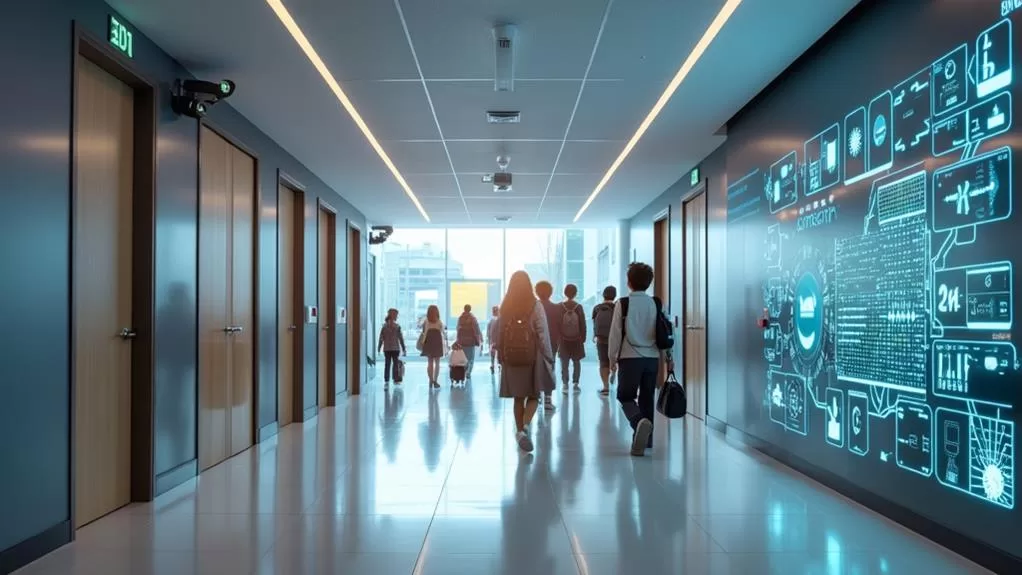

AI camera systems are revolutionizing school safety by leveraging advanced machine learning algorithms to transform traditional surveillance into proactive, real-time threat detection and response mechanisms. These systems continuously monitor for potential threats, analyze patterns, and provide immediate alerts, significantly boosting threat detection capabilities and reducing false alarms. By integrating with existing security systems, AI cameras offer a holistic security solution, enabling schools to prevent incidents before they escalate. However, implementing these systems also raises ethical and privacy concerns, such as ensuring transparency and handling sensitive data responsibly. As AI technology continues to evolve, it will play an increasingly vital role in enhancing school safety protocols, and exploring these advancements will reveal more about how they can safeguard educational environments.
Key Takeaways
- Enhanced Surveillance: AI camera systems use machine learning to interpret scenes and identify objects in real-time, elevating school safety.
- Advanced Threat Detection: AI cameras detect suspicious activities, anomalies, and unauthorized access, triggering immediate alerts for swift action.
- Real-Time Monitoring: Integration of AI technology transforms traditional cameras into intelligent observers for proactive security and incident prevention.
- Data-Driven Insights: AI systems provide analytics-driven insights, helping schools optimize security protocols and respond effectively to emergencies.
- Ethical Considerations: Implementing AI cameras raises data privacy concerns, necessitating transparency, informed consent, and robust safeguards to ensure responsible data handling[BACKGROUND].
AI Camera Systems Overview
AI camera systems are transforming school safety by leveraging artificial intelligence to enhance surveillance capabilities. These advanced systems use machine learning algorithms to interpret scenes, identify objects, and respond in real-time, enhancing security measures to a great extent. By continuously monitoring for potential threats, AI camera systems can analyze patterns, detect anomalies, and provide immediate alerts to school officials. This proactive approach to security allows for swift action in emergency situations, minimizing the risk of incidents escalating. Additionally, smart AI technology can integrate with existing NVR systems for centralized video management and remote access capabilities, providing thorough surveillance solutions for educational institutions.
Incorporating AI into security systems revolutionizes how schools address safety concerns. Unlike traditional surveillance systems that merely capture and record footage, AI camera systems act as intelligent observers, never tiring and always vigilant. They can distinguish between harmless environmental changes and real security concerns, reducing false alarms and ensuring that security personnel focus on actual threats.
This integration of AI camera systems isn’t only improving current safety protocols but also shaping the future of security technology in educational environments.
Enhanced Threat Detection
Enhanced threat detection is a cornerstone of modern school safety, and AI camera systems have greatly elevated this capability. These systems analyze real-time video feeds to identify potential risks, ensuring that schools can respond swiftly to any threats. Advanced algorithms within AI systems enable the identification of suspicious activities or individuals, pivotal in maintaining a secure learning environment.
For instance, AI Human Detection is a feature that notably reduces false alarms, enhancing the reliability of the surveillance system.
AI cameras are particularly adept at detecting anomalies such as weapons, unauthorized access, or unusual behavior, which are essential for improving safety measures. For instance, if a door is left open or a student enters a restricted area, AI cameras can alert administrators instantly, ensuring prompt action is taken.
The proactive monitoring provided by AI camera systems is indispensable. They trigger immediate alerts to authorities when they detect threats, facilitating quick response times. This real-time threat detection capability revolutionizes school safety by offering proactive measures that safeguard students and staff. By integrating AI systems into their surveillance networks, schools can enhance their security posture notably, creating a safer and more secure environment for everyone.
Real-Time Surveillance Capabilities

In the heart of modern school safety lies the real-time monitoring capability of AI camera systems. These systems are revolutionizing the way schools monitor and respond to potential risks, ensuring a safer learning environment for students and staff.
Real-Time Monitoring Capabilities
AI technology has transformed traditional security cameras into intelligent observers that can analyze video feeds in real-time, detecting anomalies and suspicious behavior with exceptional accuracy. Here are some key features of AI-powered real-time monitoring:
| Feature | Description |
|---|---|
| Threat Detection | AI algorithms identify potential risks, such as unauthorized access or suspicious behavior, and alert security personnel instantly. |
| Object Recognition | AI cameras can identify objects, individuals, and specific behaviors, enhancing overall safety and security measures. |
| Integration of AI | AI technology integrates with existing security systems, such as access control and intercoms, to create a holistic security solution. |
| Preventive Measures | Real-time monitoring enables proactive observation, allowing schools to prevent incidents before they escalate. |
| Data Analysis | AI systems provide analytics-driven insights, helping school administrators optimize security protocols and respond more effectively to emergencies. |
These capabilities make AI camera systems essential tools for ensuring a safe and secure learning environment. By leveraging real-time monitoring, schools can respond swiftly to emergencies and maintain a proactive stance against potential risks.
Ethical and Privacy Concerns
When implementing AI camera systems in schools, I must consider the ethical concerns surrounding data privacy and algorithmic bias. Constant monitoring through these systems raises significant privacy issues, including the potential misuse of surveillance data and the invasive nature of facial recognition capabilities. Ensuring transparency and obtaining informed consent are essential in balancing safety with individual rights, while adhering to regulations like GDPR and CCPA helps govern data protection and usage.
Data Privacy Issues
Implementing AI camera systems in schools raises significant data privacy concerns, as these systems inherently involve the collection and analysis of personal data. One of the primary concerns is obtaining informed consent from students, parents, and staff before capturing and processing their personal information. Transparency is essential in this scenario; schools must clearly communicate how the data will be collected, used, and stored to avoid any misunderstandings or misuse.
Ethical considerations also demand accountability, where the school administration must be responsible for handling sensitive data and making sure it isn’t compromised. This includes implementing robust safeguards such as data encryption, strict access controls, and regular security audits to protect the privacy of students and staff.
Balancing the benefits of enhanced safety with privacy rights is a key challenge. Schools must navigate privacy regulations, such as the Family Educational Rights and Privacy Act (FERPA), to ensure compliance while guaranteeing that AI camera systems don’t infringe on individual privacy rights.
Algorithmic Bias Concerns
Algorithmic bias in AI camera systems poses an essential threat to the fair and equitable treatment of students, exacerbating existing ethical and privacy concerns. This bias can lead to discriminatory outcomes based on race, gender, or other characteristics, which is particularly problematic in educational settings where inclusivity and fairness are paramount.
Concerns about privacy arise from the potential misuse of data collected by AI cameras, especially when algorithms may unfairly categorize certain groups as anomalies or deviants. For instance, facial recognition systems might predict more black faces as anomalies compared to white faces, leading to grave security mistakes and potential harm to students.
Ethical considerations include the impact of biased algorithms on student safety and well-being. Biased surveillance can create hostile environments, undermining the very purpose of enhancing school safety. Transparency in the development and deployment of AI camera systems is critical to address these concerns, ensuring that algorithms are fair and unbiased.
Safeguarding student data and ensuring fair and unbiased surveillance practices are essential in addressing ethical and privacy concerns. This involves careful data handling, diverse and representative training datasets, and continuous monitoring to detect and mitigate bias. By prioritizing transparency and ethical development, we can prevent algorithmic bias from compromising the safety and dignity of students.
Implementation and Adoption

The widespread adoption of AI camera systems in schools marks a significant shift in enhancing safety measures. These systems utilize artificial intelligence for advanced surveillance capabilities, enabling real-time identification of potential threats such as weapons or suspicious behavior. This technology is increasingly being implemented in educational settings to prevent security incidents.
Some systems, like the GW Security 15 Channel 4K NVR, feature high-definition video capture and motion detection, which contribute to more effective monitoring.
- Real-time Threat Detection: AI cameras can detect anomalies and suspicious behavior, triggering immediate alerts and speeding up response times.
- Enhanced Surveillance: AI integrates with existing cameras, transforming them into smart detectors capable of identifying potential threats using computer vision and deep learning.
- Proactive Security: AI extends the reach of school security, making staff aware of events that might require intervention, such as restricted area breaches or unusual activity.
The integration of AI technology in camera systems is revolutionizing school safety protocols. Schools like Delaware’s Appoquinimink School District and Virginia’s Prince William County Public Schools have already begun using these systems to mitigate security risks after experiencing incidents that underscored the need for proactive measures.
As schools continue to adopt AI camera systems, they’re better equipped to address the evolving landscape of security threats, ensuring a safer environment for students and staff.
Future of School Security
As we look to the future of school security, it’s clear that AI camera systems will continue to play a pivotal role in enhancing safety protocols. These advanced systems revolutionize security by providing real-time threat detection and monitoring capabilities, leveraging machine learning algorithms to analyze video feeds and identify potential risks promptly.
The integration of AI cameras enhances school safety by proactively addressing security concerns and minimizing response times during emergencies. By detecting anomalies and suspicious behavior in real-time, these systems enable quicker interventions, preventing incidents from escalating.
In the future, we can expect even more advanced surveillance features, such as improved facial recognition and object detection, to further improve security protocols in educational settings. AI camera systems will offer data-driven insights, helping schools to continuously refine and adapt their security strategies based on actual incidents and identified vulnerabilities.
Ultimately, AI camera technology will create a safer environment for students, staff, and visitors through enhanced monitoring and incident prevention. As threats continue to evolve, the proactive and predictive capabilities of these systems will be indispensable in safeguarding our schools.
Frequently Asked Questions
How Artificial Intelligence Will Change the Future of Education?
As AI advances, it will transform education by enhancing security, enabling personalized learning, and streamlining operations. Innovative technology will foster improved learning environments, making schools safer and more efficient while tailoring education to individual needs.
What Is the AI Security Camera for Schools?
An AI security camera for schools uses advanced surveillance and smart monitoring to detect threats in real time, enhancing security and preventive measures. It allows for immediate intervention to guarantee a safer learning environment.
How Does AI Increase Safety?
AI increases safety by providing real-time monitoring, analyzing behavior, and detecting threats instantly. It enables proactive intervention and enhances emergency response, ensuring swift action against potential risks and maintaining a secure environment for students and staff.
Why Should AI Be Used in Schools?
I should use AI in schools because it enhances surveillance, improves response times, prevents incidents, and analyzes patterns to detect threats. This will ultimately enhance security and create a safer environment for students and staff.
Final Thoughts
As AI camera systems continue to evolve, they are transforming the landscape of school safety. By enhancing threat detection and providing real-time surveillance, these systems enable swift responses to potential threats. While ethical and privacy concerns must be addressed, the benefits of AI-powered security are clear. As schools adopt these technologies, they pave the way for a safer, more secure educational environment, ultimately protecting students, staff, and families with precision and effectiveness.





1 comment
Comments are closed.