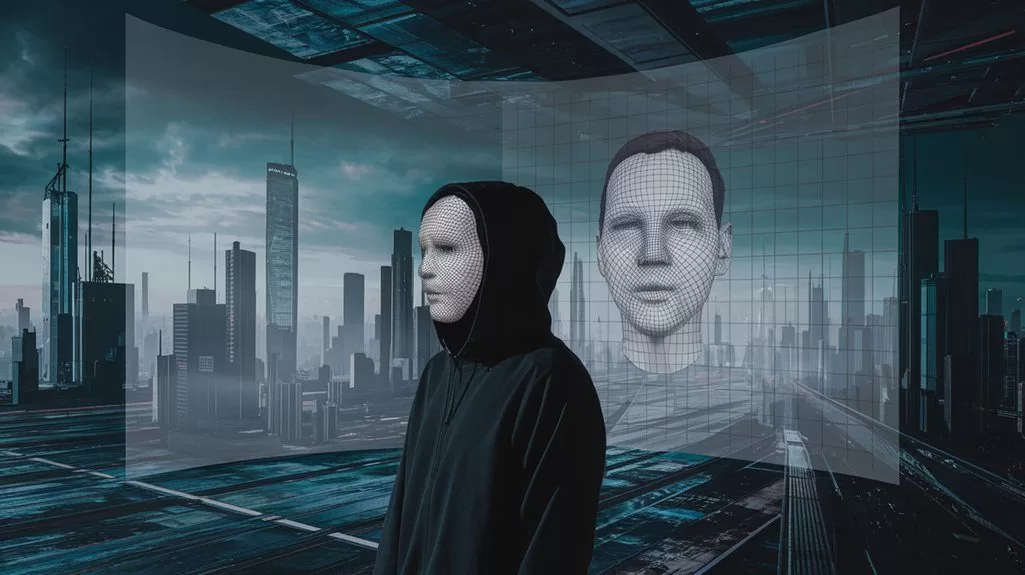

Facial recognition technology in surveillance raises vital challenges. For me, the primary issues are privacy risks, inaccuracies, and the need to balance security with ethical concerns. This technology can be invasive, lacks robust regulations, and is often biased against certain demographics. Medical conditions, mental health nuances, and corporate accountability also raise ethical red flags. With laws and technology evolving, it's essential to address these challenges head-on. And that's just the starting point; there's more to explore.
Key Takeaways
- Medical Conditions: Facial recognition accuracy can be negatively impacted by various medical conditions that alter facial features.
- Demographic Biases: Algorithms can exhibit biases against certain demographics, leading to a higher false positive error rate for individuals with darker skin tones.
- Intricate Nuances: Accurate use in mental health therapy requires special considerations and advanced algorithms to handle diverse cases.
- Corporate Accountability: Surveillance efforts raise ethical concerns when facial recognition technology is sold to law enforcement agencies without robust accountability measures.
- False Positives: Inaccuracies in facial recognition can result in false arrests, making regulatory oversight and accuracy standards essential to mitigate these risks.
Privacy Concerns and Risks
Privacy Concerns and Risks
Besides my own profile pictures scattered across social media, I didn't have much control over the facial data used in surveillance, as faces can't be encrypted and were increasingly easier to capture and store. This lack of control spells trouble for privacy and security in the age of facial recognition.
With more personal information being collected and stored in government and commercial databases, there's a higher risk of data breaches, which could result in identity theft, stalking, and harassment.
Both government and commercial databases are susceptible to hacking, causing privacy risks even greater for vulnerable groups like survivors of domestic violence and undocumented immigrants. Facial recognition technology greatly erodes privacy and anonymity in public spaces, making it difficult for individuals to avoid tracking.
The remote capture and storage of faces further emphasizes the importance of robust data protection measures to prevent these risks. Unfortunately, the use of facial recognition in everyday life leads to omnipresent surveillance, which compromises both privacy and the very principles of free speech and association.
Legal Developments and Complexities
In my exploration of facial recognition in surveillance, I came across instances where law enforcement agencies have misused technology.
Implementing robust regulations and safeguarding civil rights is crucial.
Face Recognition Misuses
How Are Cities and States Addressing Facial Recognition Misuses?
As facial recognition technology spreads into law enforcement and other sectors, have cities like San Francisco and states like Vermont taken a stand to ban and limit its use, citing concerns over potential misuses? Indeed, they have.
The challenges of facial recognition in surveillance are too significant to ignore. Privacy concerns aside, the technology is often criticized for creating a surveillance state where innocent citizens are monitored without their consent. The profound implications of false positives and data breaches have compelled cities and states to act. Moreover, the potential for algorithmic bias raises ethical questions about the reliability of such technologies, disproportionately impacting marginalized communities. As a result, lawmakers are grappling with the need to implement regulations that ensure accountability and transparency in the use of facial recognition in surveillance systems. Without robust oversight, the risks associated with misuse and overreach could undermine public trust and civil liberties.
Maine, for instance, banned the technology from schools and by government officials. Vermont, on the other hand, established the strongest prohibition on police use of facial recognition. These legal developments indicate a shifting paradigm towards government accountability.
However, we still face a long and complex regulatory road forward. Biometric data privacy remains a significant concern, and ensuring civil rights would require tackling consent issues. The fight for data protection is ongoing. We must continue to monitor and adapt as technology evolves.
Evasive Data Practices
As cities and states grapple with the implications of facial recognition, it becomes clear that regulating data practices is a challenge that must be addressed to prevent evasive tactics and guarantee accountability.
The Surveillance Devices Act in South Australia exemplifies the need for clear regulations on facial recognition data practices. Evading transparency and oversight can lead to misuse and privacy concerns, highlighting the significance of consent in enrolling in facial recognition programs. Regulations worldwide emphasize the importance of consent, aligning with consumer expectations for data protection.
Lack of transparency in handling facial recognition data can result in legal complexities and challenges related to privacy, data security, and individual rights. To address these complexities and promote responsible deployment, compliance with privacy laws, implementation of robust data security measures, and thorough ethical considerations are essential.
Transgressions in evasive data practices can be severe and far-reaching, making it vital to provide the necessary safeguards and reporting mechanisms.
Elusive Responsibility
Legal ambiguities and complexities in facial recognition surveillance stem from the lack of clear and consistent regulations, making it important to address these gaps to guarantee accountability and address emerging challenges. The absence of thorough guidelines leaves a void that hinders the ability to assign responsibility when errors or misuse occur. This vacuum fosters a sense of murky accountability, making it difficult to pinpoint and punish those who violate privacy rights or misapply facial recognition technologies.
The government has a significant role in clarifying legal responsibilities by establishing robust regulations and guidelines for facial recognition surveillance. So far, legal developments have lagged behind technological advancements, creating a regulatory landscape littered with pitfalls. Addressing this imbalance requires policymakers to create adaptable and detailed frameworks that can mitigate the dangers of widesp.
Balancing Security and Ethics
Our use of facial recognition for security inevitably triggers an unavoidable tension between our pursuit of safety and our duty to protect individual privacy and prevent misuse. Striking a balance between these two competing interests is essential, as the consequences of tilting the scales too far in either direction can be severe.
Failure to address privacy concerns and ethical considerations can lead to systemic discrimination, erosion of personal freedoms, and potential breaches of individual rights.
To guarantee that facial recognition technology is deployed responsibly, we must:
- Implement clear regulations that safeguard privacy and prevent misuse.
- Establish oversight mechanisms to monitor the use of facial recognition.
- Develop accountability frameworks to address algorithmic bias and governance.
It is by taking these steps that we can ensure facial recognition technology serves our security needs while respecting individual freedoms.
Potential Misuse and Inaccuracy
Facial recognition technology's accuracy issues, particularly among vulnerable demographics, can lead to devastating misidentifications and false arrests, highlighting the imperative to address these biases and inaccuracies in these systems.
These inaccuracies arise from demographic biases within the algorithms, often disproportionately impacting women and people of color. In a 2019 study by the National Institute of Standards and Technology, false positive error rates were notably higher for dark-skinned individuals, particularly East African women. This targeted inaccuracy can result in wrongful arrests and disparate treatment based on age, gender, and race classifications.
Concerns about profiling and surveillance based on facial recognition outcomes raise ethical and privacy implications, underscoring the potential for exacerbating existing biases in policing and criminal justice systems. The risk of false arrests stemming from inaccuracies in facial recognition systems underscores the need for regulatory oversight and accuracy standards.
Healthcare and Individual Complexity
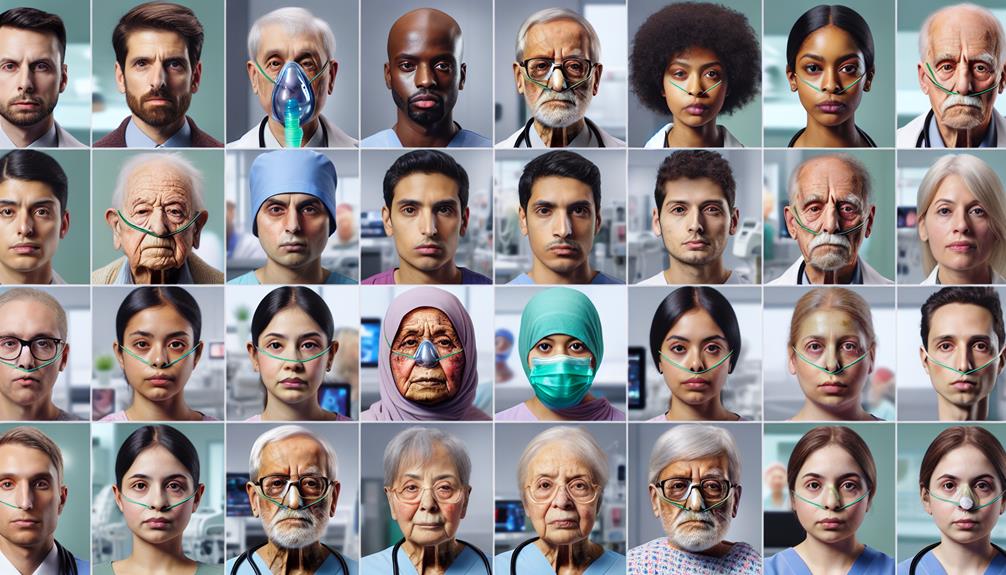
As facial recognition technology struggles with demographic biases and inaccuracies, its application in healthcare faces equally pressing challenges, where individual complexities in facial features and variations hinder accurate patient identification. These complexities are compounded by factors such as aging, facial expressions, and medical conditions, which affect the reliability of facial recognition systems in healthcare settings.
Variations in Facial Features: The uniqueness of each person's facial characteristics, including physical distinctions among racial groups, poses challenges in creating universally accurate facial recognition technology.
Impact of Aging and Medical Conditions: Changes in facial appearance as people age or develop medical conditions further diminish the reliability of facial recognition systems.
Precision in Mental Health Therapy: The intricate nuances of human emotions and expressions in mental health therapy require tailored solutions for facial recognition to maintain accuracy.
To overcome these obstacles, advanced algorithms and specialized approaches are necessary to address the intricate complexities inherent in healthcare applications.
Corporate Accountability and Limitations
Regularly, tech companies face intense scrutiny for their role in providing facial recognition technology to government agencies, sparking heated debates about corporate accountability and responsible use. Amazon and Microsoft, for instance, have faced criticism for selling this technology to law enforcement agencies, raising ethical concerns about their actions. Calls for better corporate accountability have prompted some companies to implement moratoriums on the sale of surveillance technology to police departments.
While these actions are commendable, they're often incomplete, as shown by the example of facial recognition software developer Clearview AI, which has been accused of capturing and selling faceprints without consent. Such instances highlight the need for stricter regulations and more robust ethical frameworks to guide tech companies' practices.
As a society, we must induce companies to prioritize ethical considerations and respect for privacy rights over profit. Moreover, greater oversight mechanisms are needed to prevent the development and use of invasive surveillance technologies that can perpetuate discriminatory practices.
Frequently Asked Questions
What Are the Problems With Facial Recognition Security?
"I worry about facial recognition security since privacy concerns, accuracy issues, bias detection, legal implications, data protection, false positives, ethical dilemmas, security vulnerabilities, algorithm transparency, and feeble public acceptance all threaten our safety."
What Are the Challenges of Facial Recognition System?
Face recognition systems face accuracy challenges, biased false positives, data privacy concerns, algorithm fairness issues, and security vulnerabilities. I confront these challenges by needing clear user consent, balanced surveillance ethics, and technology limitations addressed through regulation and oversight.
What Is a Weakness of Facial Recognition?
A major weakness of facial recognition is its vulnerability to spoofing attacks via photographs, masks, or deepfakes, violating data protection and raising ethical dilemmas, while also embodying accuracy problems and bias issues.
What Are the Failures of Facial Recognition?
For me, the failures of facial recognition lie in its ethical implications, privacy concerns, inaccuracy rates, bias issues, consent challenges, data protection lapses, false positives, surveillance risks, lack of transparency, and technology limitations.