


As cities grow and crowded public areas pose mounting safety concerns, facial recognition technology becomes a valuable tool for smart city surveillance. By leveraging facial recognition, authorities can swiftly identify potential security breaches, optimize traffic flow, and enhance access control measures. It also supports law enforcement in tracking and identifying individuals involved in criminal activities. This technology guarantees timely assistance during emergencies, promotes public safety, and safeguards vulnerable citizens. Incorporating facial recognition also streamlines public facility management and enhances overall public space security.
Key Takeaways
- Facial recognition enhances street safety by quickly identifying and deterring known offenders.
- Real-time alert systems allow authorities to respond promptly to unusual behavior.
- The technology optimizes traffic flow and access control, improving urban transportation efficiency.
- Facial recognition supports vulnerable citizens by swiftly identifying and providing timely assistance.
- Effective management of public spaces is possible through facial recognition technology and enhanced security.
Boosting Public Safety and Security
Facial recognition technology within smart city surveillance has notably improved public safety, rapidly identifying known offenders and effectively deterring criminal activity in public spaces. This technology greatly enhances security through real-time alerts and prompt responses to any unusual behavior.
Here are some key points that illustrate the benefits:
- Improved Public Safety: Quickly identifying known offenders helps to reduce crime rates and prevent future incidents.
- Enhanced Security: Real-time alerts and expert intelligence analysis enable authorities to respond promptly to any unusual behavior, maintaining a safer environment.
- Deterrent Effect: Facial recognition technology discourages criminal activity in areas with limited police presence, contributing to a safer and more secure public space.
- Success Stories: Successful cases of rapid offender identification demonstrate the effectiveness of facial recognition in enhancing street safety.
The use of facial recognition technology in urban environments addresses calls for safer streets by providing a crucial layer of detection and response, ultimately creating a safer and more secure environment for all.
Enhancing Emergency Response Times
Enhancing emergency response times is becoming more feasible through the strategic integration of facial recognition technology within smart city surveillance systems, allowing for swift and precise assistance during crisis situations. By leveraging this technology, response teams can quickly identify and locate missing persons, ensuring timely support in emergency situations.
Real-time facial recognition data can support efficient resource allocation and deployment of on-the-ground assistance, leading to faster and more effective emergency response times.
Furthermore, timely identification through facial recognition can improve the speed and effectiveness of emergency medical services and crisis intervention. The utilization of biometric data for emergency response can lead to faster and more accurate assistance for individuals in need during disasters.
Incorporating facial recognition technology in emergency responses allows emergency teams to focus on providing necessary support rather than dedicating resources to identifying individuals.
The efficient integration of facial recognition technology into smart city surveillance systems holds significant promise in optimizing emergency response times and saving lives.
Optimizing Traffic Flow and Access
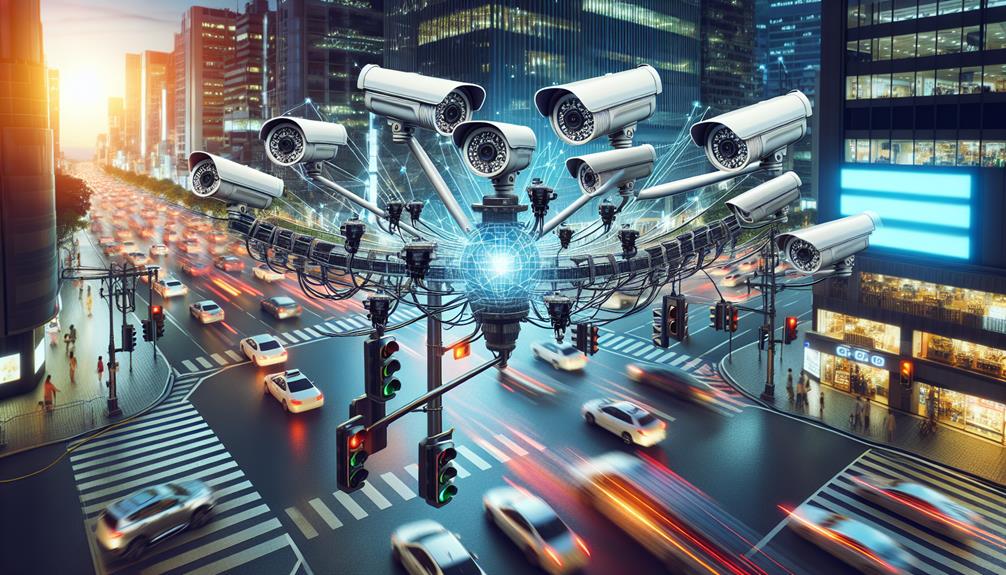
As I examine the role of facial recognition in smart city surveillance, I'm drawn to the transformative benefits it offers in optimizing traffic flow and access control.
By leveraging real-time insights from facial recognition technology, city officials can dynamically manage traffic patterns to reduce congestion and enhance mobility within urban areas.
This, in turn, can be coupled with smart access control measures at entry and exit points, further enhancing the overall efficiency of urban transportation systems.
Real-Time Insights
Real-Time Insights
To optimize traffic flow and access in smart cities, real-time facial recognition technology can provide invaluable insights. This technology allows authorities to swiftly respond to security threats and emergencies by accurately identifying individuals. In high-traffic areas, facial recognition can predict foot traffic patterns, enabling proactive measures to prevent overcrowding. It also supports efficient access control in public spaces by verifying identities in real-time, granting or restricting entry as needed.
Key Real-Time Insights from Facial Recognition
| Application | Benefit |
|---|---|
| Monitoring Crowd Flow | Enhanced Safety and Security |
| Traffic Flow Optimization | Route Suggestions During Congestion |
| Access Control in Public Spaces | Real-Time Verification and Access Management |
Additional Benefits
- Real-time facial recognition helps manage crowd flow during events or emergencies, ensuring enhanced safety and security.
- By integrating facial recognition into smart city surveillance, authorities can respond promptly to security threats and emergencies by identifying individuals in real-time.
These real-time insights from facial recognition are essential in optimizing traffic flow and access control within smart cities.
Smart Access Control
Facial identification technology integrated into access control systems optimizes traffic flow and enhances security by accurately identifying individuals and managing public spaces with greater efficiency. This integration improves operational efficiency by automating access control, which in turn enhances safety measures and allows for more thorough surveillance within smart city environments.
The use of facial identification cameras equipped with biometric capabilities guarantees seamless and secure entry points. This technology efficiently manages access to public spaces by streamlining the authentication process and reducing congestion at key points.
In smart city surveillance, effective monitoring of public areas is critical, and facial identification technology bolsters these efforts by ensuring authorized access and enhancing overall traffic management. The integration of facial identification in smart access control is a cornerstone for a safer and more efficient urban experience, contributing to the seamless movement of people through high-traffic areas.
Efficient Flow Management
Facial recognition technology plays a pivotal role in optimizing traffic flow and enhancing access control in smart cities by making sure that individuals are correctly identified, reducing congestion, and improving overall traffic management.
With the integration of facial recognition systems into smart city infrastructure, the flow of traffic in and out of public spaces can be more accurately monitored and managed. This helps to streamline entry to public areas, reducing wait times and improving efficiency.
Improved flow management through facial recognition can also greatly enhance public safety. By monitoring and regulating pedestrian traffic in real-time, smart city operators can make data-driven decisions to minimize congestion and make sure that public transportation operates smoothly.
The real-time data provided by facial recognition systems allows authorities to adjust traffic signals and routes dynamically, easing the flow of vehicles and pedestrians. This not only reduces congestion but also helps in emergency response situations, where efficient crowd management is essential.
Efficient Public Facility Management
I'm now going to explore how facial recognition can be leveraged to enhance access controls and streamline entry procedures in public facilities, making it easier for residents and visitors to utilize these spaces.
By identifying peak hours and popular areas, city officials can optimize resource allocation and improve overall user experience.
Access Controls Enhanced
Enhanced by facial recognition, smart city surveillance optimizes public facility management through seamless access controls and secure identities. This integration guarantees that authorized individuals can move freely while restricting access to sensitive areas. Several critical applications benefit from this technology.
For instance, facial recognition facilitates track-and-trace systems to quickly locate missing individuals, enhance public safety, and even ensure efficient retail transactions by preventing protocol breaches. Moreover, smart ride-sharing services can safeguard riders by verifying identities in real-time. Vulnerable populations, including those with cognitive impairments, can be safely monitored and assisted through this advanced facial recognition technology.
In addition to safety, these systems improve the overall efficiency of public facilities. By automating access schedules and integrating with other hardware and software, the management of user directories and visitor access can be streamlined. This reduces the need for manual intervention and enhances the quality of services provided.
Ultimately, incorporating facial recognition in public facilities lays the foundation for more secure and efficient urban living.
Efficient Entry Procedures
Streamlining entry procedures at public facilities is the cornerstone of efficient management, and facial recognition technology has proven instrumental in achieving this goal. By leveraging facial recognition in surveillance systems, public facilities can greatly reduce waiting times, thereby enhancing the overall visitor experience. This seamless access control system guarantees that individuals are swiftly identified and granted access, streamlining the entry process.
The advantages extend beyond improved efficiency. Facial recognition technology enhances security protocols by precisely identifying individuals, reducing the risk of unauthorized access. This, in turn, enables public facilities to allocate resources more effectively, focusing on other areas that enhance the visitor experience.
Improving Disaster Preparedness Strategies
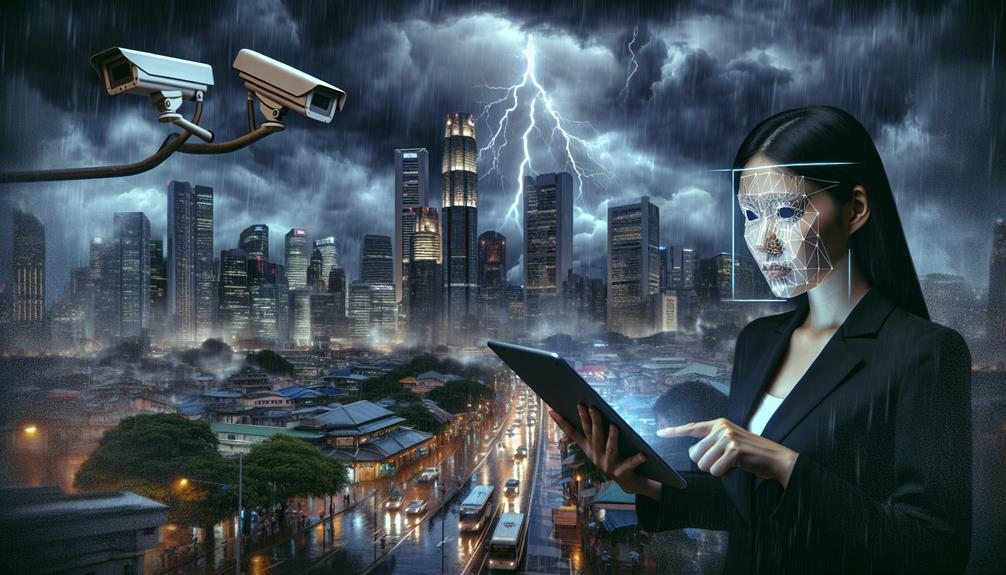
By integrating facial recognition technology into smart city surveillance systems, emergency responders can expedite disaster recovery efforts through rapid identification and localizing individuals in need of assistance. This technology is invaluable in disaster situations where time is essential.
Facial recognition, particularly when combined with geolocation data, aids in swiftly pinning down the location of individuals who require immediate aid, ensuring that resources are allocated efficiently and effectively.
- Enhanced Resource Allocation: Facial recognition technology facilitates the swift identification of individuals in emergency situations, allowing for targeted resource allocation and efficient assistance deployment.
- Improved Emergency Medical Services: With the ability to locate individuals quickly, emergency medical services can be dispatched earlier, reducing the severity of injuries and potentially saving lives.
- Crises Intervention: Facial recognition technology helps in pinpointing the locations of people requiring crises intervention, enabling authorities to respond more quickly and effectively.
- Streamlined Disaster Management: The integration of facial recognition in smart city surveillance simplifies the process of identifying and assisting those in need, thereby enhancing disaster management capabilities.
Supporting Vulnerable Citizens Safely
As we adapt facial recognition technology to safeguard urban living, smart cities take on the essential responsibility of supporting vulnerable citizens securely and compassionately.
By identifying vulnerable individuals like Alzheimer's patients, facial recognition can facilitate timely assistance and improve their safety in a smart city environment.
Digital tools equipped with facial recognition systems can swiftly locate missing vulnerable citizens, providing support during critical situations and reducing stress on emergency services.
Smart city infrastructures should leverage facial recognition to uphold the well-being of these individuals, guaranteeing their protection in public spaces and streamlining assistance efforts.
Importantly, facial recognition systems should come equipped with privacy settings that blur the faces of those not under surveillance, prioritizing both ethics and safety for vulnerable citizens.
Balancing Scalability and Privacy Concerns
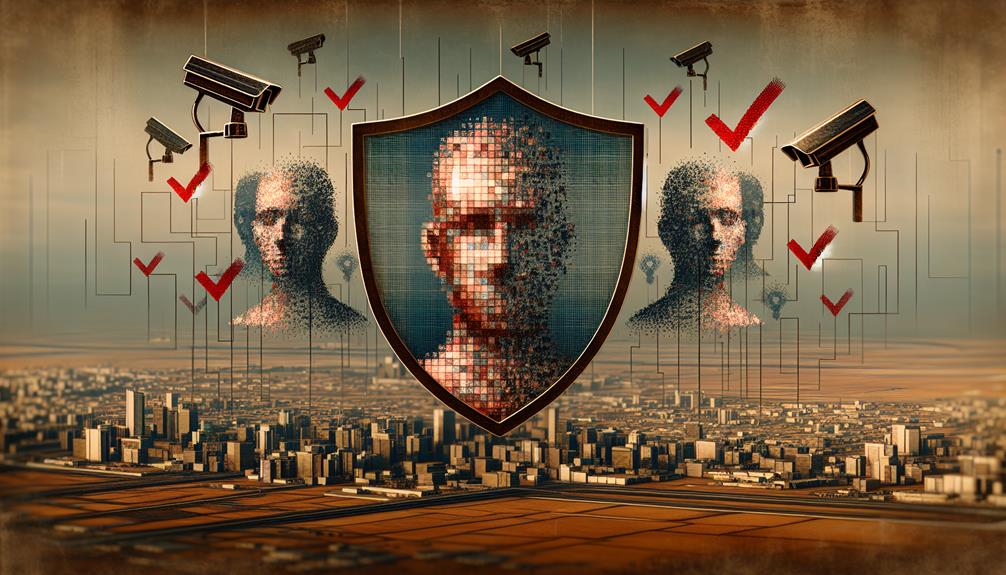
Balancing scalability and privacy concerns requires a delicate approach in smart city surveillance systems that utilize facial recognition technology to guarantee both increased security and respect for citizens' privacy rights. Making sure that facial recognition systems scale effectively with urban growth without compromising individual privacy is essential for their successful integration.
Here are some key considerations to keep in mind:
- Scalability: Facilitating expansion in facial recognition technology ensures that it can efficiently process large amounts of data arising from a growing population, thereby maintaining its effectiveness.
- Privacy Rights: Clear policies for data privacy and protection need to be established and communicated to citizens to secure trust and transparency in the system.
- Balancing Act: A balance must be struck between scaling facial recognition technology to meet increasing security demands while safeguarding citizens' privacy by implementing robust data protection measures.
- Transparency: Cities must maintain open communication about their facial recognition systems, highlighting their capabilities and limitations to prevent misuse and address privacy concerns effectively.
Intelligently Managing Public Spaces Effectively
To ensure public safety and security, smart city surveillance systems increasingly rely on facial recognition technology to intelligently manage public spaces effectively. This technology intelligently integrates with existing surveillance systems, allowing for enhanced security and improved access control.
A well-implemented facial recognition system can automatically identify potential security breaches, non-compliance with protocols, and crime incidents, ensuring prompt response and appropriate measures to mitigate risks.
Facial recognition supports law enforcement by efficiently tracking and identifying individuals involved in criminal activities. Effective event management can also be facilitated by this technology, ensuring safe attendance and minimising disruptions. Combining facial recognition with hand and fingerprint biometrics further restricts access to public spaces, enhancing overall safety and security.
In addition to these benefits, investment in scalable hybrid cloud data storage optimizes urban management in smart cities. Intelligent surveillance systems can seamlessly process and store vast amounts of data, ensuring timely and effective decision-making for law enforcement and urban planners.
Frequently Asked Questions
What Is the Role of Facial Recognition System in Surveillance Systems?
I contribute to smart city surveillance by ensuring accurate tracking and monitoring, while addressing ethical concerns like privacy infringement and biased inaccuracies that can affect communities, ensuring responsibility and control.
What Is the Use of Facial Recognition in Cities?
I use facial recognition in cities to enhance public safety by identifying suspects, tracking missing persons, and managing crowded events while balancing privacy concerns with robust data protection measures.
Why Is Facial Recognition Good for Security?
I see facial recognition as an essential security tool because it enhances identification accuracy, prevents crimes by detecting suspects quickly, and improves public safety by enabling proactive measures to keep people and spaces safe.
What Are the Benefits of Facial Recognition Technology in Law Enforcement?
As I work in law enforcement, I witness how facial recognition enhances public safety by enhancing crime prevention through swift identity verification, ensuring accurate suspect identification, and keeping critical infrastructure secure, providing robust solutions for authorities to combat criminal activity effectively.