


I use facial recognition technology to revolutionize surveillance systems. It boosts security and efficiency while reducing identity theft and loss. Real-time authentication guarantees swift and accurate identification. This technology greatly enhances business protection and public safety. By providing efficient identity verification and reducing false positives, facial recognition technology outshines traditional methods. Biometric identification protects sensitive information and locations. Autonomous access control systems streamline efficiency and convenience. The benefits are transformative – and there's even more to discover when you dig deeper.
Key Takeaways
- Accurate Real-Time Identification: Facial recognition enhances surveillance efficiency by quickly identifying individuals in real-time.
- Reduced Identity Theft and Unauthorized Access: Facial recognition technology effectively prevents identity theft and unauthorized entry to restricted areas.
- Enhanced Public Safety: Swift suspect identification and threat detection capabilities improve crime prevention and emergency response times.
- Improved Surveillance Efficiency: Automated identity verification reduces manual checks and false positives for seamless access control.
- Coordinated Threat Detection: Facial recognition enables real-time alerts and incident investigations through IoT device coordination and watchlist analysis.
Increased Security and Efficiency
Facial recognition technology greatly enhances surveillance by providing accurate and rapid identification of individuals in real-time. This capability boosts security measures, allowing authorities to respond swiftly to potential threats. By leveraging facial recognition, surveillance operations become more efficient, as automated identification frees up human resources to focus on higher-level tasks.
The real-time identification aspect is particularly crucial, as it enables early detection and intervention, thereby helping to prevent or mitigate security breaches.
The effectiveness of facial recognition can be attributed to its ability to automate the identification process, reducing the need for manual verification. This results in improved response times, enhanced overall surveillance capacity, and better decision-making.
I can confidently say that the incorporation of facial recognition technology has transformed the way we manage security, making our operations more effective and efficient.
Reduces Identity Theft and Loss
When implementing facial recognition in surveillance,
I find that it greatly reduces the risk of identity theft and unauthorized access.
The unique biometric data provided by facial recognition systems makes it highly challenging for individuals to forge or replicate identities.
This enhanced security means that sensitive information is better protected and identity loss is minimized.
Enhanced Security Measures
One key benefit of integrating facial recognition into surveillance systems is that it greatly decreases the risk of identity theft and loss by providing a reliable and accurate method of biometric verification. This enhanced security measure guarantees that only authorized individuals have access to restricted areas, safeguarding sensitive information and assets from unauthorized access. The ability to accurately verify identities in real-time allows for prompt response to potential security breaches, enhancing overall surveillance efficiency.
Implementing facial recognition technology notably enhances the security protocols of organizations. By leveraging the benefits of facial recognition in surveillance, businesses can better safeguard their valuable assets and confidential data. The accuracy of facial recognition significantly reduces the likelihood of misidentification, providing an additional layer of security against identity theft and potential scandals. This technology's effective use of unique biometric data ensures that unauthorized access is markedly reduced, ultimately protecting valuable resources and minimizing the risks associated with security breaches.
Secure Authentication Protocols
By verifying identities with unparalleled accuracy, biometric authentication through facial recognition effectively reduces the risks associated with identity theft and unauthorized access in surveillance settings.
Facial recognition technology is uniquely equipped to provide secure authentication protocols, ensuring that only authorized individuals access sensitive areas or information. This robust authentication method exploits the unique features of human faces to verify identities, rendering it extremely difficult to deceive.
In surveillance applications, facial recognition systems minimize the chances of identity theft and loss by quickly and accurately authenticating individuals. Advanced technologies in facial recognition offer a beacon of hope in a world where identity theft affects millions.
Reduced Identity Loss
Despite the ever-present risk of identity theft, I can confidently depend on facial recognition in surveillance to securely verify identities and protect sensitive assets. This advanced technology guarantees that biometric verification is precise and dependable, decreasing the risk of identity fraud.
The high precision of facial recognition systems markedly reduces the chances of incorrect identity verification. In the current landscape where identity theft and loss are widespread, this sophisticated method of authentication stands out as a beacon of protection.
- Enhanced Identity Protection: Facial recognition is effective against 2D fakes and 3D printed masks.
- Reducing Identity Theft: By utilizing facial features as the primary identifier, facial recognition technology minimizes the risk of identity fraud.
- Accurate Biometric Verification: Facial recognition ensures high precision in authentication, making it a secure method.
- Reliable Surveillance: Facial recognition surveillance safeguards personal and business assets by decreasing reliance on easily stolen IDs.
Real-Time Authentication
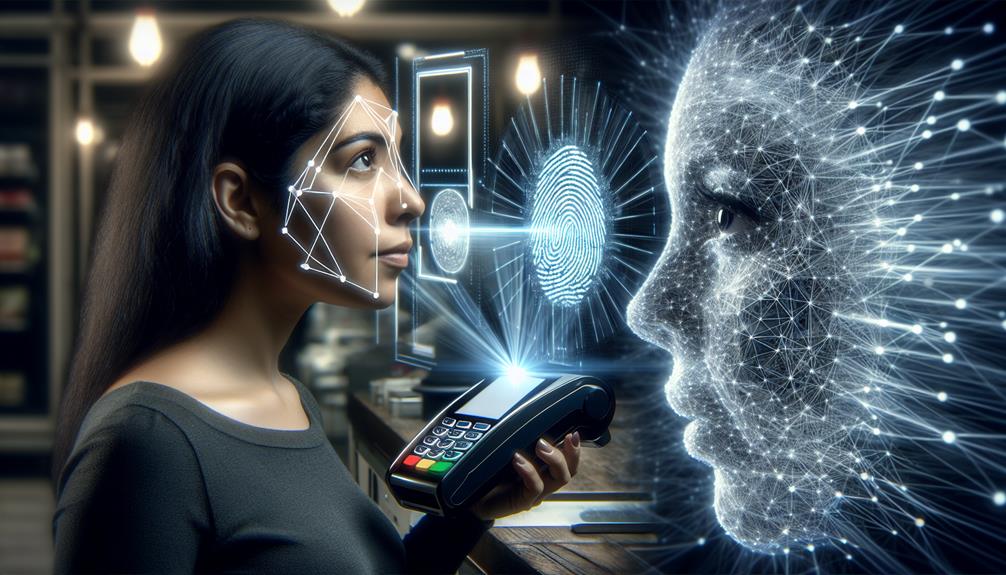
Facial recognition technology's ability to authenticate identities in real-time greatly enhances surveillance efficiency and security. Implementing facial recognition simplifies the process by instantly verifying authorized personnel in restricted areas, eliminating the need for physical tokens like keys or ID cards. This real-time authentication streamlines security processes and improves operational efficiency.
In surveillance systems, facial recognition can accurately identify individuals within milliseconds. This speed and accuracy are pivotal in maintaining the security of sensitive areas. By leveraging facial recognition, we can efficiently control who accesses specific zones, ensuring that only authorized individuals can enter.
The technology's capacity to perform real-time authentication in surveillance markedly reduces the likelihood of unauthorized access, which is a vital aspect of maintaining the integrity of secured areas.
Enhanced Business Protection
Enhanced business protection is achieved through facial recognition in surveillance, which delivers accurate and real-time identification of employees and visitors, guaranteeing the highest level of safety and security on premises.
By integrating facial recognition systems into surveillance, organizations can better manage access control. Here are key benefits:
- Prevent Unauthorized Access: Prevents unauthorized personnel from entering restricted areas, notably reducing the risk of theft and guaranteeing overall security.
- Real-Time Identification: Allows for instant verification of individuals, ensuring that those who don't belong on the premises are quickly identified and addressed.
- Streamlined Operations: Combines with existing security measures, enhancing operational efficiency.
- Incident Investigation: Provides valuable information for incident investigations, ensuring prompt resolution and improved security protocols.
The technology notably enhances business protection by guaranteeing that only authorized individuals have access to sensitive areas. This streamlines response capabilities and ensures that all parts of the business are protected meticulously.
Improved Public Safety
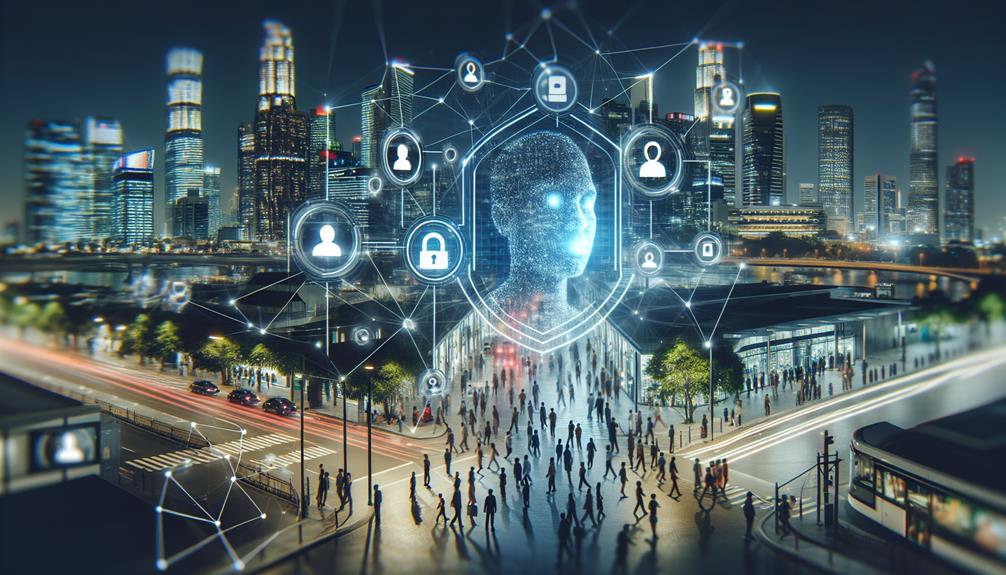
I can confidently assert that integrating facial recognition into surveillance enhances public safety by swiftly identifying suspects and potential threats in highly populated areas. This technological capability allows law enforcement officers to track individuals with criminal records or suspicious behavior in real-time, often before incidents escalate. The systems equipped with facial recognition technology can provide critical alerts for missing persons or known offenders, helping to prevent crimes and acting as a deterrent with their ability to monitor and identify individuals in public spaces.
In terms of emergency response, the use of facial recognition notably accelerates the reaction time to emergencies and enhances crime prevention measures. The precise and instantaneous identification of threats allows for swift, targeted interventions, keeping both the public and law enforcement safer. As a result, communities can feel more secure, and authorities can focus on proactive policing rather than merely reacting to incidents after they occur.
The efficacy of facial recognition in surveillance is undeniably a key contributor to improving public safety.
Smart Surveillance Systems
As I explore the advancements in smart surveillance systems, I find that facial recognition technology seamlessly integrates smart sensors to enhance threat detection.
By combining real-time video feeds with intelligent algorithms, these systems can accurately identify individuals and monitor their behavior.
This synergy empowers security personnel to respond promptly to potential threats, ensuring a safer environment.
Smart Sensor Integration
Smart sensor integration in facial recognition surveillance systems enables real-time monitoring and analysis of multiple data points. This technology empowers systems to detect anomalies swiftly and alert security personnel to potential threats efficiently. The seamless integration with Internet of Things (IoT) devices ensures unified communication and coordination, further enhancing surveillance capabilities.
Improved Surveillance Capabilities:
- Real-time monitoring and identification of individuals
- Detection of anomalies and immediate alerts to security personnel
- Integration with IoT devices for unified communication and coordination
- Enhanced accuracy and efficiency in security operations
Enhanced Threat Detection
Enhanced Threat Detection
Facial recognition technology integrated into surveillance systems greatly enhances threat detection capabilities by rapidly identifying individuals with prior records or suspicious behavior, ensuring swift alerts to security personnel. This integration allows for real-time analysis of facial features, comparing them to watchlists and enabling quick responses to potential threats.
Here are the key benefits of facial recognition in enhanced threat detection:
| Facial Recognition Capability | Security Enhancement | Operational Efficiency |
|---|---|---|
| Quick Identification of Known Threats | Enhanced Protection | Reduced Response Times |
| Tracking in Crowded Areas | Improved Situational Awareness | Streamlined Data for Analysis |
| Real-time Alerts | Proactive Threat Mitigation | Enhanced Security Decision-Making |
Efficient Identity Verification
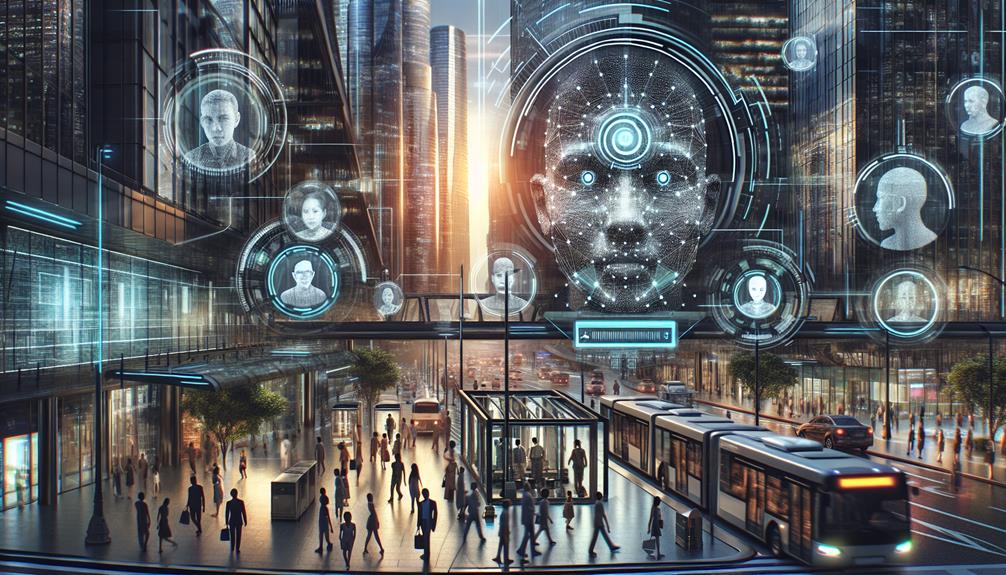
Facial recognition technology streamlines identity verification processes by swiftly and reliably matching arriving individuals against established records. In the context of surveillance systems, this technology enhances security measures. Here are some essential points to take into account:
- Automated Matching: Facial recognition systems eliminate the need for manual checks, reducing human error.
- Real-Time Identification: The technology can match faces against watchlists in real-time, guaranteeing prompt response.
- Enhanced Efficiency: By automating identity verification, facial recognition technology lessens the workload of security personnel.
- Improved Access Control: It ensures that only authorized individuals gain entry, deterring unauthorized access.
These benefits collectively transform surveillance systems into more efficient and dependable security tools.
Reduced False Positives
Through the implementation of facial recognition technology in surveillance, false positives are greatly reduced, allowing law enforcement to precisely focus resources on targeted individuals and activities. This significant improvement in accuracy is crucial, as it eliminates the need to investigate innocuous persons, thereby conserving valuable time and resources.
By leveraging facial recognition, surveillance systems reliably differentiate between genuine security threats and innocent individuals, ensuring efficient prioritization of law enforcement efforts.
The precision offered by facial recognition technology in identifying suspects or persons of interest allows authorities to channel their resources towards actual threats, minimizing unnecessary inquiries. As the number of false positives decreases, law enforcement gains a more accurate understanding of the surveillance landscape, enhancing their reaction to legitimate threats.
The integration of facial recognition technology into surveillance systems underscores its critical role in bolstering security by providing precise and reliable identifications, which in turn yields more targeted responses to security breaches. By reducing false positives, facial recognition technology constitutes an essential tool in ensuring seamless and efficient surveillance operations.
Enhanced Protection Through Biometrics
Best Advantages of Facial Recognition in Surveillance
Enhanced Protection Through Biometrics
We frequently rely on advanced biometric technologies, such as facial recognition, to bolster security by validating the authenticity of individuals in surveillance settings. Facial recognition technology offers enhanced protection through biometric identification, reducing the risk of unauthorized access. Biometric data like facial features is unique to each individual, making it a highly secure method of authentication in surveillance systems.
- Accuracy and Authenticity: Facial recognition validates that the person being verified is indeed who they claim to be, eliminating the risk of impersonation.
- Real-time Monitoring: Surveillance systems with facial recognition capabilities offer real-time monitoring and alerts for suspicious activities, enhancing security measures.
- Quick Identification: Biometric surveillance using facial recognition technology enables swift and precise identification of individuals, improving overall safety and security.
- Reduced Identity Theft: The use of facial recognition technology in surveillance helps prevent identity theft and fraud by precisely verifying individuals.
Autonomous Access Control
As I explore the application of facial recognition in surveillance, I come across the significant benefits that autonomous access control systems bring to the table.
By leveraging advanced facial biometrics, these systems guarantee secure entry processes, ensuring that only authorized personnel gain access to sensitive areas.
Such technologies automate identity checks, ensuring efficient access control that minimizes the risk of security breaches.
Secure Entry Processes
Enhanced automated access control systems utilizing facial recognition technology significantly boost the security and efficiency of entry processes.
Key security benefits include:
- Secure and Efficient Entry: Automated access control guarantees smooth and contact-free entry for authorized individuals, reducing the potential for unauthorized access.
- Real-time Monitoring: Facial recognition in surveillance offers real-time monitoring, promptly alerting security to suspicious or unauthorized attempts.
- Biometric Authentication: Facial recognition utilizes biological characteristics, eliminating the need for physical keys or access cards and minimizing vulnerabilities.
- Streamlined Management: Secure entry processes facilitated by facial recognition technology simplify access control management and reduce the risk of unauthorized entry.
Automated Identity Checks
Facial recognition technology enables smooth autonomous access control by automatically verifying individuals based on their unique facial features. This is particularly valuable for high-security facilities where prioritizing only authorized personnel enter is crucial. The advanced algorithms embedded in facial recognition systems accurately compare facial patterns to guarantee that every individual attempting to gain access is who they claim to be.
Embracing automated identity checks through facial recognition greatly enhances security and efficiency. By skipping traditional manual identification processes, the risk of unauthorized entry is alleviated while entry times are significantly reduced. This technology not only bolsters security but also ensures smooth day-to-day operations.
The integration of facial recognition into surveillance systems elevates their effectiveness, making them more proactive and responsive. As a result, the overall security environment is greatly strengthened, and any potential threats can be swiftly identified and neutralized.
Efficient Access Control
For safe and seamless access management, efficient access control systems leveraging facial recognition guarantee that authorized individuals can effortlessly enter secured areas without the need for physical keys or access cards. This technology enhances security protocols by accurately identifying individuals and restricting unauthorized entry.
There are several key reasons why facial recognition technology in access control systems stands out:
- Streamlined Efficiency: Autonomous access control reduces the need for manual checks and card management.
- Enhanced Precision: Facial recognition ensures that only authorized individuals can enter restricted areas.
- Heightened Security: The use of facial recognition limits the potential for fraudulent entry methods.
- Convenience: Users can access secure areas quickly and easily without needing to carry additional items.
Frequently Asked Questions
What Are the Advantages of Face Recognition?
I believe facial recognition advantages include facilitating customer identification, ensuring access control, preventing crime through swift suspect identification, and enhancing user experience by making interactions more efficient and personalized.
What Are the Pros and Cons of Facial Recognition Cameras?
I perceive that facial recognition cameras offer both benefits and drawbacks. On one hand, they enhance surveillance, improve security, and aid in finding missing individuals. On the other hand, privacy concerns, accuracy issues, and ethical implications raise legal challenges.
How Does Facial Recognition Improve Security?
"I enhance security through improved identification, enhanced monitoring, and increased accuracy. These advanced security measures enable real-time tracking, proactive threat detection, and exhaustive crime prevention, ensuring an environment of control and safety."
What Are the Advantages of Facial Recognition for Police?
For law enforcement, facial recognition offers significant advantages. It enhances public safety through crime prevention, quickly identifies suspects, and increases efficiency in investigations. This technology streamlines processes, ensuring more effective crime-solving and improved community security.





2 comments
Comments are closed.