


Exploring the world of facial recognition for targeted monitoring applications? With advancements in AI and deep learning, these tools are revolutionizing real-time identification, tracking, and surveillance in law enforcement and industries alike. First, consider tools like FaceFirst and Veritone IDentify for their precision in facial recognition and real-time alerts. Efficient management is a breeze with Railer, providing streamlined attendance tracking and analytics. BioID offers liveness detection for secure authentication, while tools like Deep Glint take video analysis to the next level. If you're keen to learn more about the top tools transforming modern security infrastructure…
Key Takeaways
- FaceFirst provides real-time suspect identification and tracking for law enforcement applications.
- DigiPass offers two-factor authentication for robust biometric security.
- Railer provides targeted monitoring with analytics and push notifications for efficient attendance and leave management.
- BioID software integrates liveness detection for secure authentication and prevents spoofing attacks.
- MojiPop uses facial recognition AI for creating personalized avatars with various features for a diverse user base.
How Face Surveillance Works
When attempting to track individuals or identify faces in various settings, face surveillance relies on a seamless process that involves capturing facial images, analyzing key facial features, and matching them against a database of known faces. In real-time applications, facial recognition technology played through almost every dimension of life. This efficient process enhances both security monitoring.
Here's a detailed breakdown of how face surveillance works:
- Capturing Images: Surveillance cameras equipped with facial recognition capabilities track and monitor people by capturing images of their faces. This can occur in public places, retail settings, transportation hubs, or law enforcement scenarios.
- Analyzing Key Features: Once an image is captured, facial recognition algorithms analyze different facial features. These features include the distance between eyes, nose shape, and jawline contour to create a unique digital representation.
- Database Comparison: This unique representation is then compared against a database of known faces, often compiled from various sources such as arrest records, surveillance footage, or even social media. The algorithm searches for the best match.
Applications in Law Enforcement
As I explore the applications of facial recognition in law enforcement, I'm drawn to the efficiency it brings in tracking and verifying suspects.
By expediting the identification process, these advanced tools seem to revolutionize surveillance capabilities.
Now, I'm keen to examine how suspect ID and tracking integrate with enhanced video analysis to bolster public safety.
Suspect ID and Tracking
Facial recognition tools, like FaceFirst, offer real-time analytics and alerts that enable law enforcement agencies to efficiently monitor and identify suspects. This technology transforms the way law enforcement agencies approach suspect identification and tracking. With real-time alerts and analytics, law enforcement personnel can promptly respond to potential threats, regardless of the time or location.
Key Features for Law Enforcement
| Tool | Benefits | Examples of UseCases |
|---|---|---|
| FaceFirst | Real-time alerts, analytics, and secure access control | Capturing and analyzing footage for suspect identification in public spaces |
| Veritone IDentify | AI-enhanced suspect matching, virtual 'six pack' line-ups | Rapidly comparing video evidence against booking databases for fast case resolution |
| Police1 | Thorough facial recognition solutions, cloud-based digital evidence management | Integrating facial recognition into crime-fighting strategies for enhanced efficiency |
These advanced tools greatly enhance efficiency in suspect identification, as they enable real-time analysis and swift response. The practical application of facial recognition technology aligns perfectly with law enforcement agencies' need for control and effective management of crime scenes.
Enhanced Video Analysis
Enhanced video analysis tools like Deep Glint offer real-time monitoring and analysis of facial data for law enforcement applications. This cutting-edge technology greatly enhances law enforcement capabilities by providing accurate and reliable facial recognition for targeted monitoring. By relying on AI-based solutions for public security and identity verification, law enforcement agencies can efficiently monitor, identify, and track individuals in real-time.
Boosting Efficiency: Real-time monitoring helps law enforcement focus on high-priority targets, streamlining their operations.
Accuracy Unmatched: Deep Glint's advanced algorithms and data processing ensure exceptional precision in facial recognition, reducing false positives.
Proactive Crime Prevention: Utilizing enhanced video analysis tools proactively helps prevent crimes by identifying potential threats in real-time.
With enhanced video analysis tools, law enforcement agents have a complete toolkit to guarantee precise, efficient, and targeted monitoring. This technology empowers them to better protect communities while maintaining control over surveillance operations.
Utilizing AI for Enhanced Security
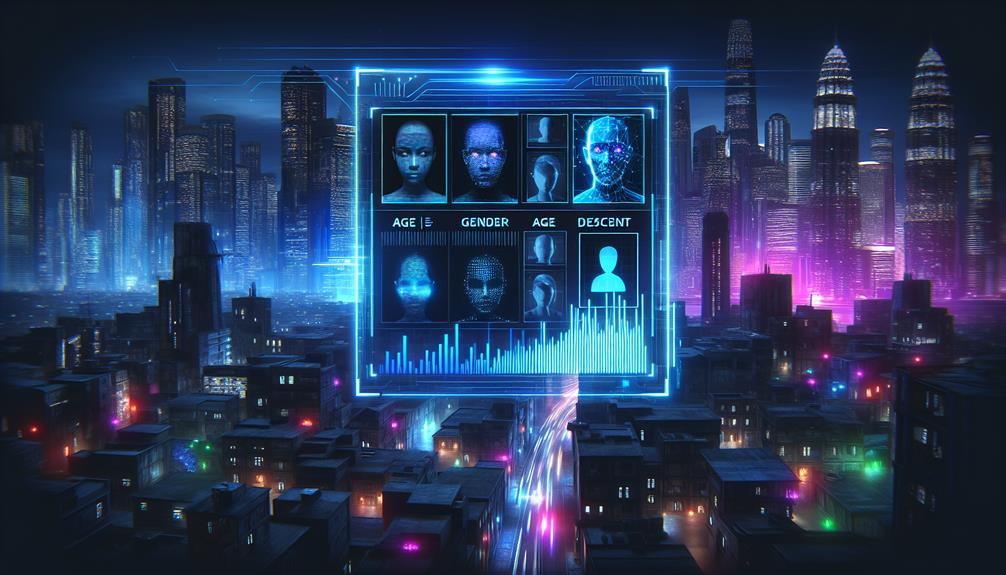
As I examine the role of facial recognition in targeted monitoring applications, I'm intrigued by how AI can elevate security protocols.
By analyzing surveillance footage in real-time, AI-powered face recognition tools can greatly enhance security measures.
Enhanced Security Protocols
By leveraging advanced AI-driven facial recognition tools like FaceFirst, I can access enhanced security protocols that deliver real-time alerts and precision analytics. These cutting-edge technologies greatly strengthen law enforcement and retail sectors by providing targeted surveillance capabilities, customer engagement, and intelligent access control.
Impressively, the error rate of facial recognition tools has significantly decreased to as low as 0.08%, making them ideal for improving security and controlling access.
Enhancing Public Safety:
With real-time alerts and powerful analytics, law enforcement agencies can rapidly respond to threats, ensuring safer communities for everyone.
Optimized Retail Security:
Facial recognition tools help retailers prevent shoplifting, violence, and fraud, creating a protected environment for customers and staff.
Effective Access Control:
Biometric technology ensures authorized access, reducing the risk of unauthorized entry and enhancing overall security protocols.
These enhanced security protocols embody the power of AI technology in safeguarding our lives.
AI-Analyzed Surveillance
While utilizing AI-powered facial recognition tools significantly enhances public safety and retail security, it's equally important to explore the capabilities of AI-assessed surveillance for targeted monitoring applications.
AI-assessed surveillance takes security measures to the next level by utilizing facial recognition technology for targeted monitoring. This technology identifies individuals in real-time through facial analysis, greatly improving monitoring accuracy. The advanced algorithms and deep learning capabilities embedded in these systems guarantee that AI-powered surveillance is proactive in high-risk environments, offering detailed insights and alerts for efficient security management.
In the context of targeted monitoring applications, AI-assessed surveillance helps customize security measures to specific needs. By leveraging AI, these systems can automatically detect and analyze suspicious movements, generating early warnings and enabling swift responses.
As the technology continues to evolve, its ability to enhance security will only grow stronger. Essentially, AI-assessed surveillance revolutionizes the way we approach security, providing unparalleled precision and effectiveness in managing risks and ensuring public safety.
Managing Person Details Efficiently
Ayush接曲aris Facial recognition tools like Railer enable efficient management of person details, streamlining attendance tracking with features like analytics, push notifications, and leave management in educational and corporate settings. They offer a complete solution for organizations to monitor and manage attendance data effectively.
With real-time insights through analytics, I can ensure precise tracking and timely decisions.
Push notifications guarantee that I'm informed about any changes or updates in attendance records, allowing for prompt responses.
By managing different types of leaves seamlessly, Railer simplifies the attendance tracking process, making it easier to optimize resource allocation.
These tools not only save time but also improve attendance tracking efficiency. By leveraging facial recognition technology, organizations can focus on enhancing productivity and employee satisfaction.
Focus on Liveness Detection
Now that we've covered managing person details efficiently, it's important to examine how facial recognition tools utilize liveness detection to guarantee secure and reliable authentication processes.
This technology plays a significant role in preventing fraudulent attempts by distinguishing live individuals from fake representations.
Its integration has the potential to enhance face matching accuracy, safeguard biometric data, and improve image analysis speed.
Face Matching Accuracy
Given the various methods by which fraudsters can spoof facial recognition systems, it's vital that we focus on enhancing face matching accuracy through robust liveness detection. The accuracy of these systems comes down to the ability to verify that a live person is present and guarantee that the system can't be fooled by photos, masks, or deepfakes.
An important element in achieving this precision is the integration of advanced liveness detection algorithms that analyze facial movements and expressions to distinguish genuine users.
Here are some key expectations from a system like BioID:
- Reliable Authentication: The goal is to ensure that facial recognition systems can accurately identify individuals without allowing fraudulent access.
- Adaptable Security: As threats evolve, facial recognition tools must continuously enhance their liveness detection capabilities to stay ahead of spoofing attempts.
- Trustworthy Verification: Users must be confident that the system they're interacting with can reliably verify their identity and maintain the safeguarded environment they expect.
Biometric Data Security
How do you ensure the robustness of facial recognition systems when it comes to biometric data security through effective liveness detection?
This technology plays a pivotal role in ensuring the reliability of authentication processes. Liveness detection prevents spoofing attacks by verifying the user's presence through actions like blinking, head movement, or facial expressions, thereby adding an extra layer of security to facial recognition systems.
When integrating liveness detection into facial recognition tools, you enhance the overall security and reliability of biometric authentication processes.
This actively checks for signs of life, ensuring the authenticity of the biometric data being used for identification. It's essential for facial recognition tools to employ robust security measures like liveness detection to counter the increasing sophistication of spoofing attempts, including high-quality photographs and deepfakes.
By prioritizing liveness detection, you fortify facial recognition systems, securing biometric data and safeguarding against identity theft and unauthorized access.
This proactive approach to biometric data security gives you greater control over targeted monitoring applications.
Image Analysis Speed
As I integrate liveness detection into facial recognition tools for targeted monitoring applications, I need to prioritize image analysis speed to guarantee real-time detection of spoofing attempts and secure biometric authentication efficiently.
The swiftness of image analysis directly impacts the effectiveness of liveness detection technology, which guarantees that the facial recognition system interacts with a live person, not a static image or video. Fast image analysis notably reduces the risk of spoofing attacks in security and access control scenarios.
Millisecond Accuracy:
Advanced facial recognition tools can accurately determine liveness within milliseconds.
Thwarting Fraud:
Real-time liveness detection is a critical feature in facial recognition tools for preventing fraudulent activities.
Enhanced Security:
Fast image analysis enhances security measures by ensuring that the system is always interacting with a live person.
Digital Age and Surveillance Systems
Facial recognition tools transform surveillance systems in the digital era, providing a robust and efficient way to monitor and identify individuals in real-time. This technology enhances security applications by allowing law enforcement and private entities to quickly identify suspects, prevent crimes, and detect threats. Facial recognition technology utilizes biometric identification to verify identities, making it invaluable in airports, border control, and government facilities.
The digital era has transformed how facial recognition technology integrates with surveillance systems. CCTV cameras, drones, and other monitoring devices use deep learning and AI-powered algorithms to analyze facial features. As a result, these systems can track people in crowded areas, identify potential criminals, and provide real-time alerts.
The global facial recognition market is expected to reach $7 billion by 2024, driven by the growing need for advanced security measures.
However, privacy concerns remain a significant issue, with critics arguing that this technology infringes on individual privacy and can be misused. As facial recognition systems continue to evolve, it's vital to address these ethical considerations to guarantee that the benefits of this technology are achieved while maintaining individual privacy and avoiding misuse.
Trends in Surveillance Technology
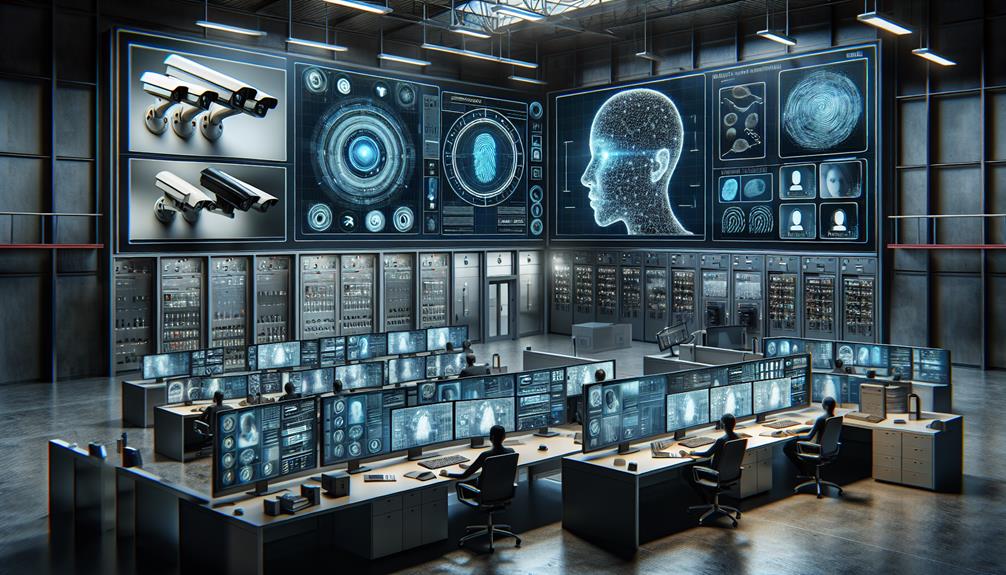
As I explore further into the world of surveillance technology, I'm struck by the significant advancements being made. Current surveillance technology trends greatly enhance real-time monitoring capabilities, leveraging AI-empowered analytics, cloud-based systems, and IoT integrations to ensure strong security measures in various environments and public spaces.
This is particularly evident in the use of facial recognition tools for targeted monitoring applications. AI-empowered video analytics now enable highly accurate and swift facial recognition, making it an essential component of modern security infrastructure. Cloud-based monitoring systems further enhance the efficiency and scalability of these solutions. Integration with IoT devices reveals new opportunities for thorough surveillance and control.
Considering the vast capabilities of facial recognition tools, it’s no wonder they’re increasingly deployed in public spaces such as airports, banks, and retail environments. These trend-setting technologies not only assure enhanced security but also seamlessly integrate with existing infrastructure. With the ability to analyze over 1 billion faces per second, the future of targeted monitoring applications is both powerful and inspiring. Moreover, as facial recognition technology applications continue to evolve, they hold the potential to revolutionize customer experiences by providing personalized services in real-time. This could lead to an unprecedented level of engagement, as businesses can tailor offerings based on individual preferences. However, the ethical implications surrounding privacy and data security must be carefully considered to ensure that the advantages do not come at the cost of individual rights.
Importance of Data Confidentiality
To safeguard the integrity of facial recognition technology, it's important to prioritize data confidentiality, as unauthorized access can lead to serious privacy breaches. The significance of data confidentiality lies in the protection of sensitive information collected by facial recognition systems.
These tools must adhere to strict privacy regulations, ensuring that personal data is utilized responsibly. Compliance with standards like GDPR is essential in this context.
To safeguard privacy effectively, encryption techniques are employed to prevent unauthorized access to facial recognition data, ensuring that biometric data remains secure. Robust data protection measures are crucial for maintaining public trust and preventing privacy concerns, which can be detrimental to public acceptance of facial recognition technology.
It's essential for organizations handling personal information to prioritize GDPR compliance and implement robust encryption methods to safeguard data confidentiality, thereby preserving the integrity of facial recognition tools.
Improved Identity Verification
Several biometric tools, such as FacePhi and FaceFirst, are leveraging advanced algorithms and database integration to enhance identity verification in targeted monitoring applications. This improved identity verification is critical for law enforcement, security, and various industries such as healthcare and insurance. Enhanced facial recognition algorithms provide real-time alerts that help prevent fraudulent activities, securing a safer and more dependable environment.
Here are some significant benefits of advanced facial recognition:
- Enhanced Security: Advanced facial recognition guarantees robust access control measures, detecting known threats and preventing unwanted access.
- Streamlined Operations: Real-time analytics and notification systems streamline operations, allowing security personnel to act quickly and decisively.
- Accuracy and Trust: Advanced biometric technology provides a high level of precision, instilling confidence in the identity verification process.
These advanced technologies guarantee that targeted monitoring applications are effective and efficient, providing a solid foundation for maintaining secure and reliable environments.
Security and Efficiency Combined
By integrating surveillance capabilities and watchlist management, facial recognition tools like FaceFirst and FacePhi deliver a powerful blend of security and efficiency. These tools are specifically designed for various security applications, offering features that make targeted monitoring both easy and effective.
Key benefits include real-time alerts and analytics, which guarantee prompt response to potential threats. Efficiency is prioritized through features like watchlist management and instant identity verification. This streamlined approach to security helps both law enforcement and retail sectors monitor and manage potential risks more effectively.
Biometric technology from providers like FacePhi continues to advance, making facial recognition software more reliable and accurate in its verification process. Targeted monitoring is further enhanced by the ability to share data among businesses. This allows organizations to work together to combat fraud and other security concerns.
Frequently Asked Questions
What Are the Best Tools for Face Recognition?
To maximize security and efficiency, I highly recommend exploring tools like Amazon Rekognition, Kairos, and Kinesense Advanced Analytics for targeted surveillance and lightning-fast biometric identification, ensuring real-time tracking and robust machine learning algorithms while addressing privacy concerns.
Which Technology Is Best for Face Recognition?
To answer the current query, I must analyze various facial recognition software, including Amazon Rekognition, DeepFace, Face++, and Kairos, while considering real-time face tracking, privacy concerns, and deployments in healthcare, retail, and law enforcement.
What Is the Most Accurate Face Recognition Algorithm?
I'm on the hunt for the most accurate face recognition algorithm. Leveraging deep learning, computer vision, and biometric identification methods, GaussianFace stands out with an impressive 98.52% accuracy score, beating human performance.
What Is the Best Face Detection Model?
For me, the best face detection model is often context-dependent, but top contenders like MTCNN, YOLOv3, and RetinaFace, leverage deep learning, convolutional neural networks, and feature extraction to excels