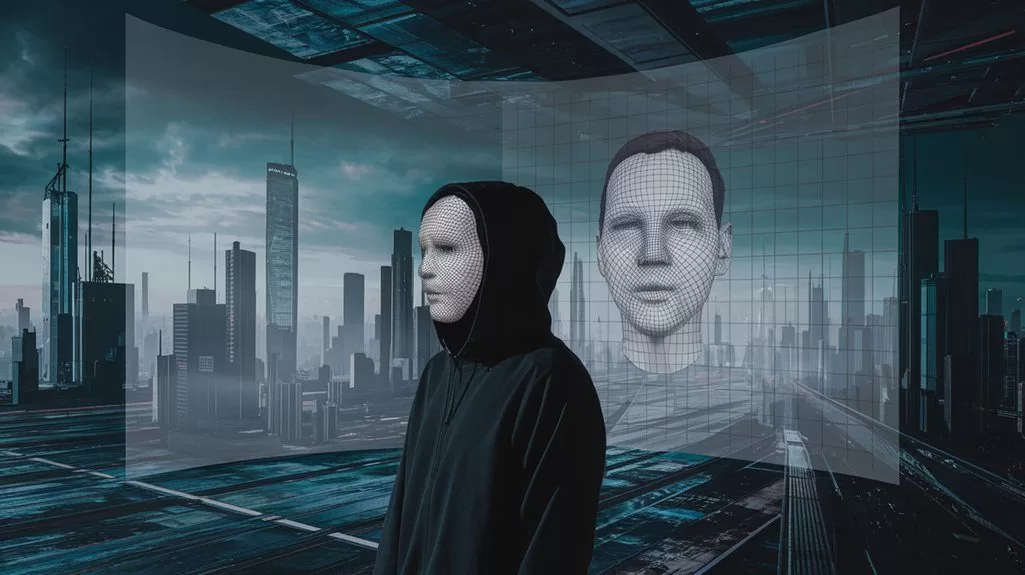

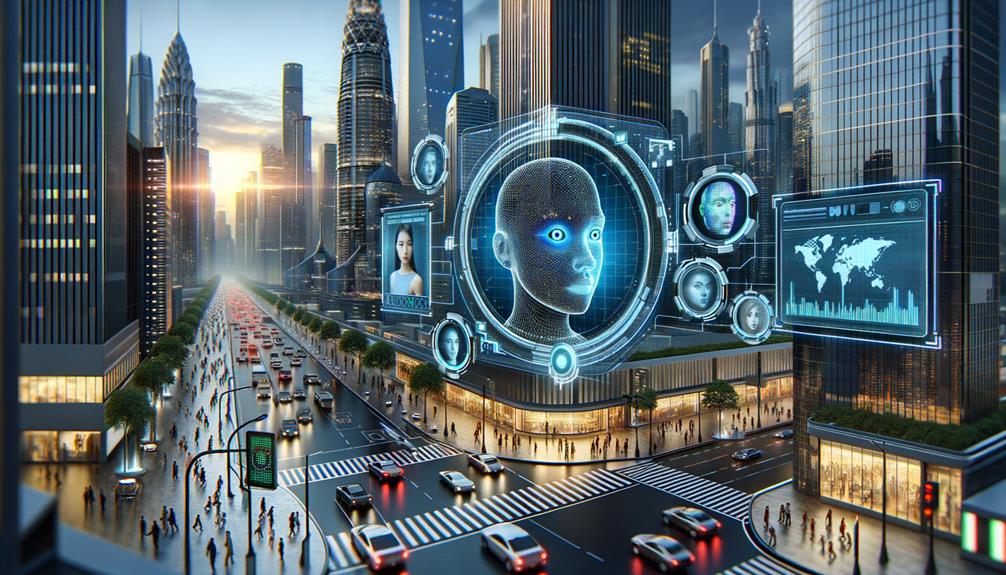
Facial recognition technology has proven to be a game-changer in various monitoring contexts. I find it fascinating how efficiently it streamlines airport boarding, making it optional and convenient for passengers. It also enhances European border control processes by optimizing identity verification for non-EU nationals. In finance, it secures ATM transactions by using facial scans. In sports, MLB uses facial authentication for seamless fan entry. Finally, Mastercard leverages it to authenticate shoppers' identities and prevent fraud in e-commerce transactions. There's no doubt this technology has a multitude of applications, and there's more to explore.
Key Takeaways
- Improved safety and security ensue from faster processing and enhanced accuracy in facial recognition systems.
Facial recognition technology helps regulate the movement of non-EU nationals efficiently across the Schengen Area.
Facial recognition optimizes employee attendance management with non-contact and hygienic approaches for accurate records.
Law enforcement organizations can receive fast notifications of suspected criminals through database access.
Facial recognition technology is widely integrated in various industries like retail for targeted marketing and enhanced customer service.
Airport Boarding Enhancements
As I navigate through the bustling world of airports, I discover that facial recognition technology has been increasingly used to enhance the efficiency of airport boarding processes. It's evident that its applications go beyond mere security, as it also streamlines the flow of passengers.
In 2017, Paris-Charles de Gaulle and Paris-Orly airports, catering to over 100 million passengers annually, implemented facial recognition systems by Gemalto to speed up processing times.
The use of facial recognition in airport boarding has become widespread. U.S. airports and European airlines have adopted this technology to simplify and quicken procedures. The Schengen Area is also moving towards biometric entry/exit systems, including facial recognition, to strengthen border security. This approach is being supported by EU-LISA, which is developing a central system to record entries and exits using biometric data.
In a separate instance, National Australia Bank and Microsoft collaborated to test accessing ATMs with face scans, ensuring biometric data privacy and security. These advancements showcase the versatility of facial recognition in improving processes and enhancing security across various industries.
Biometric Border Checks in Europe
The European Union is introducing a biometric entry/exit system, developed by EU-LISA, to streamline border checks and enhance security across the Schengen Area. This system aims to regulate the movements of non-EU nationals more efficiently by using biometric data. Biometric border checks in Europe are part of efforts to strengthen security measures, and facial recognition technology plays a key role in improving border control processes within the Schengen Area.
EU-LISA is developing a central system for recording entries and exits using biometric identifiers, which includes biometric data such as facial images and fingerprints. This integrated system will provide a unified information base for monitoring cross-border movements. The use of biometric data ensures more precise and dependable identification than traditional manual methods.
Cash Withdrawal With Facial Recognition

National Australia Bank (NAB) and Microsoft have made strides in creating secure, card-less ATMs by utilizing facial recognition technology, enhancing the customer experience while minimizing the risk of fraudulent transactions. This innovative approach marks a significant step towards robust, customer-centric banking services.
During the NAB-Microsoft collaboration, no biometric data was stored locally, ensuring privacy and data security for the customers.
The incorporation of facial recognition technology during cash withdrawals optimizes the authentication process, hence reducing the risk of fraudulent transactions. This system eliminates the need for customers to memorize multiple passwords, making the overall experience more convenient and efficient.
The use of facial recognition for authentication minimizes the risk of theft and enhances the security of transactions. Evidently, the integration of facial recognition in cash withdrawals highlights a promising shift towards secure and innovative banking solutions that prioritize customer convenience and safety.
Biometric Entry Systems in Major League Baseball
Major League Baseball's (MLB) adoption of biometric entry systems, including facial recognition technology, aims to provide fans with a seamless and secure entry experience while enhancing safety at ballparks. Through the partnership with Clear, MLB introduced biometric ticketing that allows fans to use fingerprints or facial recognition to enter ballparks, providing a faster and more secure entry process.
This technology allows for the verification of ticket information simply by walking by the gate pedestals and looking at the camera. The facial authentication technology guarantees that security measures are in place while also streamlining the fan experience. The integration of facial recognition for age verification and other purposes further boosts these benefits.
Identity Verification in E-Commerce With Mastercard

Mastercard has introduced various biometric authentication methods, including facial recognition, to enhance security and convenience in e-commerce transactions. This innovative approach reduces password-related issues and offers a streamlined online shopping experience. For instance, shoppers can now authenticate their identity using a selfie on their smartphone for online purchases, which boosts security without adding complexity.
Mastercard's facial recognition technology plays a pivotal role in preventing fraud and ensuring secure authentication for online shoppers. By leveraging this advanced technology, online retailers can provide their customers with a seamless and secure payment process, fostering trust and confidence in their e-commerce platforms.
The incorporation of biometrics, particularly facial recognition, aligns with Mastercard's commitment to delivering enhanced security and convenience for e-commerce transactions. This technology not only simplifies the payment process but also helps to mitigate fraud. As online shopping continues to grow, Mastercard's facial recognition-based identity verification will remain an essential tool in securing and streamlining the digital shopping experience.
Frequently Asked Questions
Which Situation Is the Best Example of the Use of Facial Recognition?
'I believe facial recognition shines in airport security, swiftly and accurately verifying identities, streamlining check-in and boarding processes while ensuring excellent security.'
What Is Facial Recognition Useful For?
I find facial recognition useful for enhancing campus security through attendance tracking and access control, streamlining administrative processes, and personalizing student experiences in educational settings.
How Is Facial Recognition Used in Surveillance?
In surveillance, I utilize facial recognition for enhanced security monitoring, efficient airport screening, and effective law enforcement. It facilitates seamless access control, precise retail analytics, crowd management, identity verification, and employee attendance tracking, further fortifying border control and VIP protection.
What Are the Practical Applications of Face Recognition?
"I witness facial recognition technology being broadly applied in retail security, time attendance, access control, law enforcement, border control, identity verification, marketing analysis, airport security, crowd management, and employee tracking for enhanced efficiency and safety."