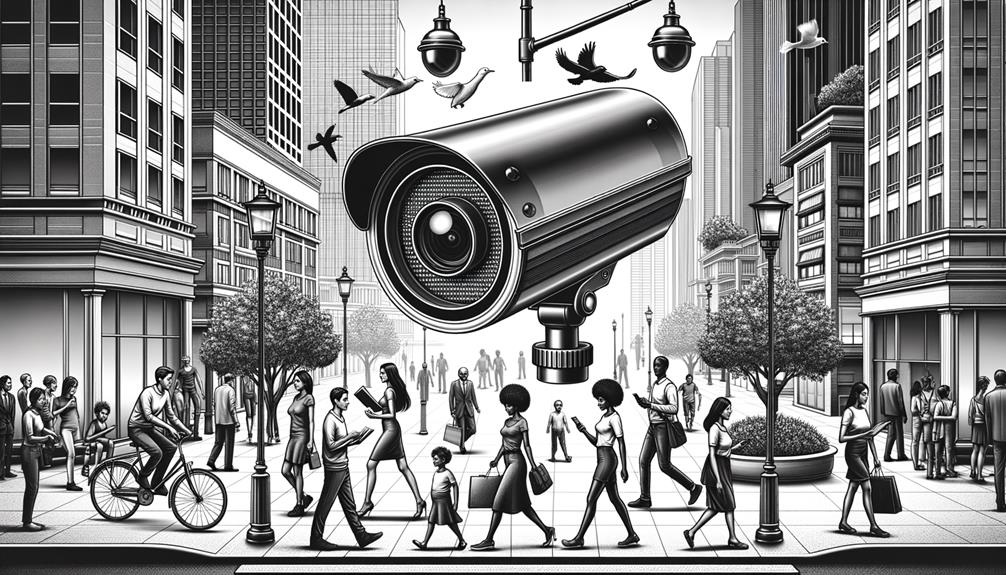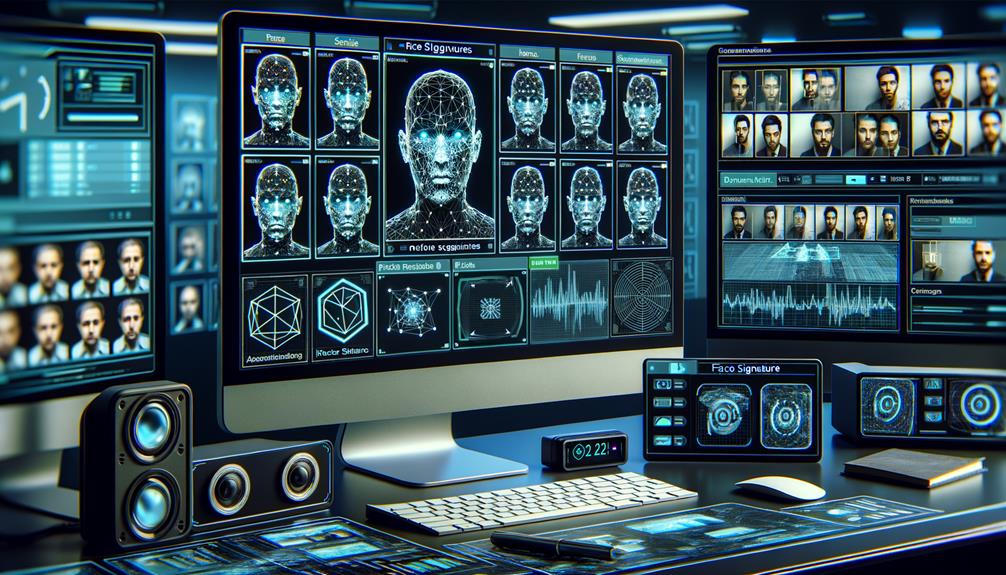


Facial recognition technology is a powerful tool for access control in surveillance systems. It functions by capturing facial images, extracting unique features, and converting them into numerical representations. This process enhances security by verifying identities with high accuracy. Implementing facial recognition access involves integrating AI technology, aligning faces, and making decisions based on captured signatures in a database. While it presents challenges like false acceptance rates, maintenance needs, and implementation costs, its applications in real-time security and audit trails make it an invaluable addition. As I explore further into this technology, I'm excited to uncover its full potential.
Key Takeaways
- Facial recognition systems for access control use cameras to capture facial images, extract unique features, and compare these to a database for identification.
- Advanced AI technology is integrated into facial recognition systems to detect and verify individuals, enhancing security and minimizing vulnerabilities.
- False acceptance and rejection rates, spoofing attacks, and maintenance requirements are challenges that must be addressed in facial recognition systems.
- Facial recognition access control systems prevent unauthorized entry, detect suspicious activities, and provide valuable data for audit trails.
- Integration with existing surveillance infrastructure and overcoming initial implementation costs are crucial for effective facial recognition access control.
How Facial Recognition Systems Work
When implementing facial recognition systems for access control in surveillance, it's essential to understand how these systems function. Facial recognition systems are designed to perform a series of key steps to ensure secure and efficient access control.
First, cameras capture facial images, which are then analyzed to extract unique facial features. These features are converted into numerical representations using advanced algorithms such as Convolutional Neural Networks (CNN) for accurate face detection and feature extraction.
Next, the system aligns the face, corrects lighting conditions, and distills the facial features into a unique facial signature. The decision-making process involves comparing this signature with stored faces in the database and granting or denying access based on the match.
This process is critical for effective access control, and the use of CNN significantly enhances the accuracy and efficiency of facial recognition technology.
Benefits of Face Recognition Technology
By leveraging the unique and distinguishable qualities of our facial features, face recognition technology offers an array of compelling benefits that can revolutionize the way we approach access control and surveillance. As a powerful authentication method, facial recognition enhances security measures by accurately identifying individuals based on their distinctive biological traits. This advanced technology not only bolsters security but also provides unparalleled convenience and speed.
With facial recognition, traditional physical cards or keys are no longer required for access control. Users can simply present their face to the designated reader, and the system guarantees seamless and efficient entry. The technology's high accuracy diminishes the risk of false positives or negatives, making it an attractive solution for industries requiring robust identity verification.
Embedding facial recognition into surveillance systems greatly strengthens user authentication processes and offers a sophisticated layer of security. By capitalizing on the power of facial features, we can create highly secure and efficient access control solutions that redefine the future of user authentication.
This cutting-edge technology offers a seamless blend of advanced security and enhanced user experience, making it a game-changer for modern surveillance.
Implementing Facial Recognition Access

To overcome the challenges associated with traditional security methods, facial recognition access control presents a thorough solution by integrating advanced AI technology and precise biometric analysis. By capturing facial images and analyzing unique features, this system compares data to a database for identification. This process includes face detection, feature extraction, matching, and decision-making to grant or deny access.
| Step | Description | Technology |
|---|---|---|
| Image Capture | High-definition cameras capture facial images or videos | Infrared cameras for best results |
| Face Detection | Identification of human faces | Convolutional Neural Networks (CNN) |
| Feature Extraction | Unique features distilled into a numerical representation | Euclidean distance or Cosine similarity measures |
Facial recognition access control systems offer enhanced security by requiring unique biological features for identification. This minimizes vulnerabilities present in traditional systems, where credentials can be lost, stolen, or cloned.
Challenges and Future Trends
Challenges associated with facial recognition technology must be acknowledged and addressed. Implementing facial recognition access control systems isn't without its difficulties. Key issues include:
- False Acceptance and Rejection Rates: High error rates can lead to both security vulnerabilities and inconvenience for users.
- Spoofing Attacks: The manipulation of facial data can compromise system accuracy.
- Maintenance Requirements: Regular calibration and maintenance are essential for maintaining accuracy over time.
- Initial Implementation Costs: High costs can be a notable deterrent for some organizations.
- Integration Challenges: Combining facial recognition with other access control technologies can be intricate.
Despite these challenges, innovations in deep learning algorithms and artificial intelligence integration are enhancing the security and efficiency of facial recognition access control systems.
The development of contactless biometric solutions is also significantly enhancing user experience and hygiene in various environments.
As technology continues to evolve, we can expect these challenges to be addressed, leading to broader adoption across industries and more effective access control in surveillance applications.
Applications in Surveillance Systems
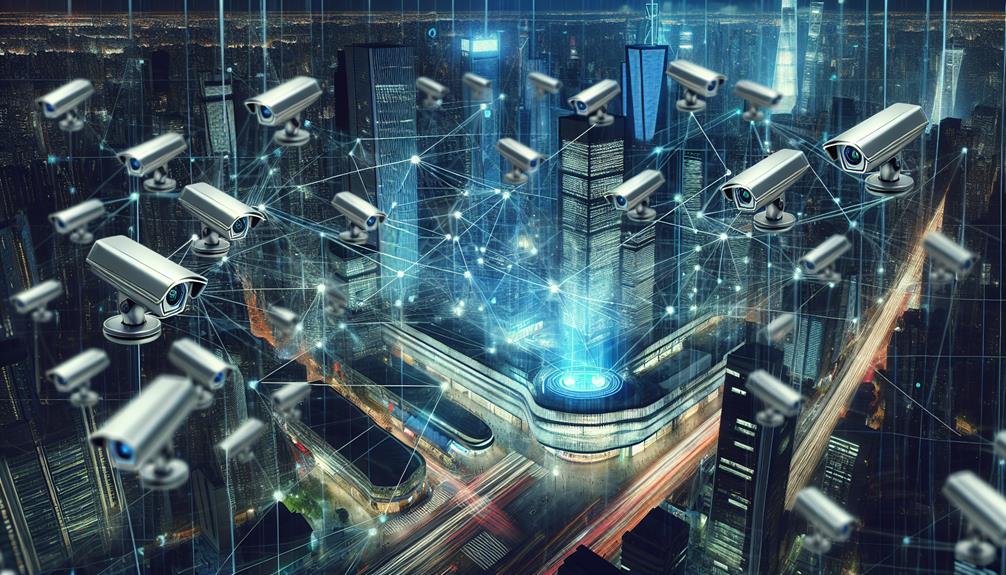
As surveillance systems increasingly rely on facial recognition technology, an added layer of real-time security is enabled by automatically identifying individuals attempting to enter restricted areas through facial matches in the database. This advanced solution is far more effective than traditional methods that relied on manual verification or physical barriers. With facial recognition for access control in surveillance, any attempts at unauthorized entry are prevented.
The enhanced security provided by these systems extends beyond mere access control. By tracking and monitoring individuals' movements within designated areas, surveillance systems can detect and respond to suspicious activities. This not only improves upon overall security measures but also provides valuable data for audit trails, making it easier to identify and address vulnerabilities.
The biometric data collected through facial recognition serves as a unique identifier, ensuring that only authorized personnel can access sensitive areas. Law enforcement agencies also benefit from these advanced solutions, which help them track and monitor individuals more efficiently. Injecting advanced algorithms into surveillance systems guarantees that they're robust and reliable, ultimately securing a safer environment.
Facial recognition for access control in surveillance represents a leap forward in security solutions, leveraging the power.
Frequently Asked Questions
How Does Facial Recognition Surveillance Work?
While using surveillance cameras, I leverage advanced biometric technology, incorporating machine learning and a facial database. This process extracts unique facial features for a secure authentication process, balancing security measures and privacy concerns for access permissions and data protection.
How Does Facial Recognition Access Control Work?
'I use facial recognition technology for secure access control, where my face is captured and analyzed to create a unique faceprint. This identification process guarantees real-time detection and verification, respecting my data privacy while maintaining high-quality security measures.'
What Is the Difference Between Facial Recognition and Face Surveillance?
"As I understand face surveillance and facial recognition, the major divide lies in the intent. Surveillance raises serious ethical concerns around privacy and vigilantism, while recognition for access control aims for security and convenience—yet both feed into the ongoing discussion around accuracy, data security, and transparency."
What Is the Face Recognition System for Security Systems?
"I implement facial recognition systems for security by leveraging advanced biometric authentication to detect and match faces, ensuring seamless access control through surveillance cameras while respecting privacy concerns and enhancing identity verification."