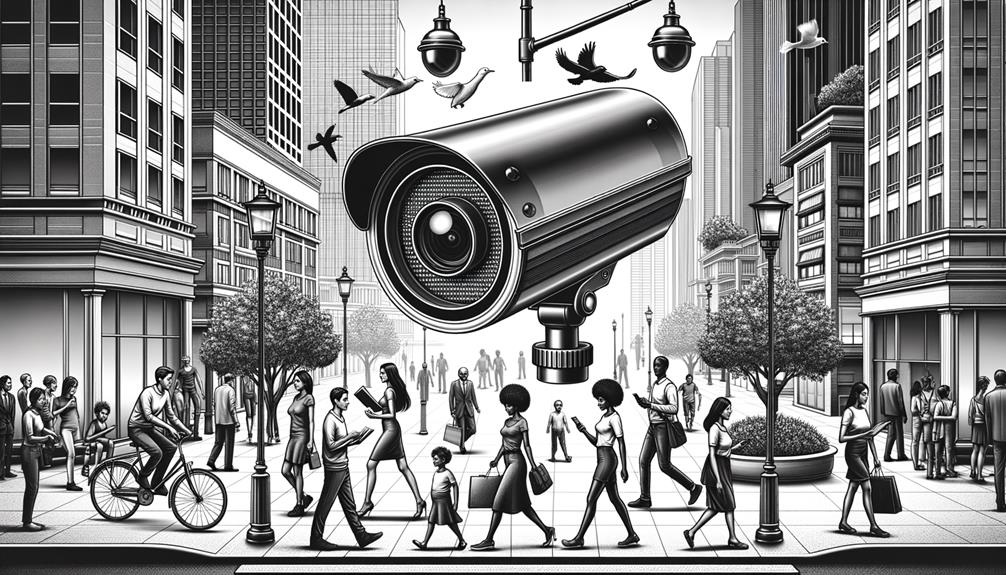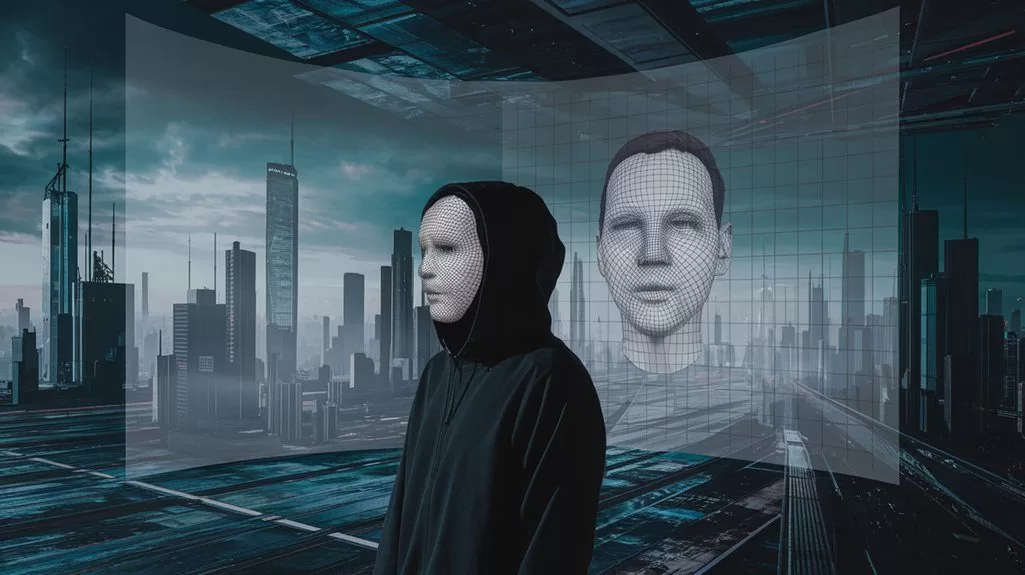


Using facial recognition technology greatly enhances surveillance capabilities, allowing for real-time threat detection through advanced data analytics and pattern recognition. This integration accelerates the identification and tracking of suspicious behaviors, making security systems more responsive. I explore how these systems leverage high-performance algorithms to efficiently detect threats. By integrating the technology into video surveillance, security personnel can rapidly identify problems. If you're interested in how this balances security needs with privacy concerns, let's continue.
Key Takeaways
- Facial recognition technology integrated with AI-powered data analytics enhances threat detection efficiency and accuracy.
- Real-time pattern recognition addresses various challenges like misidentification and spoof attacks.
- Integration into video surveillance systems streamlines threat detection by enabling automatic tracking of suspicious behaviors.
- Biased training datasets must be addressed through diversification to prevent wrongful arrests and systemic inaccuracies.
- Clear regulations, monitoring, and consent mechanisms ensure the responsible use of facial recognition for surveillance.
Security and Privacy Concerns
When deploying facial recognition technology for threat detection, security and privacy concerns arise from the potential for constant surveillance, misidentification due to environmental factors, and the ethical implications of balancing safety with individual privacy rights.
One pressing issue is the accuracy of facial recognition systems, which can be hampered by factors like lighting conditions, leading to false positives or false negatives. This inaccuracy further heightens privacy alarms as it can result in the mistaken identification of individuals, often with disproportionate impacts on marginalized communities.
As concerns about the technology's potential for mass surveillance grow, privacy advocates stress the risks associated with unchecked facial recognition use. Without robust regulations, governments or corporations can easily misuse facial data, infringing upon users' right to privacy and creating a culture of suspicion rather than safety.
For instance, the incident at Madison Square Garden exemplifies how facial recognition can be used for exclusionary and discriminatory practices. Ultimately, it's essential to develop clear ethical guidelines and safeguards to guarantee that security personnel utilize facial recognition technology responsibly and with respect for individual privacy rights.
Enhancing Surveillance Efficiency
In the domain of surveillance effectiveness, the integration of facial recognition technology with advanced data analytics accelerates the process of threat detection by accurately identifying and analyzing objects, individuals, and irregular activities in a swift and efficient manner. This fusion empowers security experts to react promptly to potential threats, improving overall surveillance efficiency.
Enhanced Pattern Recognition: Facial recognition technology processed through high-performance algorithms can swiftly identify patterns and anomalies in footage, alerting security teams to potential threats in real-time.
Accurate Identification: The technology ensures precise and rapid identification of individuals, notably reducing the time spent on manual analysis.
Intelligent Surveillance: By integrating facial recognition with surveillance cameras, security systems can automatically detect and track suspicious behaviors, enhancing the level of security and threat detection in various settings.
Facial Recognition Technology
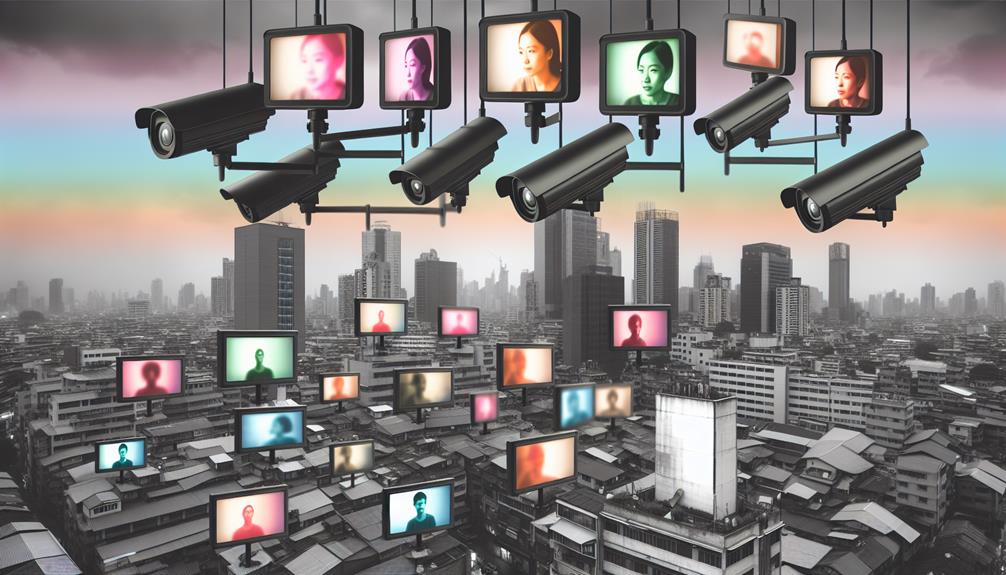
Facial identification technology operates by converting unique physiological facial characteristics into a distinct signature that's matched against a database to achieve rapid and accurate identification. This technology relies on advancements in artificial intelligence and machine learning to improve speed and accuracy.
When integrated into video surveillance systems, facial identification technology greatly enhances the efficiency of threat detection by quickly identifying individuals from a large database. This precision plays a key role in high-stress surveillance environments where every second counts.
However, concerns around privacy and algorithmic bias need to be addressed to ensure responsible implementation. Interestingly, companies like Clearview AI and Amazon have already made significant progress in leveraging facial identification for various applications, including law enforcement and real-time video surveillance.
Algorithmic Bias and Misidentification
Algorithmic bias in facial recognition can manifest as higher misidentification rates for certain demographic groups, especially communities of color. These biases occur due to both intentional and unintentional design choices and raise significant concerns regarding the fairness and objectivity of surveillance systems.
Key issues contributing to algorithmic bias include:
- Disparate training datasets: When facial recognition algorithms are trained on datasets that lack diverse representations, they can struggle to accurately identify individuals from those underrepresented groups.
- Biased policing practices: The intersection of disparities in facial recognition and existing biases in law enforcement practices often targets marginalized communities more heavily.
- Systemic inaccuracies: Inherently flawed algorithms can be further amplified by inadequate testing, leading to misidentification and wrongful arrests.
The prevalence of algorithmic bias in facial recognition underscores the need for more diverse and inclusive training datasets, stricter regulation, and careful evaluation of these technologies before their adoption in surveillance and policing.
Legal and Ethical Implications
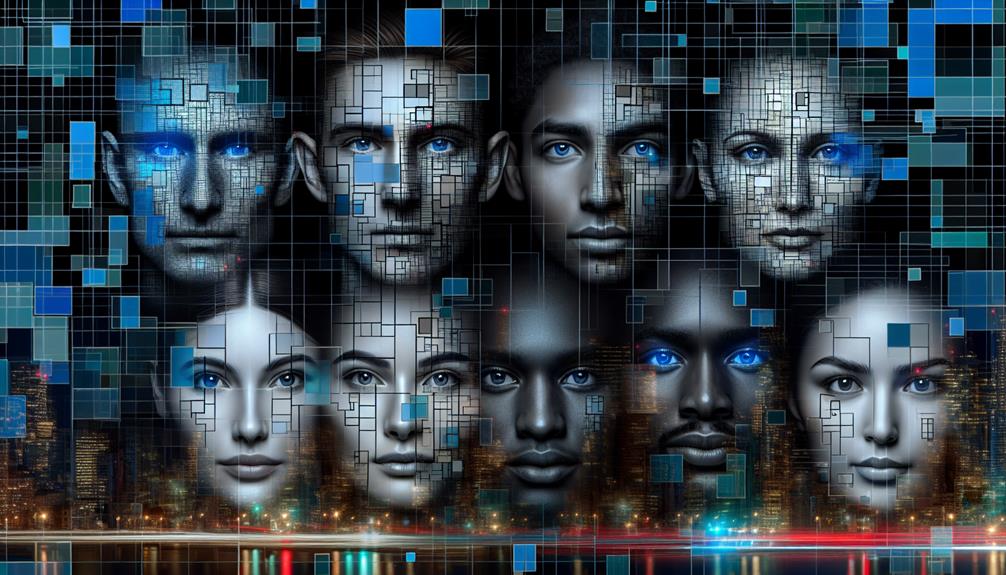
The use of facial recognition technology for surveillance raises urgent legal and ethical questions about individual privacy, data collection, and the fair application of these systems in public spaces. As these technologies become increasingly widespread, concerns about privacy rights and data collection in public arenas are escalating. Ethical considerations surrounding the responsible and equitable application of facial recognition for security purposes are gaining prominence. Recent events, such as the George Floyd protests, have amplified the legal and ethical debates surrounding facial recognition's appropriate uses.
State-level data privacy laws in California, Colorado, and Virginia recognize residents' rights to control their personal information within the domain of facial recognition. Additionally, major companies like Amazon, Microsoft, and IBM have pledged to restrict the sale of facial recognition technology to law enforcement to address these ethical and legal concerns.
It's essential to weigh the benefits of enhanced security against the potential intrusions on personal privacy and the risk of algorithmic bias in surveillance systems. By acknowledging these legal and ethical implications, we can guarantee that facial recognition technology is used responsibly to protect both public safety and individual rights.
Government Surveillance Policies
When examining the legal landscape for facial recognition use in government surveillance, it becomes clear that a patchwork of regulations exists across different states and municipalities, posing challenges for consistent oversight and governance. This lack of uniformity in government surveillance policies raises significant legal and ethical implications.
For instance:
- Over seven states and 20 municipalities have implemented legal restrictions on government use of facial recognition technology.
- The majority of municipalities lack specific legal restrictions on government use of facial recognition.
- There is ongoing debate on the ethical use of facial recognition in government surveillance, balancing societal safety against individual privacy rights.
These inconsistencies underscore the pressing need for all-encompassing, standardized policies to govern the use of facial recognition technology in government surveillance.
Balancing Security and Privacy
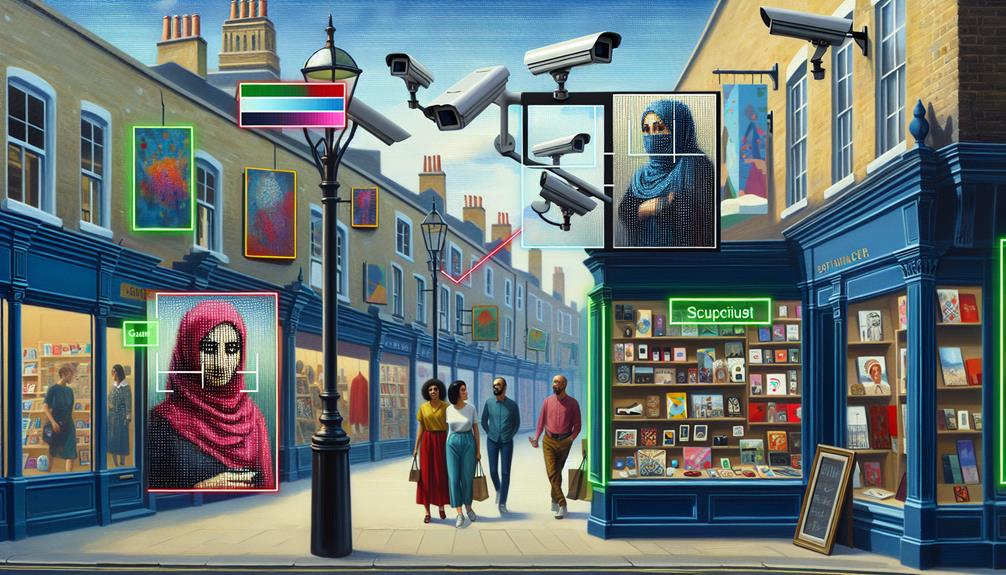
I argue that we should carefully consider the relationship between security and privacy in the use of facial recognition technology for surveillance threat detection.
It's essential to recognize that effective security measures can't come at the expense of privacy rights; as a result, we must strike a balance between these two objectives.
This calls for a nuanced understanding of the ethical dilemmas raised by facial recognition and the development of regulations that guarantee both security and privacy are respected in its implementation.
Privacy Over Security
Numerous ethical dilemmas arise as facial recognition technology for threat detection grapples with balancing security and privacy concerns, particularly with the increased risk of mass surveillance compromising individual rights. A primary concern is the potential for privacy violations that occur when this surveillance becomes ubiquitous.
It's crucial that privacy practices and commitment are upheld to prevent the abuse of personal data. To guarantee responsible use, transparency and accountability mechanisms must be in place to safeguard individual privacy.
- Poor Facial Recognition Accuracy: AI algorithms can be inaccurate, leading to false identifications, which can unfairly target individuals and have severe consequences.
- Consent and Regulatory Compliance: Companies must fully disclose their use of facial recognition technology and obtain explicit consent from individuals, complying with regulations such as the GDPR.
- Privacy Over Security: The need for security shouldn't overshadow the importance of respecting individual privacy, as unmonitored surveillance can stifle freedom of expression and lead to unjust arrests.
Bias in Surveillance Tech
The widespread implementation of facial recognition technology in law enforcement, which often shows higher inaccuracy rates for individuals from racial minority groups, fuels concerns about the perpetuation of racial bias in surveillance practices. As the technology continues to expand its presence in various sectors, it becomes increasingly important to acknowledge and address the unfair targeting of communities of color.
Facial Recognition Errors by Demographic:
| Demographic | Error Rate |
|---|---|
| Light-skinned Men | 0.0%-0.8% |
| Darker-skinned Women | 20.8%-34.7% |
| Black, Asian, and Native American Individuals | Higher False Positives or Negatives |
| General Populations | Variable accuracy rates.
While the claim that technology is naturally unbiased is far from the truth. Facial recognition technology, developed by people, replicates existing cultural and societal biases. Furthermore, its deployment in law enforcement practices, which are already acknowledge significant potential to be used, the technology further exacerbates these biases. It is crucial to take steps towards mitigating racial bias in facial recognition and guarantee fair, unbiased surveillance practices to protect all communities.
Ethics and Regulations
As facial recognition technology increasingly permeates law enforcement and commercial sectors, reconciling the competing interests of bolstering security and safeguarding individual privacy becomes a heightened challenge.
Adopting ethical regulations is essential to guarantee that facial recognition technology is used responsibly. Governments and organizations must strike a delicate balance between guaranteeing public safety and protecting personal freedoms:
- Reconciling Security and Privacy: Regulations should aim to balance the need for surveillance and threat detection with individuals' right to privacy, preventing misuse of facial recognition technology for mass surveillance or discrimination.
- Addressing Algorithmic Bias: Ethical regulations must consider the potential biases in facial recognition algorithms and guarantee that these biases are mitigated to prevent disproportionate impacts on marginalized communities.
- Transparency and Accountability: Clear guidelines and oversight mechanisms should be established to guarantee transparency in the collection, storage, and use of facial recognition data, holding those who misuse the technology accountable for their actions.
Applications in Various Industries
While implementing advanced security systems, I've found that facial recognition technology greatly boosts surveillance efficiency across various industries.
For instance, law enforcement agencies use it to identify suspects, while airports leverage it for seamless traveler tracking.
These applications demonstrate the versatility and effectiveness of facial recognition in enhancing security systems.
Advanced Security Systems
In the domain of advanced security systems, threat detection takes a quantum leap forward through the integration of facial recognition technology. This cutting-edge innovation transforms traditional surveillance cameras into intelligent sentinels that can discern patterns and anomalies in real-time.
By leveraging facial recognition technology, security systems gain precise identification capabilities, enabling quick responses to potential threats.
Key features of these advanced security systems include:
- Enhanced Object Recognition: AI algorithms are increasingly able to accurately distinguish between objects, such as packages, people, and vehicles, ensuring targeted alerts and minimizing false alarms.
- Real-time Anomaly Detection: Systems can continuously analyze and flag unusual activity, ensuring response teams remain vigilant and prepared to respond swiftly to any potential threat.
- Seamless Integration with Edge Computing: Facial recognition technology, when paired with advancements in edge computing, greatly boosts threat detection speed and accuracy by processing data closer to the point of collection, reducing latency and increasing situational awareness.
These advanced security systems, enabled by facial recognition technology, provide a robust line of defense against threats, offering enhanced safety and control for those employing them.
Surveillance Efficiency Boost
Facial recognition technology greatly boosts surveillance efficiency across various industries by providing swift identification and precise accuracy for enhanced security measures, from securing high-stakes government facilities to streamlining passenger flow at bustling airports. This advanced technology plays a significant role in ensuring effective access control systems, utilizing computer vision to rapidly process large datasets and identify multiple faces simultaneously in crowded environments.
| Industry | Application | Benefits |
|---|---|---|
| Government | Access control for high-security facilities | Enhanced security, efficient access management |
| Defense | Monitoring bases, detecting potential threats | Improved threat detection, faster response times |
| Law Enforcement | Identifying suspects, monitoring crowds | Increased accuracy, expedited investigations |
| Airports | Streamlining passenger flow, securing checkpoints | Enhanced passenger experience, improved security |
| Healthcare | Monitoring patients, securing facilities | Improved patient safety, enhanced facility security |
As I delve into the applications of facial recognition technology, it's evident that this technology offers a trifecta of efficiency, precision, and speed traverse multiple sectors, solidifying its position as a cornerstone in modern surveillance.
Ensuring Accuracy Andsensitive Usage
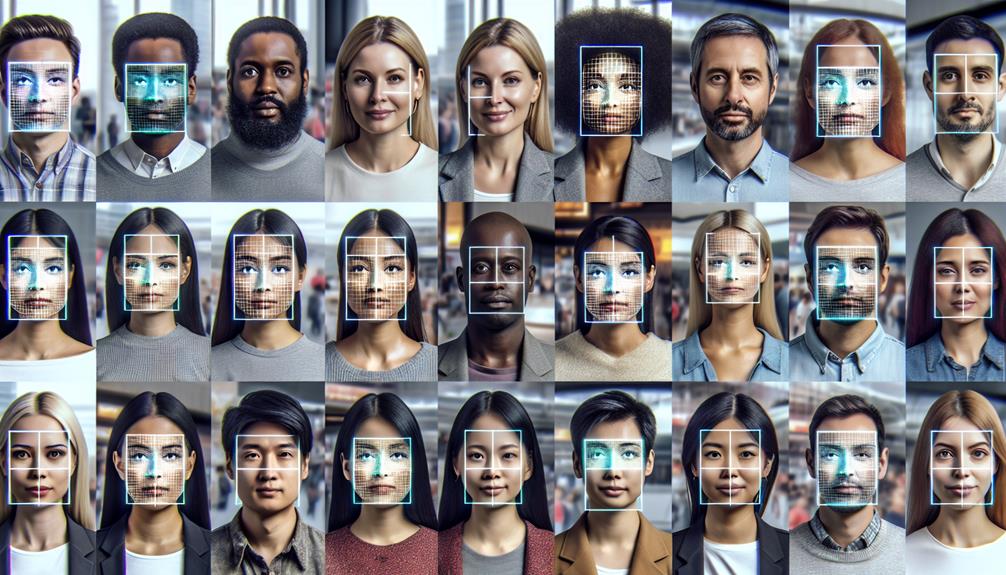
To safeguard facial recognition technology is harnessed effectively in surveillance threat detection without infringing on privacy, significant focus must be given to safeguarding accurate and sensitive usage. Ensuring the technology is used in a responsible manner requires careful consideration of its capabilities and limitations. This involves balancing accuracy with ethical considerations to maximize its benefits while minimizing potential risks.
- Data Protection Measures: Implementing robust data security protocols is critical to protect sensitive personal information collected through facial recognition.
- Restricting Invasive Usage: Establish clear guidelines and oversight mechanisms to prevent unintended or excessive use that could lead to privacy violations.
- Algorithmic Refinement: Continuously improving facial recognition algorithms to iron out accuracy biases and guarantee consistent performance across diverse populations.
Frequently Asked Questions
How Is Facial Recognition Used in Surveillance?
I employ facial recognition algorithms for real-time monitoring to guarantee accurate biometric identification. Through advanced video analytics, I quickly detect anomalies in surveillance feeds.
Is the Use of Facial Recognition Technology a Threat to Privacy?
In my opinion, the use of facial recognition technology poses significant risks to privacy due to inadequate ethical guidelines, weak data protection measures, and insufficient legal regulations, compromising individual security and autonomy.
What Is the Place of Facial Recognition Technologies in Security Systems?
In security systems, facial recognition technologies play a pivotal role in surveillance monitoring, providing precise biometric identification that enhances threat detection capabilities by rapidly analyzing facial features, thereby ensuring robust security applications.
How Is Facial Recognition Used as an Investigative Technique?
As an investigator, I leverage facial recognition to facilitate criminal identification through biometric analysis, applying it in forensic investigations to identify suspects, trace movements, and locate missing persons swiftly and accurately.