


Google's SpeciesNet revolutionizes wildlife conservation. This AI marvel nails animal ID with jaw-dropping accuracy. Camera trap images analyzed in minutes, not months. Seriously, 99.4% accuracy in animal detection? That's insane! Yet, challenges loom. Merging AI with conservation isn't all roses and rainbows. Expertise needed. Still, the open-source nature fosters a collaborative spirit. It's like inviting a geeky friend to a nature hike—it actually gets better. Curious about the whole scoop?
Key Takeaways
- SpeciesNet achieves 99.4% accuracy in detecting images with animals and a 94.5% accuracy at the species level.
- The AI tool reduces data analysis time from months to minutes, enhancing biodiversity monitoring efficiency.
- Open-source nature of SpeciesNet invites global collaboration and continuous improvement from the community.
- Developed with WWF and other organizations, SpeciesNet supports conservation efforts in ecosystems like the Amazon rainforest.
- Google's SpeciesNet is part of a commitment to protect 30% of Earth's land and oceans by 2030.
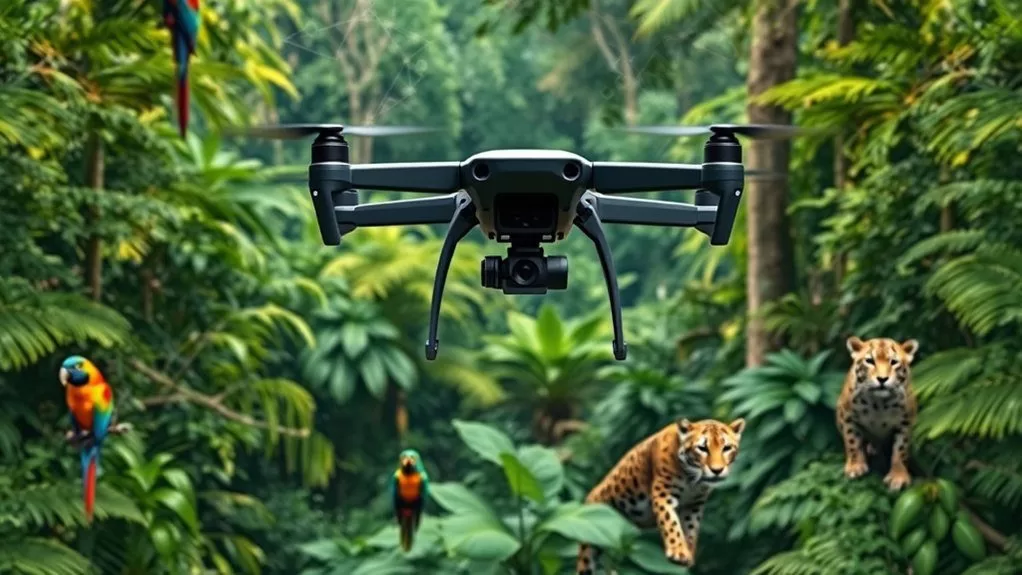
Although wildlife conservation has always faced significant hurdles, Google's latest AI marvel, SpeciesNet, boldly steps into the fray like a tech superhero. This AI tool, crafted for wildlife conservation, is turning heads with its uncanny ability to automatically identify animal species from camera trap images. Revolutionizing the field, it's now open-source, inviting global tinkering and improvement. Developed in collaboration with the WWF and other conservation powerhouses, SpeciesNet has been part of the Google Cloud-based Wildlife Insights platform since 2019—a game-changer, if you will.
The conservation challenges are intimidating. SpeciesNet, however, offers a glimmer of hope. It enhances biodiversity monitoring across various ecosystems, cutting data analysis time from months to mere minutes. That's not just an advancement; it's a leap. With a staggering 99.4% accuracy in detecting images containing animals, it's like having an eagle-eyed conservationist on speed dial. The AI's precision doesn't stop there. When predicting animal presence, it boasts a 98.7% success rate, and at the species level, an admirable 94.5%. These numbers aren't just impressive—they're borderline heroic. SpeciesNet's development was supported by training on over 65 million images, which included data from conservation organizations like the Smithsonian Conservation Biology Institute, bolstering its biodiversity monitoring capabilities in natural areas.
SpeciesNet slashes data analysis from months to minutes, boasting impressive accuracy and redefining conservation efforts.
SpeciesNet is trained on a jaw-dropping 65 million images, thanks to contributions from WWF and other organizations. Talk about a data feast. By being open-source, it encourages the community to refine and adapt it, making it a living, breathing tool. Privacy and access? Check. Available through Wildlife Insights and GitHub, it's ready for action. And action it gets. From the Amazon rainforest to local conservation projects, SpeciesNet is not just a tool—it's an ally. New initiatives, such as the Google for Startups Accelerator: AI for Nature and Climate, aim to enhance global nature conservation efforts, further reinforcing Google's commitment to protecting biodiversity.
But let's not drown in optimism. There are challenges. Integrating AI with conservation isn't all rainbows and butterflies. It requires not just tech know-how but a deep understanding of ecosystems. Yet, AI advancements like SpeciesNet are essential. They empower researchers and conservationists worldwide, from seasoned professionals to enthusiastic amateurs.
Google's commitment is clear. Their environmental initiatives, backed by significant funding, underscore their resolve to protect 30% of Earth's land and oceans by 2030. A tall order, indeed.
In this dance of technology and nature, AI plays a pivotal role. It mitigates climate change impacts, fortifies ecosystems, and shakes up traditional conservation methods. By encouraging collaboration among governments, NGOs, and researchers, SpeciesNet supports the systemic change necessary for sustainable practices.
In a world fraught with ecological challenges, SpeciesNet doesn't just identify species—it defies expectations, proving that AI can be both a technological marvel and a conservation catalyst.
References
- https://globalbizoutlook.com/google-unleashes-ai-to-save-nature-startups-grants-wildlife-tech/
- https://anewz.tv/science/artificial-intelligence/3818/google-releases-speciesnet-an-ai-model-to-identify-wildlife/news
- https://www.worldwildlife.org/stories/using-the-power-of-ai-to-identify-and-track-species
- https://blog.google/outreach-initiatives/entrepreneurs/ai-nature-climate-accelerator-nonprofits-speciesnet/
- https://sustainability.google