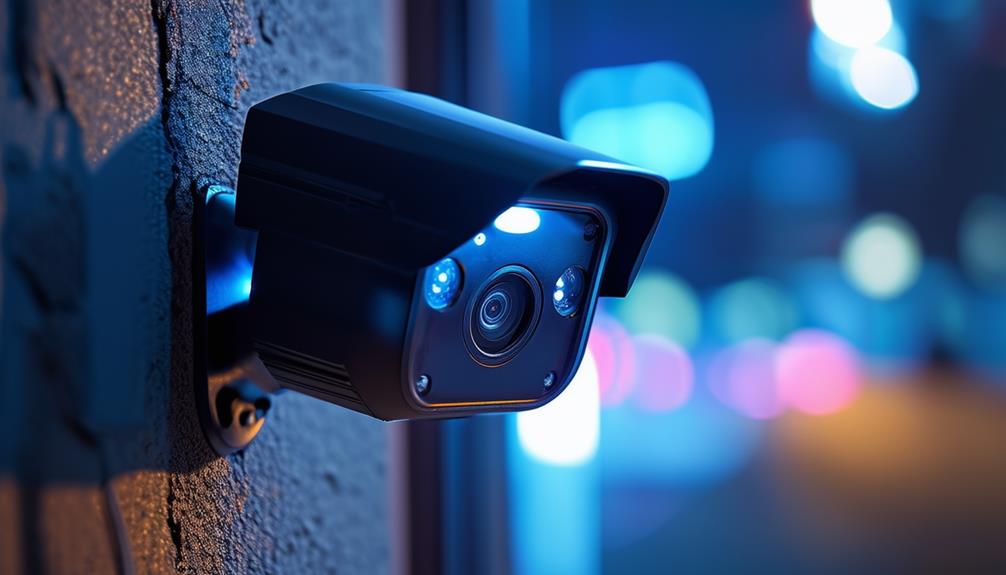


AI-enhanced thermal IP cameras have greatly improved security surveillance by utilizing heat detection to provide real-time alerts and accurate threat differentiation. These cameras capture infrared radiation and convert it into electrical signals, which are then amplified and processed into visible thermal images. AI integration enhances object detection, reduces false alarms, and offers proactive threat detection through advanced analytics. This technology is particularly useful in critical infrastructure settings, providing unmatched visibility in low-light conditions and long-range perimeter protection. With AI-powered video analytics, these cameras boost security measures by offering continuous temperature monitoring and advanced warning for potential hazards, making them indispensable for modern security applications, and there's more to explore on how they revolutionize monitoring and safety.
Key Takeaways
- AI Integration: Enhances object detection and classification capabilities in thermal IP cameras, improving security monitoring accuracy.
- Real-Time Monitoring: AI-powered thermal cameras provide real-time temperature monitoring and alerts for potential hazards, enhancing situational awareness.
- Accurate Threat Differentiation: AI analytics in thermal IP cameras enable precise differentiation between genuine threats and false alarms, optimizing security responses.
- Proactive Protection: AI-driven thermal imaging allows for proactive threat detection, enabling swift and effective response to potential security breaches.
- Improved Visibility: AI-enhanced thermal cameras offer unmatched visibility in low-light and obstructed conditions, enhancing long-range perimeter protection and safety protocols.
Thermal Imaging Camera Construction
When it comes to the construction of thermal imaging cameras, understanding the core components is vital. These cameras consist of five primary elements: an optic system, detector, amplifier, signal processing unit, and display.
The optic system focuses infrared radiation onto the detector, which converts this radiation into electrical signals. These signals are then amplified to enhance the data, and the signal processing unit translates the raw data into a readable format. Finally, the display component renders this data as a visible thermal image, showcasing temperature differentials in real-time.
Thermal imaging cameras are designed to be heat-resistant, ruggedized, and waterproof, making them ideal for fire service applications where durability is essential. They come in various forms, including handheld, helmet-mounted, and integrated models, catering to different use cases such as security, firefighting, and medical diagnostics.
These cameras are crucial for heat detection, enabling users to locate fire sources in darkness, identify victims, and detect overheating materials in low-level combustion scenarios. By rendering infrared radiation into visible light, thermal imaging cameras provide invaluable insights in critical situations.
Key Components and Functionality
When considering the key components and functionality of AI-powered thermal IP cameras, I focus on three critical elements: the optic system function, the detector and amplifier, and signal processing and display.
The optic system function captures and focuses infrared radiation, converting it into a thermal image.
The detector and amplifier then process this thermal energy, while advanced signal processing and display systems, often enhanced by AI, analyze and present the data, enabling accurate heat signature detection and real-time alerts.
Optic System Function
The optic system of a thermal IP camera is essential, comprising a lens and a sensor that work in tandem to capture and convert infrared radiation into visible images. This system is vital for accurate heat detection and thermal imaging capabilities. The lens plays a crucial role in focusing the incoming infrared radiation onto the sensor, allowing for the formation of a clear thermal image.
Key components like the lens are designed to focus the infrared radiation precisely onto the sensor. This precision is necessary for capturing heat signatures and converting them into detailed, visible images for analysis. The functionality of the optic system relies on this precise alignment to make sure that the sensor can effectively detect temperature differences as small as a fraction of a degree Celsius.
The optic system enhances security by providing detailed heat detection and surveillance capabilities. By accurately capturing and converting infrared radiation, these cameras can identify and visualize temperature anomalies, making them invaluable for various security applications, including surveillance, search, and rescue missions.
Precise optics are thus essential for the effective operation of thermal IP cameras, enabling users to rely on accurate and detailed thermal images.
Detector and Amplifier
The detector and amplifier are pivotal components in a thermal IP camera, working together to enhance the accuracy and detail of thermal imaging. The detector, typically a long-life, uncooled VOx microbolometer, converts infrared radiation into electrical signals. This conversion is essential as it allows for the detection of temperature differences, which are then processed and displayed as thermal images.
Here are some key aspects of the detector and amplifier in a thermal IP camera:
- Detector Material: VOx microbolometers are commonly used due to their high sensitivity and long lifespan.
- Resolution: The detector's effective resolution can be as high as 327,680 pixels, providing detailed thermal imaging.
- Amplification: Amplifiers boost the electrical signals from the detector for further processing and display, ensuring that even subtle temperature changes are captured.
- Focus and Zoom: While some thermal IP cameras may not require focus adjustments due to athermalized lenses, they often offer E-Zoom capabilities for continuous zooming up to 4x to focus on specific areas[Note: This point is inferred from general camera capabilities, not explicitly mentioned in the sources].
These components work in harmony to deliver high-resolution thermal images, making thermal IP cameras indispensable for security and surveillance applications.
Signal Processing and Display
Signal processing in thermal IP cameras is where infrared radiation is transformed into a visible, interpretable format, enabling real-time surveillance. This crucial step involves several key components and sophisticated algorithms that enhance the functionality of thermal IP cameras.
At the heart of signal processing are the optic system, detector, and amplifier. The optic system focuses the infrared radiation onto the detector, which converts this radiation into an electrical signal. The amplifier then increases this signal to a level that can be processed effectively.
Advanced algorithms interpret this thermal data, translating it into a visible image that highlights temperature differentials. This displayed output is vital for heat detection and surveillance, as it reveals temperature variations that aren't visible to the naked eye.
In thermal IP cameras, AI-driven signal processing enhances image quality and accuracy in detecting heat signatures, making them invaluable for security monitoring and threat detection.
The display functionality in thermal IP cameras is equally significant, as it presents the processed thermal images in a clear and understandable format. Modern thermal IP cameras can overlay thermal images onto visible light images, providing thorough visual data for enhanced security monitoring.
This integration of AI with thermal imaging technology notably improves the efficiency and accuracy of security operations, making thermal IP cameras essential tools in various security applications.
Usage in Firefighting Operations

When responding to fires, thermal imaging cameras are essential tools for identifying fire sources and locating victims quickly, even in darkness or smoke-filled environments. These cameras help firefighters pinpoint the origin of a fire and spot visually obscured victims, enabling efficient rescue operations. By detecting heat signatures, they also aid in identifying overheating electrical wiring and smoldering fires, which are vital for ensuring both firefighter safety and the success of firefighting operations.
Fire Source Identification
Firefighters heavily depend on thermal imaging cameras (TICs) to swiftly pinpoint fire sources, even in the most challenging environments. These cameras are essential in fire source identification, enabling firefighters to see through smoke and darkness, which are common hindrances in firefighting operations.
Here are four key ways TICs aid in fire source identification:
- Navigating through smoke and darkness: TICs allow firefighters to move safely through smoke-filled areas, helping them locate the fire source without relying on visual cues.
- Detecting hidden hotspots: Thermal cameras can identify smoldering fires and overheating materials, even when they aren't visible to the naked eye, which is vital for controlling and extinguishing fires.
- Mapping temperature variations: TICs create heat maps that help firefighters understand the spread of the fire and identify the hottest areas, guiding their strategy for combating the blaze.
- Ensuring structural safety: After a fire has been extinguished, TICs are used to detect any residual hotspots, ensuring the structure is safe and reducing the risk of re-ignition.
Victim Location
Thermal imaging cameras (TICs) play a critical role in locating victims during firefighting operations, particularly in environments where visibility is severely compromised. These cameras are essential for detecting heat signatures from trapped individuals, aiding in swift rescue efforts during emergencies.
In smoke-filled environments, traditional visibility is often near zero, but TICs can cut through the smoke and darkness, providing firefighters with a clear view of the area.
Firefighters rely on thermal imaging technology to identify and locate victims quickly, even in low-visibility conditions. The ability of thermal cameras to detect body heat helps prioritize rescue operations and save lives in critical situations.
This technology enhances situational awareness for firefighters by providing real-time heat detection for victim location in fire incidents. By using thermal IP cameras, firefighters can rapidly identify unconscious victims and navigate safely through hazardous conditions, ensuring timely and effective rescue operations.
This capability makes thermal imaging a cornerstone in modern firefighting, enabling more efficient and safer rescue efforts.
History and Adoption
The journey of thermal imaging technology from its early beginnings to widespread adoption has been marked by significant milestones and overcoming various barriers. Initially, thermal imaging faced substantial cost barriers that hindered its adoption by civilian fire services. However, after notable life-saving incidents in the 1980s, its value became more apparent, leading fire departments to acquire these devices through grants and initiatives.
Here are some key points that highlight the evolution and challenges of thermal imaging technology:
- Cost Barriers: High costs initially limited the adoption of thermal imaging cameras by fire departments.
- Naval Firefighting: The technology gained traction post incidents like the HMS Sheffield sinking, prompting broader adoption in firefighting.
- Advancements: Modern advancements include better performance, durability, and features like helmet-mounted TICs and drone integration.
- Challenges: Despite advancements, challenges such as maintenance, training, and limitations like depth perception persist.
Today, thermal imaging technology is standard equipment in many fire departments, enhancing situational awareness and safety. While AI-based object classification isn't yet a standard feature in most firefighting applications, it has the potential to further enhance monitoring capabilities in challenging conditions.
Advancements in Thermal Imaging
Thermal imaging advancements have greatly improved image quality, allowing for accurate recognition of humans and vehicles even in challenging conditions such as low light or dense obscurants like smoke and fog.
The integration of AI into thermal imaging systems has also enhanced situational awareness and decision-making in security applications by providing advanced analytics and object classification.
Additionally, enhancements in durability and sensitivity have made thermal cameras more robust and versatile, suitable for a wide range of applications from military operations to industrial safety measures.
Enhanced Image Quality
Advancements in thermal imaging technology have greatly enhanced image quality, allowing for clearer and more detailed visuals, even in the most challenging conditions. This improvement is pivotal for enhancing security measures and situational awareness.
- High Resolution: Modern thermal cameras now offer high-definition capabilities, making it easier to distinguish between objects and detect subtle changes in temperature.
- Enhanced Sensitivity: The sensitivity of thermal sensors has been markedly improved, enabling the capture of detailed thermal signatures even in low-light conditions.
- Wide Temperature Detection: These cameras can detect a broad range of temperatures, providing thorough data for various applications, from surveillance to industrial inspections.
- AI Integration: AI analytics play a key role in enhancing image quality by accurately recognizing humans and vehicles, thereby improving situational awareness and proactive protection.
The integration of AI with thermal imaging has revolutionized the field, enabling the creation of crisp and detailed images from what would otherwise be blurry thermal data. This technology guarantees better monitoring of people and vehicles, efficient detection of temperature changes, and ultimately, improved safety and security measures.
With these advancements, thermal imaging has become an indispensable tool in various industries, offering enhanced dependability and precision in diverse environments.
Advanced AI Integration
Advanced AI integration in thermal IP cameras greatly enhances object detection capabilities, allowing for accurate identification of people and vehicles even in challenging conditions. This technology leverages AI analytics to distinguish between ordinary movements and suspicious activities, minimizing false alarms and optimizing response times for critical events.
Benefits of AI Integration in Thermal IP Cameras
| Feature | Description |
|---|---|
| Object Detection | Accurate identification of people and vehicles in challenging conditions. |
| Abnormal Temperature Detection | Real-time notifications for temperature changes, enhancing safety measures. |
| False Alarm Reduction | Improved analytics help filter out irrelevant information, reducing false alarms. |
| Proactive Threat Detection | AI-powered video analytics offer situational awareness and proactive threat detection. |
With AI-powered thermal IP cameras, I can guarantee that my security system is proactive rather than reactive. These cameras can detect fires at early stages, monitor critical equipment for overheating, and track temperature variations in industrial processes. This integration not only enhances security but also improves maintenance efficiency by identifying potential issues before they escalate. The advanced capabilities of these cameras make them indispensable for critical infrastructure, providing clear visuals even in harsh conditions like smoke or fog.
Improved Durability
Enhancing the dependability of security systems, modern thermal IP cameras have undergone significant improvements in durability, making them resilient in harsh environments. These advancements are particularly vital for fire-service specific models, which must withstand the intense conditions of firefighting operations.
- Heat Resistance: Thermal IP cameras are constructed to endure high temperatures, ensuring they remain operational even in environments where other cameras might fail.
- Waterproof Housings: Ruggedized and waterproof housings protect the cameras from water and other environmental hazards, extending their lifespan and reliability.
- Robust Construction: Improved materials and design have made thermal IP cameras more sturdy, allowing them to function effectively in various settings, including industrial facilities and outdoor perimeters.
- Long-Term Performance: The ruggedized nature of modern thermal IP cameras ensures long-term performance and reliability for security applications, reducing maintenance needs and downtime.
These enhancements in durability make thermal IP cameras indispensable tools for security applications, offering consistent and reliable heat detection in challenging environments. By investing in these advanced cameras, security teams can enhance their capabilities to monitor and respond to potential threats effectively.
Challenges and Limitations
When implementing AI and thermal IP cameras, several challenges and limitations arise that can affect their effectiveness and widespread adoption. One significant hurdle is the cost obstacle; the initial investment in AI-driven thermal IP cameras can be prohibitive for many organizations, encompassing expenditures on technology, talent, and training.
Another essential aspect is the need for proper education and utilization. AI systems, including those integrated with thermal IP cameras, require high-quality data and skilled personnel to maximize their benefits. Without adequate training, these advanced technologies may not operate at their full potential.
Additionally, there are technical challenges such as distance judgment and detail limitations. While thermal IP cameras excel in detecting heat signatures, they can lack the detail and distance judgment of other camera types, which may limit their effectiveness in certain scenarios.
Maintaining these systems also poses challenges, particularly in ensuring ongoing funding for maintenance and upgrades. This ongoing financial commitment is essential to keep the technology up-to-date and functioning optimally over time.
These factors collectively underscore the importance of a well-planned and well-funded strategy when integrating AI and thermal IP cameras into security systems.
AI-Enhanced Thermal Imaging

How can AI-enhanced thermal imaging revolutionize security surveillance? This advanced technology combines thermal sensors with artificial intelligence algorithms to enhance object detection capabilities significantly. Here are some key benefits:
- Long-distance detection: AI-enhanced thermal imaging systems can detect people and vehicles over long distances, even in challenging visibility conditions like darkness, smoke, or foliage.
- Real-time temperature monitoring: Radiometric capabilities in these cameras can identify hot spots and abnormal temperature changes in real-time, which is essential for monitoring industrial equipment and processes.
- Accurate threat differentiation: AI technology helps minimize false alarms by accurately differentiating between actual threats and environmental factors, ensuring a more reliable security response.
- Enhanced security monitoring: These cameras can monitor fences, entry points, and restricted areas in critical infrastructure, providing clear visuals even in harsh weather conditions.
Object Detection and Classification
AI-enhanced thermal IP cameras take surveillance to the next level by accurately categorizing and distinguishing between different objects, such as humans and vehicles. These cameras use deep neural network (DNN) video analytics, which improve threat identification and situational awareness.
The integration of AI analytics with thermal imaging allows for precise object classification, even in challenging conditions like low visibility or varying lighting.
Heat detection technology embedded in these cameras provides proactive protection by monitoring temperature changes in real-time. This is particularly useful for early warnings of potential hazards, such as fires or overheating equipment, thus averting accidents before they occur.
The capability of thermal cameras with AI-based object classification to detect and classify objects efficiently, even in intricate environments, significantly boosts security measures.
Radiometric Alarms and Safety

Radiometric alarms in thermal IP cameras are a key component in enhancing safety measures. These advanced features enable real-time detection of hot spots and overheating objects, providing critical notifications for abnormal temperature changes. This capability allows users to set rules and alarms for predefined temperature values, ensuring proactive safety measures are in place.
Here are some key ways radiometric alarms contribute to enhanced safety:
- Incident Detection: Thermal IP cameras quickly identify temperature-related issues, such as overheating machinery or electrical malfunctions, before they escalate into major incidents.
- Advanced Warning: Built-in radiometric capabilities offer early warnings for potential hazards, enabling swift action to mitigate risks and prevent damage.
- Temperature Monitoring: These alarms monitor temperature changes continuously, alerting operators to anomalies that could indicate a fire risk or equipment failure.
- Improved Situational Awareness: By detecting temperature variations, thermal analytics security cameras enhance overall situational awareness, helping users respond effectively to potential threats.
These features collectively improve safety protocols by providing rapid and accurate incident detection, ensuring a safer environment. The integration of radiometric alarms into thermal IP cameras is a powerful tool for enhancing security and preventing incidents through early detection and response.
Improved Visibility in Low Conditions
Thermal IP cameras, particularly those like the H5A Thermal camera, offer unmatched visibility in low-light and obstructed conditions, making them indispensable for security applications. These cameras utilize cutting-edge heat-sensing technology, enabling them to detect people and vehicles even in complete darkness, smoke, mist, and foliage. This thermal sensitivity is vital for long-range perimeter protection, as it allows security personnel to monitor areas that would be difficult or impossible to see with standard cameras.
The H5A Thermal camera's ability to detect objects over 1,000 feet away is a significant advantage, expediting response times in critical situations. This is made possible by its AI-powered video analytics, which enhance object detection and classification. These analytics not only improve visibility but also minimize false alarms, ensuring that security teams are notified only of genuine threats.
Additionally, the built-in radiometric capabilities of these cameras identify hot spots and overheating objects, providing real-time notifications for abnormal temperature changes. This feature enhances safety measures by alerting personnel to potential hazards before they become serious issues.
Integration With Security Systems

When incorporating thermal IP cameras into existing security systems, the key benefit is the enhanced capability to detect and alert on heat signatures in real-time. This integration greatly boosts the overall security monitoring efficiency, allowing for prompt responses to potential threats.
Here are four critical aspects of incorporating thermal IP cameras into your security system:
- Seamless Integration: Thermal IP cameras can be easily integrated with Video Management Systems, including popular brands like FLIR, to create a unified security framework.
- Real-Time Alerts: These cameras provide immediate alerts for abnormal temperature changes, ensuring that security personnel can respond promptly and effectively.
- Advanced Warning: Thermal IP cameras with radiometric capabilities offer advanced notification for potential hazards based on predefined temperature values, helping to prevent equipment malfunctions and fires.
- AI-Powered Analytics: Integration with AI-powered video analytics guarantees accurate detection of people and vehicles, even in challenging environments such as low-light or adverse weather conditions.
This combination of thermal sensitivity (typically 25 mK NETD) and AI analytics combines to form a robust security system that enhances visibility and reduces the likelihood of false alarms, making it an essential tool for any serious security setup.
Frequently Asked Questions
Do Thermal Cameras Detect Heat?
Yes, thermal cameras detect heat by capturing infrared radiation, identifying heat signatures, and creating heat maps. This infrared heat detection allows for precise monitoring, making them versatile tools in various applications.
What Is the Use of AI in Security Cameras?
In security cameras, AI analysis enhances facial recognition, motion tracking, and intrusion detection. It automates threat detection, classifies objects like humans and vehicles, and provides real-time alerts, minimizing false alarms and improving response times to critical events.
Can Thermal Cameras Detect Heat Through Walls?
Thermal cameras can't see through solid walls, but they can detect heat signatures through thin barriers or materials like plastic. However, wall penetration is limited, and privacy concerns arise, especially considering environmental factors like material composition and thickness.
Does Heat Affect Security Cameras?
Yes, heat can greatly affect security cameras, causing overheating that interferes with camera performance and accuracy. High temperatures can lead to heat anomalies, posing security risks and compromising camera reliability, especially in harsh environmental conditions.
Final Thoughts
Thermal imaging cameras have revolutionized firefighting and security by enhancing visibility in low-light and smoke-filled conditions. These cameras detect heat signatures, allowing for the quick identification of potential fire risks and hidden hotspots. Their integration into firefighting practices has notably improved safety and efficiency, making them indispensable tools for first responders. With advancements in technology, thermal imaging continues to evolve, offering better image quality, durability, and integration with other security systems, further enhancing overall safety and response capabilities.