


Clearview AI is a facial recognition company founded in 2017 by Hoan Ton-That and Richard Schwartz, utilizing a database of over 30 billion images scraped from public internet sources, including social media platforms. The technology converts photos into unique biometric codes, claiming near 100% accuracy in certain conditions, as validated by NIST testing. It has been used nearly 1 million times by U.S. law enforcement agencies to generate leads, close cases, and enhance public safety, despite facing criticism for privacy violations and legal challenges. Clearview’s tools have also been employed in the Ukraine conflict and by various global law enforcement agencies, highlighting its significant impact and raising important ethical and regulatory questions. For a deeper understanding of its implications and controversies, further exploration is warranted.
Key Takeaways
- Founding and Funding: Clearview AI was founded in 2017 by Hoan Ton-That and Richard Schwartz, with initial funding of $8.4 million and subsequent funding rounds.
- Facial Recognition Technology: Utilizes a database of over 30 billion images, claiming near 100% accuracy in certain conditions, and has been tested by NIST for its precision.
- Data Collection: The database is built by scraping billions of photos from the public internet, including social media platforms, raising significant privacy concerns and legal challenges.
- Law Enforcement Impact: Aids law enforcement in generating leads, closing cases faster, and enhancing public safety, with nearly 2 million searches conducted by U.S. law enforcement agencies.
- Controversies and Regulations: Faces criticism for privacy violations, has been fined in Europe for GDPR violations, and is subject to ongoing regulatory actions and calls for stricter governance.
Clearview AI History
Clearview AI, a facial recognition company founded in 2017 by Hoan Ton-That and Richard Schwartz, has its origins in the handover of assets from their previous venture, SmartCheckr. This shift marked the beginning of a new era in facial recognition technology, as Clearview AI quickly gained momentum for its innovative approach to identifying and matching faces.
The company initially raised $8.4 million from investors, which was followed by additional funding rounds in 2020 and 2021, totaling $38.625 million. By October 2020, Clearview AI had claimed a valuation of over $100 million, highlighting its swift growth and financial stability. The company has also formed an advisory board and recruited key executives to support its expansion plans.
Clearview AI’s primary service involves offering facial recognition services to government agencies and law enforcement by utilizing an extensive image database scraped from social media and the internet. This database, which exceeded 10 billion images by October 2021, has raised significant concerns over privacy rights.
Despite these controversies, Clearview AI has been utilized by various government agencies worldwide, further consolidating its presence in the facial recognition market. The company’s expansion plans include targeting schools and lending platforms outside the U.S., indicating a wider scope for its technology in the future.
Founders and Origins
Founded in 2017 by Hoan Ton-That and Richard Schwartz, the inception of Clearview AI marked a significant shift in the field of facial recognition technology. This company emerged after the founders transferred assets from their previous venture, SmartCheckr.
Hoan Ton-That, an Australian entrepreneur, brought a background in technology and entrepreneurship to the table. He had previously attempted various ventures, including social media applications and a phishing app, before focusing on facial recognition.
Richard Schwartz, with his experience as an aide to Rudy Giuliani and as the editorial page editor of The New York Daily News, provided valuable connections and strategic insight. The pair met at the Manhattan Institute in 2016, where they conceptualized Clearview AI.
Key Founders and Origins Details
| Aspect | Description |
|---|---|
| Founders | Hoan Ton-That, Richard Schwartz |
| Year Founded | 2017 |
| Initial Funding | $8.4 million from investors including Peter Thiel and Kirenaga Partners |
| Database Source | Billions of photos scraped from social media and the internet |
| Early Use Cases | Law enforcement, government agencies, and later schools and lending platforms |
Clearview AI’s facial recognition technology relies on a vast database of images collected from social media and the internet. This approach has raised significant privacy concerns but has also been praised for its effectiveness in aiding law enforcement.
Facial Recognition Technology

Utilizing a vast database of over 30 billion images scraped from social media and the internet, Clearview AI‘s facial recognition technology enables users to quickly match and identify faces. This technology allows law enforcement and other authorized entities to upload a photo of a face and find matches within the extensive database, providing links to where the matching images appear online.
Clearview AI’s facial recognition technology is considered one of the most powerful and accurate in the world, with claims of near 100% accuracy in certain conditions. However, this accuracy can vary significantly depending on the quality of the input image. The company has undergone testing by the National Institute of Standards and Technology (NIST), where it ranked among the top facial recognition algorithms.
Despite its technological prowess, Clearview AI’s practices have sparked noteworthy privacy concerns and lawsuits. The company has faced fines and legal challenges in Europe and Australia for breaching privacy laws, and in the U.S., it has been banned from selling its services to most private companies due to privacy violations. Critics argue that the widespread use of this technology puts everyone in a “perpetual police line-up” and raises substantial ethical issues regarding the unauthorized collection and use of facial data.
Data Collection Methods
How does Clearview AI amass its vast database of facial images, and what are the implications of these data collection methods?
Clearview AI’s database is built by scraping billions of photos from the public internet, including social media platforms such as Facebook, Instagram, LinkedIn, and even Venmo. This process involves automatically collecting images of people’s faces from various online sources, despite many of these platforms having policies that prohibit such “photo scraping” practices[4].
The company’s database reportedly contains over 30 billion photos of individuals, a figure that has been confirmed by recent reports and has even been stated to have grown to 40 billion and 50 billion faces in more recent claims. This extensive collection of facial data has raised significant privacy concerns and led to numerous lawsuits being filed against the company. Regulatory bodies in Europe and Australia have fined Clearview millions of dollars for breaches of privacy laws, highlighting the contentious nature of its data harvesting methods.
Clearview AI’s facial recognition software is primarily sold to police departments and other government entities following a settlement with the American Civil Liberties Union (ACLU) that restricts its sales to non-government entities in the U.S. The widespread use of this technology by law enforcement agencies has sparked debates about privacy rights and the ethical implications of such pervasive facial recognition capabilities.
Global Database Scale

Clearview AI’s database has reached an unprecedented scale, with the company now boasting over 50 billion facial images, a figure that has grown substantially from earlier estimates. This vast database, compiled through the scraping of photos from various internet sources, including social media platforms like Facebook, Instagram, and YouTube, as well as other online sites, has positioned Clearview AI as a leader in facial recognition technology.
The sheer size of the database is a critical factor in the effectiveness of Clearview AI’s facial recognition services. The company’s algorithm, which converts photos into unique biometric codes, enables law enforcement and other users to identify individuals with a high degree of accuracy. This capability has been validated through rigorous testing, including evaluations by the National Institute of Standards and Technology (NIST), where Clearview’s algorithm ranked among the top regarding accuracy.
Despite the technological prowess, Clearview AI’s data collection methods have faced significant legal and regulatory challenges. The company has been fined multiple times in Europe for violating GDPR data protection rules, with the Dutch data protection agency imposing a fine of $33.7 million for harvesting billions of photos from the internet. These actions reflect the ongoing debate and concerns regarding privacy violations associated with such extensive facial image collection.
Law Enforcement Usage
Law enforcement agencies around the world have increasingly relied on Clearview AI‘s facial recognition technology to enhance their investigative capabilities. This technology has been instrumental in generating leads, closing cases faster, and keeping communities safer. Clearview AI’s platform, which boasts a database of over 50 billion images scraped from public sources such as social media and the internet, allows law enforcement to identify suspects, witnesses, and victims quickly.
In the United States, for instance, Clearview AI has been used nearly 2 million times by law enforcement agencies, with many departments relying on it for a wide range of crimes, from murders to shoplifting.
The Miami Police Department, for example, has confirmed using the software for every type of crime and has significantly succeeded in solving several murders.
Clearview AI’s technology helps law enforcement in high-stakes scenarios to uncover members of criminal networks and locate suspects efficiently. The system provides links to where matching images appear online, facilitating further investigation.
Despite controversies and concerns over privacy and accuracy, Clearview AI remains a powerful tool for law enforcement, aiding in the resolution of criminal cases and the maintenance of public safety.
Controversies and Criticisms
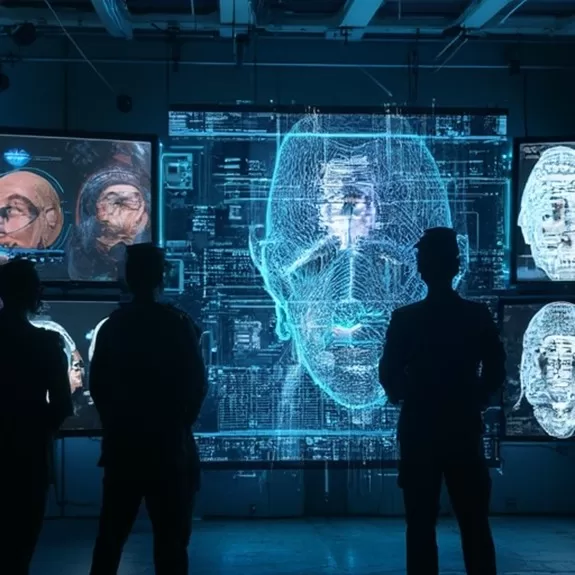
The widespread adoption of Clearview AI‘s facial recognition technology has been met with profound controversy and criticism, primarily centered around its pervasive impact on individual privacy and the legality of its data collection methods. One of the most significant criticisms is the company’s extensive data scraping practices, where billions of photos are harvested from the internet and social media without the consent of the individuals depicted.
This has led to numerous legal challenges, particularly in Europe, where Clearview AI has been fined multiple times for violating stringent data protection regulations such as the GDPR. For instance, the Dutch data protection watchdog fined Clearview AI $33.7 million for building an “illegal database” containing over 30 billion photos of people, highlighting the grave privacy concerns associated with such practices.
The company’s database practices have been deemed highly intrusive, as they enable the identification and potential monitoring of individuals without their knowledge or permission. Critics argue that these actions constitute a clear violation of privacy rights and could lead to dangerous situations, especially for vulnerable groups such as survivors of domestic violence and sexual assault.
The ACLU and other advocacy groups have successfully pushed for restrictions, including a nationwide ban in the U.S. on Clearview AI’s ability to sell its faceprint database to most businesses and private entities, further underscoring the ethical and legal issues surrounding the technology.
Privacy Concerns and Lawsuits
Clearview AI has been subject to intense scrutiny for its data collection methods, and numerous lawsuits and regulatory battles have highlighted the severe privacy concerns associated with its facial recognition technology.
Clearview AI’s practice of scraping billions of photos from social media and the internet without users’ consent has sparked widespread criticism. Here are some key points regarding the privacy concerns and lawsuits:
- Lawsuits and Fines: Clearview AI has faced significant legal challenges, including a class-action suit in Illinois alleging privacy violations. The company has been fined by several data protection authorities, such as the UK’s Information Commissioner’s Office (ICO) and Italian data protection authorities, for breaching data protection laws.
- Settlement and Criticism: The company settled a lawsuit with the American Civil Liberties Union (ACLU) without admitting liability, offering individuals in the database a stake in the company rather than cash payments. This settlement, estimated at over $50 million, has been criticized for not adequately addressing Clearview’s data harvesting practices and for potentially legitimizing the company’s actions.
- Regulatory Actions: Clearview AI is banned from selling its database to most businesses in the US, and in Illinois, it cannot sell access to its database to anyone, including law enforcement, for five years. This underscores the ongoing regulatory efforts to mitigate the privacy concerns associated with facial recognition technology.
These legal and regulatory actions reflect the deep-seated concerns about the impact of Clearview AI’s facial recognition technology on individual privacy and the need for stringent safeguards to protect personal data.
Regulatory Fines and Bans

Clearview AI’s facial recognition technology has prompted a flurry of regulatory fines and bans across various jurisdictions, highlighting the severe concerns over its data collection and usage practices. The facial recognition start-up has been hit with significant regulatory penalties, particularly in Europe, for violating the General Data Protection Regulation (GDPR) and other data protection regulations.
In Europe, Clearview AI faced multiple fines for its non-compliance with data protection laws. The Netherlands data protection watchdog fined the company over $30 million for illegally harvesting billions of photos from the internet. Similar sanctions were imposed in Italy, Greece, France, Germany, Austria, and the UK, underscoring the widespread disapproval of its practices.
These European sanctions reflect the stringent stance against Clearview AI’s method of collecting and utilizing facial images without user consent, which raises profound privacy concerns.
The regulatory actions against Clearview AI emphasize the need for stricter adherence to data protection regulations. The company’s lack of transparency and its failure to comply with these regulations have led to legal actions and substantial fines, reinforcing the importance of safeguarding individual privacy in the face of advanced surveillance technologies.
Accuracy and Reliability
Clearview AI’s facial Recognition technology stands out for its exemplary accuracy and reliability, having achieved accuracy scores of 99+% in the Facial Recognition Vendor Test maintained by the National Institute of Standards and Technology (NIST).
Here are some key highlights of Clearview AI’s performance:
- High Accuracy Ratings: Clearview AI’s algorithm has consistently achieved greater than 99 percent accuracy across all demographics in NIST testing, including in categories such as VISA photos, mugshot photos, and the challenging “WILD Photos” category.
- Cross-Demographic Reliability: The technology has been verified to perform with high accuracy across all demographic groups, addressing concerns about racial bias and ensuring reliable identification regardless of the individual’s background.
- Real-World Efficacy: Law enforcement agencies have relied on Clearview AI’s technology in high-stakes scenarios, successfully identifying suspects, witnesses, and victims even in challenging photographic conditions. This has been instrumental in solving crimes, finding abducted children, and enhancing public safety.
Clearview AI’s facial recognition accuracy and reliability are underpinned by its vast database of over 10 billion publicly available facial images and rigorous testing protocols. This makes it a trusted tool for law enforcement to generate leads quickly and efficiently while also contributing to the overall safety and justice system.
Despite ongoing debates about privacy and ethical concerns, the technology’s performance metrics demonstrate its robustness and precision in facial recognition tasks.
Advanced Features Development

The development of advanced features in Clearview AI’s facial recognition technology has greatly boosted its capabilities, especially in handling challenging image conditions. One of the notable advancements is the integration of deblur and mask removal tools, which notably enhance the quality of facial images. This enhancement allows the software to identify individuals even in situations where the images are blurry or partially obscured, a common issue in real-world investigative scenarios.
Clearview AI’s facial recognition software, trained on a diverse dataset, ensures high accuracy in identification across all demographics, a claim validated by tests conducted by the National Institute of Standards and Technology (NIST). The platform excels in challenging photographic conditions, making it a leading technology for law enforcement agencies in high-stakes scenarios.
The company’s advanced features development also includes tools for still image extraction from video footage and deconfliction to enhance interagency collaboration and information sharing. These features, part of their premium offerings, support integration with strategic partners and provide advanced support, including engineering resources for deployment guidance and issue resolution.
Despite the benefits, the use of this data raises concerns about privacy and the potential for misuse, highlighting the necessity for stringent regulations on how the facial recognition company can use the data collected from its vast database.
Impact on Public Safety
Clearview AI’s integration of advanced facial recognition features has greatly enhanced its impact on public safety. This technology has been instrumental in aiding law enforcement agencies in generating leads quickly and identifying suspects, witnesses, and victims, thereby contributing to faster case closures and more efficient crime-solving.
Here are some key aspects of how Clearview AI’s facial recognition technology impacts public safety:
Efficient Identification
Clearview AI’s platform, which includes a database of over 50 billion facial images, enables law enforcement to identify individuals rapidly, even in cases where little to no prior information is available. This efficiency is pivotal in solving crimes and preventing further criminal activity.
Enhanced Protection and Investigation
The technology helps protect sensitive operations by identifying and mitigating personnel’s online exposure. It also aids in locating victims of crimes or missing persons and, in some cases, has helped prove the innocence of wrongly accused individuals, as highlighted in a case chronicled by the New York Times.
Public Safety and National Security
Various law enforcement agencies use Clearview AI’s facial recognition solutions to create safer communities and enhance national security. Despite facing legal challenges, such as a class action settlement, the technology remains a valuable tool in disrupting and solving crimes, including cases like vehicular homicide and child exploitation.
Usage in Ukraine Conflict

How is facial recognition technology impacting the ongoing conflict in Ukraine? Clearview AI’s facial recognition technology has become an essential component in Ukraine’s defense strategy against Russia. The United States-based company provides this technology free of charge, and over 1,500 officials across 18 Ukrainian government agencies have adopted it.
Key Applications of Clearview AI in Ukraine
| Application | Description | Impact |
|---|---|---|
| Identifying Russian Soldiers | Clearview AI helps identify Russian soldiers who are killed or captured and those attempting to infiltrate Ukrainian territory. | Enhanced security at checkpoints and identification of enemy personnel. |
| Debunking Russian Propaganda | The technology aids in identifying deceased Russian soldiers, dispelling Russian claims of minimal casualties. | Counters Russian misinformation and reveals the true cost of the conflict. |
| War Crime Investigations | Clearview AI facilitates the identification and prosecution of war criminals, including members of pro-Russia militias. | Speeds up the process of collecting evidence and prosecuting alleged war crimes. |
| Public Safety | The technology is used to process citizens who lost their IDs, enhance safety at checkpoints, and identify missing persons. | Guarantees the safety of citizens and military personnel through swift and accurate identification. |
Clearview AI’s services have provided a new, innovative solution for Ukraine, leveraging advanced facial recognition to address various wartime challenges. This collaboration between Ukraine and the United States-based Clearview AI underscores the significant role technology can play in modern conflict resolution.
Customer Base and Expansion
Clearview AI’s customer base is diverse and expansive, encompassing a significant number of law enforcement agencies and various private sector entities. The company’s services are utilized by at least 600 police departments, primarily in the U.S. and Canada, but also in other countries. Here are some key points regarding Clearview AI’s customer base and expansion:
- Law Enforcement Usage: Clearview AI’s tools are employed by numerous law enforcement agencies, including the FBI, the Department of Homeland Security, and hundreds of U.S. police departments. These agencies use the technology to solve a wide range of crimes, from homicides and financial fraud to identifying missing persons and victims of child exploitation.
- Private Sector Contracts: In addition to law enforcement, Clearview AI has contracts with private sector entities such as Bank of America, Kohl, and Macy. This expansion highlights the broad reach of the company’s facial recognition services.
- International Expansion: Clearview AI has also expanded its services internationally, particularly in Latin America and the Caribbean. Countries such as Brazil, Colombia, and Trinidad and Tobago are using Clearview’s technology to combat organized crime and human trafficking. This expansion has been facilitated by fewer regulatory hurdles in these regions compared to the U.S. and Europe.
Despite facing legal challenges, including agreeing to a settlement under Illinois’ Biometric Information Privacy Act (BIPA) and restrictions on selling its services to private companies in the U.S., Clearview AI continues to grow its customer base. In a statement, Hoan Ton-That, Clearview AI’s CEO, emphasized the company’s commitment to supporting law enforcement agencies and other entities in their investigative efforts.
Ethical and Social Implications

The widespread use of Clearview AI‘s facial recognition technology has sparked profound ethical and social concerns, particularly regarding privacy and data protection. The company’s practice of scraping billions of photos from social media and the internet to create its vast database has been heavily criticized. This method of data collection violates numerous privacy laws, including those in Europe, where Clearview AI has faced significant fines for breaching GDPR data protection rules. For instance, the company was fined $9.4 million by the UK’s Information Commissioner’s Office for illegally harvesting over 20 billion images without users’ knowledge or consent.
The ethical implications are multifaceted. The lack of transparency and consent in data collection raises concerns about individual autonomy and the right to control personal information. Additionally, the potential for bias and discrimination in facial recognition systems is a significant issue, as studies have shown higher error rates for certain demographic groups, such as people of color and women.
The intrusive nature of these databases affects everyone’s privacy and security, as highlighted by the Dutch data protection watchdog. Clearview AI’s actions have led to calls for stricter regulations to protect individual rights and make sure that such technologies are used in a responsible and legally compliant manner.
Frequently Asked Questions
Is Clearview AI Still Available?
Yes, Clearview AI’s facial recognition technology remains available for use by law enforcement agencies and government entities despite facing legal challenges and fines in multiple countries as it continues to operate and provide its services.
What Technology Does Clearview AI Use?
Clearview AI employs advanced facial recognition technology that converts photos into unique biometric codes. It matches these against a database of over 30 billion images scraped from the internet, utilizing machine learning models for high accuracy.
How Much Does Clearview AI Facial Recognition Cost?
The cost of Clearview AI’s facial recognition technology varies, depending on the scale and scope of usage. Contracts range from $18,000 for a one-year FBI subscription to multi-year agreements like Hays County’s $19,485 three-year plan.
Where Does Clearview AI Get Their Data?
Clearview AI obtains its data by scraping over 30 billion photos from social media platforms like Facebook, Instagram, and LinkedIn, as well as other publicly available online sources, including news media and public profiles, without user consent.
Final Thoughts
Clearview AI’s facial recognition technology has greatly impacted public safety and surveillance despite contentious ethical and privacy issues. The platform’s vast database, compiled from billions of internet-sourced images, enables rapid and accurate face matching, aiding law enforcement and government agencies. However, its methods have sparked global regulatory actions and fines, highlighting the need for balanced regulation between public safety and individual privacy rights. The technology’s applications, from crime resolution to military support, underscore its dual potential for benefit and scrutiny.







7 comments
Comments are closed.