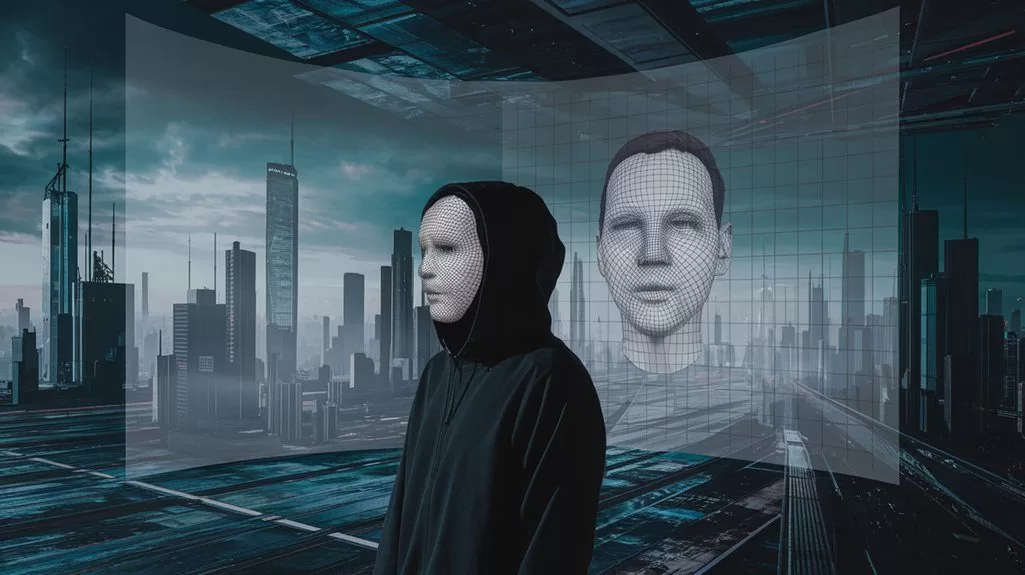
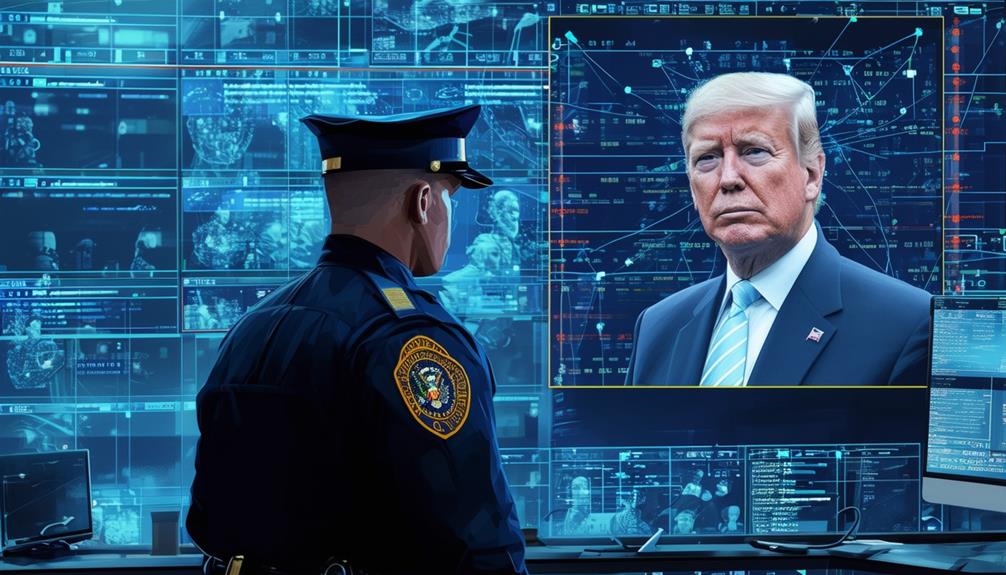

AI can greatly enhance the Secret Service’s protection of the President by leveraging advanced surveillance capabilities. By analyzing vast amounts of data from various sources, predictive threat analytics can identify potential security breaches, enabling proactive measures. Real-time social media monitoring detects suspicious behavior, while AI-driven facial recognition swiftly identifies high-risk individuals in crowds. Autonomous incident response systems detect and respond to threats in real time, ensuring swift action. Stay ahead of the curve as we explore how these cutting-edge technologies can safeguard the President’s security.
Key Takeaways
- AI-enhanced surveillance systems analyze data to detect threats to the President’s security, ensuring real-time monitoring and actionable insights.
- Predictive analytics powered by AI forecast security breaches and identify complex relationships between data points to prevent incidents.
- Real-time facial recognition technology quickly identifies individuals with a history of violence, enhancing access control and security monitoring.
- AI-driven autonomous incident response systems detect anomalies and potential security threats in real time, facilitating swift and accurate responses.
- Continuous social media monitoring with AI algorithms provides real-time intelligence, enhancing situational awareness and proactive threat detection.
AI Enhanced Surveillance Capabilities
AI Enhanced Surveillance Capabilities
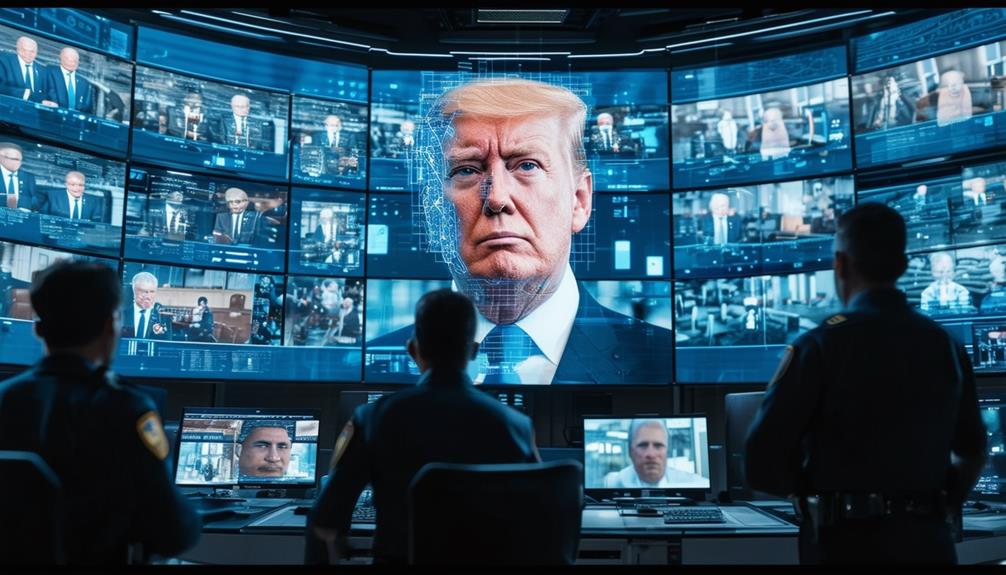
Frequently, AI-powered surveillance systems analyze immense amounts of data quickly and accurately to detect potential threats to the President’s security. This technology plays a crucial role in supporting the Secret Service by identifying suspicious patterns or behaviors that could potentially harm the President.
These systems continuously monitor and analyze real-time data from various sources, such as public events, online platforms, and social media. AI algorithms can identify faces in crowds, track individuals, and detect anomalies that might indicate a security threat. This proactive approach enables Secret Service agents to respond immediately to potential risks.
In addition, AI-powered facial recognition technology can quickly identify individuals with a history of violence or criminal activity, allowing the Secret Service to take preventative measures.
Predictive Threat Analytics
Through the lens of advanced data analysis, predictive threat analytics sponsored by AI can pinpoint subtle patterns and anomalies to forecast potential security breaches. With the power to proactively detect and mitigate security risks, predictive analytics can help the Secret Service stay one step ahead of potential threats.
By continuously monitoring social media, online platforms, and other data sources, these tools can provide real-time intelligence, ensuring that security details are always on high alert.
Predictive threat analytics can identify complex relationships between seemingly unrelated data points, providing the Secret Service with actionable insights that inform smart decision-making. AI algorithms can analyze a vast amount of data at an unprecedented scale and speed, giving security agents a powerful tool to identify and neutralize threats before they materialize.
This proactive approach, powered by AI, allows the Secret Service to anticipate and prevent security incidents more effectively, ensuring the President’s safety.
Real-Time Social Media Monitoring
Consistently monitoring social media in real time can give the Secret Service a key advantage in identifying and responding to potential threats against the President. Leveraging AI algorithms in this process allows for the rapid analysis of vast amounts of online data, flagging suspicious behavior or concerning posts related to the President’s safety. This proactive approach enables the Secret Service to assess and respond to emerging threats more effectively.
AI tools can continuously track online conversations, sentiments, and trends that may pose a risk to the President’s security. By leveraging AI for social media monitoring, the Secret Service can enhance its situational awareness and threat detection capabilities, ensuring a robust defense against potential threats.
The real-time intelligence gathered through AI-assisted social media monitoring helps the Secret Service stay ahead of security risks, providing a critical layer of protection for the President.
AI Facial Recognition
Facial recognition technology driven by artificial intelligence enhances the Secret Service’s threat detection capabilities by swiftly identifying potential security risks in crowded areas where the President is present. This technology leverages AI algorithms to match facial features against watchlists in real time, ensuring rapid and precise detection of individuals.
At crowded events or areas around the President, AI-powered facial recognition provides real-time monitoring, allowing security personnel to respond promptly to potential threats.
AI facial recognition technology also safeguards against unauthorized access to secure areas by continuously analyzing facial features and identifying known threats. This significantly enhances the Secret Service’s surveillance capabilities, strengthening overall security measures.
The detailed analysis provided by AI facial recognition enables quick notifications to security personnel, ensuring the President’s safety in high-risk situations. This advanced technology empowers the Secret Service to mitigate security breaches proactively.
AI-enabled facial recognition is a powerful tool in the fight against potential threats, and its integration into the Secret Service’s security protocols could greatly enhance the President’s safety.
Autonomous Incident Response
By integrating artificial intelligence into incident response, the Secret Service can leverage AI’s advanced analytics to immediately identify potential security breaches, greatly enhancing its ability to protect the President.
Utilizing autonomous incident response powered by AI, the Secret Service can analyze vast amounts of data in real-time, detecting anomalies and potential risks to the President’s safety. This allows for swift and accurate responses to security threats, ultimately ensuring the President’s security.
- Real-time Threat Detection: AI algorithms can process vast amounts of data to detect anomalies and potential security threats.
- Predictive Capabilities: AI-driven incident response systems provide predictive capabilities to address security breaches before they escalate proactively.
- Enhanced Efficiency: By automating threat detection and response, AI enhances the Secret Service’s ability to protect the President efficiently and accurately.
Analyzing Historical Data Patterns
AI empowers the Secret Service to analyze historical data patterns, revealing insights that can predict and prevent security threats to the President. By leveraging historical data, AI algorithms can identify anomalies and trends that may have gone unnoticed by human analysts alone. This ability to process vast amounts of data allows the Secret Service to enhance security measures based on insights from historical trends proactively.
For instance, AI can analyze past incidents to identify patterns and potential vulnerabilities in security protocols. This information enables the Secret Service to adapt protection strategies and stay ahead of potential security risks.
In addition, AI algorithms continuously monitor social media and online platforms for any mentions of potential threats, providing real-time intelligence to enhance the President’s security detail.
The integration of AI in historical data analysis significantly boosts the Secret Service’s abilities to safeguard the President. By understanding the past, AI helps the Secret Service better anticipate and mitigate security threats, ultimately ensuring the President’s safety in the presence of potential dangers.
AI-Assisted Agent Training
Having fine-tuned agents via advanced simulations leads to exceptional preparedness in protecting the President. As a member of the Secret Service, leveraging the power of AI in our training operations has revolutionized how we prepare agents for diverse security challenges.
- AI-driven simulations: Prepare agents for real-world scenarios
- Machine learning analyzes performance: Identify areas for improvement
- Personalized training modules: Enhance agent capabilities based on strengths and weaknesses
Cybersecurity and Data Protection
Cybersecurity and Data Protection
As we safeguard the President’s digital landscape, cutting-edge cybersecurity measures, empowered by advanced AI tools, are essential to detecting and mitigating cyber threats. Our approach incorporates both predictive analytics and machine learning algorithms to identify patterns in potential cyber-attacks aimed at compromising sensitive information. This proactive strategy enhances data protection by continuously monitoring for unauthorized access or breaches.
| Cybersecurity Measures | Benefits |
|---|---|
| Predictive Analytics | Forecasts potential cybersecurity risks in real-time. |
| Machine Learning Algorithms | Identifies patterns of cyber attacks. |
| AI-driven Cybersecurity Solutions | Strengthens protection of digital assets and communications. |
| Continuous Monitoring | Detects and prevents unauthorized access or breaches. |
Intelligence Gathering

Efficient intelligence gathering is key to guaranteeing robust security for the President, and I’ll now outline how AI can enhance these efforts.
The integration of AI into intelligence gathering can greatly improve the Secret Service’s ability to anticipate and neutralize threats. Here are the advantages that AI brings to intelligence gathering:
- Enhanced Data Analysis: AI algorithms can quickly process large amounts of intelligence data, identifying patterns and potential security risks that might easily go unnoticed by human analysts.
- Streamlined Surveillance: Automated surveillance systems powered by AI can provide real-time monitoring and analysis of potential hotspots around the President, allowing for proactive security measures.
- Predictive Insights: Machine learning models can analyze online chatter and social media to detect potential threats, providing early warnings of security breaches or suspicious activities.
Biometric Identification Systems
By integrating AI into biometric identification systems, I can greatly enhance the President’s safety by ensuring swift and accurate verification of authorized personnel. This integration allows AI to analyze unique physical characteristics like fingerprints, facial features, and iris patterns for secure access.
AI-powered biometric systems can enhance security by accurately verifying an individual’s identity in real time, making it difficult for unauthorized personnel to enter restricted areas.
As a result, the Secret Service can leverage AI for biometric identification to quickly authenticate the President’s presence and restrict access to authorized personnel only.
Safe and Secure AI Development
Securing the safe and sound development of AI technologies is crucial to safeguarding the President. These systems will manage sensitive information and must be designed to prevent critical security breaches. To achieve this, the Secret Service should adhere to ethical guidelines and regulations, guaranteeing that AI systems are designed with privacy protection and equity considerations in mind. This includes establishing responsible governance models, monitoring AI performance, and collaborating with AI experts and stakeholders.
- Robust Risk Assessment: Conduct thorough evaluations to identify potential vulnerabilities in AI systems and mitigate risks of biases and data breaches.
- Transparency and Accountability: Implement clear documentation and auditing processes to ensure transparency in AI decision-making and immediate tracking of security incidents.
- Human Oversight: Maintain human supervision over AI-driven decision-making to prevent autonomous actions that could compromise presidential security.
Protecting the President
Integrating AI-powered tools, such as facial recognition and predictive analytics, into the Secret Service’s protective measures can greatly enhance the safety and security of the President. By analyzing vast amounts of data, AI can identify potential threats and predict security risks more effectively. Specifically, AI algorithms can quickly process and analyze patterns and anomalies in real time, providing early warnings to the Secret Service of potential security breaches.
Facial recognition technology powered by AI can also enhance the identification and tracking of individuals in crowds or public events, making it easier to spot potential threats.
Another notable advantage of AI is its ability to continuously monitor social media and online platforms, providing real-time intelligence on any mentions of potential threats to the President’s safety. This automation can streamline security processes, improving the efficiency and effectiveness of the Secret Service’s protective measures.
Advanced Surveillance Methods
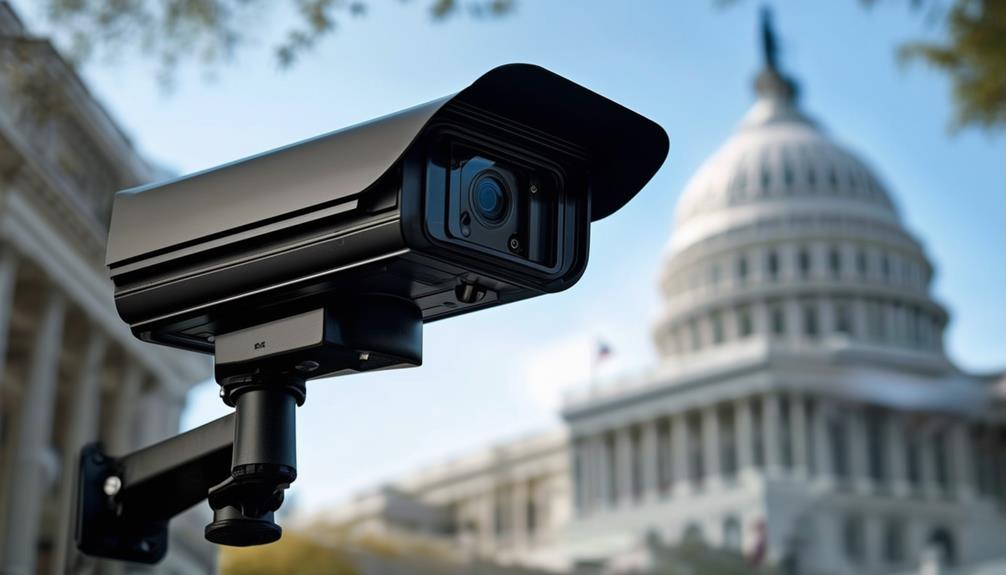
AI-powered surveillance methods greatly enhance the protection of the President by promptly detecting and tracking potential threats through advanced data analysis and real-time monitoring. My integration into the Secret Service enables me to revolutionize their surveillance capabilities by leveraging advanced facial recognition technology, predictive analytics, and machine learning algorithms.
Key Capabilities:
- Efficient Identification: AI-driven facial recognition technology allows for swift identification of individuals in crowded areas, even in dim lighting conditions.
- Real-Time Analysis: Machine learning algorithms rapidly process large amounts of data, detecting anomalies and signaling potential threats in real time.
- Expanded Coverage: AI-powered drones equipped with advanced sensors and cameras extend surveillance capabilities, ensuring thorough aerial surveillance.
Early Threat Identification
By expeditiously analyzing vast data streams, I can detect subtle yet telltale signs of potential threats to the President’s security in real time. My advanced AI algorithms are designed to identify abnormal patterns or behaviors that may pose a risk to the President. This enables the Secret Service to respond to and mitigate potential security breaches proactively.
For instance, AI-powered surveillance systems can enhance early threat detection capabilities around the President by monitoring vast amounts of video footage. These systems are particularly effective in identifying potential threats in large crowds, where human analysts might struggle to detect suspicious activity.
Additionally, AI-assisted social media monitoring allows me to continuously monitor online platforms for any mentions or signs of potential threats to the President. This real-time intelligence enhances the President’s security detail and allows them to stay one step ahead of potential security risks.
AI Driven Risk Assessment

As I analyze vast data streams, my AI algorithms predict potential security breaches and identify threats to the President, empowering the Secret Service to respond and mitigate risks proactively. Through AI-driven risk assessment, the agency can revamp its security strategies to rely more heavily on data-driven insights.
By leveraging advanced computational capabilities to analyze vast volumes of data, AI technology can enhance the detection and prediction of security threats. This not only bolsters the effectiveness of protective measures but also secures more efficient resource allocation.
- Predictive Power: Identifying potential breaches before they occur.
- Enhanced Surveillance: AI-powered facial recognition to monitor crowds in real time.
- Advanced Monitoring: Continuous surveillance of social media and online platforms for early threat detection.
Frequently Asked Questions
How Much Data Can AI Systems Process to Enhance Security?
AI systems can process vast amounts of data to identify potential threats and enhance security. If configured correctly, facial recognition technology can analyze large datasets, track individuals in crowds, and predict security risks.
Can AI Distinguish Real Threats From False Alarms?
Yes, AI can distinguish real threats from false alarms by applying advanced algorithms to evaluate data patterns and contextual cues, increasing accuracy and reducing the likelihood of misidentification.
How Does AI Prevent Privacy Breaches via Surveillance?
I use strong encryption and secure data processing to prevent privacy breaches via surveillance by AI-powered systems. By Algorithmically enforcing privacy controls, AI guarantees sensitive information is protected and accessed only by authorized personnel.
Can AI Be Used to Predict High-Risk Zones?
Yes, AI can predict high-risk zones by analyzing spatial and temporal patterns in crime data and identifying trends.
How Are AI Algorithms Updated to Ensure Accuracy?
I guarantee AI algorithm accuracy by continuously updating models with new data, retraining on diverse datasets, and leveraging active learning techniques to minimize bias and maximize performance.