
The short answer
The top pick on this page is the AOSU Solar Security Cameras Wireless Outdoor. Solar panels power it, so there are no wires to run. It records 5MP video, stores footage locally with no subscription, covers a 166-degree field of view and has color night vision. The second option is the aosu SolarCam D1 Max 2-camera kit, with 4K video and color night vision. Before you buy any solar security camera, check that the battery and solar panel can keep it running, then compare field of view, waterproofing, video quality and how well it works with the system you already have.
Key Takeaways
- The AOSU Solar Security Cameras record 5MP video, cover a 166-degree field of view and store footage locally with no subscription.
- The aosu SolarCam D1 Max kit has two 4K (8MP) cameras that pan and tilt for 360-degree coverage, with 32GB of local storage that expands to 1TB.
- Check that the battery and solar panel can keep the camera running where you mount it. A spot with little direct sun needs more power storage.
- Look for strong weather resistance, such as an IP66 rating and anti-fog technology, plus efficient power use.
- Clean the solar panels and lenses now and then, so the panels collect as much energy as possible.
AOSU Solar Security Cameras Wireless Outdoor
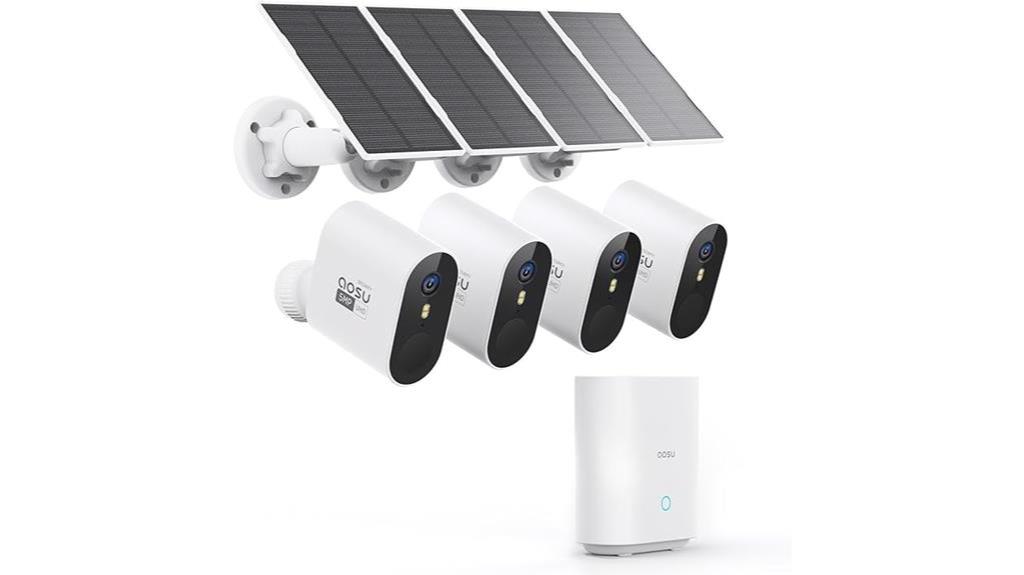
For homeowners who want reliable, low-cost security, the AOSU Solar Security Cameras Wireless Outdoor is a good option. Setup is wire-free, and the solar panels keep it powered.
The cameras record 5MP high-definition video and offer cross-camera tracking and local storage with no subscription, so there are no extra monthly costs.
The wide 166-degree field of view reduces blind spots, and color night vision keeps the picture clear in low light. The cameras are water-resistant and wireless, which suits outdoor use.
Best For Homeowners who want low-cost security with an easy, wire-free setup.
Pros:
- It offers a wire-free setup and long-lasting power through solar panels, making it cost-effective and convenient.
- Provides 5MP high-definition video recording and advanced features like intelligent cross-camera tracking.
- Includes local storage without a subscription, ensuring no additional costs for high-quality monitoring and recording.
Cons:
- It may require periodic cleaning of solar panels for optimal performance.
- Battery life may vary depending on weather conditions.
- Limited flexibility for placement due to solar panel requirements.
See the aosu 3K/5MP solar 2-camera kit on Amazon
aosu SolarCam D1 Max 2-Camera Kit
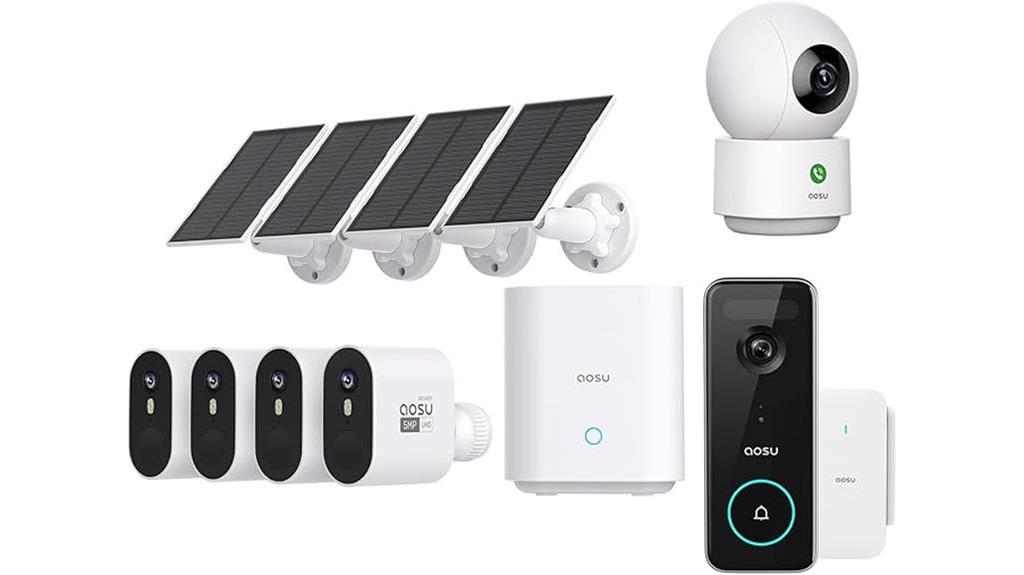
The aosu SolarCam D1 Max kit pairs two 4K (8MP) solar cameras with an aosuBase hub. Each camera pans and tilts for 360-degree coverage and follows the people and vehicles it detects, and the hub joins clips from both cameras into one timeline (cross-camera tracking).
Recordings stay at home: the kit includes 32GB of storage, which expands to 1TB, and aosu lists no subscription requirement. Built-in spotlights give color night vision, and the cameras carry an IP65 rating for outdoor use.
Best For Homeowners who want pan-and-tilt coverage of a driveway or yard without running power cables to the cameras.
Pros:
- 4K Video: 8MP cameras with 6x digital zoom.
- 360-Degree Pan and Tilt: Each camera turns to follow people and vehicles.
- Local Storage: 32GB included, expandable to 1TB, with no subscription required.
Cons:
- Wired Hub: The aosuBase connects to your router by Ethernet cable, so it has to sit near the router.
- Sunlight Needed: The solar panels need daily sun where you mount them to keep the batteries charged.
See the aosu SolarCam D1 Max kit on Amazon
Factors to Consider When Choosing Solar Security Cameras Wireless Outdoor
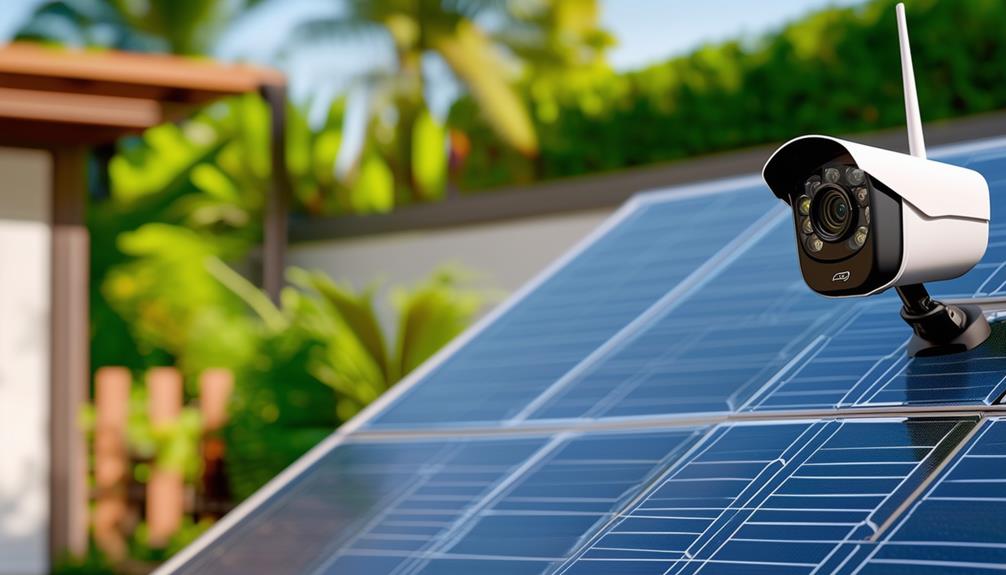
Start with power: make sure the battery and solar panel can keep the camera running. Then compare field of view, waterproofing, video quality and compatibility with the systems you already have.
Device Power Sources
Solar security cameras don't need an electrical outlet. Integrated solar panels power them from sunlight, which reduces reliance on the grid, lowers energy costs and makes them a greener choice.
Check the camera's power storage capacity, because it decides whether the camera keeps running through low sunlight or bad weather.
Some solar security cameras come with backup battery options that keep recording going when there is less sun. Think about how much sunlight your mounting spot gets: a spot with little direct sun may need a camera with more power storage.
For reliable performance, check the solar panel's wattage, the battery life and smart features such as battery notifications.
Field of View
Field of view decides how much area a camera covers, so it matters when you shop for solar security cameras wireless outdoor.
The wider the angle, the more extensive the coverage. A 360-degree view, for instance, is ideal for general property surveillance, while a narrower view, like 43.6 degrees, may be better suited for targeted areas such as entry points or specific corners.
A wider field of view also reduces blind spots and helps motion detection and tracking. A panoramic camera covers a much broader area than a standard camera, so you are less likely to miss activity.
When you compare solar security cameras, consider one with a wider angle to maximize the effectiveness of your home security system.
Waterproof Ratings
Outdoor cameras have to handle the weather, so waterproofing matters. Look for high waterproof ratings, such as IP66, so the camera can handle rain, snow and other moisture.
A higher waterproof rating means better protection against water ingress and damage. Match the camera's waterproof rating to your climate. In an area with heavy rainfall, an IP66 or higher rating is a must, so the camera can withstand powerful water jets and keep working.
Besides the rating, check the build. A sturdy, weatherproof design matters for long outdoor exposure and reliable surveillance year-round.
Video Quality
Good image quality makes footage useful as evidence. Look for high-definition video, such as 5MP, so you can identify people even when they are far from the camera.
Features like color night vision keep the picture clear in low light, which matters for nighttime recording. A high zoom ratio, such as 6x, lets you zoom in on specific areas or objects for more detail.
Field of view matters here too. Wide angles like 166 degrees cover more ground, so it is easier to watch the whole area.
Compatibility Options
Check that the solar security cameras work with your phone or tablet and any smart home systems you use, so you can control and watch them the way you want.
Another vital aspect is compatibility with popular voice assistants like Alexa or Google Assistant. That lets you control the cameras with voice commands.
Make sure the cameras can connect to your home network by Wi-Fi or Ethernet for reliable monitoring.
Also consider whether add-on cameras or accessories you might want later will work with the system.
Finally, check that the camera's app works with your operating system, iOS or Android, to keep setup and monitoring simple.
Battery Longevity
For steady home monitoring, look for cameras with high-capacity batteries. They can run for long periods without frequent recharging.
Look at how well the camera manages power. Cameras that use power well get more out of each charge and have less downtime.
Low power consumption also matters. Cameras with PIR motion sensors save battery when nothing is happening. When the battery runs low, cameras with quick recharge are back up sooner.
Some solar security cameras also have power-saving modes that adjust settings to the conditions to make the battery last longer. These features keep the camera recording without frequent battery replacements.
Weather Conditions
Solar wireless outdoor security cameras face harsh weather, from heavy rain to blizzards and heat waves, and that affects how well they work and how long they last. Rain, snow and strong winds can shorten a camera's life if it is not built for them.
Look for a high IP weather resistance rating, such as IP66 or above, so the camera keeps working in bad weather.
Also check the temperature range the camera can work in, since extreme heat or cold can affect battery life and overall function. Some cameras have anti-fog or anti-glare technology to keep the picture clear in bad weather.
Regular maintenance helps: clean the lenses and solar panels so the panels collect as much energy as possible and the video stays clear.
Installation Flexibility
Check the installation options for solar security cameras: mounting methods and simple setup that avoids complex wiring. Wall mounts, freestanding poles and tree mounts make it easier to place the camera in different outdoor spots. Adjustable angles and flexible positioning let you point the camera exactly where you need it.
Clear installation guides or online tutorials make DIY setup easier, so you install the camera correctly the first time and avoid security gaps. Also check the wireless range and connectivity options.
Frequently Asked Questions
Can Solar Security Cameras Still Function During Prolonged Periods of Rain or Snow?
Yes, solar security cameras can still function during prolonged rain or snow. They are built to withstand weather conditions, often with high-capacity batteries and waterproofing to keep them running even when there is little sunlight.
Are Solar Security Cameras Typically More Expensive Than Traditional Security Cameras?
Yes. The extra cost comes from the integrated solar panel and battery, which let the camera run wirelessly and off-grid.
Can Solar Security Cameras Be Installed in Shaded Areas Without Direct Sunlight?
A shaded spot is not ideal. The solar panels need daily sun where you mount them to keep the batteries charged. If the spot gets little direct sun, pick a camera with more power storage.
Do Solar Security Cameras Have Built-In Memory for Video Storage?
Some do. Both aosu kits on this page store video locally with no subscription. The aosu SolarCam D1 Max kit includes 32GB of storage, which expands to 1TB.
Are Solar Security Cameras More Prone to Battery Drain During Winter Months?
They can be. Winter days give the panels fewer hours of sun, and extreme cold can affect battery life. PIR motion sensors and power-saving modes help the battery last, because the camera uses less power when nothing is happening.