
Several video doorbells save clips on the doorbell, on a memory card or on a home base, with no monthly fee. Consumer Reports' list of no-subscription doorbells, updated October 7, 2026, includes models from Eufy, TP-Link (Tapo and Kasa), Night Owl and Wyze that performed well in its lab tests. Before you buy, check two things: whether person alerts are free, and which Wi-Fi band the doorbell uses, because some models connect only on 2.4 GHz.
Why doorbell plans cost money
Ring doorbells dominate the market, Consumer Reports notes, so Ring's rules make a useful baseline. Ring's help page on subscriptions says a plan is required to review recorded video. Without one, you can watch live and respond to alerts as they happen, and events are recorded only after you subscribe. Plans keep clips in the cloud for up to 180 days, and features such as Video Search, Video Descriptions and Familiar Faces, Ring's face recognition, sit in the paid tiers.
The fees add up. Consumer Reports puts Ring's plans at $5 to $20 a month and says that after a few years they cost more than the doorbell itself. CR also flags the privacy side: on a plan, the company holds your video on its servers.
Not every brand on CR's list is fully free, either. CR says the Wyze Duo Cam Video Doorbell saves clips to a microSD card but sends no smart alerts for people, pets, packages or vehicles without a Wyze Cam Plus subscription.
Where a doorbell camera with local storage keeps its video
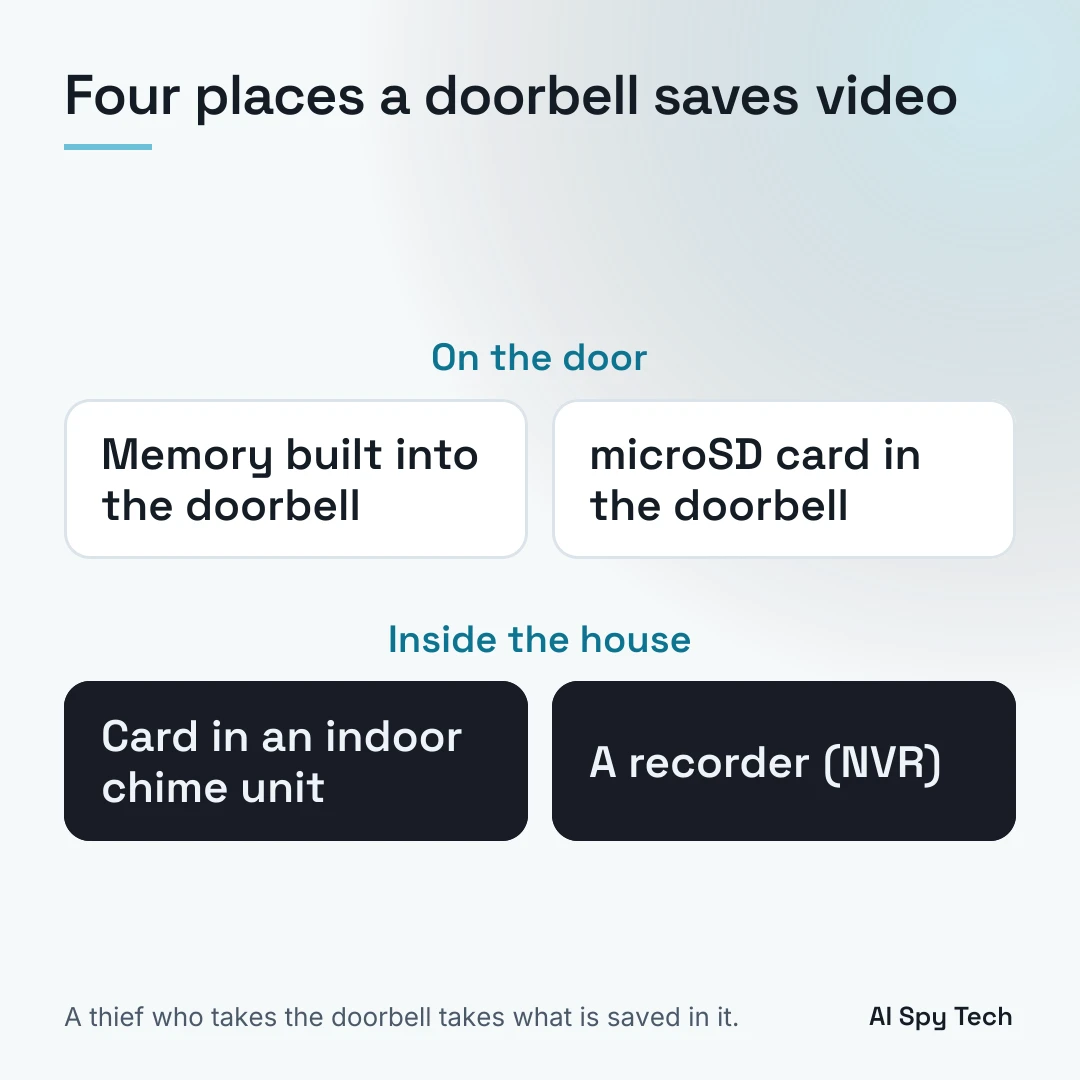
There are four common spots, and each one changes what happens if someone pulls the doorbell off the wall.
- Memory inside the doorbell. The eufy Video Doorbell E340 has 8 GB built in, per CR's roundup.
- A microSD card in the doorbell. The TP-Link Tapo D225 has a card slot, though the card is sold separately.
- A card in an indoor unit. The Aqara G410 keeps its microSD card in the chime unit inside the house, so the recordings stay put if the outdoor part is stolen.
- A recorder. Reolink's PoE doorbell can save to a Reolink NVR as well as its own card, which Reolink caps at 256 GB for its doorbell series.
Some brands also sell an optional hub. CR notes the E340 works with eufy's HomeBase S380, which holds up to 16 TB, a good fit if you own several eufy cameras.
Wired, battery or PoE
Wired doorbells run on the low-voltage doorbell wiring many homes already have, and hardwiring often turns on extra features. Consumer Reports found that wiring the Tapo TD25 enables 24/7 recording and 4 seconds of pre-roll, the video from just before motion was detected. Hardwiring the Eufy C31 adds 5-second pre-roll, but it means bypassing the home's existing chime.
Battery doorbells skip the wiring and need recharging. Wyze rates the Duo Cam's battery at three to six months, according to CR. Some battery models can also connect to doorbell wiring to stay charged, which keeps the battery ready to run the doorbell during a power outage.
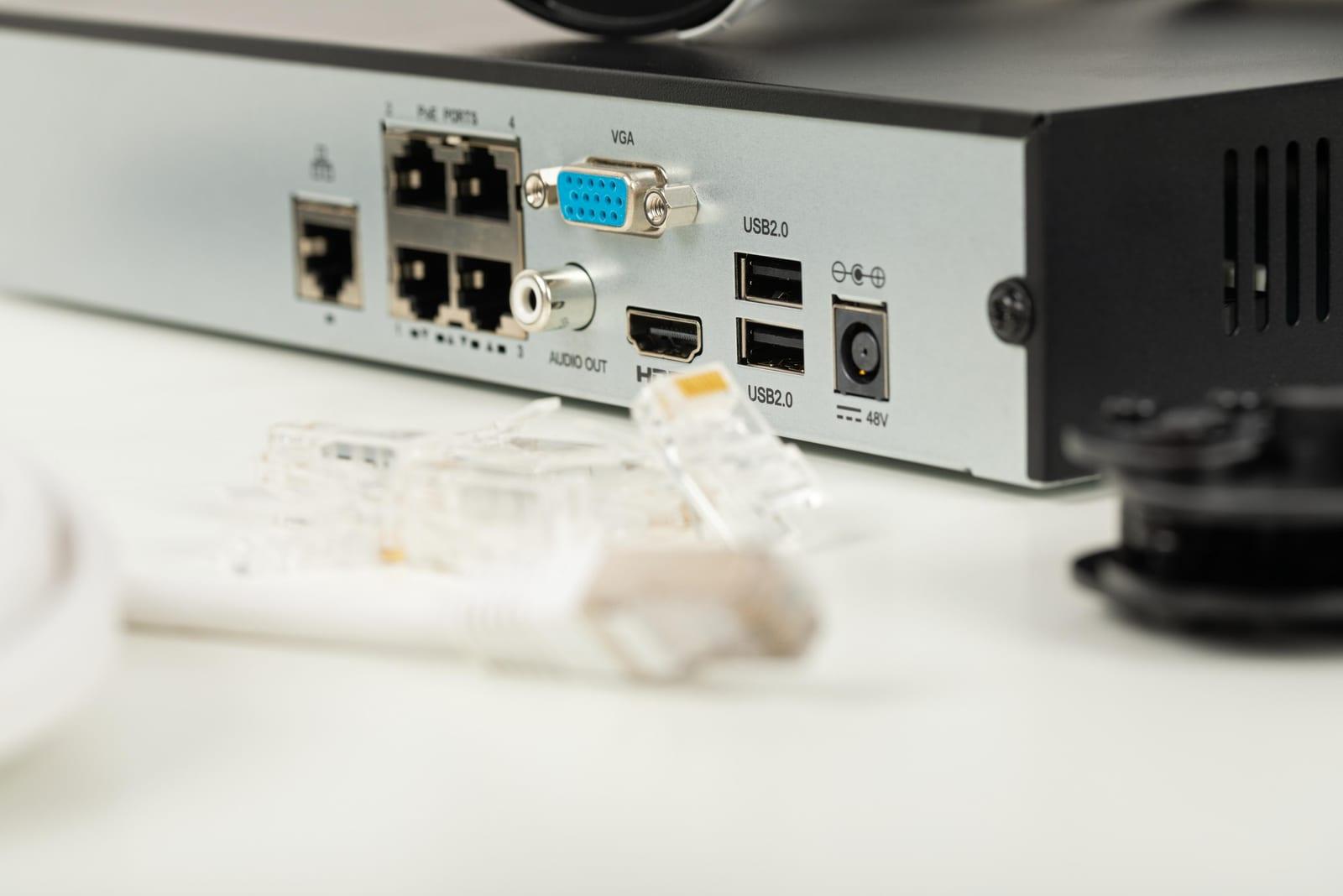
PoE doorbells take power and data over one Ethernet cable and skip Wi-Fi entirely. They make sense in a house that already has a wired camera system; our guide to PoE camera systems explains the recorder side.
What to check before you buy
- Free smart alerts. CR lists which alerts each model gives without a plan, from people only up to packages, people and faces.
- The Wi-Fi band. A doorbell that connects only on 2.4 GHz needs that band available at your router and a decent signal at the front door.
- Pre-roll, the few seconds before someone rings or walks up. It often depends on hardwiring.
- Your chime. CR notes that some wired models, including the Kasa KD110 and Tapo D130, cannot ring an existing chime and ship with a plug-in chime instead.
- Smart home fit: Alexa, Google Home or Apple Home.
Apple users have one more subscription to know about. HomeKit Secure Video records camera and doorbell video to iCloud with end-to-end encryption, and the clips do not count against your iCloud storage, but Apple requires a paid iCloud+ plan. The plan sets the camera count: one camera on the 50 GB plan, up to five on 200 GB, and unlimited on 2 TB and above. A doorbell that is subscription-free on its own still needs iCloud+ if you want HomeKit to record it.
Video doorbells with no subscription that record locally
eufy Video Doorbell E340
The E340 has two cameras, one facing visitors and one aimed down at packages, plus 8 GB of storage built in. It runs on its battery or on doorbell wiring, and the listing gives a 16 to 24 volt range for wired setups. Consumer Reports calls it a great performer, with strong scores for night video and data security and a subpar score for daytime video. Watch the Wi-Fi: the listing says 2.4 GHz only.
See the eufy Video Doorbell E340 on Amazon
TP-Link Tapo D225
This 2K doorbell has a 180-degree view, free person, package and vehicle alerts, and a microSD slot for cards up to 512 GB, sold separately. It runs on battery or doorbell wiring. Consumer Reports says it performs close to the Tapo TD25, a Best Buy version with a 5MP sensor that scored excellent for response time and for the smart features it includes without a subscription. Like the E340, it connects on 2.4 GHz only, and you will need to buy the card.
See the Tapo D225 doorbell on Amazon
Reolink Video Doorbell PoE
Reolink's 2K wired doorbell gets power and data over a single Ethernet cable and records to a microSD card up to 256 GB or to a Reolink recorder, and a chime comes in the box. It fits a home that already runs a Reolink PoE system. Check the setup before you order: it needs a PoE switch or injector, it has no Wi-Fi, and the listing says it works with Reolink NVRs only.
See the Reolink PoE video doorbell on Amazon
Aqara Doorbell Camera Hub G410
The G410 is a 2K battery doorbell with a 175-degree view and face recognition that runs on the device, per Aqara. Video goes to a microSD card of up to 512 GB in the indoor chime, which also acts as a Zigbee and Matter hub, and the doorbell supports dual-band Wi-Fi. It suits Apple Home and smart-home users. One limit: with HomeKit Secure Video, Aqara caps recording at 1200p, and Apple requires the paid iCloud+ plan described above.
See the Aqara G410 doorbell on Amazon
Your porch, the law and the police
A doorbell that records sound can capture conversations you are not part of, such as a delivery driver on the phone or two neighbors on the sidewalk. Justia's 50-state survey lists about a dozen states, including California, Florida, Illinois, Maryland, Massachusetts, Pennsylvania and Washington, where recording a conversation can require everyone's consent. Even in one-party states, Justia notes, a non-party needs the consent of at least one person in the conversation. Check whether your doorbell app lets you record video without audio.
Face recognition has its own limits. Ring's subscription help page says Familiar Faces is not offered in Illinois, Texas or Portland, Oregon, because of state and local laws, and that Video Search and Video Descriptions are not offered in Illinois. If you live in one of those places, read the terms before you turn on face recognition on any brand.
Police requests depend on where the video lives. Ring's Community Requests let verified police and fire agencies post requests in the Neighbors app for footage from a set area and time. Sharing is voluntary, and agencies cannot see who declined. If you do share, Ring sends the clip to Axon Evidence along with your home address and email, you cannot retract it, and requests stay open for 60 days. Video kept on the doorbell or a card stays off company servers, so Consumer Reports says police have to come to you or serve a warrant. For the wider picture of camera networks police use, see our guide to Flock cameras, and for outdoor cameras beyond the front door, our guide to security cameras without a subscription.