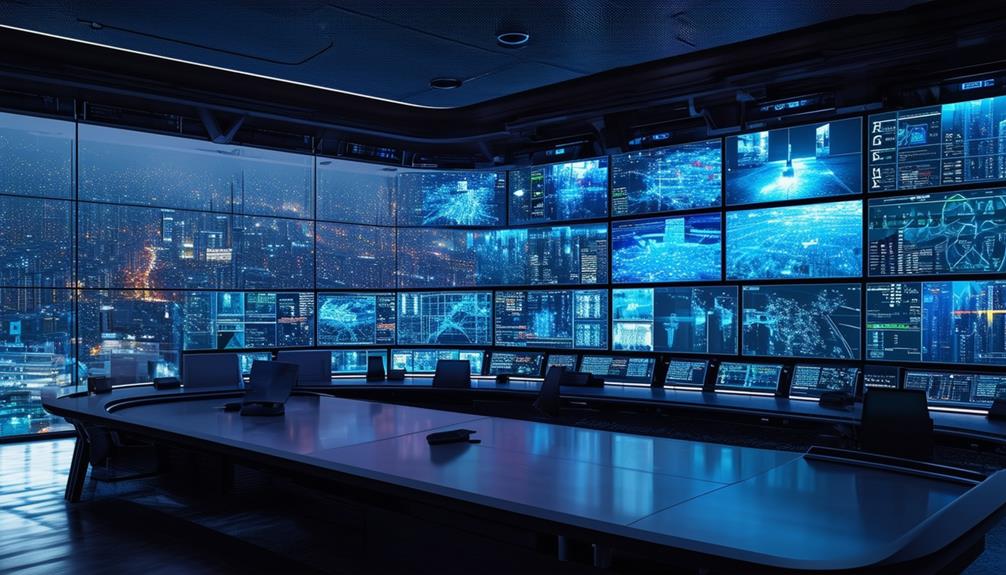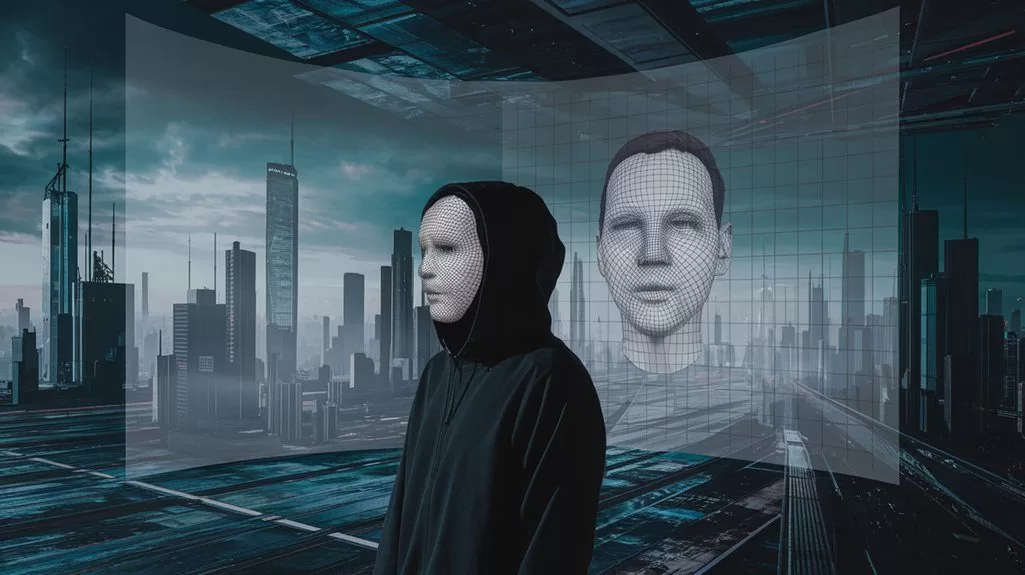


The influence of facial recognition on surveillance is substantial. Twenty out of forty-two federal agencies and one in four state and local agencies already use it. This rapid expansion enhances the ability to track activities in public spaces, heightening concerns about privacy. For some, it's a necessary tool for public safety, while for others, it poses risks to personal autonomy and perpetuates societal biases. As I explore this issue further, I'll uncover more about the balance between security and privacy in this growing surveillance landscape.
Key Takeaways
- Facial recognition technology enables covert identification without consent, perpetuating societal biases and heightening privacy concerns.
- AI algorithms enhance surveillance system accuracy with real-time face matching against large databases.
- The majority of Americans believe law enforcement can track activities using facial recognition technology in public spaces.
- Clear regulations and robust oversight mechanisms are crucial to mitigate privacy risks and maintain accountability.
- Facial recognition data poses a significant threat to privacy due to the risks of hacking and unauthorized access.
Surveillance Capabilities Expanding
With advancements in technology, facial recognition surveillance capabilities are expanding at a concerning rate, sparking concerns about the impact on privacy and the need for regulation in their use. The widespread adoption of facial recognition technology reflects a vast and rapidly growing network where privacy rights are often overlooked.
Approximately 20 out of 42 federal agencies currently utilize facial recognition, which is particularly concerning since the technology becomes more prevalent across various government levels. Georgetown Law researchers estimate that one in four state and local law enforcement agencies have access to this technology, greatly broadening the scope of surveillance. Moreover, prominent providers like Clearview AI have partnered with over 3,100 federal and local law enforcement agencies, which heightens concerns about the dissemination of this technology and its impact on citizens' privacy.
As surveillance cameras become increasingly ubiquitous in public spaces, the capacity for effortless mass monitoring grows, severely limiting anonymity. The absence of clear regulations on the use of facial recognition technology by government agencies leaves privacy rights vulnerable and heightens the need for more stringent data privacy laws to mitigate these dangers.
Privacy Concerns Emerge
In this rapidly evolving landscape of surveillance capabilities, I fear that the privacy impact of facial recognition technology is often overlooked.
The lack of transparency in surveillance programs, coupled with the technology's capability for covert mass identification without consent, is cause for considerable concern.
As we continue to grapple with the implications of facial recognition, it's essential that we address the fundamental questions about data security and individual privacy rights.
Data Security Challenges
Facial recognition data, highly susceptible to hacking and breaches, poses a significant threat to privacy as it can lead to identity theft and stalking. This technology's reliance on capturing and storing facial data exacerbates privacy risks because individuals have limited control over their personal information in such systems.
As facial recognition systems become more widespread in government and commercial databases, the risk of hacking and unauthorized access increases. The privacy concerns rose to new heights as standardized configurations in facial recognition systems compromise data security. This vulnerability disrupts the privacy and safety of individuals and raises ethical issues on how personal data should be handled.
To safeguard personal privacy in the age of surveillance technology, careful attention needs to be given to the practices of facial recognition technologies. Hence, stringent policies should be put in place to protect the privacy and security of facial data, safeguarding individuals from the dangers of identity theft and unauthorized surveillance.
Surveillance\'s Privacy Impact
The extensive deployment of facial recognition technology in surveillance systems gives rise to a network of concerns around privacy, as it allows for the widespread, covert identification of individuals without their consent, perpetuating existing societal biases and disproportionately impacting marginalized communities. As this technology becomes more widespread, its underlying potential to violate personal privacy increases.
Facial recognition databases, which store unique facial characteristics to compare with images, risk regressing civil rights by fueling mass surveillance and racial profiling. Public protests, where people gather to express dissent, are particularly susceptible to these intrusive tactics.
The technology's significantly different impact is evident in its heightened misidentification rates for communities of color, leading to potentially disastrous consequences. Once an individual's image is recorded, their privacy is violated, allowing for continuous tracking of their movements and associations.
This intrusive surveillance system fundamentally alters the balance between societal security and personal autonomy. The indiscriminate use of facial recognition in surveillance must be reassessed to guarantee that it doesn't undermine our civil liberties.
American Public Perspectives

As I examine the complexity of facial recognition technology in surveillance, I find that public acceptance of this technology in the United States is influenced by various factors.
While there's relatively high support for the use of facial recognition for certain purposes, surveillance concerns and questions about its accuracy, particularly among Black and Hispanic adults, can't be overlooked.
To better understand these perspectives, it's essential to explore both the public's views on law enforcement use and the current legal landscape.
Public Acceptance Factors
Americans expressed mixed views on the use of facial recognition technology, particularly by law enforcement, with concerns about privacy and accuracy disparities along racial lines. It appears that approximately 46% of adults believe widespread use by police would be beneficial for society. Public perceptions of this technology are influenced by various factors.
| Factor | Painter of Public Acceptance |
|---|---|
| Training and Errors | 64% of Americans find police use more acceptable if officers are trained in potential errors |
| Privacy and Notification | Majority believe facial recognition technology would aid in finding missing persons and solving crimes but also reduce privacy |
| Government Regulation | Roughly half believe government or police should play a major role in setting standards for facial recognition technology use |
| Opt-out and Choice | Conditions such as notification and opt-out options impact public acceptance, influencing public attitudes towards the technology |
These factors demonstrate that public acceptance of facial recognition technology is closely tied to conditions that ensure accountability and transparency.
Surveillance Concerns
I'm still trying to understand how widespread surveillance using facial recognition technology makes me feel, but it's sobering to realize that I'm probably being monitored every time I go to a public place. The American public has notable concerns over the erosion of privacy as this technology becomes more ubiquitous.
For instance, a majority of Americans believe that law enforcement can track their activities using facial recognition in public spaces. This fear is particularly prevalent among Black and Hispanic adults, who are more likely to view the technology as a tool for racial profiling.
Public acceptance of facial recognition in surveillance hinges on various factors, including training, notification, and opt-out options. If law enforcement officers are properly trained to handle potential errors, public acceptance increases significantly. However, without these safeguards, facial recognition technology raises numerous red flags.
Facial recognition is now so prevalent in surveillance that around half of American adults have their faces in law enforcement databases.
The manifestation of surveillance fears is especially pronounced in airport security, where passengers can opt out of facial recognition but often face notable inconvenience in doing so. An atmosphere of forced compliance prevails, compounding the sense of unease.
Personally, I'm left wondering at what cost this surveillance comes, as I navigate the delicate balance between security and individual freedom.
Law Enforcement Views
Alongside their concerns about privacy and accuracy, Americans are debating the role of facial recognition technology in law enforcement. Opinions vary widely, with 46% of U.S. adults believing its use by police would be beneficial. Many see it as a valuable tool for finding missing persons and solving crimes. However, public unease is evident, particularly among Black and Hispanic adults, who are worried about potential biases and privacy implications.
There's also a divide on the role of government and police in regulating the technology, with about half of Americans thinking government agencies and police departments should set standards.
For me, it's clear that the widespread adoption of facial recognition technology by law enforcement agencies raises significant questions about balancing public safety with individual privacy. The key lies in creating safeguards and ensuring transparency. This includes training law enforcement officers to use facial recognition algorithms effectively and with minimal bias.
Further, public agencies must accept responsibility for ensuring these systems don't infringe on civil liberties. Only through careful oversight and regulation can we maintain trust in the use of facial recognition surveillance by police departments.
AI to Enhance Surveillance Accuracy
Facial recognition technology leverages artificial intelligence algorithms to greatly enhance the accuracy of surveillance systems by effectively identifying and analyzing facial data in real-time. This integration allows AI algorithms to aid in accurately identifying individuals in various environments, reducing the likelihood of false positives.
The real-time monitoring capabilities of AI-powered facial recognition technology permit the rapid matching of faces against large databases for identification purposes. This is particularly vital in law enforcement applications where timely and accurate identification is essential.
The use of AI algorithms in facial recognition systems notably improves recognition rates by coping with varying light conditions, camera angles, and image quality. These advancements guarantee that surveillance systems can distinguish between individuals efficiently, even in complex environments.
The incorporation of AI in facial recognition simplifies the process of reviewing footage, letting law enforcement agencies and security teams focus on higher-priority tasks. Overall, AI-driven facial recognition technology plays a pivotal role in enhancing surveillance accuracy by providing fast and precise results.
Legal Developments and Bans

Legal developments have been pivotal in shaping the future of facial recognition surveillance, with several states and cities enforcing bans or restrictions on its use. A notable example is Vermont, which has a near-total moratorium on the technology, allowing its use only for specific investigations such as sexual exploitation of minors. Other states like Maine, Illinois, and New York City have implemented regulations to curb its use in various contexts.
| Jurisdiction | Type of Ban | Exceptions |
|---|---|---|
| Vermont | Near-total moratorium | Sexual exploitation of minors,deny |
| San Francisco | Ban on governmental use | — |
| Oakland | Ban on governmental use | — |
| Maine | Regulatory restrictions | Serious crimes,probable cause required |
This trend reflects growing concerns about the potential misuse of facial recognition technology by law enforcement agencies. In addition, proposed federal legislation like the Facial Recognition and Biometric Technology Moratorium Act of 2021 aims to restrict its use nationally. These developments indicate a significant shift towards balancing surveillance capabilities with privacy and security concerns.
Solutions to Mitigate Privacy Risks
To lessen the privacy risks associated with facial recognition surveillance, we must adopt clear regulations, increased officer training, and robust oversight mechanisms. One key solution is to impose strict restrictions on the use of surveillance technologies to guarantee that privacy risks are effectively managed. Additionally, federal privacy protections with proscriptive guardrails are crucial to limit the risks of facial recognition surveillance in both public and private sectors.
Training is another essential component. Law enforcement officers must have thorough training on the appropriate use of facial recognition technologies to prevent unfair profiling and misuse. This training helps ensure that officers are aware of the consequences of their actions and understand how to apply facial recognition tools ethically.
Accountability and oversight mechanisms are also vital. Relentless scrutiny is needed to guarantee that facial recognition technology is used responsibly and in accordance with established privacy policies. This oversight should involve strengthening auditing, policy intervention, and more inclusive technical designs to secure individual privacy and address ongoing injustices.
Only through a blend of these measures can we guarantee that facial recognition is used in a way that respects individual privacy and promotes social justice.
Frequently Asked Questions
What Is the Role of Facial Recognition System in Surveillance Systems?
I use facial recognition systems in surveillance to aid law enforcement in real-time tracking and crime prevention, enhancing public safety through biometric identification and facial analysis.
How Does Facial Recognition Help With Security?
"I rely on facial recognition for enhanced security. It helps prevent crimes by accurately verifying identities, controlling access to restricted areas, and ensuring public safety via real-time biometric monitoring and law enforcement support."
How Is Facial Recognition a Threat to Privacy?
Facial recognition invades my privacy by using biometric identification without consent, compromising data security, and increasing the risk of government control. Its widespread adoption in public surveillance raises ethical implications, threatening my civil liberties and advancing privacy invasion.
What Are the Pros and Cons of Facial Recognition Cameras?
When considering facial recognition cameras, I weigh the pros (enhanced law enforcement efficiency) against the cons (ethical concerns, accuracy issues, algorithm bias, potential misuse, and biometric data risks), which impact public acceptance and data protection.