

I predict facial recognition in surveillance systems will see major advancements driven by AI and deep learning algorithms, resulting in faster, more precise identification. Integration with high-resolution cameras and deep learning algorithms will facilitate near-real-time processing and analysis. This technology will see increased adoption in access control, attendance tracking, and emotion recognition, as well as in security and surveillance sectors. Facial recognition will transform surveillance systems by swiftly tracking individuals in crowds and enhancing threat detection. To fully appreciate the details of these advancements, be sure to continue exploring this topic.
Key Takeaways
- Facial recognition technology will be more integrated with AI to enhance accuracy and efficiency in real-time surveillance operations.
- Surveillance cameras will incorporate high-resolution image capture, deep learning algorithms, and edge computing for rapid processing and analysis.
- Widespread adoption in law enforcement and security is expected, including real-time monitoring for proactive security measures.
- Improvements in emotion recognition and behavior analysis will be added to existing surveillance systems.
- Greater emphasis on ethical use and data privacy regulations is anticipated to ensure public trust and avoid abuse.
Facial Recognition Advancements
Important advancements in facial recognition technology, driven by the integration of AI and deep learning algorithms, have enhanced the accuracy and speed of identification in surveillance applications. This integration has allowed for the use of high-resolution cameras and deep learning algorithms, which have greatly improved identification accuracy. The AI integration facilitates near-real-time processing and analysis of facial features, resulting in enhanced security and surveillance capabilities.
The impact of these advancements is evident in various surveillance applications. Facial recognition is increasingly used for access control, attendance tracking, and even emotion recognition in surveillance systems. Market trends show a growing demand for facial recognition in security and surveillance sectors for enhanced identification and tracking capabilities. This demand is influenced by the efficiency, precision, and reliability provided by AI-driven facial recognition.
As the technology continues to evolve, we can anticipate further advancements leading to more sophisticated surveillance systems.
Increased Surveillance Efficiency
Dramatic advancements in facial recognition technology have transformed surveillance systems, granting authorities unprecedented capabilities to swiftly and accurately track and identify individuals within dense crowds, thereby ensuring a secure and vigilant public environment. This technology streamlines security operations by automating the identification and tracking of individuals in public spaces. Leveraging advanced algorithms, facial recognition enhances threat detection and prevention by quickly identifying suspects and potential security risks.
Real-time monitoring capabilities empower authorities to respond instantly to emerging threats, fostering a proactive approach to security. The integration of facial recognition technology into surveillance systems greatly enhances efficiency by accurately identifying and tracking individuals in crowded areas. This technological integration allows for seamless, efficient processing, reducing the workload on security personnel and freeing them to focus on more critical tasks.
Hence, the integration of facial recognition technology into surveillance systems revolutionizes the way public spaces are monitored and secured, ensuring a safer, more secure environment for all. These advancements not only enhance security measures but also streamline the identification process in crowded areas, allowing law enforcement to respond swiftly to potential threats. As a result, the adoption of facial recognition technology applications becomes increasingly vital in various sectors, including retail, transportation, and event management, where real-time monitoring is essential. Ultimately, its ability to accurately recognize individuals in diverse settings holds the promise of transforming our approach to safety and efficiency in public spaces.
Enhancing Public Safety Measures
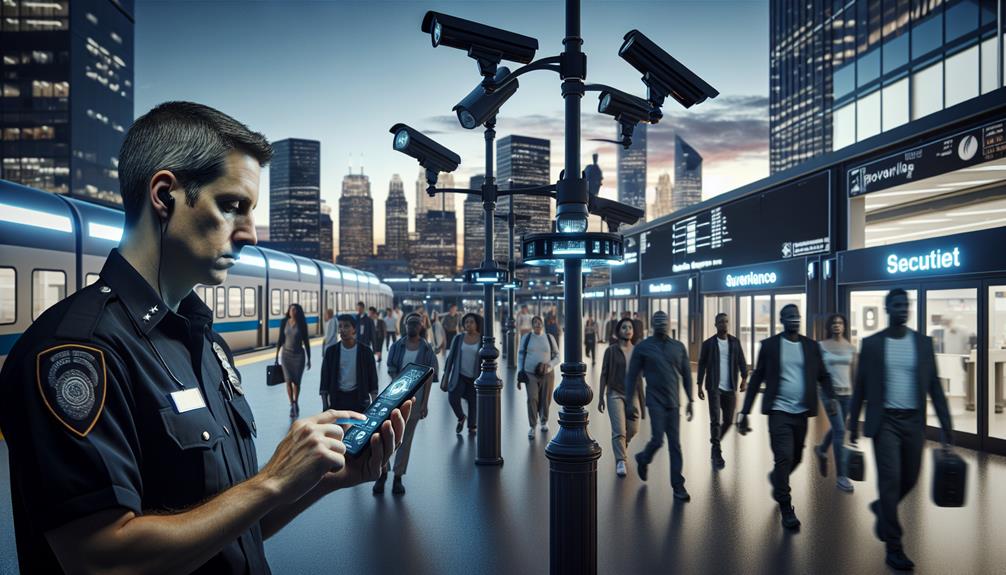
How can law enforcement agencies further leverage facial recognition technology in surveillance systems to enhance public safety measures?
The advantages are undeniable: enhanced security, simplified tracking of suspects, and improved efficiency. Facial recognition technology can boost public safety by accurately identifying individuals in crowded areas. It enhances security measures and helps identify potential threats, streamlining processes and improving overall safety.
This technology provides an additional authentication layer in critical infrastructure and public spaces, ensuring that only authorized individuals have access. By integrating facial recognition into surveillance systems, authorities can prevent security threats more effectively.
Additionally, it helps in tracking and identifying suspects, leading to increased law enforcement efficiency. Facial recognition technology can significantly enhance public safety measures by accurate identification and efficient tracking. This precision can be invaluable in maintaining a safe and secure environment for all.
Integration With AI Solutions
By integrating facial recognition with AI solutions into surveillance systems, we can enhance the accuracy and efficiency of individual identification in real-time surveillance operations.
AI integration enhances facial recognition performance by analyzing vast amounts of data and patterns to achieve better identification accuracy. This includes adapting to changing environments and lighting conditions, leading to improved surveillance outcomes.
AI-powered facial recognition in surveillance systems accelerates processing speeds and enables more efficient tracking of individuals in surveillance footage. In addition, AI integration allows for advanced features like emotion recognition and behavior analysis, providing enhanced security monitoring. With facial recognition software integrated with AI, real-time identification becomes more precise and reliable.
Integrating facial recognition with AI serves multiple purposes beyond just identification. It can improve overall security by analyzing patterns and detecting anomalies, enhancing public safety measures. By leveraging the capabilities of AI algorithms in facial recognition, surveillance systems become even more effective in creating safer, more secure environments.
Overcoming Privacy Concerns
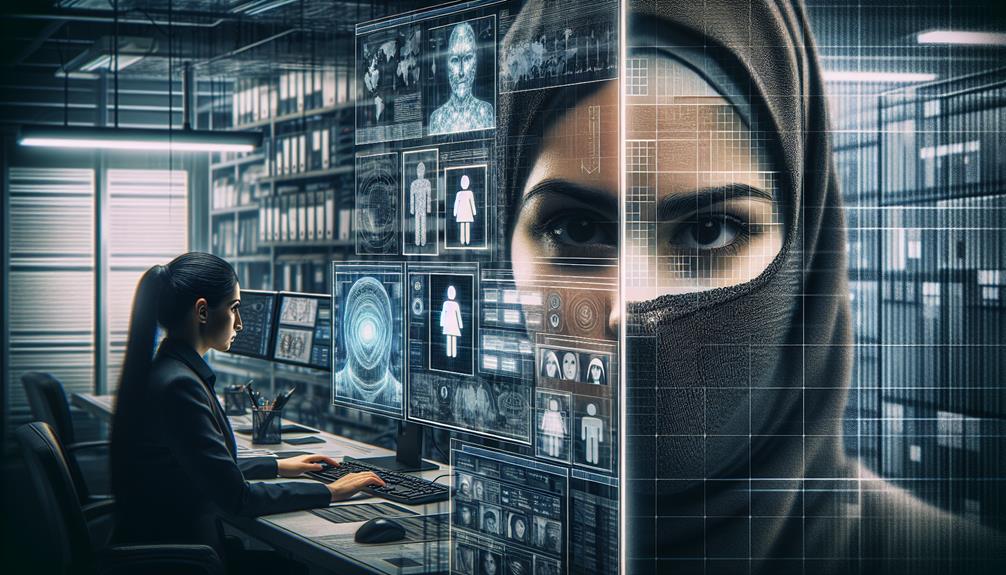
To address privacy concerns effectively, facial recognition surveillance systems need strict data protection regulations. Transparency is key in building trust. Implementing clear policies on data collection and usage guarantees that individuals are well-informed about what's happening with their personal information. Encryption and secure storage of facial data safeguard against unauthorized access and potential misuse.
Additionally, empowering individuals with user consent and opt-in mechanisms allows them to take control over their own facial data.
Regular audits and compliance checks are essential in ensuring that facial recognition systems meet the highest privacy standards and regulations. With robust measures in place, these systems can operate while respecting individual privacy.
The future of facial recognition technology in surveillance systems must prioritize the protection of individuals' personal data. By addressing these concerns now, we can unleash the full potential of facial recognition without compromising privacy and security.
Frequently Asked Questions
What Is the Future of Facial Recognition Technology?
As I explore the future of facial recognition technology, ethical implications and data privacy concerns must be urgently addressed alongside advancements in accuracy rates, real-time identification methods, and industry applications to guarantee responsible, secure use.
What Is the Future Work in Face Recognition?
I see future work in face recognition focusing on accuracy improvements through deep learning techniques, ethical mitigations of privacy concerns, and thorough evaluation of biometric authentication security measures, all critical in shaping facial recognition legislation and responsible software development.
What Is the Facial Recognition Market Forecast?
By 2032, the global facial recognition market will reach $24.3 billion, driven by technological advancements in AI, deep learning, and biometric authentication. However, privacy concerns and ethical implications require thoughtful regulation for security applications.
What Is the Future Scope of the Face Recognition Attendance System?
Regarding the future scope of face recognition attendance systems, I foresee improvements in accuracy and bias detection, however, significant challenges persist, namely privacy concerns, integration complications, ethical issues, and regulation updates.