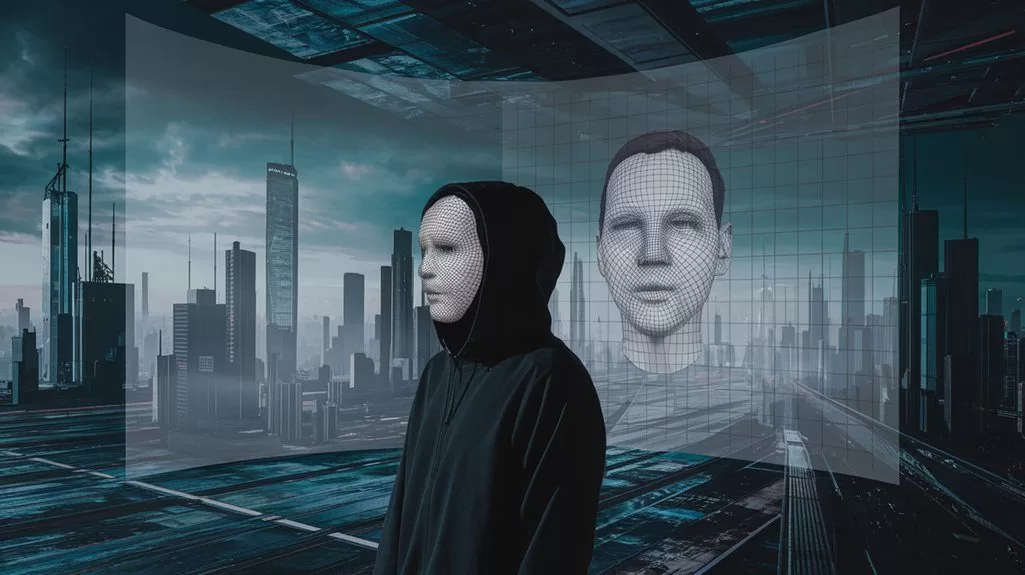


AI cameras are reshaping security. They rapidly detect threats like weapons and suspicious vehicles. The market leaps from $7.8 billion to a hefty $35.5 billion by 2034. Yet, privacy concerns loom. Feeling safe or just watched? A blurred line. Ethical conundrums abound—biased algorithms may falsely accuse. Public opinion split between security and a "Big Brother" dystopia. A high-stakes balancing act. For a deeper exploration, the debate continues.
Key Takeaways
- AI cameras enhance security by improving object detection and real-time data analysis with faster response times.
- Privacy concerns arise from invasive surveillance, causing public unease about constant monitoring.
- Ethical issues include data misuse, privacy erosion, and lack of transparency in AI camera operations.
- Bias in AI algorithms can lead to inaccuracies and unfair treatment in security measures.
- The industry's growth is driven by demand for security, despite ongoing debates about privacy and ethics.
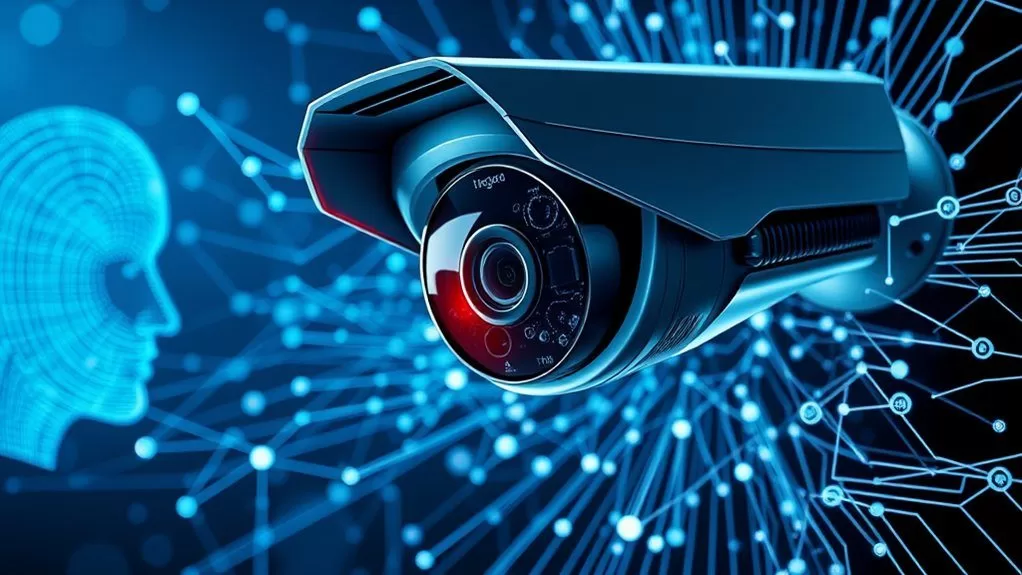
While some may argue that AI cameras are the ultimate guardians of modern security, others might see them as omnipresent spies lurking in every corner. These devices, with their enhanced object detection and real-time data analysis, seem like the perfect tools for keeping threats at bay. They can spot a weapon, track a suspicious vehicle, and send alerts faster than you can say "Big Brother."
But therein lies the rub: the potential for invasive surveillance. Privacy concerns are screaming louder than a malfunctioning alarm system. Striking a balance between surveillance and privacy is crucial to ensure these systems are not misused, as their ability to analyze vast amounts of data raises significant privacy infringement concerns.
Data ethics and surveillance impact are at the forefront of this debate. AI cameras wield the power to identify and classify objects with alarming precision. However, the public perception is split. Some feel protected; others feel watched, like participants in a never-ending reality show. Facial recognition technology, despite its promise of enhanced security, is often scrutinized for its impact on individual privacy and potential misuse.
AI cameras: a blend of precision and paranoia, leaving society torn between feeling secure and feeling surveilled.
The balance between security and privacy is as precarious as a tightrope walk. A stumble could lead to misuse and data breaches. Technology regulation is supposed to keep things in check, but let's face it, regulations often play catch-up with technology.
Then, there's the issue of bias. AI algorithms can be as biased as a reality show judge. They rely on data—sometimes biased data—to learn. The result? Potential inaccuracies in facial recognition or motion tracking. Imagine being flagged for suspicious activity just because the algorithm didn't like the cut of your jib. It's a head-scratcher and a privacy nightmare wrapped in one.
Despite these concerns, the industry is booming. The AI camera market, currently valued at $7.8 billion, is projected to skyrocket to $35.5 billion by 2034. People want security, and they want it now.
These cameras, integrated with 5G and IoT, promise improved response times and reduced human error. They offer real-time alerts, making traditional systems seem like they're stuck in slow motion. But at what cost? The constant surveillance feels like a dystopian dream.
In many ways, AI cameras are a double-edged sword. Enhanced accuracy and scalability are great, but the potential for constant scrutiny is unsettling. Privacy erosion is a real fear. The lack of transparency in how data is processed and stored adds fuel to the fire. Additionally, the use of advanced algorithms and machine learning in AI security cameras enhances their capabilities, but also raises new privacy concerns.
The public is left in the dark, wondering if they're safer or just more watched.
Final Thoughts
AI cameras. A $56 billion industry juggernaut. Revolutionizing security with precision and speed. Yet, privacy concerns linger, casting a long shadow. Are these cameras guardians or intruders? Depends who you ask. They can stop crime in its tracks or become Big Brother's eyes. It's complicated. Security enhanced, privacy diminished—it's a trade-off. Like it or not, they're here to stay. Embrace the future or brace for impact. Your call, really. Just don't forget to smile for the camera.
References
- https://arcules.com/blog/ai-security-cameras-worth-every-penny/
- https://www.eejournal.com/industry_news/how-artificial-intelligence-ai-cameras-are-revolutionizing-surveillance-and-security/
- https://appinventiv.com/blog/ai-in-surveillance-system/
- https://www.schultztechnology.com/blog/ai-security-cameras/
- https://stealthmonitoring.com/video-monitoring/video-surveillance-artificial-intelligence