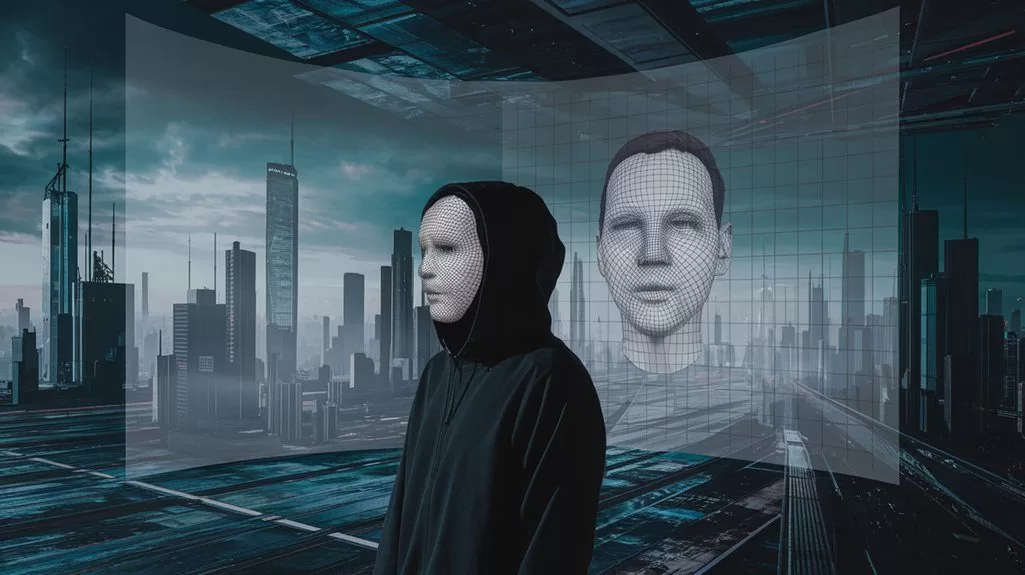


Facial recognition technology boosts surveillance accuracy by empowering security forces with swift and accurate identity verification, managing high-volume settings efficiently, and integrating seamlessly with AI and computer vision for enhanced surveillance. The precision of computer vision and AI algorithms minimizes human errors and guarantees timely identification, streamlining security operations in dynamic environments. This technology plays a key role in fortifying security measures, decreasing the chances of misidentification, and guaranteeing timely responses in critical scenarios. Furthermore, it can strengthen safety by combining face recognition with other biometric tools, integrating into current systems, and reducing physical interactions.
Key Takeaways
- Facial recognition technology, fortified with AI and machine learning, ensures high precision and speed in surveillance and security applications.
- Geometric recognition capabilities enhance facial recognition accuracy by measuring and analyzing distinct facial features.
- Integration with AI algorithms minimizes errors, reducing the likelihood of false negatives and false positives.
- Trained AI models can handle dynamic environments and large datasets efficiently for timely and accurate surveillance reporting.
- Facial recognition systems eliminate human biases, ensuring consistent and reliable results in surveillance and security operations.
Enhancing Security Through Efficiency
Advancements in facial recognition technology empower security forces to swiftly and accurately verify identities, bolstering security efficiency particularly in high-volume settings. This cutting-edge tech offers precise accuracy and rapid identification speed, guaranteeing a high level of security in crowded environments.
Combining facial recognition with other credentials notably enhances security by guaranteeing unique and reliable identification. Integration with AI and computer vision allows for seamless processing of large data sets. This schematic integration facilitates efficient surveillance, eliminating potential security breaches due to faulty recognition.
Unlike traditional identification methods that are often time-consuming and may rely on purely human skills, facial recognition technology guarantees error-free authentication, significantly boosting overall security outcomes. Dynamic and unstable settings that previously posed challenges for traditional security methods are now easily handled through geometric recognition capabilities.
As a security officer, I rely on this technology to streamline the verification process, ensuring that it's both swift and precise. The key benefits of this technology—accuracy, speed, and reliability—make it an invaluable asset for maintaining tight security controls.
Precise Identification Speed
By leveraging the combined power of computer vision and AI, facial recognition technology excels at swiftly processing large datasets for accurate and timely identification. It's capable of identifying multiple faces simultaneously in crowded environments. This technology's geometric recognition capabilities further enhance its accuracy and effectiveness.
Moreover, facial recognition technology doesn't get impeded by dynamic and unstable environments. Its speed and accuracy remain consistent, making it an indispensable tool for security operations. For instance, airports and border control systems use facial recognition to identify travelers quickly and efficiently, reducing wait times and improving overall security.
In terms of verification, facial recognition technology offers fast and accurate authentication, adding a layer of convenience to daily experiences. Whether it's accessing secure accounts, or detecting fraudulent activities, facial recognition technologies have proven themselves to be highly reliable. Their recognition accuracy is now a key factor in maximizing surveillance efficiency.
Computer Vision and AI

As I explore the nuances of facial recognition, I realize that computer vision and AI are essential components that enable rapid and precise identification.
These technologies empower facial recognition systems to handle large data sets efficiently, even in crowded environments where multiple faces need to be identified simultaneously.
Ongoing Solidification of AI
Current advancements in AI technology, specifically computer vision, are empowering facial recognition systems to consistently deliver accurate and speedy results. I've noticed that the integration of AI algorithms plays a vital role in enhancing the accuracy and speed of these systems.
Computer vision enables quick processing of large datasets, facilitating precise identification of individuals. This eliminates human errors, leading to more reliable identification results.
One notable advantage of AI in facial recognition is that it streamlines processes and guarantees timely responses. For instance, in a casino setting, AI-powered facial recognition can swiftly verify identities, preventing fraud and enhancing customer experience.
Additionally, ongoing improvements in AI technology have notably improved the accuracy and efficiency of these systems. These advancements have solidified the position of facial recognition technology as a robust tool in modern security, providing unparalleled control and oversight.
Real-time Image Optimization
To heighten security and customer satisfaction, I employ real-time image optimization in facial recognition technology that leverages both computer vision and AI algorithms to deliver precise and speedy results even in dynamic settings.
This advanced combination allows the technology to accurately analyze and process visual data in real-time, swiftly identifying and verifying individuals even when multiple faces are present. The AI element guarantees exceptional accuracy and efficiency in facial recognition, even when faced with varied lighting conditions or environmental factors.
This fusion of computer vision and AI capabilities enables reliable and timely responses in access control systems, attendance tracking, customer authentication, and other applications where fast and accurate facial recognition is crucial. Additionally, it empowers law enforcement agencies in identifying suspects and enhances overall safety and security.
Eliminating Human Errors
As I delve into the realm of facial recognition technology, it becomes evident that one of its main benefits is its capacity to eradicate human errors in identification.
By depending on accurate algorithms and computer vision capabilities, AI-powered facial recognition systems notably diminish the risk of inaccuracies linked to manual identification processes.
This not only boosts the overall precision of surveillance but also guarantees consistent and reliable results, completely eradicating the variability introduced by human operators.
Eliminating Racial Bias
By leveraging advanced AI and computer vision technologies, facial recognition systems aim to mitigate racial bias in identification processes by reducing the influence of human error and subjectivity.
However, it's important to acknowledge that these systems still can perpetuate discrimination. Studies have shown that facial recognition technology is less accurate for people of color, particularly darker-skinned women, due to biases in the training data and algorithms.
For example, one study found that error rates increased significantly when the technology was used to identify darker-skinned women, with rates as high as 34.7% compared to 0.8% for light-skinned men. This perpetuates systemic racism and discrimination, leading to false arrests and detentions.
As a result, addressing racial biases within these systems is essential for ensuring fairness and accuracy in surveillance processes.
Oversights in Reporting
Eliminating human errors in surveillance reporting, facial recognition technology greatly enhances the accuracy and reliability of surveillance processes, primarily by reducing the impact of manual reporting. The technology plays a pivotal role in improving the precision of surveillance data by automatically spotting and matching faces, thereby decreasing the likelihood of inaccurate or misleading reports. This not only enhances the trustworthiness of the data but also guarantees that law enforcement agencies can rely on accurate information for decision-making.
Three key advantages of facial recognition technology in eliminating oversights in reporting:
- Reduces Human Errors: Automation of identification processes eliminates potential human inaccuracies, making the data more reliable and trustworthy.
- Enhances Surveillance Accuracy: Facial recognition technology reduces the dependence on manual reporting, which can be prone to errors, ensuring that surveillance data is more accurate and concise.
- Improved Reporting Accuracy: The precision of facial recognition systems minimizes the risk of errors in surveillance data, leading to more reliable results and informed decision-making by law enforcement agencies.
The incorporation of facial recognition technology in surveillance processes substantially decreases the margin of human error, guaranteeing that law enforcement agencies have access to reliable data for making critical decisions. This enhances the overall efficiency and effectiveness of surveillance, ultimately improving public safety and security.
AI-based Error Reduction
Facial recognition technology is able to decrease errors in identification processes by relying on advanced AI algorithms that automatically detect and compare facial features. These AI-powered systems significantly decrease error rates, leading to reliable identification outcomes.
By integrating AI technology into facial recognition, we can minimize mistakes that occur in manual identification procedures. This automation process decreases the likelihood of human error, enhancing overall surveillance accuracy.
The elimination of human errors in identification processes is vital for ensuring reliable results. AI-based facial recognition systems achieve this through the algorithm's ability to accurately analyze and compare facial features.
As AI technology continues to evolve, facial recognition systems are becoming increasingly precise and efficient. This not only enhances security measures but also provides more dependable identification results.
Fast and Reliable Verification

In the field of security operations, I rely on facial identification technology to provide a quick and reliable verification process, accurately pinpointing individuals in a mere matter of seconds. The efficient use of computer vision and AI algorithms guarantees rapid processing of large datasets, making simultaneous verification possible for multiple faces in crowded environments. This enhanced capacity greatly contributes to security operations.
3 key benefits:
- Speed: Facial identification technology allows me to identify individuals rapidly, ensuring timely security checks.
- Accuracy: The geometric recognition capabilities of facial identification software improve precision, minimizing potential errors.
- Flexibility: Dynamic environments don't hinder the performance of facial identification technology, guaranteeing reliable verification even in the most challenging conditions.
With facial identification, I can enhance security in the most demanding situations, making it an indispensable tool in my surveillance operations.
Combining Face Recognition
Combining face recognition with other authentication methods gives me a robust defense against security threats. This multi-layered approach enhances the accuracy and efficiency of surveillance systems to a large extent. By leveraging the power of machine learning, computer vision, and other AI tools, facial recognition becomes even more reliable in crowded environments.
| Application | Benefits |
|---|---|
| Airport Security | Fast and secure identification for efficient customs clearance |
| Law Enforcement | Accurate tracking and verification of criminal suspects |
| Retail Stores | Real-time detection of shoplifters and fraud prevention |
| Healthcare | Secure authentication for confidential patient records |
| Financial Services | Enhanced compliance with KYC and AML regulations |
The integration of facial recognition with other credentials improves operational efficiency and minimizes the risk of human errors. This can include combining face recognition with traditional methods like passport verification, fingerprint matching, or even iris scanning. By layering these approaches, the effectiveness of physical security measures is greatly improved, leading to a safer and more secure environment for everyone.
Geometric Recognition Capabilities

To ensure the highest possible precision in facial recognition, I rely on geometric recognition capabilities that allow for precise measurement and analysis of facial features. These capabilities are vital in enhancing surveillance accuracy, particularly in scenarios where other methods are less effective.
With geometric recognition, I can create biometric profiles using distinct facial landmarks, further improving the efficiency of identification processes.
Here are three key ways geometric recognition strengthens facial recognition systems:
- Facial Template Creation: Geometric recognition capabilities facilitate the generation of unique facial templates for accurate matching and verification.
- Landmark Detection: Algorithms utilize geometric data to determine facial landmarks, enhancing the accuracy and reliability of facial recognition systems in various applications.
- Improved Identification Rates: Geometric recognition helps minimize errors, ensuring that identification rates are consistently high across different lighting conditions and angles.
These geometric features are pivotal for receiving accurate and reliable results, making them indispensable in high-stakes applications, such as law enforcement or border control, supported by standards and guidelines set forth by the National Institute of Standards.
Facial Recognition System Integration
I effectively integrate facial identification into current systems to improve security and access control seamlessly. By incorporating facial recognition technology, I can greatly enhance the accuracy of identification and streamline access control processes. This integration allows for a more efficient and reliable security system that eliminates the need for additional hardware or infrastructure. The setup process is straightforward, as these systems can be deployed through web and desktop applications.
The face recognition system is particularly useful in maintaining a safe workplace environment. Its non-contact nature minimizes physical interactions and reduces the risk of spreading infections. Additionally, combining facial recognition with other credentials strengthens security measures, ensuring accurate identification and access control. This technology hence provides a robust layer of defense against unauthorized access.
Utilizing facial recognition not only enhances security but also respects privacy by ensuring that only authorized personnel can access sensitive information or restricted areas. Essentially, facial recognition technology empowers me to maintain robust security and privacy in various environments with ease.
Reducing Safety Risks

Facial recognition technology plays an important role in enhancing safety and security measures by effectively verifying traveler identities. As we continue to strive for better safety and security, it's essential to understand how this technology helps mitigate potential risks.
One major way facial recognition enhances safety is by ensuring accurate identification. This can greatly reduce the danger posed by fraudulent IDs or imposters.
For instance:
- Airport Security: Facial recognition technology is being used by the TSA to verify a passenger's identity, making air travel safer by preventing unauthorized access.
- Fraud Prevention: The technology can identify individuals on government watch lists or flag those with a history of suspicious behavior, assisting law enforcement agencies in preventing criminal activities.
- Efficient Verification: Facial recognition speeds up the identification process, improving the overall user experience and decreasing the likelihood of human error.
Frequently Asked Questions
How to Make Face Recognition More Accurate?
To make face recognition more accurate, I focus on improving algorithms through enhanced dataset diversity and advanced training techniques, ensuring high-quality annotated data to minimize errors and enhance precision.
How Is Facial Recognition Used in Surveillance?
In surveillance, I use facial recognition to quickly identify individuals without consent, making it critical to take into account privacy concerns and ethical implications amid its widespread adoption in law enforcement and security systems.
How Accurate Are Facial Recognition Cameras?
I think facial recognition cameras have greatly improved, especially with high-quality Visa pictures, resulting in a 33-fold accuracy increase in just two years, yet accuracy varies depending on the quality of images.
What Factors Affect the Accuracy of Facial Recognition?
'entin opi faced in *851ce to recogonırng erorrıoes include lighting conditons and facial expressions. NIST's research shows that erroırates increase with the use of masks and poor image quality.'