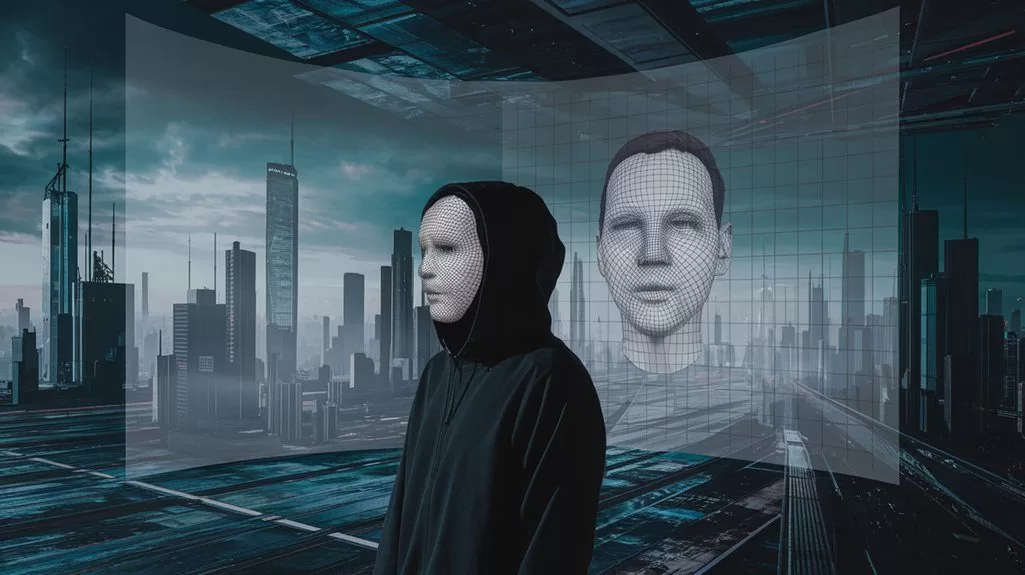


Facial recognition tech, touted as crime-solving wizardry, sometimes fumbles disastrously. It's wrongly arrested eight innocents. Algorithms aren't infallible—especially cruel to people of color. Misidentification? It's not just tech malfunction; it's serious business. Biased datasets, poor image quality, or maybe plain old bad luck spoil the magic. And public faith? Shaken, especially among Black Americans. Algorithms struggle with darker skin and blur. Tech booms, rights loom. Intrigued? More twists await in the saga.
Key Takeaways
- Facial recognition errors have caused the wrongful arrest of eight individuals due to misidentification.
- Racial biases in facial recognition technology lead to higher misidentification rates for Black and Asian people.
- Technical limitations, like biased datasets and poor image quality, contribute to inaccurate identifications.
- Public skepticism is prevalent, especially among minorities, due to higher false positive rates.
- Legal cases highlight the severe consequences and ethical concerns of using facial recognition in law enforcement.

Facial recognition technology: a marvel of modern innovation or a ticking time bomb? It's a question worth pondering, especially when considering the unintended consequences. Imagine being wrongly accused of a crime you didn't commit. Scary, right? For at least eight individuals, this nightmare became reality—thanks to facial recognition technology gone awry. Misidentification risk is a glaring issue. Incorrect matches are not just minor hiccups; they can lead to wrongful convictions. One might think algorithms are infallible, but surprise! They're not. Algorithms struggle with identifying anomalies in user behavior, which is a crucial aspect of behavioral anomaly detection in cybersecurity.
Facial recognition: innovation marvel or ticking time bomb? Misidentification risk leads to wrongful convictions. Algorithms aren't infallible.
Algorithm bias is a real problem, especially when racial bias creeps in. Studies show Black and Asian individuals are more likely to be misidentified than their white counterparts. Oops, how did we not see that coming? It doesn't stop there. At least six Black individuals have been falsely accused due to these tech blunders. Is it the lack of regulation or just plain negligence? Maybe both. Law enforcement's heavy reliance on AI results doesn't help. It only amplifies human biases. No wonder wrongful arrests are making headlines.
Algorithms, with their so-called sophistication, often suffer from flaws. They're trained on biased datasets, leading to skewed results. And guess what? They struggle with darker skin tones. Image quality also plays a role. A blurry shot? Say goodbye to accuracy. Then there's the legal maze. Should facial recognition be trusted as evidence in court? At least seven cases of wrongful arrests suggest otherwise. Legal implications are mounting, along with concerns about reliability.
Racial disparities are already a pain point in policing, and this tech only adds to the mess. Public perception is mixed. Black Americans, in particular, are skeptical. Who can blame them? Accuracy varies dramatically across demographics. While some algorithms boast 98-99% accuracy, that's in "ideal" conditions. For people of color, the false positive rate is higher. Men are identified more accurately than women. Age adds another layer of complexity. Kids and the elderly throw these systems off balance. Even with tech improvements, biases linger.
Cases like Robert Williams and Porcha Woodruff underscore the dangers of errors. Mistaken identity isn't just inconvenient; it's life-altering. Some have taken legal action, seeking justice for tech's blunders. A few lawsuits might change things, but who knows? Facial recognition technology is a double-edged sword. It's a marvel and a menace, rolled into one. As its capabilities expand, so do its pitfalls. And in this high-tech age, the stakes are only getting higher. Georgetown University found that one in two American adults may have images in facial recognition networks, raising concerns about privacy and the extent of surveillance. The ACLU's Nate Freed Wessler has called for law enforcement to abandon the use of facial-recognition technology due to its significant failings and ethical implications.
Final Thoughts
Facial recognition tech, hailed as the future, sometimes stumbles—resulting in eight innocent arrests. A tool meant to enhance security instead misfires, raising eyebrows and questions. Sure, it can identify a cat from a dog, but humans? Not always. The pros: potential for crime reduction. The cons: wrongful arrests, shattered lives. Oops. Society watches, wary and hopeful, wondering if this tech will ever get it right. Until then, it's a double-edged sword, cutting both ways.
References
- https://innocenceproject.org/when-artificial-intelligence-gets-it-wrong/
- https://www.marketplace.org/shows/marketplace-tech/how-facial-recognition-technology-can-lead-to-wrongful-arrests/
- https://bipartisanpolicy.org/blog/frt-accuracy-performance/
- https://innocenceproject.org/artificial-intelligence-is-putting-innocent-people-at-risk-of-being-incarcerated/
- https://ucalgary.ca/news/law-professor-explores-racial-bias-implications-facial-recognition-technology