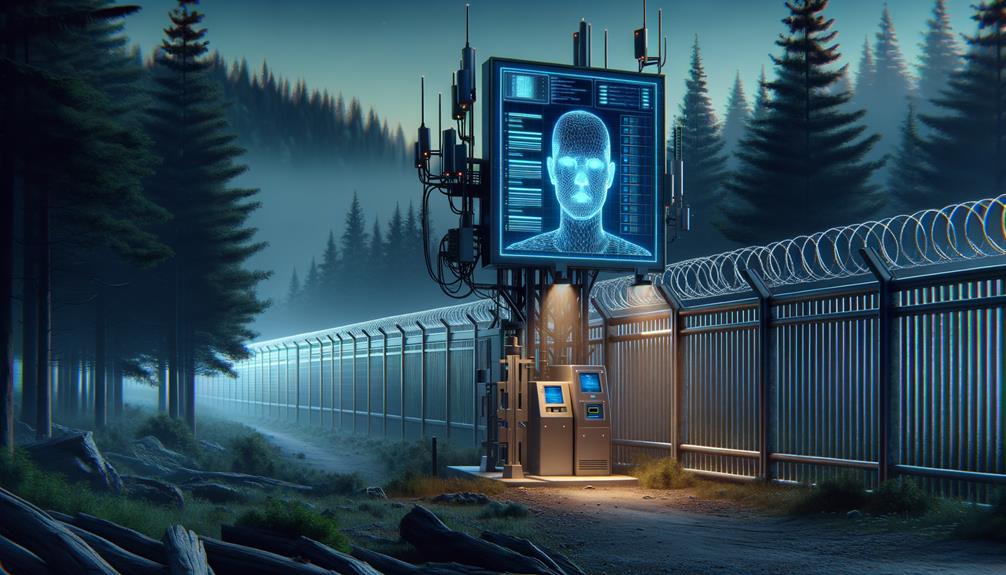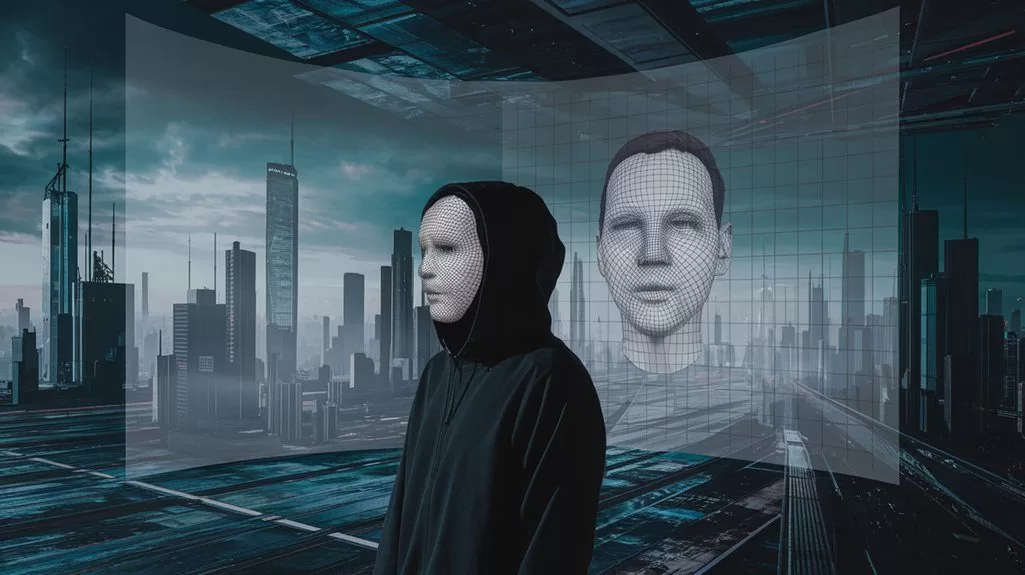


To improve facial recognition in surveillance, I make sure that cameras are positioned for optimal facial angles and sufficient lighting conditions. This involves correct camera placement, adjusting for sufficient lighting, and using cameras with adjustable angles and zoom. Incorporating advanced algorithms like Convolutional Neural Networks and real-time monitoring tools like face tracking systems aids in reducing errors. Integrating databases and anti-spoofing techniques additionally boost security. Regular software updates and operator training are crucial for maintaining accuracy. For a more thorough approach, I persist in refining these strategies to maximize surveillance efficiency.
Key Takeaways
- Implementing cameras with adjustable angles and zoom enhances face capture accuracy.
- Utilize Convolutional Neural Networks for accurate identification and deep learning models for reduced false matches.
- Integrate facial recognition with databases and incorporate anti-spoofing techniques, such as eye blink detection, for enhanced security.
- Regularly update facial recognition software to counter evolving attacks and protect data with encryption and access controls.
- Thoroughly train operators to minimize errors and optimize system efficiency.
Optimizing Camera Placement
When setting up surveillance cameras, proper positioning is essential to achieve high-quality images for accurate facial identification. A camera placed at a height of around 7-8 feet captures facial features at the ideal angle, which greatly enhances image quality.
Strategically positioning cameras at entry points and chokepoints ensures that faces are captured head-on, further increasing accuracy. Avoiding direct sunlight or harsh backlighting also enhances image quality by reducing unwanted glare.
Finally, cameras with adjustable angles and zoom capabilities offer flexibility in capturing facial details, improving identification accuracy.
Furthermore, careful camera placement also reduces security risks. By situating cameras in areas with high foot traffic or potential security threats, facial recognition technology can be utilized to its maximum capacity.
For example, in a busy airport or station, widespread camera deployment can assist in identifying and tracking individuals more efficiently. By optimally situating cameras, facial recognition technology can greatly enhance security and user experience.
Ensuring Adequate Lighting Conditions
Do facial lighting standards have a direct impact on the accuracy and reliability of facial recognition systems in surveillance applications? The answer is undeniably yes. Adequate lighting conditions are essential for optimal facial recognition performance. Shadows and low light can impede the system's ability to detect and match facial features accurately, leading to false positives and negatives.
Uniform and consistent lighting helps to improve image quality, enabling the algorithms to operate efficiently and reduce errors.
Ideal lighting conditions are necessary to ensure that the facial recognition system can distinguish between features effectively. In low-light settings, capturing a high-quality image that allows for accurate identification becomes challenging. Variations in lighting conditions can notably affect the reliability of the system.
Ensuring proper lighting conditions in surveillance environments is vital to guaranteeing the accuracy and effectiveness of facial recognition systems. In these settings, consistent lighting can make a notable difference in enhancing the overall reliability and functionality of security measures.
Advanced Algorithms for Identification

Using advanced algorithms like Convolutional Neural Networks (CNNs), facial recognition technology greatly enhances its accuracy and reliability in identifying individuals. By delving deep into facial features, including shapes, textures, and spatial relationships, CNNs notably improve the efficiency of surveillance systems. This level of analysis allows these systems to learn intricate patterns and variations in facial data, ultimately reducing false matches and enhancing security measures.
In real-time surveillance, the advanced algorithms improve the tracking and identification of persons of interest. The enhanced precision in facial recognition translates to swift responses to security threats, ensuring a safer environment. The capabilities of CNNs in facial recognition demonstrate remarkable advancements in surveillance technology, as they far surpass the limitations of basic facial detection methods.
With the power of deep learning models, our ability to efficiently identify and track individuals has never been more refined. Through the strategic integration of these advanced algorithms, facial recognition in surveillance moves forward, granting us greater control over security protocols with unmatched precision and reliability.
Implementing Real-Time Monitoring
As I explore the subtopic of Implementing Real-Time Monitoring, I realize the importance of integrating advanced technologies within surveillance systems.
Specifically, face tracking systems, dynamic scene analysis, and real-time updates play a pivotal role in enhancing surveillance capabilities.
Face Tracking Systems
Face tracking systems, equipped with sophisticated algorithms, swiftly analyze and track faces within surveillance areas, facilitating real-time monitoring. This advanced technology guarantees precise identification and monitoring of individuals, which is crucial in surveillance applications. When integrated with other surveillance technologies, face tracking systems contribute to a complete security solution.
Here are the key benefits of face tracking systems in real-time monitoring:
- Enhanced Security: Face tracking systems provide immediate alerts for suspicious activities or individuals, ensuring prompt action in high-risk situations.
- Accurate Identification: Advanced algorithms precisely detect and track faces, reducing errors and enhancing security.
- Complete Solution: Face tracking can be seamlessly integrated with other surveillance technologies to create a robust and reliable security system.
- Real-Time Alerts: Instant notifications are triggered for potential threats, enabling security personnel to respond promptly and effectively.
Dynamic Scene Analysis
Dynamic scene analysis enhances the surveillance capabilities of facial recognition systems by continuously processing live video feeds to detect and track individuals in real-time. This advanced technology allows security personnel to monitor dynamic scenes, ensuring prompt responses to potential threats. Key features include real-time monitoring, which can identify suspicious behavior or unauthorized access in high-traffic areas.
The continuous tracking of individuals in changing environments significantly enhances security measures. Permits ongoing surveillance of people of interest, making it ideal for crowded areas where security breaches are more likely. By leveraging_algorithmic systems to detect and respond to facial data in live feeds, this technology provides vital tools for law enforcement and security agencies to protect both public and private spaces.
The accuracy and speed of dynamic scene analysis make it an essential tool for enhanced security. With the ability to detect and track individuals instantly, this technology elevates the efficiency and effectiveness of facial recognition surveillance systems.
Real-Time Updates
Implementing real-time monitoring in facial recognition surveillance systems guarantees the immediate detection and response to security threats in high-traffic areas. This enables swift action in the face of unauthorized access or potential criminal activity. Here are some key benefits:
- Real-time monitoring provides constant tracking of individuals, enhancing security and threat detection.
- Facial matches are live-updated, ensuring timely intervention in suspicious cases.
- Real-time updates boost situational awareness, effectively preventing security breaches.
- Integration of real-time updates improves the overall efficiency and response times to potential security threats.
Integrating With Databases

Integration with databases forms the backbone of efficient and effective facial identification in surveillance applications. By integrating facial identification technology with databases, real-time matching of detected faces against stored information becomes possible, greatly enhancing accuracy and speed.
This integration allows for instant identification of individuals based on stored biometric data, effectively streamlining data management processes. Facial identification systems integrated with databases can perform tasks such as quick customer recognition and watchlist alerts.
A key advantage of this integration is that it enhances security by instant matching of faces against watchlists or desired databases. This accurate and real-time identification aids in advanced security monitoring and guarantees timely alerts for identified individuals.
In addition, integration with CRM databases allows for personalized customer interactions by identifying specific attributes. By leveraging facial identification technology with databases, surveillance security becomes more efficient and focused.
Anti-Spoofing Techniques
Facial recognition security demands reliable anti-spoofing measures to combat sophisticated attacks that can deceive biometric systems. It's important to integrate advanced anti-spoofing techniques that enhance the accuracy and reliability of facial recognition solutions.
These advanced algorithms detect and differentiate real faces from spoofed presentations by utilizing liveness detection algorithms to capture active and passive motion during authentication.
For instance:
- Convolutional Neural Networks (CNNs): Trained to distinguish between authentic and fake pictures, CNNs provide strong anti-spoofing capabilities.
- Eye Blink Detection: This liveness detection test guarantees natural blinking to determine whether a face is live.
- 3D Cameras: Offering high accuracy against presentation attacks by distinguishing differences between a face and a flat shape.
- Active Flash: Utilizing light reflections on a face to distinguish real from fake faces.
Regular Software Updates

As I aim to improve the reliability of facial recognition in surveillance, regular software updates become an essential component of my strategy.
By keeping these systems up-to-date, we can fine-tune algorithms to counter evolving presentation attacks and maintain strong security against spoofing threats.
This proactive approach guarantees excellent performance and accuracy in all surveillance applications.
Security Patch Management
Regular software updates are vital for guaranteeing the security of facial recognition surveillance systems. These systems can be compromised by hackers exploiting known vulnerabilities if left unpatched.
Failure to apply timely patches opens up opportunities for cybercriminals to breach the systems and access sensitive facial recognition data. This is particularly concerning, given that 60% of data breaches occur due to unpatched vulnerabilities for which a patch was available.
Implementing a consistent patch management schedule guarantees that your facial recognition systems are protected against emerging security threats.
Assure your facial recognition software can seamlessly integrate with your existing security systems, making it easier to keep your systems updated without additional hardware costs.
Prioritize patches based on the severity of the vulnerabilities, focusing on the most critical ones first to minimize downtime and guarantee system integrity.
Continuously monitor your systems for potential vulnerabilities and patch updates to prevent security breaches and maintain the integrity of your facial recognition surveillance.
Algorithm Refresh Cycles
Peak system performance relies on regular algorithm update cycles to guarantee that facial recognition software incorporates the most recent security features and advancements. This secures facial recognition systems employ the best technologies to identify and detect faces accurately. As facial recognition algorithms improve, regular updates enable organizations to address limitations and adapt to emerging threats.
These updates are vital for enhancing the effectiveness of facial recognition systems. Here are the key benefits of algorithm refresh cycles:
| Benefit | Description | Impact |
|---|---|---|
| Accuracy | Improved identification rates through advanced mathematical representations. | Enhanced User Experience. |
| Security | Integration of anti-spoofing measures to combat cyber attacks. | Data Protection. |
| Compliance | Adaptation to changing industry standards and regulations. | Compliance. |
| Threat Response | Timely patching of vulnerabilities to prevent data breaches. | Security. |
| Liveness Detection | Advanced detection methods prevent fake biometric input. | Enhanced Security. |
Regular algorithm update cycles are essential for mitigating risks, ensuring data privacy, and maintaining the efficiency of facial recognition technology in surveillance applications.
Data Protection Protocols
Updating software regularly sustains facial recognition systems in surveillance stay vigilant against evolving threats and maintain robust data protection protocols to safeguard sensitive information. As the system remains operational, outdated software can expose it to hacking attempts, data breaches, and exploitation of security loopholes. This underscores the need for continuous monitoring and updating of the facial recognition software to stay ahead of emerging threats and maintain system integrity.
Key steps for enhancing data protection protocols include:
- Implementing robust encryption for data storage and transmission
- Utilizing access controls such as multi-factor authentication and strong passwords
- Conducting regular penetration testing and security audits
- Implementing end-to-end encryption for secure data transfer
These measures secure that sensitive information remains protected, upholding privacy standards and maintaining trust in facial recognition surveillance systems.
Operator Training and Support
To guarantee the reliability of facial recognition in surveillance, we must focus on thorough operator training and ongoing assistance to minimize errors and maximize system efficiency. Specifically, training is necessary to ensure that operators can accurately interpret facial recognition results, reducing false positives and ensuring informed decision-making.
For instance, well-trained operators can differentiate between genuine identification matches and false alarms, which greatly impacts the success of surveillance operations.
Furthermore, providing continuous support is vital to ensure that operators remain proficient in system usage. This support includes troubleshooting system issues, addressing any technical problems that arise, and staying updated on software enhancements. Effective support not only promotes uninterrupted surveillance coverage but also minimizes downtime.
When combining extensive training with dedicated support, facial recognition technology can achieve its full potential in surveillance applications. This two-pronged approach significantly improves the accuracy and reliability of facial recognition systems, ultimately strengthening the overall effectiveness of surveillance operations. Furthermore, optimizing facial recognition technology entails not only refining algorithms but also ensuring that the systems are trained on diverse datasets to minimize bias. By incorporating real-world scenarios into training, the technology becomes more adept at recognizing faces under various conditions, which is crucial for effective surveillance. As a result, law enforcement and security agencies can make more informed decisions based on accurate data, thereby enhancing public safety and trust.
Frequently Asked Questions
How to Improve Facial Recognition System?
'When enhancing my facial recognition system, I optimize machine learning mechanisms, utilize advanced image processing, and test it bounds to guarantee accurate matches.'
How Is Facial Recognition Used in Surveillance?
I am involved in law enforcement, leveraging facial recognition technology to identify suspects via surveillance cameras in public spaces, but privacy concerns of unbiased system implementation and data security underlie my actions.
How to Improve Recognition of Faces?
"To improve face recognition, I enhance accuracy by incorporating CNN and siamese networks for precise feature extraction. I increase speed by optimizing preprocessing, ensuring robust detection under varying lighting conditions."
How Do You Beat Facial Recognition Camera?
To beat facial recognition cameras, I use mask technology like Reflectacles or Cap_able's sweatshirts, implementing makeup algorithms and disrupting with infrared light. I stay informed to keep ahead of facial recognition systems and avoid detection.