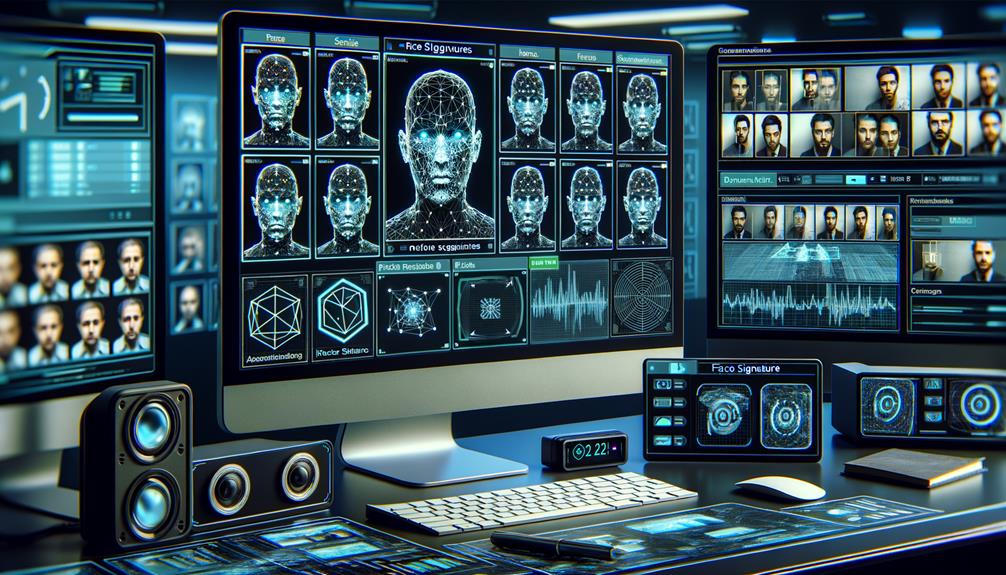


The integration of AI in ceiling security cameras has greatly enhanced surveillance efficiency by enabling real-time threat detection and proactive anomaly analysis. AI algorithms analyze video footage accurately, recognizing patterns and anomalies, and predicting potential threats before they occur. This allows for swift incident response and minimizes false alarms, making surveillance more efficient and cost-effective. AI cameras also optimize resource allocation by focusing on critical incidents, and their ability to continuously learn and adapt improves their accuracy over time. By transforming traditional passive security systems into intelligent, proactive monitors, AI in ceiling security cameras ensures a safer environment, and there's more to uncover about their capabilities.
Key Takeaways
- Real-Time Analysis: AI in ceiling security cameras enables real-time analysis of video feeds, identifying security threats and anomalies instantly.
- Advanced Object Recognition: AI algorithms accurately recognize specific objects, such as weapons, and distinguish between humans, vehicles, and other objects.
- Proactive Threat Detection: AI cameras detect unusual behavior patterns and alert security personnel promptly, enhancing incident response and preventing potential threats.
- Efficient Threat Detection: AI filters out irrelevant data, minimizing false alarms and focusing on detecting genuine threats, optimizing resource utilization.
- Continuous Learning and Adaptation: AI-powered cameras learn from historical data, refining their object recognition and anomaly detection capabilities over time.
Understanding AI CCTV Cameras
When it comes to boosting security, traditional CCTV cameras have evolved greatly with the integration of artificial intelligence (AI). AI CCTV cameras now use advanced algorithms to analyze video footage accurately and mimic human intelligence through machine learning. These cameras can recognize patterns, anomalies, and even predict threats, enabling proactive crime prevention and real-time incident response.
AI algorithms enable a thorough understanding of threats by analyzing movement patterns, crowd behavior, and interpreting visual cues. This advanced level of analysis allows for immediate response and intervention, minimizing the risk of security breaches.
The integration of AI with other technologies enhances monitoring capabilities, aiding in efficient resource allocation and cost-effective security solutions.
With real-time analysis, AI CCTV cameras offer improved accuracy and efficiency. They can instantly process video feeds, identifying potential threats or suspicious activities and providing swift action. This revolutionizes video surveillance, enhancing security measures significantly.
Role of AI in Surveillance
AI in ceiling security cameras revolutionizes surveillance by enabling real-time analysis of video footage, allowing for proactive threat detection.
Advanced algorithms interpret visual cues to detect anomalies and predict potential security risks, greatly enhancing the efficiency of surveillance systems.
With capabilities like object recognition and anomaly analysis, these cameras facilitate intelligent monitoring, swift incident response, and optimized resource allocation.
Real-Time Threat Detection
The integration of AI in ceiling security cameras has revolutionized real-time threat detection, enabling these systems to analyze video feeds continuously for suspicious activities. With sophisticated algorithms, AI cameras can identify abnormal behavior patterns and alert security personnel promptly. This real-time threat detection capability is pivotal for preventing crimes, intrusions, and security breaches effectively.
AI-powered ceiling cameras offer continuous monitoring and instant alerts for swift response to potential threats. By analyzing video feeds in real-time, these systems can detect and track objects, people, and even recognize specific patterns associated with suspicious activities, such as loitering or vandalism. This proactive approach enhances overall security and maximizes surveillance efficiency in various environments.
The instant alerts generated by AI cameras allow security personnel to respond quickly and effectively, ensuring that potential threats are addressed before they escalate. This continuous monitoring and real-time analysis enable organizations to maintain a high level of security, making AI in ceiling security cameras an essential tool for modern security measures.
Advanced Object Recognition
Advanced object recognition in ceiling security cameras is a game-changer, enabling these systems to identify specific objects like weapons, bags, or suspicious items with exceptional accuracy. This capability is driven by sophisticated AI algorithms that analyze object characteristics, shapes, and movements to differentiate between normal and potentially threatening objects. By leveraging these AI capabilities, ceiling security cameras can detect unauthorized objects in real-time, triggering immediate alerts for swift response.
Object recognition technology in AI-powered cameras enhances surveillance efficiency by automating the identification of predefined objects based on specified criteria. This advanced feature minimizes false alarms and improves threat detection accuracy, leading to enhanced security measures.
The integration of AI algorithms ensures that these cameras can continuously learn and adapt, refining their ability to recognize and classify objects over time.
The real-time alerts generated by these cameras are essential for proactive security management. By quickly identifying potential threats, security personnel can take immediate action, reducing the risk of incidents.
Proactive Anomaly Analysis
Object recognition is just the beginning; the real power of AI in ceiling security cameras lies in their ability to perform proactive anomaly analysis. This advanced capability allows AI-powered surveillance systems to detect and respond to potential threats in real-time, enhancing security measures to a notable degree.
Here are some key ways AI in ceiling security cameras achieves this:
- Real-time Anomaly Detection: AI cameras continuously analyze footage to identify unusual patterns or behaviors, enabling immediate response to potential security breaches.
- Differentiating Normal Activities: These systems differentiate between normal activities and potential threats, ensuring that security personnel focus on actual risks rather than false alarms.
- Accurate Threat Detection: By analyzing data continuously, AI ceiling security cameras provide precise threat detection, minimizing false alarms and optimizing security efficiency.
- Immediate Response: Real-time anomaly detection allows for an immediate response to potential security breaches, preventing incidents before they escalate.
This proactive approach to security makes AI in ceiling security cameras an indispensable tool for maximizing surveillance efficiency and ensuring a secure environment.
Benefits of AI CCTV Cameras
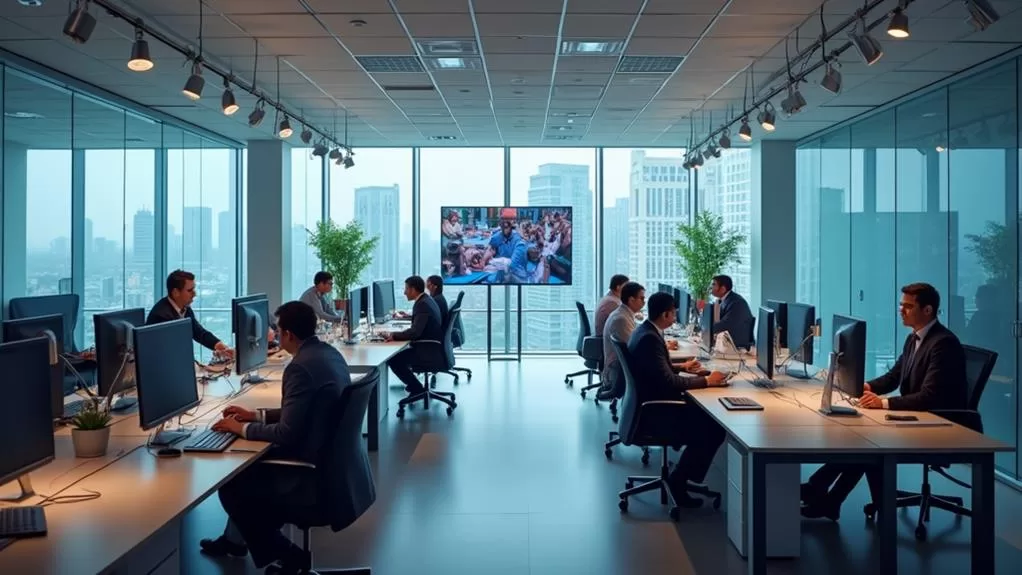
When it comes to the benefits of AI CCTV cameras, one of the standout features is their enhanced object recognition. These cameras can accurately identify and track specific objects, people, and behaviors in real-time, greatly enhancing threat detection and response times.
Enhanced Object Recognition
AI CCTV cameras have revolutionized security surveillance by incorporating sophisticated object recognition algorithms. These advanced cameras can accurately identify and classify various objects in real-time, greatly enhancing surveillance efficiency.
- Proactive Threat Detection: AI CCTV cameras can distinguish between humans, vehicles, animals, and packages, enabling proactive threat detection and efficient monitoring.
- Precise Alerting: Object recognition allows for precise alerting to security personnel, reducing the likelihood of false alarms and focusing attention on relevant threats.
- Enhanced Security Measures: By differentiating between normal and suspicious objects, AI-powered cameras optimize security measures, ensuring that only potential risks are highlighted.
- Efficient Monitoring: This capability streamlines surveillance, allowing security teams to respond quickly and effectively to potential security incidents.
With these enhanced object recognition capabilities, AI CCTV cameras optimize surveillance efficiency by focusing on relevant threats and potential risks. This feature is vital for maintaining robust and responsive security systems, making AI CCTV cameras an indispensable tool in modern security infrastructure.
Real-Time Threat Detection
Building on the enhanced object recognition capabilities of AI CCTV cameras, real-time threat detection takes security surveillance to the next level. These cameras offer real-time threat detection by analyzing movement patterns and interpreting visual cues, enabling immediate action.
AI algorithms at the heart of these systems continuously learn and improve their accuracy over time, boosting their ability to identify potential threats. This continuous learning process allows AI CCTV cameras to detect anomalies and predict potential threats based on historical data.
This proactive approach to crime prevention greatly enhances security measures by enabling swift and effective responses. When integrated with other technologies, such as access control systems, AI cameras can trigger alarms and lock down access to certain areas, ensuring a rapid and coordinated response to security breaches.
Key Features of AI Surveillance
As we explore the world of AI surveillance in ceiling security cameras, it becomes clear that real-time analysis of video feeds is a cornerstone of their functionality. These cameras utilize advanced algorithms to recognize patterns, anomalies, and potential security risks, enabling proactive threat detection.
Key Features of AI Surveillance
- Real-Time Analysis: AI surveillance in ceiling security cameras analyzes video feeds in real-time, allowing for immediate identification of security threats.
- Pattern and Anomaly Recognition: Advanced algorithms detect and classify objects, behaviors, and patterns, ensuring that only relevant data is flagged for review.
- Efficient Threat Detection: AI features filter out irrelevant information, focusing on detecting threats efficiently and reducing false alarms.
- Enhanced Incident Response: Integration with AI technology aids in swift incident response by triggering immediate alerts to security personnel or law enforcement.
These features collectively enhance monitoring capabilities, ensuring that security measures are both proactive and highly effective. Additionally, AI surveillance systems offer continuous learning, which enhances their accuracy over time as they adapt to new data and patterns.
Real-Time Threat Detection
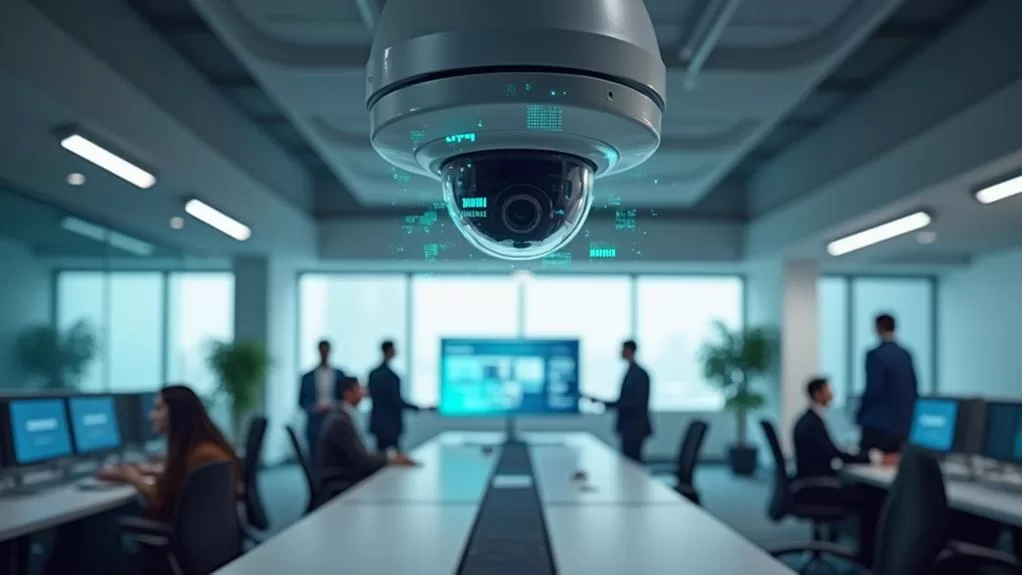
When it comes to real-time threat detection, overhead security cameras equipped with AI technology are game-changers. These cameras analyze movement patterns and anomalies, enabling them to detect threats immediately, thereby reducing response time for enhanced security measures. AI algorithms embedded in these overhead cameras interpret visual cues and behavior patterns, allowing them to proactively detect potential threats before they escalate.
Real-time threat detection in overhead security cameras facilitates swift incident response and proactive security measures. For instance, if an intruder is detected, the system can instantly alert security personnel with detailed visuals and metadata, guaranteeing prompt action. This capability extends to recognizing specific objects or individuals, such as weapons or known criminals, which enhances the efficiency of security responses.
The continuous monitoring and analysis provided by AI-powered overhead cameras ensure a thorough understanding of threats. By analyzing historical data, these cameras can predict potential security risks, enabling proactive measures to be taken. This transforms traditional security practices, making them more intelligent and proactive, ultimately safeguarding public spaces, businesses, and personal property more effectively.
Object and Facial Recognition
Ceiling security cameras equipped with AI technology greatly enhance security monitoring through advanced object and facial recognition capabilities. These features transform passive surveillance into proactive threat detection, enabling real-time alerts and swift responses.
Key Capabilities of AI-Powered Ceiling Security Cameras
- Object Recognition: AI technology allows these cameras to distinguish between various items in the surveillance area, such as people, vehicles, and animals. This helps in ignoring false alarms and focusing on relevant events.
- Facial Recognition: Facial recognition capabilities enable these cameras to identify individuals and enhance security monitoring. This feature aids in differentiating between authorized personnel and potential threats.
- Real-Time Detection: Object recognition helps in detecting suspicious items or activities in real-time, ensuring immediate action can be taken.
- Personalized Security Protocols: Facial recognition in AI ceiling cameras can assist in creating personalized security protocols for different individuals, further enhancing security measures.
With these advanced features, ceiling security cameras with AI technology significantly improve surveillance monitoring, providing precise and timely detection of potential threats. This integration of AI ensures a higher level of security and operational efficiency.
Behavior Analysis and Anomalies

Behavior analysis in AI-powered ceiling security cameras elevates surveillance to a new level by monitoring and interpreting movements, gestures, and interactions within a space. This advanced technology enables the cameras to identify and understand the subtleties of human behavior, which is essential for enhancing security measures. Anomaly detection capabilities in these ceiling cameras are particularly remarkable, as they identify unusual behaviors or events that deviate from normal patterns. This helps in flagging potential threats or suspicious activities in real-time, allowing for swift and effective intervention.
AI algorithms in ceiling cameras are the backbone of this functionality, analyzing behavior patterns to differentiate between normal activities and abnormal behaviors. This differentiation is vital to proactive security measures, as it minimizes false alarms and focuses surveillance efforts on relevant events.
Predictive Analytics in Surveillance
Predictive analytics in surveillance leverages AI algorithms to forecast potential security threats by analyzing historical patterns, behaviors, and trends. This approach allows for real-time risk assessment, enabling us to identify suspicious activities before they occur. By using machine learning to anticipate and prevent security breaches, we can notably reduce response times and enhance overall surveillance efficiency.
Threat Pattern Identification
When it comes to enhancing the security capabilities of ceiling security cameras, one of the most noteworthy advancements is the integration of predictive analytics. This technology allows these cameras to identify threat patterns by analyzing movement, behavior, and anomalies, making them far more effective in maintaining security.
Here are some key points on how predictive analytics enhances threat pattern identification:
- Predictive Analytics: AI algorithms in ceiling security cameras can forecast potential threats based on historical data and real-time analysis, enabling proactive detection.
- Behavior Analysis: By recognizing patterns in crowd behavior and movement, these cameras can proactively detect and prevent security incidents.
- Anomaly Detection: The system can identify anomalies that may indicate a security breach, such as unauthorized entry or suspicious behavior.
- Incident Response: Threat pattern identification helps in swift incident response and targeted surveillance, enhancing overall security measures.
Predictive analytics in surveillance transforms ordinary cameras into intelligent observers that can detect and respond to threats more effectively than traditional systems. By leveraging machine learning and computer vision, these cameras can continuously monitor and analyze visual data, providing real-time alerts and hindering potential security breaches before they occur.
This proactive approach to security notably enhances surveillance efficiency and guarantees a safer environment.
Real-Time Risk Assessment
In the field of ceiling security cameras, real-time risk assessment has emerged as a cornerstone of enhanced surveillance. This advancement is powered by AI algorithms that continuously analyze live video feeds to predict potential threats and anomalies.
Predictive analytics in surveillance cameras play a pivotal role in this process, examining patterns, behaviors, and environmental cues to identify risks proactively. By doing so, these systems enable swift incident response, detecting and predicting security risks in a meaningful manner.
Advanced algorithms in these surveillance cameras facilitate continuous learning, enhancing predictive analytics and threat assessment capabilities. This means that the system becomes more accurate over time, reducing the likelihood of false alarms and improving overall security effectiveness.
With AI technology, ceiling security cameras provide proactive surveillance measures, ensuring that potential risks are identified and addressed before they escalate. This proactive approach allows security personnel to take preventive measures, deploying resources efficiently and mitigating risks effectively.
Integration With Security Systems

The synergy between ceiling AI cameras and existing security systems is a cornerstone of modern security solutions. This integration allows for seamless collaboration between various security components, enhancing overall security measures.
- Centralized Monitoring and Control: Integrating ceiling AI cameras with existing security infrastructure facilitates centralized monitoring and control, enabling you to manage all security devices from a single interface.
- Real-Time Response: This integration enables real-time response to security events by synchronizing alerts and actions across the system, ensuring immediate action is taken when necessary.
- Enhanced Identity Verification: AI ceiling cameras can be linked with biometric systems for enhanced identity verification and access control, providing an additional layer of security.
- Proactive Threat Detection: Collaborating with AI-powered analytics platforms enhances the capabilities of ceiling security cameras for proactive threat detection, allowing for early identification and mitigation of potential threats.
Technical Challenges and Solutions
Implementing AI in ceiling security cameras poses significant technical challenges, particularly in processing high-resolution video data efficiently. To overcome these challenges, we leverage advanced AI algorithms that can analyze video streams in real-time, but this demands powerful hardware and cloud computing solutions.
Enhanced hardware capabilities, such as high-performance processors and GPUs, and cloud computing integration provide the necessary scalability and flexibility to handle the computational demands and large volumes of surveillance data.
Processing Power Demands
Processing power demands for AI in ceiling security cameras are substantial, necessitating high computational capabilities to facilitate real-time analysis. These cameras rely on sophisticated AI algorithms to process intricate video data, which requires powerful processors such as GPUs and dedicated AI processors. Here are some key points to keep in mind:
- High Computational Needs: AI algorithms in ceiling security cameras require significant processing power to manage real-time video data processing and object recognition.
- Advanced Hardware: Using advanced hardware components like GPUs and dedicated AI processors is essential to meet these processing demands.
- Efficient Management: Efficient management of processing power ensures smooth operation and accurate surveillance data interpretation.
- Energy Efficiency: Balancing processing power demands with energy efficiency is essential for sustained performance and reducing operational costs.
To achieve seamless real-time analysis, these cameras must integrate powerful hardware and optimized software architectures. The use of cutting-edge NVIDIA GPUs, for example, enhances video quality while optimizing bandwidth usage, making them a smart choice for businesses prioritizing safety and operational excellence.
Effective management of processing power also ensures that the system remains energy-efficient, which is crucial for continuous operation without significant downtime.
Hardware and Cloud Solutions
Hardware and cloud solutions play a pivotal role in overcoming the technical challenges associated with AI ceiling security cameras. One of the primary challenges is the demanding processing power required for real-time analysis and object recognition. These tasks necessitate substantial computational resources, which can be overwhelming for on-camera hardware alone.
To address this, cloud solutions offer a scalable and flexible alternative. By leveraging cloud-based AI, large amounts of video data can be efficiently stored and processed, enabling seamless real-time analysis. This integration optimizes the performance of AI ceiling security cameras, allowing for more efficient surveillance operations.
Cloud-based AI enhances scalability, reducing the need for on-site hardware and infrastructure. This setup enables centralized management and storage of video data, simplifying maintenance and reducing costs.
Advanced AI algorithms, when combined with cloud resources, empower these cameras to provide real-time alerts and proactive threat detection, greatly enhancing security measures.
Privacy Concerns and Data Security

As AI ceiling security cameras become more prevalent, concerns about privacy and data security rise to the forefront. The use of these cameras involves collecting and analyzing vast amounts of personal data, which can be vulnerable to breaches and unauthorized access. Here are some key considerations to address these concerns:
- Data Breaches and Unauthorized Access: Potential data breaches and unauthorized access to sensitive information are significant risks. Implementing robust data security measures is essential to prevent such incidents.
- Encryption Protocols: Encryption protocols and secure data storage practices are necessary in protecting user privacy. Companies must guarantee that their data is encrypted to prevent malicious access.
- Compliance with Regulations: Compliance with data protection regulations such as GDPR and CCPA is important to safeguard user privacy. Adhering to these regulations helps secure that data is handled responsibly.
- Transparent Policies and User Consent: Transparent data handling policies and user consent mechanisms help build trust and guarantee privacy protection. Clear communication about how data is collected and used is key.
To mitigate these risks, it's vital that organizations implement strict data protection policies, adopt a privacy-by-design approach, and ensure transparency in their data handling practices. This includes regular security audits, data minimization, and the integration of fairness metrics to avoid biases. By taking these steps, we can guarantee that AI ceiling security cameras enhance security without compromising individual privacy and civil liberties.
Advantages Over Traditional Systems
AI ceiling security cameras greatly outperform traditional systems in several key areas, enhancing overall security and efficiency. One of the most significant advantages is their ability to provide real-time analysis and proactive surveillance, allowing for swift threat detection.
Unlike traditional cameras that merely record, AI-enabled cameras actively analyze footage, filtering out irrelevant information to focus on potential threats with improved accuracy.
These cameras also benefit from continuous learning, enhancing their efficiency over time as they process more data. This adaptive capability allows them to recognize patterns and anomalies that might elude human observers, ensuring that security measures remain effective and proactive.
Integration with other technologies further enhances monitoring capabilities, aiding in resource allocation for best surveillance. For instance, AI cameras can be programmed to identify specific objects, people, or activities, helping security personnel allocate their attention more effectively.
Efficiency and Cost-Effectiveness

Efficiency and cost-effectiveness are pivotal in modern security systems, and AI ceiling security cameras excel in these areas. These cameras optimize surveillance by analyzing video footage in real-time, identifying potential threats with high accuracy and speed. This real-time analysis enables swift incident response and proactive threat prevention, which are critical for maintaining security.
- Reduced False Alarms: AI algorithms minimize false alarms by distinguishing between actual threats and non-significant events, such as the presence of small animals or changing shadows.
- Cost-Saving Measures: By automating the monitoring process, AI-powered cameras reduce the need for manual monitoring, thereby saving costs on staffing and resources.
- Continuous Learning: These cameras continuously learn and adapt, enhancing their effectiveness over time as they collect more data and refine their performance.
- Integration with Existing Systems: AI ceiling security cameras can be seamlessly integrated with existing security infrastructure, including fire detection and traffic management systems, enhancing overall surveillance capabilities.
This integration and the proactive nature of AI-powered cameras make them a valuable addition to any security setup, ensuring both efficiency and cost-effectiveness.
Advanced Search and Analysis
Advanced search and analysis capabilities of AI ceiling security cameras greatly enhance their utility in modern surveillance systems. With AI algorithms, these cameras can quickly sift through vast amounts of video data to retrieve specific incidents or events, notably reducing the time and effort required for post-event analysis. This advanced search functionality allows security personnel to efficiently locate and review critical footage, whether it's identifying a person of interest or investigating a suspicious incident.
AI-powered ceiling cameras analyze video footage in real-time, providing immediate insights into movement patterns, behavior, and anomalies. This real-time analysis enables proactive threat detection, allowing security teams to respond swiftly to potential security breaches. By differentiating between normal and abnormal activities, AI algorithms reduce false alarms and optimize surveillance efficiency.
The thorough analysis and interpretation of visual cues by AI-powered ceiling cameras make them invaluable for maximizing surveillance efficiency. These cameras can detect and track objects, recognize faces, and identify suspicious behaviors, all while learning from historical data to predict future security risks. This proactive approach to threat detection and prevention revolutionizes how surveillance data is processed, analyzed, and utilized for optimized security measures.
Future Trends in AI Surveillance

As we look to the future of surveillance, it's clear that ceiling security cameras will continue to evolve, driven by significant advancements in AI algorithms and integration with other technologies. Here are some key trends that will shape the future of AI surveillance:
- Advancements in AI Algorithms: Future updates in AI algorithms will enhance the capabilities of ceiling security cameras, allowing for more accurate object detection, motion tracking, and predictive analytics. This will dramatically improve surveillance efficiency.
- IoT Integration: Integration with IoT devices will optimize monitoring processes, enabling seamless communication between various security devices and providing real-time insights to security personnel.
- Remote Monitoring Capabilities: AI-powered ceiling security cameras will facilitate remote monitoring, allowing for real-time oversight of multiple locations from a centralized platform.
- Centralized Management and Predictive Analytics: Centralized management of facilities through AI surveillance systems will drive operational efficiency and cost savings. Additionally, predictive analytics will enable proactive security measures, enhancing overall security posture.
These advancements won't only enhance surveillance efficiency but also provide scalable solutions that offer predictive analytics and enhanced security measures, making them indispensable for future surveillance systems.
Frequently Asked Questions
Which Security Camera Has the Best Ai?
For the best AI security camera, I'd recommend the Arlo Ultra 2. It excels in object tracking, intruder detection, and activity analysis, offering real-time alerts and advanced features like package detection, making it a top choice for thorough security monitoring.
How AI Is Used in Security Cameras?
In security cameras, AI uses facial recognition, object detection, and behavior analysis to track motion and detect anomalies, identifying potential threats in real-time, enhancing my ability to monitor and respond to security incidents efficiently.
Are AI Security Cameras Worth It?
AI security cameras are worth it, offering a strong cost benefit, real-time alerts, facial recognition, and remote monitoring. However, consider privacy concerns and leverage data analytics to maximize their potential, enhancing your security infrastructure substantially.
How Can AI Help in Security and Surveillance?
AI helps in security by enabling real-time analysis, facial recognition, intrusion detection, and behavior tracking, sending alert notifications for anomalies. However, it's important to address privacy concerns to guarantee ethical deployment and maintain public trust.
Final Thoughts
To sum up, AI-powered CCTV cameras revolutionize surveillance by offering real-time threat detection, enhanced accuracy, and cost-effective solutions. These cameras integrate advanced analytics, object recognition, and facial recognition, enabling proactive security measures and efficient resource allocation. By automating threat detection and minimizing false alarms, AI CCTV cameras greatly enhance surveillance efficiency, making them an essential component in modern security systems. As technology advances, AI's role in surveillance will continue to expand, ensuring safer and more secure environments.