


In the world of facial recognition for surveillance, I aim to overcome the complexities that hinder its effectiveness. By tackling challenges such as poor lighting and facial angles, robust algorithms and diverse datasets are important. Addressing racial biases through balanced datasets and ethical considerations is essential. Secure data storage and robust surveillance management also safeguard individual privacy. To enhance security, facial recognition systems must refine and adapt through continuous deep learning techniques. As I navigate these complexities, I uncover more sophisticated and accurate solutions for a safer future.
Key Takeaways
- Implement race and gender-balanced datasets to eliminate biases in facial recognition.
- Secure storage and encryption of facial templates protect biometric data and ensure system integrity.
- Advanced encryption methods and multi-factor authentication enhance data security against breaches.
- Continuous refinement and deep learning techniques minimize biases for higher accuracy and reliability.
- Thermal imaging integration improves identification accuracy under adverse conditions.
Understanding Facial Recognition Technology
Facial recognition technology in surveillance systems uses advanced biometric analysis to map and match unique facial features against a database to identify individuals, leveraging both geometric and photometric approaches to account for variations in lighting, angles, and facial expressions. As someone who works closely with these systems, I understand the significance of accurate recognition despite these challenging factors.
Facial templates are created by combining facial landmarks and analyzing them through mathematical formulas, known as faceprints. These faceprints are then compared to stored records to guarantee precise identification. I've seen firsthand how facial recognition technology rapidly identifies individuals, enhancing public safety and efficiency in law enforcement.
Understanding the fundamental principles of facial recognition technology is vital for addressing its challenges effectively. I acknowledge the ongoing concerns about privacy, but the benefits in surveillance and security applications make it essential that we find ways to overcome these challenges and ensure responsible use. Effective identity verification remains a priority, and I believe a deeper comprehension of this technology will help us achieve that goal.
Challenges of Facial Recognition
I work with facial recognition systems every day, but even I acknowledge that they often struggle to accurately identify individuals amid challenging environmental conditions like poor lighting or unusual facial angles. This is because traditional 2D face recognition can get confused by changes in lighting, facial expressions, or head orientation. To overcome this, we must utilize robust algorithms and advanced data processing techniques to guarantee reliable and accurate identification.
In general, facial recognition software can be quite effective. However, we can't gloss over the substantial challenges it faces in surveillance systems. The accuracy levels of facial recognition technology should be high to guarantee the reliability and effectiveness of these systems. This requires the use of diverse datasets to optimize the performance of the software. Additionally, data security and ethical considerations must be prioritized to guarantee that the technology isn't misused.
I realize that enhancing recognition accuracy is vital, especially when dealing with unusual cases such as individuals wearing masks. This can be done by leveraging 3D imaging, which can greatly improve the accuracy of facial recognition. Although the use of such advanced sensors can be costlier, it's well worth it to guarantee the reliability of these systems.
Addressing Racial Biases and Accuracy
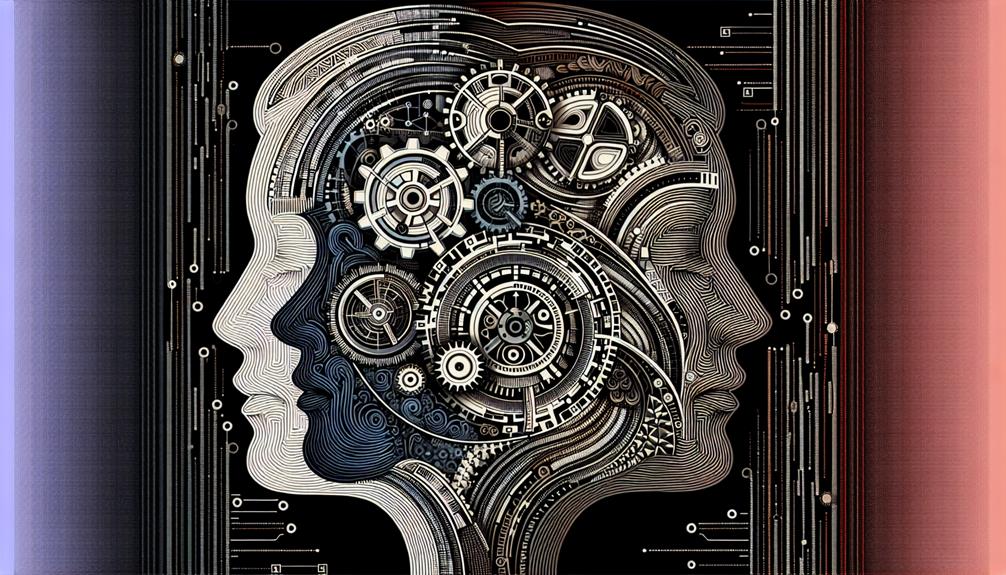
Implementing race and gender-balanced datasets is important to eliminating biases in facial recognition software that disproportionately misidentify people from certain ethnic and demographic groups. These biases are more prevalent in traditional machine learning algorithms where engineers select facial features to be analyzed.
Research has shown that facial recognition technology performs worse for darker skin tones due to the data used to train the algorithms being mainly white. Ensuring equal racial representation in datasets is vital for achieving racial balance and reducing bias.
Deep learning techniques, which involve layered neural networks, can also improve accuracy by learning features programmatically from the training images. Ethically built datasets like those at Scylla are designed to eliminate these biases by balancing the racial distribution of images used to train the algorithms.
Dr. Armen Ghambaryan's work highlights the importance of accuracy and sensitivity in facial recognition technology. To improve the fairness and reliability of surveillance facial recognition, overcoming racial biases is essential.
Mitigating Privacy Concerns
As I continue to explore the intricacies of facial recognition in surveillance systems, I find that mitigating privacy concerns requires attention to two key aspects: biometric data protection and surveillance management.
Protecting facial data from unauthorized access and managing surveillance processes to eliminate intrusive practices are pivotal to ensuring that these systems align with ethical standards.
Biometric Data Protection
In surveillance systems utilizing facial recognition technology, biometric data protection must prioritize the secure storage and encryption of facial templates to mitigate privacy concerns and prevent data breaches.
The use of Facial Recognition Technology (FRT) raises numerous ethical dilemmas, primarily related to privacy and data protection. The storage of facial templates and other biometric data requires stringent security measures to guarantee that sensitive information is safeguarded against unauthorized access.
The encryption of images is vital to prevent spoofing attacks and maintain the integrity of the system. Effective data protection mechanisms must be in place to collect, store, and process biometric data while adhering to privacy laws and regulations.
The European Data Protection Board (EDPB) emphasizes the importance of individual control over biometric data, highlighting the need for secure storage solutions that protect against data breaches and misuse.
As a result, applicants must incorporate robust data protection measures into the use of facial recognition technology to address privacy concerns and maintain public trust.
Surveillance Management
The effective management of surveillance systems incorporating facial recognition technology depends on mitigating privacy concerns through robust data protection mechanisms and balanced security practices. To guarantee the integrity of facial recognition systems, surveillance management must carefully consider security needs against privacy risks. Only by striking this balance can we confidently deploy these technologies.
Robust data protection measures are essential in preserving privacy. Implementing data encryption and access control policies guarantees that sensitive information remains secure and accessible only to authorized individuals. Guaranteeing the security of biometric data involves both technical and regulatory considerations. Facial recognition systems must comply with privacy laws, such as the General Data Protection Regulation (GDPR), to avoid legal and ethical dilemmas.
Effective surveillance management extends beyond technological safeguards. Ethical considerations and regulatory compliance are equally significant. Training security personnel on privacy best practices ensures that responsibility for personal data is understood. Likewise, establishing clear policies and protocols for data usage and retention helps prevent misuse.
It's vital that we pursue a harmonious balance between security and privacy, enriching both to make sure that advanced facial recognition technologies benefit society without compromising individuals' rights.
Enhancing Security Measures

By leveraging advanced algorithms and machine learning, facial recognition technology can accurately identify individuals by capturing and analyzing unique biometric data points from their facial features. These biometric points are compared against secure database records to ensure precise identity verification in surveillance applications. Facial recognition systems in surveillance employ robust cybersecurity measures, encryption methods, and regular audits to prevent potential breaches. Moreover, these systems are designed to minimize biases through continuous refinement, deep learning techniques, and pattern identification.
In practice, facial recognition technology enhances security measures by accurately identifying individuals even under varying lighting, angles, and expressions. Surveillance cameras equipped with facial recognition can identify criminals, prevent identity theft, and enhance public safety. The accuracy of recognition algorithms continues to improve, making facial recognition a reliable tool for law enforcement and security professionals.
The integration of facial recognition into surveillance systems bolsters security and ensures that individuals are held accountable for their actions.
Overcoming Deployment Challenges
Implementing facial recognition technology into surveillance systems requires careful attention to deployment challenges that can greatly impact its effectiveness. The success of these advanced tools relies on seamless integration with existing infrastructure, guaranteeing compatibility across various devices. Failing to address integration and compatibility concerns can lead to inconsistent results, thus compromising security and trust in the system.
Deployment challenges are easily overlooked but pose significant hurdles. That's why training staff to effectively and efficiently navigate facial recognition technology is essential. This training ensures not only high accuracy but also a thorough understanding of the system's capabilities and limitations.
Additionally, overcoming deployment challenges necessitates meticulous adherence to privacy regulations and robust data protection measures to maintain the integrity and security of biometric data.
Future Advancements in Surveillance Systems
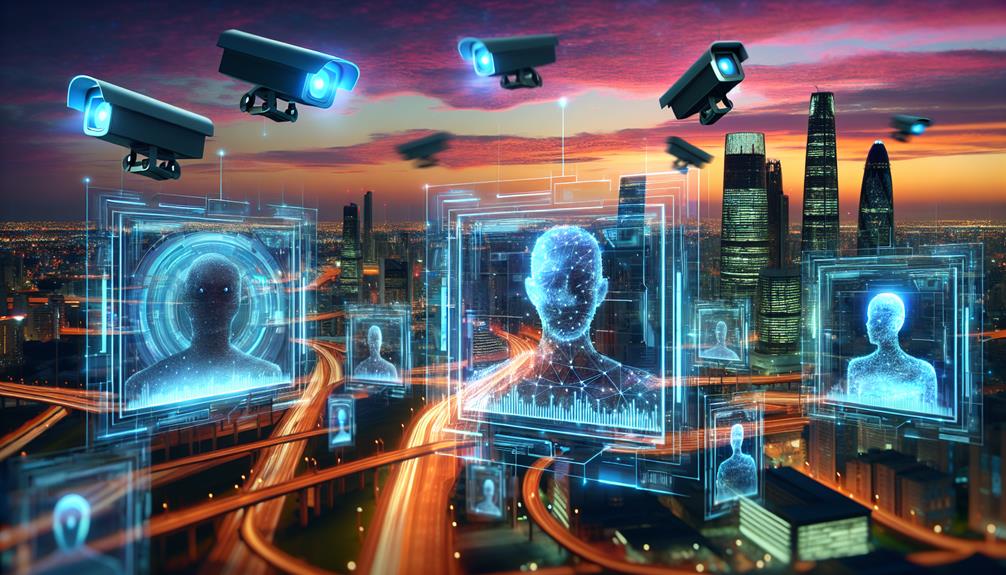
As I explore future advancements in surveillance systems, I'm considering how the integration of thermal imaging can enhance accuracy by leveraging heat signatures, along with enhanced data security measures to protect sensitive information.
Deep learning techniques will play an important role in mitigating biases and improving overall performance. These emerging capabilities will have a major impact on the deployment of facial recognition systems across various industries.
Thermal Imaging Integration
Utilizing thermal imaging integration in surveillance systems amplifies facial recognition capabilities by capturing unique heat signatures of individuals, which becomes important in enhancing subject identification under various lighting conditions. This technology bolsters accuracy by highlighting subtle differences in facial features through heat variations. As a result, surveillance systems become more effective in challenging environmental conditions.
Four significant advantages of thermal imaging integration are:
- Enhanced Identification Accuracy: Thermal imaging captures the distinct heat signatures that distinguish individuals, leading to better recognition results.
- Non-Intrusive Identification: Thermal imaging is less intrusive compared to traditional methods, allowing for more discreet surveillance.
- Robust Performance in Adverse Conditions: Thermal imaging continues to provide reliable identification even in low-light or harsh weather conditions.
- Advanced Subject Identification: Thermal imaging extraction of subtle facial features enhances the overall quality of subject identification.
The integration of LWIR polarimetric-based thermal imaging further enhances identification accuracy by leveraging the polarization-state information of images. This cutting-edge approach enables surveillance systems to operate effectively in diverse environments, ensuring improved control and surveillance.
Enhanced Data Security
Innovative surveillance systems are fortifying their defenses by incorporating multi-layered security measures to safeguard facial recognition data. This approach is essential to address privacy implications and ethical concerns that surround biometric data collection.
To guarantee robust data security, advanced encryption methods are employed. Symmetric encryption, for instance, uses a single key for both encryption and decryption, while asymmetric encryption employs a pair of keys for enhanced security. Regular security audits also play a crucial role in maintaining the integrity of these systems.
| Security Measure | Benefits | Impact on Surveillance |
|---|---|---|
| Multi-Factor Authentication | Enhanced Access Control | Strengthened Data Protection |
| Advanced Encryption | Secure Data Storage | Reduced Risk of Data Breaches |
| Regular Security Audits | Identification of Vulnerabilities | Proactive Threat Mitigation |
Enhanced Data Security Overview
These enhanced security measures are important to preventing unauthorized access and data theft in surveillance systems incorporating facial recognition technology. By integrating multi-factor authentication and robust encryption methods, the risk of data breaches and unauthorized access are notably reduced. This layered approach ensures that sensitive biometric data remains secure, addressing the privacy implications and ethical concerns inherent in the use of facial recognition technology in surveillance systems.
Deep Learning Techniques
Deep learning techniques empower surveillance systems by greatly enhancing facial recognition accuracy through algorithm training on diverse datasets, overcoming challenges like lighting and facial variations. These advancements have given rise to vital innovations in surveillance technologies. Here are some key aspects:
- Enhanced Accuracy: Training deep learning models on large datasets notably improves facial recognition accuracy.
- Handling Variations: Deep learning algorithms can effectively handle challenges such as different lighting conditions, angles, and facial expressions.
- Improved Efficiency: Implementing deep learning in surveillance systems results in more accurate and efficient facial recognition.
- Continuous Refinement: Ongoing refinement of deep learning algorithms reduces biases and enhances overall performance in facial recognition for surveillance.
These enhancements are essential in ensuring that surveillance systems based on facial recognition provide higher accuracy and reliability.
Frequently Asked Questions
What Are Some Potential Solutions for This Issue of Facial Recognition?
To overcome the challenges of facial recognition, I propose integrating machine learning enhancements, prioritizing data privacy through secure storage and user consent, ensuring algorithm accuracy, and emphasizing ethical considerations alongside robust security measures.
How Do You Overcome Face Recognition?
To overcome face recognition challenges, I prioritize privacy by incorporating robust data security measures and obtaining user consent. I employ advanced algorithms, mitigate bias, and utilize machine learning for higher accuracy, while adhering to a stringent regulatory framework.
What Are the Challenges of Facial Recognition Systems?
As I explore facial recognition systems, I grapple with accuracy issues from lighting and angles, privacy concerns over data protection, security vulnerabilities from hacking, and the need to mitigate biases through diverse training datasets.
How Can Facial Recognition Be Improved?
To improve facial recognition technology, I enhance and refine algorithms using deep learning, 3D mapping, and more accurate datasets. Ensuring advanced hardware and robust privacy controls are essential steps toward reliable and responsible system implementation.