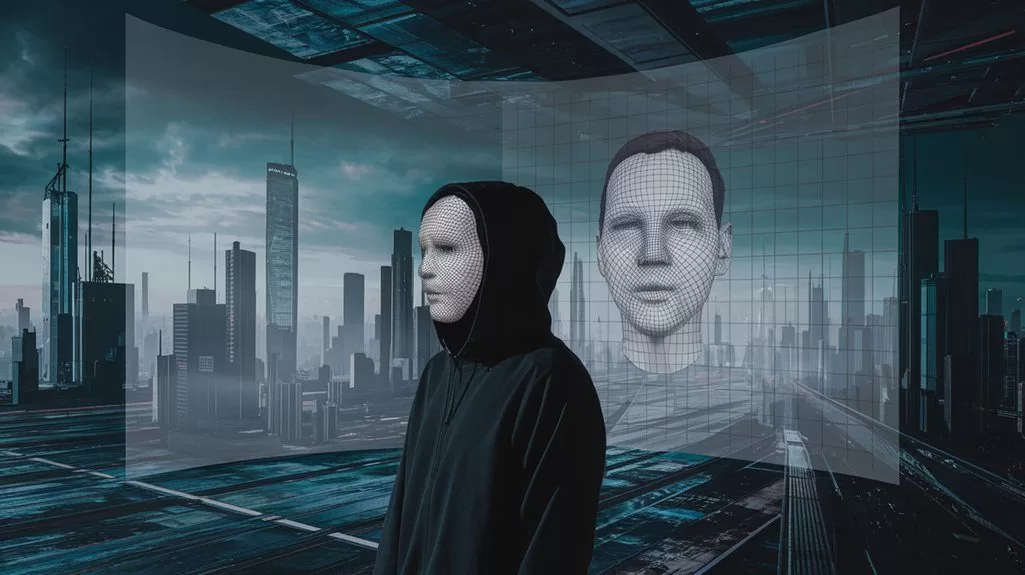


SAFR's prowess in biometric security is undeniable. With near-perfect recognition accuracy and top-tier mask detection, it's a standout. The real surprise? It doesn't hoard your imagery. AES-256 encryption acts like a digital double-locked door. Anti-spoofing tech keeps the fraudsters at bay, ensuring faces aren't just pixels on a screen. Compliant, private, and adaptable—SAFR's not messing around. Surveillance meets its match. The real scoop is unfolding just beyond this introduction.
Key Takeaways
- SAFR achieves 99.87% accuracy, ensuring robust security while maintaining privacy.
- Encrypted AES-256 data storage and offline deployment options enhance privacy protection.
- Advanced anti-spoofing and liveness detection technologies prevent unauthorized access and misuse.
- Compliance with TAA, NDAA, and privacy mandates guarantees legal adherence and ethical use.
- Balances high surveillance capabilities with privacy concerns, setting new privacy and surveillance standards.
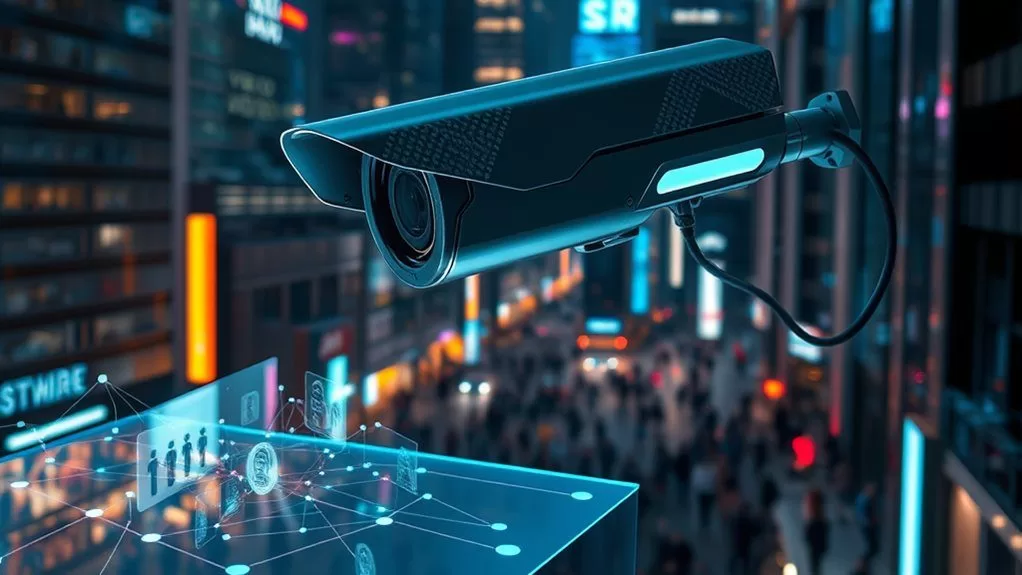
While the world frets over privacy breaches and data theft, SAFR steps in with a swagger, introducing its cutting-edge biometric security. With a nod to NIST testing and accuracy rates that raise eyebrows, SAFR stands as a beacon in biometric security. It's not just the 99.87% recognition accuracy that gets attention, but also its ability to see through masks with 98.85% precision. During health crises, that's a game-changer.
SAFR's algorithms? Unbiased. It's like they skipped the discrimination class. Regulatory compliance is exceptional too, guaranteeing it plays by the rules. Organizations must adapt protocols to changing technologies to mitigate risks. Despite the high accuracy rates, concerns regarding privacy remain prevalent as facial recognition technology can be used for surveillance without consent.
But what really makes SAFR a headliner? Its anti-spoofing technology. It uses 3D structured light and RGB like a tech wizard, making certain no one pulls a fast one. Impersonation attempts? Not on SAFR's watch. Liveness detection adds another layer, verifying if the face is real. It's like having a bouncer at a nightclub, only more effective. Real-time processing keeps everything moving at a brisk pace. The system provides actionable intelligence, which boosts security measures like a shot of espresso.
SAFR isn't just about surveillance. Oh no, it's about privacy too. Encrypted data storage ensures biometric data stays as secret as a teenager's diary. With AES-256 encryption, it's like wrapping data in a digital fortress. Offline deployment options add another layer of privacy, perfect for those who like to stay off the grid. Compliance with privacy mandates keeps SAFR on the right side of the law.
And let's not forget the minimal visual imagery—data stored without facial images. It's like a magic trick, but for privacy.
Touchless, fast throughput is another feather in SAFR's cap, securing up to 30 individuals per minute. It's like a security checkpoint on caffeine. Integration capability with leading access control platforms means fast deployment. It's as if SAFR is the plug-and-play of biometric security, ready to go at a moment's notice. Made in the USA, it's TAA and NDAA compliant, ticking all the right boxes for regulatory compliance. With its versatile applications, SAFR is effective both indoors and outdoors, adapting to diverse environmental conditions.
While some might argue about the cons of biometric security, SAFR seems to have an answer for everything. The pros are clear: high accuracy, robust privacy measures, and a penchant for compliance. SAFR's approach to biometric security is both visionary and grounded.
In a world where privacy is often an afterthought, SAFR makes it the main event. It's a bold move, and one that might just set the standard.