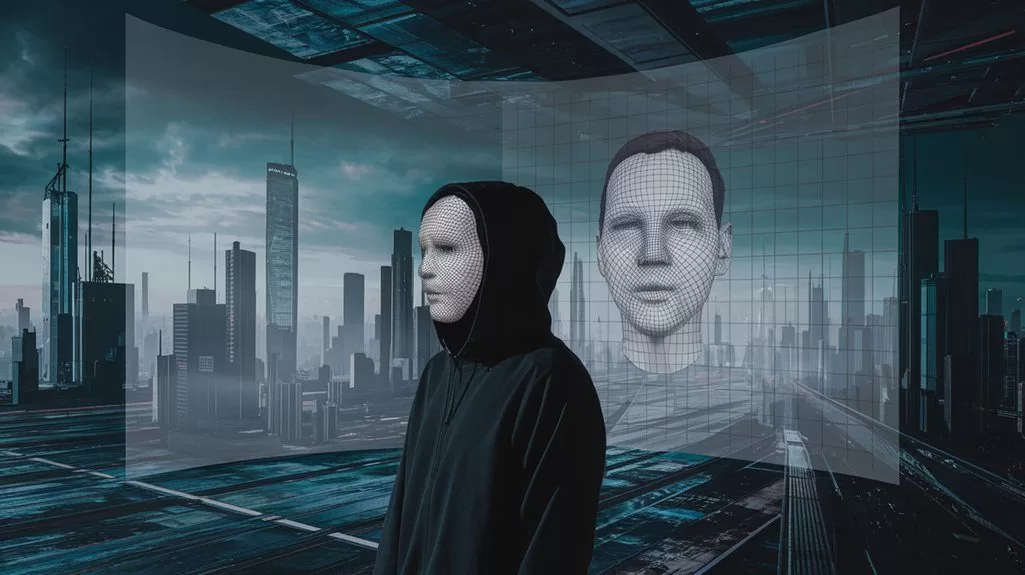


To maximize the effectiveness of facial recognition in security systems, I follow these essential tips: optimizing camera angles at eye level and slightly angled downward for clear facial features, managing high-quality datasets with varied lighting conditions, and guaranteeing robust data management strategies. Addressing lighting conditions with backlight compensation techniques, resolution enhancement methods, and illumination standardization is also vital. Moreover, I minimize biases through diverse datasets and regular algorithm audits, set a confidence score threshold balancing security with usability, and guarantee secure data storage and integration with existing systems. By implementing these strategies, I enhance the reliability and accuracy of facial recognition, ensuring cutting-edge security solutions.
Key Takeaways
- Implement diverse datasets to enhance system robustness and reduce biases in facial recognition.
- Regularly update and test algorithms to address challenges and improve accuracy.
- Proper camera placement at eye level and controlled lighting contribute to accurate face detection.
- Standardize illumination conditions to ensure consistent image quality and higher accuracy.
- Establish accountability measures and secure integration with existing systems to prevent misuse and ensure regulatory compliance.
Optimizing Camera Angles and Perspectives
To guarantee peak facial identification, cameras must be positioned with precise angles and perspectives. The key to best facial recognition quality lies in these details.
Proper camera placement at eye level ensures faces are captured at an ideal angle, greatly enhancing accuracy. Angle cameras slightly downward to capture full facial features; this helps prevent any portion of the face from being obscured, ensuring precise identification.
An additional vital factor is avoiding extreme angles that distort facial proportions and hinder recognition capabilities. Imagine multiple cameras systematically placed to cover various perspectives, which not only enhances overall coverage but also contributes to improved accuracy.
Moreover, thoughtful lighting adjustments are essential to prevent shadows and ensure clear facial imaging.
Managing High-Quality Data Datasets
Managing High-Quality Data Datasets
By ensuring the quality and consistency of data datasets, I can greatly enhance the performance and reliability of facial recognition systems. High-quality data datasets are essential for accurate facial recognition, ensuring reliable identification processes. Diverse datasets with variations in lighting, poses, and expressions improve the system's robustness and performance.
To optimize dataset quality, I follow these key steps:
- Clean and preprocess data: Remove noise and inconsistencies from the datasets to enhance their quality and optimize recognition accuracy.
- Use annotated datasets: Include labeled facial features in the datasets to aid in training models and improving recognition precision.
- Continuously update and maintain datasets: Adapting to new faces and ensuring system efficiency over time is vital for maintaining a reliable facial recognition system.
Addressing Lighting Conditions and Quality

When addressing lighting conditions and quality in facial recognition systems, I focus on:
- Backlight compensation techniques
- Resolution enhancement methods
- Illumination standardization
By applying these methods, we can greatly enhance the quality of input images, ensuring more accurate identification in various environmental settings.
This attention to detail helps maximize the reliability of security systems, even in challenging lighting scenarios.
Backlight Compensation Techniques
Implementing effective backlight compensation techniques becomes necessary in ensuring consistent facial recognition performance across diverse environments. In facial recognition systems, backlight compensation plays a pivotal role in optimizing system accuracy and reducing false rejections caused by inadequate lighting. By enhancing contrast and clarity in backlit situations, facial recognition systems can maintain performance consistency across different environments.
These techniques help address challenges posed by varying lighting conditions by adjusting the brightness of the background to prevent overexposure and improve the visibility of facial features.
For example:
- Adaptive Backlight Compensation Algorithm: This algorithm presented in a study uses digital signal processors to divide an image into different sections and adjust the lighting accordingly, ensuring accurate face detection even in backlighted conditions.
- Gamma Correction: This process is part of a pre-processing chain that includes other techniques to eliminate most of the effects of changing illumination conditions, enabling the system to verify images obtained in very poor lighting.
- Wide Dynamic Range (WDR) Technology: This technology balances light on an image via image sensors and digital signal processors, which can capture clear and balanced images/videos even in low-light conditions.
Resolution Enhancement Methods
Resolution enhancement methods, such as those incorporating deep learning and multi-resolution edge-aware lighting enhancement, are essential for addressing diverse lighting conditions and quality in facial recognition systems. High-resolution images are crucial for accurate facial recognition, especially in challenging lighting conditions. Advanced algorithms can enhance image quality by reducing noise and improving clarity for better facial feature extraction. Proper lighting setup is essential for capturing high-quality images that optimize facial recognition performance.
| Technique | Description | Benefits |
|---|---|---|
| Multi-resolution Edge-Aware Lighting Enhancement | Improves lighting conditions in images by adjusting edges and light intensities | Enhances facial feature extraction |
| Deep Learning Algorithms | Uses AI to enhance image quality and reduce noise | Increases accuracy in facial recognition |
| Image De-noising Technologies | Removes noise from images for clearer features | Improves system reliability |
Illumination Standardization
levels. Lighting can significantly impact the accuracy of facial recognition technology. Standardizing illumination conditions involves controlling external light sources and ensuring consistent lighting across different environments. Addressing variations in light levels requires implementing algorithms that can adapt to different lighting conditions and optimize image quality for accurate facial recognition. By standardizing illumination conditions and addressing variations in light levels, facial recognition systems can achieve higher accuracy rates and improve overall performance.
Standardizing illumination conditions:
Controlling external light sources and ensuring consistent lighting across different environments.
Addressing variations in light levels:
Implementing algorithms that can adapt to different lighting conditions and optimize image quality for accurate facial recognition.
Minimizing Biases and Demographic Variability
Ensuring fair and accurate facial recognition entails addressing inherent biases that can lead to inaccurate identification based on race and gender. Unfortunately, algorithmic biases often exist within the systems themselves, which necessitates proactive steps to mitigate these issues.
One vital approach is to implement diverse and representative datasets to train these algorithms. This helps minimize biases and improve recognition performance across different demographics.
Regularly testing and auditing facial recognition algorithms for bias detection and mitigation is also essential for ethical and inclusive use.
Collaborating with diverse experts and stakeholders provides valuable insights to enhance system fairness and reduce demographic variability. Applying transparent and accountable practices in facial recognition development is key to mitigating biases and promoting equitable outcomes.
Confidence Score Threshold and Reliability

When it comes to maximizing facial recognition in security systems, I understand the pivotal role of the confidence score threshold in ensuring the reliability of results.
This threshold directly influences the certainty of matches, and configuring it correctly is critical to balancing security and usability.
Threshold and Accuracy
The boundary for confidence scores plays a crucial role in maximizing the accuracy and dependability of facial recognition systems. It directly impacts the trade-off between false positives and false negatives. Setting this boundary appropriately guarantees that the system doesn't produce too many false alarms, while also not missing actual matches.
Here are the key considerations for fine-tuning the boundary:
- Accuracy vs. Convenience: Higher boundaries increase the system's reliability but may lead to more false negatives, while lower boundaries may result in more false positives.
- Security Requirements: The boundary should be tailored to specific security needs, striking a balance between false positives and false negatives.
- System Feedback: Regularly monitoring and adjusting the boundary based on system performance metrics ensures peak accuracy.
Methods for Improvement
By maximizing the confidence score threshold in facial recognition systems, we can greatly enhance their reliability and accuracy, tailoring them to specific security requirements and user needs. For instance, in high-stakes security applications, setting a high confidence score threshold increases the certainty of accurate identifications. Conversely, in applications where usability is a priority, a lower threshold can balance security and usability. Adjusting the threshold is key to balancing accuracy and speed. My experience has taught me that fine-tuning this parameter allows for best system performance.
Confidence Score Threshold Recommendations
| Use Case | Threshold | Effect |
|---|---|---|
| High-Risk Security | >90% | High accuracy |
| Convenience-Focused | 70-85% | Balances security and usability |
| High-Traffic Areas | 80-90% | Accuracy and speed |
Regular monitoring and adjustments to the confidence score threshold can maintain system reliability and effectiveness. This holistic approach guarantees that facial recognition systems deliver the desired balance of security and usability.
Confidence Scoring
To guarantee the highest level of security and maximize the reliability of facial recognition systems, setting a confidence score threshold is important, as it directly impacts how accurately the system can identify individuals and makes actionable decisions.
In facial recognition, confidence scoring plays a significant role in ensuring that security protocols are robust and efficient. By assigning a numerical value to each potential match, the system can determine the likelihood of a correct identification. This value represents the certainty of the match, with higher scores indicating a more dependable match.
Optimizing Confidence Scoring for Enhanced Security:
- Threshold Balancing: Adjust the confidence score threshold to strike a balance between security and convenience in access control applications.
- Reliability Checks: Monitor and analyze confidence scores to identify areas where system performance can be optimized.
- Threshold Adjustments: Iterate on the confidence score threshold to make sure that only matches above a desired reliability level are accepted.
Algorithm Updates and Performance Monitoring
\[tinyservice\]
Regular algorithm updates play an essential role in refining the accuracy and efficiency of facial recognition systems by addressing biases, enhancing feature extraction, and improving matching accuracy. These updates are vital for guaranteeing that facial recognition systems operate effectively in security applications. Performance monitoring is another key aspect that helps identify and address system vulnerabilities, leading to consistent and reliable outcomes.
| Metric | Impact | Importance |
|---|---|---|
| True Positive Rate | Measures the proportion of correctly identified faces. | High: Secures accurate identification. |
| False Positive Rate | Measures misidentification frequency. | High: Alerts of potential errors. |
| System Vulnerabilities | Reveals points of weakness in the system. | High: Secures proactive security. |
Secure Data Storage and Transmissions Protocols

To guarantee robust security in facial recognition systems, I prioritize utilizing robust data encryption mechanisms. This includes leveraging advanced ciphers like AES, implementing secure protocols like SSL/TLS, and employing secure cloud storage solutions.
Effective secure distribution methods and stringent access control measures are also essential to safeguard data during both storage and transmission.
Data Encryption Mechanisms
Implementing strong data encryption mechanisms is vital to secure the storage and transmission of sensitive facial recognition information. Data breaches pose a significant threat to facial recognition systems, and robust encryption serves as the primary line of defense.
Advanced encryption algorithms such as AES (Advanced Encryption Standard) offer unmatched protection for sensitive data. Here are key considerations:
- Data Encryption: Transform facial recognition data into a format that only authorized parties can access by employing encryption algorithms.
- Secure Data Storage Protocols: Guarantee that stored facial recognition information is protected by implementing protocols that securely store and manage access to the data.
- Encrypted Transmissions Protocols: Employ SSL (Secure Sockets Layer) or TLS (Transport Layer Security) to safeguard data in transit during facial recognition processes.
Secure Distribution Methods
Beyond strong encryption, facial recognition data requires secure distribution methods that protect both storage and transmissions. When implementing a facial recognition system, it's crucial to guarantee that data is safeguarded from unauthorized access. This involves employing end-to-end encryption for secure data transmission, which makes data decipherable only to authorized parties.
Additionally, using secure communication protocols like HTTPS guarantees that data remains secure during transmission.
To further enhance security, regularly updating security measures is essential. This helps protect against potential vulnerabilities and cyber threats that can compromise facial recognition data.
Another vital aspect is restricting access to sensitive data through role-based permissions. This minimizes the risk of data breaches by limiting access to only those who need it.
Lastly, multi-factor authentication is necessary for distributing facial recognition data. This adds additional security layers by requiring multiple forms of verification to access the data, making it much more difficult for unauthorized individuals to gain access.
Access Control Measures
Access Control Measures for Enhanced Security
Employing strong encryption techniques guarantees the security of facial recognition data both in storage and during transmission. This is particularly important since facial recognition systems involve sensitive and unique biometric data.
Here are three key steps to strengthen your access control measures:
1. Secure Data Storage Protocols
Implementing secure data storage protocols protects against unauthorized access and misuse of collected data. Confirm that data is encrypted and securely stored in compliance with data protection regulations.
2. Encryption Techniques
Utilize strong encryption techniques during data transmission to prevent interception and unauthorized access to facial recognition data.
3. Regular Security Audits
Regularly conduct security audits to identify and address any vulnerabilities in access control measures. This guarantees that your security protocols remain strong and up to date, preventing potential breaches.
Clear User Consent and Transparency
To ensure user trust and compliance, it's essential to clearly outline the purpose and benefits of facial recognition in security systems, as well as provide detailed information on how facial recognition data will be used and stored. In addition, ensuring transparent implementation is vital to prevent potential biases and data breaches. This includes diligently explaining how data will be handled, stored, and secured, thereby fostering user consent and trust.
Implementing clear data retention policies and providing continuous updates to informed users is also important. Regularly informing users about changes and updates promotes accountability and transparency. This way, users are more likely to trust the system and comply with its requirements.
Establishing Accountability Measures

Establishing clear accountability measures is essential to guaranteeing that facial recognition systems are used responsibly and in compliance with privacy regulations. When it comes to managing a facial recognition system, accountability is the key to maintaining public trust and preventing misuse.
Here are three vital steps to achieve accountability:
- Assign Responsibility: Clearly define who's accountable for data handling, system maintenance, and compliance with regulations. This includes assigning specific roles and responsibilities to individuals or teams for managing the system and its data.
- Regular Auditing: Regularly review and audit system usage to guarantee adherence to established protocols and regulations. This includes monitoring system performance, identifying potential biases, and addressing any breaches or unauthorized access.
- Training and Awareness: Provide thorough training to all personnel involved in using the facial recognition system on data protection, privacy laws, and ethical considerations. This helps guarantee that users understand the implications of their actions and are committed to responsible use.
Secure Integration With Existing Systems
By integrating facial recognition technology with our existing security systems, we can enhance the overall efficiency and effectiveness of our security protocols. The key to successful integration lies in guaranteeing a seamless integration of facial recognition technology with our current security infrastructure. This involves conducting thorough compatibility testing to verify that the facial recognition system works harmoniously with other security components.
| Step | Action | Rationale |
|---|---|---|
| Compatibility Testing | Ensure the facial recognition system is compatible with existing security software and hardware. | Guarantee seamless integration. |
| Alignment with Protocols | Verify the system aligns with current security protocols and does not compromise overall security. | Maintain security integrity. |
| Staff Training | Conduct thorough training sessions for staff to effectively utilize the integrated system. | Ensure proficient use. |
Regular performance monitoring and evaluation are essential to address any potential issues or optimize the system's functionality. By following these steps, we can maximize the impact of facial recognition technology on our security systems.
Frequently Asked Questions
How to Improve Facial Recognition Systems?
"I enhance facial recognition by optimizing algorithms for better data accuracy, isolating distinct facial features, and refining performance in various lighting conditions, all while ensuring user privacy and consent."
What Is the Best Practice for Face Recognition?
For ideal facial recognition, I implement best practices like high-quality cameras, proper lighting, and regular algorithm updates. Additionally, I prioritize user privacy and robust security protocols, ensuring accurate and reliable performance in my systems.
How Does Facial Recognition Enhance Security?
'I use facial recognition to enhance security through biometric authentication, which guarantees accurate identity verification at access points. This surveillance technology, while involving privacy concerns, aids in crime prevention by detecting patterns and potential threats.'
How to Outsmart Facial Recognition?
To outsmart facial recognition,
I employ disguise techniques,
avoid detection,
mask my identity,
distort facial features,
and evade surveillance
using advanced tools like anti-CCTV glasses and Face Dazzle makeup to keep my face hidden.