


Clearview AI is on a mission to lock down federal facial recognition deals. Their new dual leadership, featuring Hal Lambert and Richard Schwartz, is ready to rumble. These executives are eyeing government contracts like pies at a bake sale, despite ongoing ethical storms over privacy and public backlash. Meanwhile, Clearview faces a landscape peppered with competition and concerns over discrimination through biased algorithms. Amidst this mix, potential insights await the curious.
Key Takeaways
- Clearview AI is focusing on securing government contracts with agencies like the Pentagon and Department of Homeland Security.
- Hal Lambert and Richard Schwartz have been appointed as co-CEOs to lead the company's federal market expansion efforts.
- Leadership changes are part of a strategic move to strengthen Clearview AI's position in the federal facial recognition market.
- Lambert's connections to the U.S. administration may offer Clearview AI strategic advantages in securing federal deals.
- Over 20 federal contracts present competitive challenges, complicating Clearview AI's efforts to expand its federal market presence.
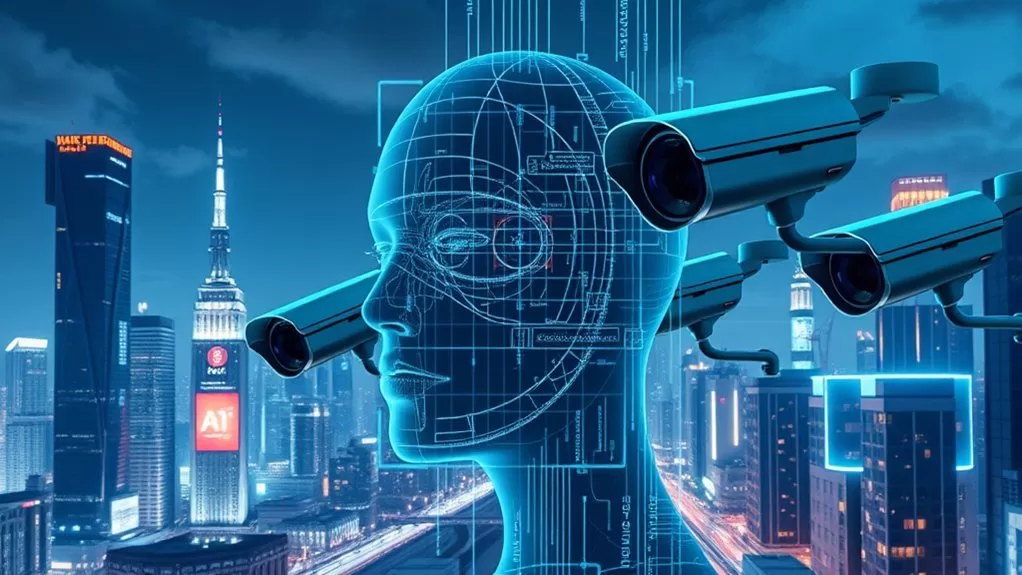
While Clearview AI continues to boast about its cutting-edge facial recognition technology, it has found itself knee-deep in legal controversies. The company, known for its extensive database of over 50 billion facial images, faces significant backlash over facial recognition ethics and government surveillance. They have managed to stir quite the pot with their practices of scraping images from public web sources without user consent. This, not surprisingly, has led to privacy concerns and legal challenges.
Clearview AI's quest to conquer the federal government market is ambitious, albeit fraught with complications. The company is altering focus towards government contracts, eyeing collaborations with agencies like the Pentagon and Department of Homeland Security. Yet, this shift hasn't been smooth. A licensing agreement with the FBI is a step forward, but with over 20 federal contracts for facial recognition technologies in play, their task is far from easy. The U.S. government's stance on privacy issues acts as a pesky roadblock, casting shadows over Clearview's expansion dreams. Algorithm bias in facial recognition technology has also been a significant concern, as it can lead to discriminatory practices and necessitates rigorous oversight.
Clearview AI's federal ambitions face hurdles, with privacy concerns casting shadows over expansion dreams.
In a bid to bolster their position, Clearview AI has undergone leadership changes. Hoan Ton-That stepped down as CEO, moving to company president. Enter Hal Lambert and Richard Schwartz as the new co-CEOs, who are expected to focus on federal deals. Lambert's ties to the U.S. administration could be the ace up their sleeve, but then again, who knows? Leadership shake-ups are always a gamble in the corporate world.
Ah, the legal challenges! They're a doozy. The company is embroiled in a settlement that demands a 23% stake for plaintiffs, a move opposed by attorneys general of 22 states and D.C. The plaintiffs would rather see the company go bankrupt than receive equity. Ouch. With insufficient funds for a cash settlement, Clearview AI is backed into a corner. Their opt-out policy, requiring individuals to submit their own facial images, hasn't won them any fans, either. It's a classic case of damned if you do, damned if you don't.
Despite these hurdles, over 1,000 law enforcement agencies have embraced Clearview AI's technology. The platform's capability to quickly process and search facial images proves irresistible for identifying persons of interest. Yet, lurking beneath this technological marvel is the specter of misuse. Concerns about the chilling effect on public behavior and freedom are very real.
As Clearview AI navigates these turbulent waters, the balancing act between innovation and ethics remains razor thin. And so the saga continues.
Final Thoughts
Clearview AI's dual leadership strategy pushes federal facial recognition deals into the spotlight. Pros? Enhanced security and streamlined operations. Cons? Privacy concerns and ethical debates. Who needs privacy, right? Facial recognition's potential is undeniable, yet its implications are divisive. A nuanced dance of technology and ethics unfolds, leaving us questioning the cost of convenience. The debate rages on, with both sides wielding valid points. A tech revolution or privacy invasion? Maybe both.
References
- https://www.biometricupdate.com/202501/clearview-fights-to-give-away-23-of-facial-recognition-business
- https://www.eff.org/deeplinks/2020/01/clearview-ai-yet-another-example-why-we-need-ban-law-enforcement-use-face
- https://iapp.org/news/b/fbi-agrees-to-licensing-contract-with-clearview-ai
- https://www.biometricupdate.com/202502/clearview-ai-targets-us-federal-govt-facial-recognition-contracts-with-new-co-ceos
- https://www.clearview.ai/plans