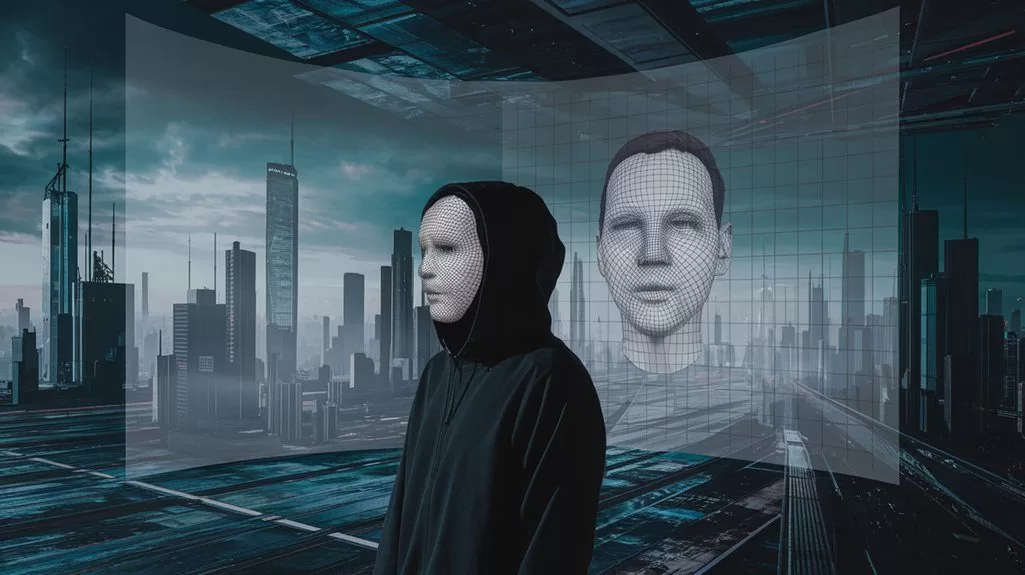


Facial recognition tech might spy on you using your driver's license photo. It's like Big Brother, without the cool soundtrack. Law enforcement loves it: catches bad guys, saves time. But, hey, privacy concerns much? Faces aren't like passwords—can't just change them. Plus, algorithm errors exist. Misidentification risk is real. Marginalized groups face more scrutiny. It's a balancing act: public safety vs. invasion of privacy. Curious about these dual facets? Stick around.
Key Takeaways
- Driver's licenses can be used in facial recognition databases for identifying individuals in law enforcement investigations.
- Integration with facial recognition technology raises concerns about privacy and potential misuse of personal data from driver's licenses.
- The use of driver's license photos in surveillance efforts requires strict regulation to prevent abuse.
- Public awareness and transparency about how driver's license data is utilized are crucial for trust in law enforcement practices.
- Driver's licenses could inadvertently contribute to wrongful identifications due to potential algorithmic biases in facial recognition systems.

While the world wakes up each morning, facial recognition technology silently gears up for its day job. It lurks in the background, ready to be released by law enforcement like some digital bloodhound. The tech's main gig? Comparing faces in photographs or video frames against massive databases. An essential tool for identifying suspects, locating missing persons, and solving crimes. A boon for public safety, right? Not so fast. Privacy concerns swirl like a persistent fog over this technological marvel.
Facial recognition promises efficiency. It reduces investigation time, speeds up crime-solving, and even closes cold cases by matching facial features. A cold investigator's best friend. But here's the kicker: those faces? They're unchangeable. You can't swap them out like a pair of socks. This leads to the unsettling reality of identity security concerns. Imagine being wrongly identified from a crowd because, well, the algorithm said so. Not so comforting.
Unchangeable faces pose identity risks; algorithms aren't always comforting allies.
Public safety is the banner under which facial recognition often parades. Live systems can quickly identify suspects in bustling crowds. Retrospective facial recognition analyzes CCTV footage post-event, potentially catching perpetrators who thought they'd made a clean getaway. Operator-initiated systems help officers identify individuals during interactions. A digital accomplice in safeguarding communities. But there's a catch: privacy concerns. The technology's ability to scan millions of faces in seconds feels a bit too Big Brother for comfort. Real-time alerts and intelligence analysis allow authorities to respond promptly to unusual behavior, enhancing public safety.
Bias and inaccuracy haunt facial recognition like a bad dream. Systems may have a penchant for misidentifying certain demographics. Yikes. And the current lack of regulation? A wild west of digital surveillance. Legal frameworks, where they exist, offer some semblance of order, but debates rage on about the need for stricter oversight. Transparency is demanded, yet often lacking. Not exactly a recipe for public trust. Law enforcement agencies have access to hundreds of millions of images of American citizens and can identify unknown individuals, verify known identities, or search for specific faces.
Facial recognition's role in law enforcement is undeniably transformative. Resource optimization allows officers to focus on tasks beyond the monotonous grind of sifting through footage. Multidisciplinary use spans counter-terrorism to missing persons cases. It's a multifaceted toolkit. Yet, the specter of civil liberties looms large. Marginalized communities may find themselves disproportionately scrutinized, their fears echoed in the call for transparency.
In a world where technology often outpaces regulation, facial recognition stands as both a guardian and a potential adversary. It offers safety but at the cost of privacy. A blessing and a curse, depending on where you stand. As society grapples with its implications, the quest for belonging remains. Facial recognition technology also enables faster investigation times for law enforcement agencies, enhancing the overall effectiveness of their operations.
References
- https://www.aware.com/blog-facial-recognition-used-in-law-enforcement/
- https://www.eff.org/wp/law-enforcement-use-face-recognition
- https://www.met.police.uk/advice/advice-and-information/fr/facial-recognition-technology/
- https://innovatrics.com/trustreport/is-facial-recognition-helping-or-hurting-law-enforcement/
- https://homeofficemedia.blog.gov.uk/2023/10/29/police-use-of-facial-recognition-factsheet/