

As I explore the world of facial recognition in surveillance, I find myself confronting a multitude of privacy risks. Abuse of biometric data can lead to false arrests and identity theft. Some developers even use social media data without consent. Additionally, racial bias in algorithms can cause more harm to marginalized groups. Lack of transparency and regulation exacerbates the issue, turning our public spaces into surveillance state. How much personal autonomy do we stand to lose?
Key Takeaways
- Facial recognition technology raises concerns about improper data storage and misuse, including data breaches and unauthorized tracking.
- Surveillance threatens personal privacy and anonymity, particularly during public events and demonstrations.
- Biometric data collection raises the risk of identity theft, stalking, and other malicious activities if compromised.
- Lack of transparency and explicit consent mechanisms challenges individual control over biometric data and increases privacy risks.
- Unregulated surveillance and profiling can lead to false arrests, erosion of civil liberties, and systemic inequality.
Data Misuse and Breaches
Facial recognition technology not only poses significant privacy risks but also raises concerns about improper data storage and potential misuse of biometric information. One of the primary concerns is the threat of data breaches involving facial recognition. Since biometric data can't be changed or encrypted, any such breach would have drastic consequences.
This is a significant reason why improper data storage is a critical issue. Hacking risks are significant when dealing with sensitive biometric data. Once hacked, facial data can be used for fraudulent purposes, compromising individuals' identities and putting them at risk of various forms of harm.
In addition to these risks, the misuse of data acquired through facial recognition technology is another major issue. Inaccurate or biased data can lead to false arrests, profiling, and wrongful convictions. How facial recognition technology is used in surveillance must be carefully regulated and monitored to make sure that it doesn't become an instrument of mass surveillance.
Transparency and consent are essential safeguards that must be implemented to mitigate these privacy risks.
Surveillance and Privacy Infringement
As I explore the challenges posed by facial recognition in public surveillance systems, I'm struck by the vulnerabilities that come with relying on technology that incessantly monitors our every move.
It's clear that the risks to personal privacy and anonymity are substantial, from unauthorized data collection to potential profiling based on demographic factors.
These concerns underscore the need to weigh the benefits of enhanced security against the dangers of encroaching on individual liberties.
Safety Risks
Through the relentless monitoring facilitated by facial recognition technology, I consistently face the unsettling feeling that my personal data and privacy are at risk, and individual freedoms are compromised. This pervasive tracking represents a significant breach of individual privacy, heightening my worries about safety risks.
The stakes are high, as facial recognition monitoring increases the likelihood of unauthorized data access and intentional misuse of my biometric information. Additionally, the ease with which my face can be captured, stored, and used without my consent is deeply unsettling. This lack of control over my personal data intensifies my concerns about potential privacy violations.
When surveillance overshadows individual privacy, it also restricts freedom of speech and association. The dystopian reality looms, where a misplaced reliance on facial recognition technology can result in false arrests, further eroding trust in institutions and undermining my sense of security.
It's essential that we scrutinize the mechanisms of mass surveillance to verify that these technologies don't perpetuate privacy infringement and worsen safety risks.
Anonymity Erosion
Surveillance and Privacy Infringement
When my personal data and privacy are threatened by facial recognition, I feel a steady sense of unease that my anonymity is rapidly disintegrating. Facial recognition technology has the capacity to recognize and track individuals without their knowledge or consent. This invasion of privacy raises significant concerns about the use of this technology in surveillance, as it can tag me, follow my movements, and even expose my personal life.
The constant surveillance enabled by facial recognition inhibits my ability to engage in First Amendment protected activities without fear of being monitored. Furthermore, the data collected through these systems can be used for malicious purposes such as identity theft, decreasing my anonymity and potentially putting my safety at risk.
Commercial entities and governments must be held accountable to make sure that the privacy risks associated with facial recognition technology are mitigated. In a world where surveillance technology is advancing at an unprecedented pace, I believe it's important to address these privacy concerns before it's too late.
Faces on the Radar
- Uncover Hidden Identities
- Track Associations and Locations
- Stalk Without Boundaries
- Steal Identity, Steal Life
Privacy Threats
Facial recognition in surveillance systems poses significant privacy threats by constantly monitoring and tracking individuals in public spaces, predisposing them to potential data breaches and unauthorized use. With facial recognition technology, biometric data is collected and stored, raising concerns about data misuse and breaches. When such data is compromised, individuals face the threat of identity theft and stalking.
Moreover, facial recognition's ability to identify individuals without their knowledge increases the risk of unauthorized tracking, potentially compromising anonymity and personal privacy. The widespread deployment of facial recognition systems contributes to privacy risks by enabling the tracking of individual locations and associations without explicit consent.
To mitigate these privacy risks, it's crucial to regulate the use of facial recognition technology and ensure that biometric data is handled responsibly. Implementing robust privacy protections, such as clear consent mechanisms and strict data storage protocols, can help prevent data breaches and misuse.
Lack of Transparency and Consent
As I delve into the world of facial recognition and surveillance, I'm unsettled by the glaring absence of transparent data collection practices and explicit consent mechanisms. This lack of transparency poses significant risks to personal privacy and data protection, making it increasingly challenging for individuals to maintain control over their biometric data.
Covert cameras capturing facial scans
Personal information stored in ambiguous databases
Data shared without explicit user agreement
Biometric data used without awareness or permission
The misuse of facial recognition technology can easily result in privacy violations, as surveillance systems often operate without clear guidelines on transparency and consent.
Users are often left in the dark about how their biometric data is collected, stored, and processed, leaving them vulnerable to stalking, harassment, and various other privacy risks.
Without proper consent mechanisms in place, facial recognition technology can infringe on individuals' privacy rights by capturing and analyzing their biometric data without authorization.
It's essential to implement and enforce robust regulations that guarantee transparent data collection practices, thereby protecting personal information and mitigating the privacy risks associated with facial recognition surveillance.
Biometric Data Vulnerability
I'm compelled to explore the impenetrable nature of biometric data in facial recognition, a vulnerability that not only allows for identity theft but also perpetuates privacy concerns where even the most robust security measures are limited. The critical element of this technology is the inability to encrypt faces, making them vulnerable to data breaches and hacking. This vulnerability heightens the risk of identity theft and stalking, particularly in government and commercial databases where facial data is commonly stored. The ease of remote capturing and storage of facial scans further exacerbates data security risks, increasing the likelihood of unauthorized access to individuals' personal information.
More concerning still is the lack of control individuals have to hide their faces from surveillance. Facial recognition technology essentially reduces meaningful choice in this regard, as faces can be captured and utilized in various contexts, directly contributing to privacy infringements in public spaces. These privacy risks require a thorough examination of the use of facial recognition technology, especially its applications in surveillance, where our faces aren't effectively protected from unauthorized access.
Erosion of Civil Liberties
As I continue to explore the impacts of facial recognition technology, I'm increasingly concerned about its potential to erode our civil liberties. Without proper restrictions and safeguards, this technology can silently track and monitor us, silently erasing the boundaries of our privacy and anonymity.
It's imperative that we address these privacy risks and establish clear guidelines for the use of biometric data to protect our fundamental rights and freedoms.
Restrictions on Technology
The unregulated use of facial recognition technology in surveillance fundamentally erodes civil liberties by rendering individuals susceptible to perpetual monitoring and unjust profiling, thereby threatening the very fabric of our democracy.
In a world where facial recognition technology is given free rein, we risk being trapped in a surveillance state where every move is tracked and every face is categorized. Imagine these scenarios:
- Your every step is monitored:
From the moment you step out into public, your face is tracked and compared to vast databases, eliminating any semblance of privacy.
- You're judged by your face:
Biased algorithms determine your guilt or innocence, often leading to false arrests and wrongful accusations.
- Your personal data is a commodity:
Governments and corporations alike exploit your biometric data for their own gain, disregarding your privacy concerns.
- Your freedom is curtailed:
The normalization of facial recognition surveillance stifles dissent and protest, silencing voices that should be heard.
We desperately need a robust regulatory framework to curb the intrusive use of facial recognition technology in law enforcement. Government oversight and control are essential to guarantee our privacy risks are mitigated, and the devastating consequences aren't solidified.
Surveillance Without Consent
What Are the Privacy Risks of Facial Recognition in Surveillance?
Facial recognition technology poses significant privacy risks in the realm of surveillance. It enables the constant monitoring and tracking of individuals in both public and private spaces without their explicit consent. This intrusion into personal privacy undermines the fundamental concept of autonomy and personal freedom. The ability of facial recognition to identify individuals without their knowledge or approval raises serious concerns about the misuse of this technology for unethical or invasive purposes.
Furthermore, the widespread adoption of facial recognition in surveillance systems can lead to the creation of comprehensive databases of individuals' facial biometric data. These databases could be vulnerable to hacking or unauthorized access, potentially exposing sensitive personal information to malicious actors. The lack of robust regulations and oversight regarding the use of facial recognition technology exacerbates these privacy risks, leaving individuals vulnerable to surveillance and data breaches.
Privacy Protection Needed
In our increasingly surveillance-dependent world, the unregulated use of facial recognition technology could irreversibly erode our civil liberties if we fail to establish robust privacy safeguards. As we rely more on these technologies for security, we risk creating an atmosphere where our every move is monitored and analyzed without our consent. This lack of oversight not only compromises our personal autonomy but also opens the door to data breaches, racial profiling, and targeted surveillance.
The Unseen Costs of Unchecked Surveillance:
- Unwarranted Monitoring: Facial recognition apps can track our every move, even in public spaces.
- Data Breaches: Our biometric identifiers can be stolen and exploited for malicious purposes.
- Personal Control: Surveillance technologies undermine our ability to make choices without interference.
- Systemic Inequality: Without accountability, facial recognition can perpetuate existing social biases.
To halt this erosion of privacy, we need a regulatory road forward that prioritizes data privacy, transparency, and consent. Only then can we safeguard our rights and guarantee that surveillance technologies aren't misused against us.
Misidentification and False Arrests
Misidentification errors in facial recognition systems, particularly widespread among women and people of color, put innocent lives at risk by increasing the likelihood of false arrests in criminal investigations. These inaccuracies can lead to severe consequences, such as lengthy detention, damage to personal and professional reputations, and lasting emotional distress. I understand that a primary concern is the potential for false arrests based on inaccurate identification. The drip-feed of wrongful convictions, usually involving Black suspects, underscores the need for urgent regulations to address the risks of facial recognition technology.
| Misidentification Mistakes | Consequences |
|---|---|
| Incorrect Identifications by Race | Highest for Darker Skinned Individuals |
| Women More Prone to False Positives | Disproportionate Impact on Marginalized Communities |
| Surveillance Systems Vulnerable to Bias | Need for Strict Regulations to Prevent Abuse |
| Deepfakes and Spoofing Location | False Arrests Jar the Public's Trust |
| Technical Vulnerabilities Remain Unaddressed | Greater Transparency and Accountability Needed |
I deeply appreciate the significance of discussing the privacy risks linked to the misuse of facial recognition in surveillance. As we move forward in this discussion, it is essential to emphasize the vulnerabilities of these technologies and the asymmetric impact on communities of color to guarantee that we can develop a more just and equitable use of surveillance tools.
Unchecked Deployment and Abuse
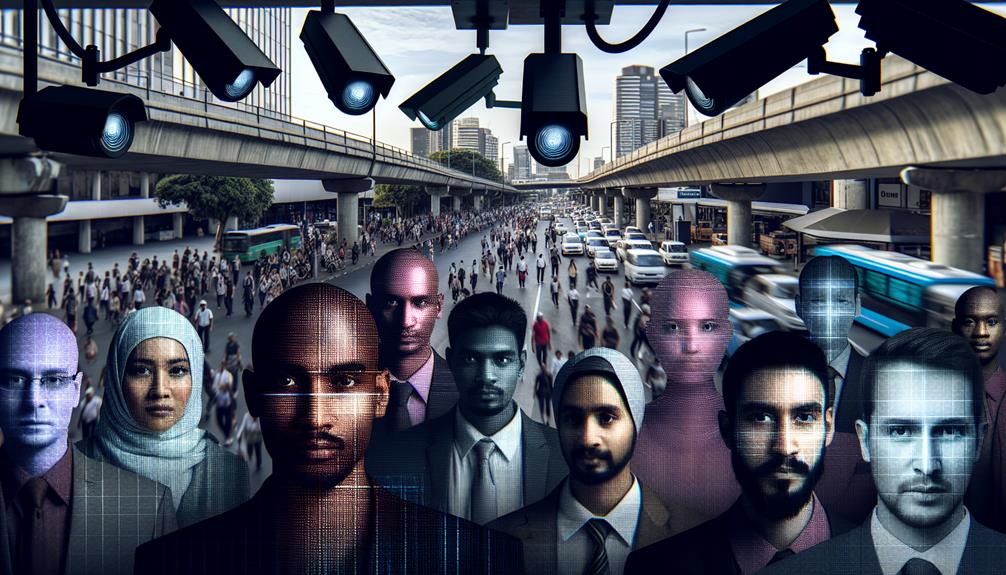
Surveillance Without Boundaries:
Facial recognition technology can monitor and identify individuals from public surveillance footage, social media profiles, or even a single photograph.
Bias and Targeting:
The technology often misidentifies people of color, leading to wrongful arrests and targeting of marginalized communities.
Lack of Oversight:
Without appropriate regulation, the technology can be abused, resulting in constant AI surveillance and data breaches.
Dangers of Unchecked Use:
The unregulated deployment of facial recognition surveillance can lead to gross privacy violations and undermine civil liberties fundamentally.
Frequently Asked Questions
What Are the Privacy Concerns of Face Recognition?
"As I share my concerns about facial recognition, I worry about data collection without consent, biometric identification for tracking individuals, and the potential for discrimination and misuse, all hidden behind a lack of transparency and surveillance implications that undermine our privacy."
What Are the Security Risks of Facial Recognition?
"As I assess the security risks of facial recognition, I am concerned about data breaches, identity theft, biometric spoofing, unauthorized access, surveillance abuse, false positives, lack of consent, discriminatory profiling, invasion of privacy, and a lack of transparency."
What Are the Vulnerabilities of Facial Recognition?
I worry about the vulnerabilities of facial recognition, including data breaches, unauthorized access to biometric data, privacy invasion, identity theft, and a surveillance state enriched by discriminatory algorithms, facial spoofing, and mass surveillance without consent.
What Is One Application of Face Recognition That Infringes Privacy?
As I reflect on the privacy risks of facial recognition, I realize one concerning application is its use in retail stores, where it can discreetly track and profile me without my consent.