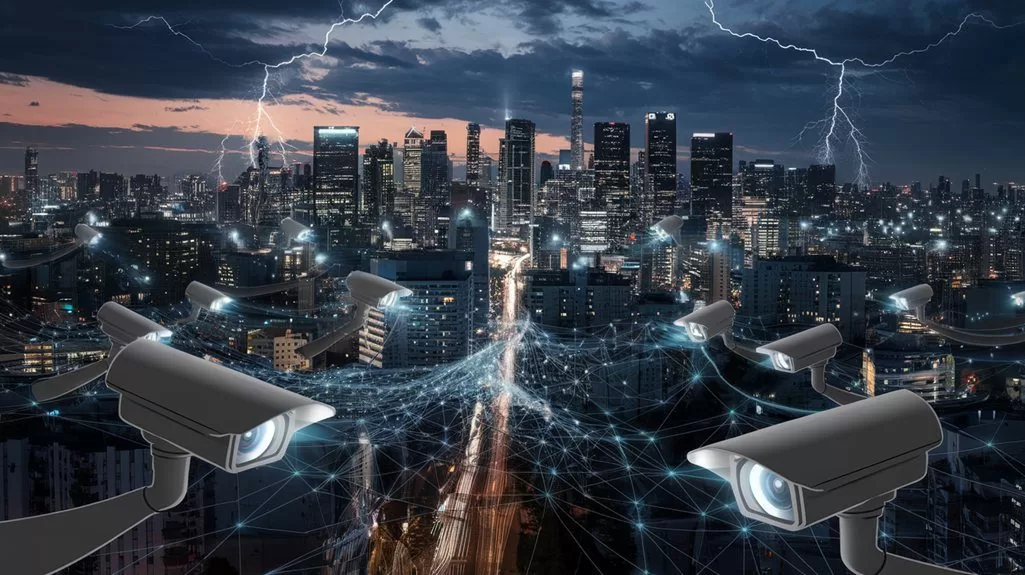


AI transparency, touted as a miracle solution for fairness, could be just another sneaky surveillance tool. Yes, it opens the proverbial "black box," shedding light on AI systems. But at what cost? Privacy might be tossed aside, and societal biases, enhanced. Legal frameworks? Sometimes as opaque as the tech they regulate. Ethical implications swirl like storm clouds. AI transparency: noble endeavor or stealthy snoop? A curious conundrum, spurring deeper exploration awaits.
Key Takeaways
- AI transparency can unintentionally create opportunities for increased surveillance and data exposure.
- While transparency aims to enhance trust, it may simultaneously reveal critical system vulnerabilities.
- Legal frameworks like GDPR promote transparency but may overlook potential surveillance implications.
- Transparency efforts could inadvertently amplify societal biases instead of eliminating them.
- Balancing transparency with privacy remains a significant ethical and practical challenge.

Despite its promise, AI transparency is a double-edged sword. It offers a glimpse into the mysterious workings of AI systems, promising fairness, accountability, and perhaps even a sprinkle of AI ethics. But wait, there's a catch. While transparency is supposed to build public trust, it can also open Pandora's box, revealing sensitive data and raising surveillance concerns.
Sure, understanding how AI comes to its decisions sounds great on paper. It's like peeking behind the curtain of the all-knowing wizard. But there's a thin line between transparency and an inadvertent invitation to prying eyes. The promise of AI transparency in enhancing algorithmic accountability is not without its hurdles. Complex AI models, often labeled as black boxes, challenge this noble goal. They're like the enigmatic artist whose work is open to interpretation—where even the creators can't quite explain the magic.
Tools like LIME and SHAP are the interpreters, attempting to translate the cryptic language of deep learning models. But let's be honest, these tools are still in their infancy, and the road to achieving true transparency without compromising data privacy is, well, bumpy at best. AI transparency is essential for securing trust from users, regulators, and affected individuals, ensuring AI systems remain reliable and understandable. However, one must consider the ethical implications of using AI transparency to prevent exacerbating societal biases and discrimination, as highlighted by the algorithm bias in facial recognition technology.
Legal frameworks like the GDPR and the EU AI Act emphasize transparency and accountability. They're the rulebooks for keeping AI on its best behavior. But here's the kicker: these laws sometimes miss the mark on surveillance implications. Transparency is a multifaceted concept, which means its implementation can be as complex as the AI systems it aims to clarify.
Like trying to cut with a butter knife, regulations often fail to fully address how transparency might inadvertently boost surveillance capabilities. It's a classic case of good intentions with unintended consequences.
In the domain of AI ethics, transparency is hailed as the hero. It's supposed to alleviate fears of bias and discrimination. Yet, the very act of being transparent can paradoxically lead to a loss of privacy.
Imagine disclosing algorithmic workings and inadvertently handing over the keys to the kingdom—your data. Public disclosure risks turning transparency into a surveillance tool, which is, frankly, ironic.
Balancing these risks is a Herculean task. Ensuring AI systems are open and understandable without creating a surveillance state requires a delicate dance. The societal implications are vast.
On one hand, transparency can enhance trust in AI, making it something less akin to a sci-fi villain. On the other, it can amplify issues like bias and discrimination, leaving one to wonder if AI transparency is truly the answer or just another problem in disguise.
In the end, AI transparency is that double-edged sword, promising clarity yet flirting with chaos.
Final Thoughts
AI transparency sounds noble. Who doesn't like a peek behind the curtain? But wait, is it just more surveillance in disguise? A layer of openness that ironically feels like a new kind of intrusion. Pros? Sure, accountability. Cons? More eyes watching. It's a double-edged sword. A transparency paradox, if you will. The world may get clarity, but at what cost? The irony is palpable. It's clear as mud. Welcome to the AI age.
References
- https://www.techtarget.com/searchcio/tip/AI-transparency-What-is-it-and-why-do-we-need-it
- https://policyreview.info/concepts/transparency-artificial-intelligence
- https://www.zendesk.com/blog/ai-transparency/
- https://www.brookings.edu/articles/the-case-for-ai-transparency-requirements/
- https://knightcolumbia.org/content/transparencys-ai-problem